
Three Rivers Community Players introduce ‘black list’ and ‘gray list,’ board member and director barred
Blacklisted individuals must have willfuly created a situation to put cast members at risk, either physically or emotionally, TRCP’s board stated.

Saying it’s taking accountability for situations allowed to go on “for far too long” and making procedural changes, the Three Rivers Community Players (TRCP) have developed a “black list” and a “gray list.”
Both lists, but not their content, were announced in the predawn hours Friday by TRCP’s board of directors. It was also announced that a board director has voluntarily resigned from their position on the board of directors and volunteered themselves to be barred from directing any further shows at TRCP’s theatre.
Neither TRCP’s initial statement nor Board President Mike Eickhoff directly named an individual or production, just that it was “our most recent production” and “the director of said production.” Because of the lack of direct confirmation, Watershed Voice chooses not to name either the director or production in this article. That information is publicly available and was previously reported on our site.
“We don’t want this to be something that hurts (the director) down the line,” Eickhoff said.
Eickhoff described Wednesday evening’s board meeting.
“Part of that board meeting (was) a review of cast feedback from the show,” he said. “Feedback comes back through our vice president anonymously. We ask that it be written anonymously, so no one feels singled out. We’re not going to give out people’s names (about) situations.”
Some “unfortunate issues” were pointed out, Eickhoff said.
“Nothing illegally was done. It had a lot to do with perception and how people were treated. Being a new board, and publicly announcing before this that we wouldn’t allow this kind of conduct, we knew something had to be done. In the process of trying to decide what would be done, the individual on the board stood up and basically volunteered his resignation. It was not part of what we were asking for. We were at the time discussing a much less drastic response, such as having him co-direct the next show he’s involved with. We were by no means pushing him out. It wasn’t specifically about him. It was other things that happened that we felt we needed to address,” Eickhoff said.
Things really came to a head as TRCP’s board read recent cast feedback, Eickhoff said. He said the board was not looking at as drastic of a punishment as what happened Wednesday.
Eickhoff reiterated the issues brought up by cast members were not illegal in nature, nor anything that would get a person kicked out of a show.
“It was more or less people doing things and saying things they shouldn’t have that were offending other people and some of the cast,” Eickhoff said. “We just don’t want that moving forward.”
TRCP said Friday that while breaking down “the unfortunate feedback” of its most recent production, it realized that problems are deeper than that show and its director.
What do the lists mean?
- TRCP has developed a black list and a gray list to give to future directors and their creative teams. Eickhoff said Friday the lists are being formalized.
- “There’s an informal conversation that happens as we go on from show to show to show about people that we may have issues with. We’re just to formalize it,” Eickhoff said. “The people know they’re on it. I don’t like putting someone on the list in the background and have them not know they’re on a list.”
- The black list consists of people who are no longer welcome in TRCP’s theatre. To be considered for the black list, the person must have willfully created a situation to put cast members at risk, either physically or emotionally.
- The gray list consists of people who have had reoccurring issues for multiple productions that severely hindered a show’s production or made situations difficult for other cast members or crew.
- “(Gray list issues) may not rise to the point of dismissal, but are noted to inform future directors of the possibility of problems,” TRCP stated. “Those on the gray list will be notified of the concerns and that they are still allowed to participate in shows at TRCP. However, it is up to the director’s discretion, and they very well may not be selected to participate until they prove that they have changed the behavior that put them on the list.”
- Both the black list and gray list will not be taken lightly, according to TRCP. All situations will be reviewed by the board of directors. In order for an individual to be added to a list, a vote will be held by the board, with majority ruling.
- As of Friday, the board includes President Mike Eickhoff, Vice President Eathan Bingaman, Secretary Maddy Eickhoff and Treasurer Susie Shimer. Kate Wilen’s role is play selections, Tylor Paige’s role is productions, and Claire Evans’ role is technical advisors. There are now vacancies in the buildings and resources and promotions department.
Why a “black list”?
TRCP’s statement did not include comments on its use of the phrases “black list” and “gray list.” Eickhoff said that the idea of a black list is not new to local theater.
“You have a black list. You have a white list. Black list being people that you don’t want to work with going forward, white list being ‘This is people that you can contact if you need something. They’re willing to do it. They’re good to work with.’ The concept of the gray list was just basically someone in between. ‘Yes, we can work with them,’ acknowledging that they have had issues of some kind in the past,” Eickhoff said.
Having a black list is indeed not new. It was most famously or infamously practiced in Hollywood in the late 1940s and ’50s. The Hollywood blacklist was established and practiced for its own specific reasons, but its legacy includes recognition that blacklisting as a whole is problematic.
“The blacklist was implemented by the Hollywood studios to promote their patriotic credentials in the face of public attacks and served to shield the film industry from the economic harm that would result from an association of its product with subversives,” according to Britannica. “Though many of the entries on the blacklist were the result of rumors, the hint of suspicion was enough to end a career.”
Plays written in response to the Hollywood blacklist include “The Crucible” and “Inherit the Wind.”
What else is going on?
TRCP also announced an “incident report” procedure to help assist its junior productions. This well be done to “(turn) concerning behavior into teachable moments for both our children and production crew, as well as have records on file to protect all parties.”
All productions will also now include a “cast advocate.” This will be a member of the cast selected by his or her fellow cast members, who will serve as the cast’s liaison with the TRCP board. The cast advocate’s role will be presenting cast members’ issues with directors or other production team members to the TRCP board.
“(This is) so that we can address it swiftly, rather than waiting to hear about it after a show has ended,” the board stated.
‘We hope … we can gain back your trust’
TRCP’s statement included affirming that it wants to create an inclusive, welcoming, and safe environment to all cast and crew members. The board offered a formal apology to anyone it “may have harmed while allowing unacceptable behavior and situations to continue.”
“We would like to assure you that we take the testimonies from our cast members seriously, and we hope in implementing these changes, we can gain back your trust and in time, you may consider auditioning and participating in our shows in the future,” TRCP stated.
Frank Stanko is a staff writer for Watershed Voice.
Author

Related Articles
Local stories hit the big screen at Kalamazoo Film Society’s fourth annual showcase
The event features mostly filmmakers from Kalamazoo and the surrounding region, with films shot in — and in some cases about — the city itself.
One of the featured filmmakers, Jerod Kauffman, created a documentary about the final days of the longtime dive bar Harvey’s on the Mall, which closed after a buyout. Kauffman said he wanted to capture the story of a place that helped define Kalamazoo’s nightlife culture.
“The closure was sudden to everyone — the community and staff — so I wanted to immortalize a place that was loved by so many,” Kauffman wrote to Watershed Voice. “I saw a fence and bulldozer outside the building today on the way to work. I think it’s going to be torn down, so I am happy I was able to capture a piece of Kalamazoo history and the bar that stood and served the community for 40+ years.”
Useless Creatures to donate all of today’s sales to tornado relief
Useless Creatures Brewing Company plans to donate all sales today, Thursday, March 12 to tornado recovery efforts. All of the money will go to The Huss Project who has been organizing volunteers, collecting donations, and providing resources for those in need in the wake of the tornado.
Sturgis Civic Players to present “Anne of Green Gables” March 20–22 at Sturges-Young Center for the Arts
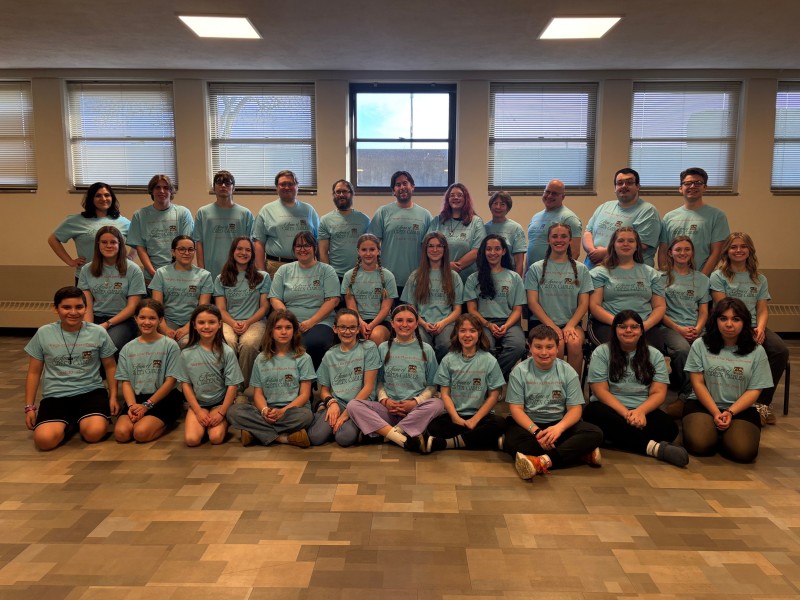
Directed by Elizabeth Smith of Sturgis and adapted from one of the best-selling books in the world, Anne of Green Gables follows Anne Shirley’s journey from a mischievous girl to a young woman, exploring themes of imagination, belonging, and family.
This production spans six years of Anne’s life — from her arrival in Avonlea as a 12-year-old to her young adulthood at 18 as she prepares to set out on her own. The production highlights many of the story’s most beloved moments.
