
Joel Potrykus on Michigan, music, and truly independent filmmaking
“We’re always looking for the dead trees, the dirty water — the ugly spots nobody else is pointing a camera at. Because when I say I’m a Michigan filmmaker, it’s absolutely not in the vein of Pure Michigan tourism ads. That’s not it.”
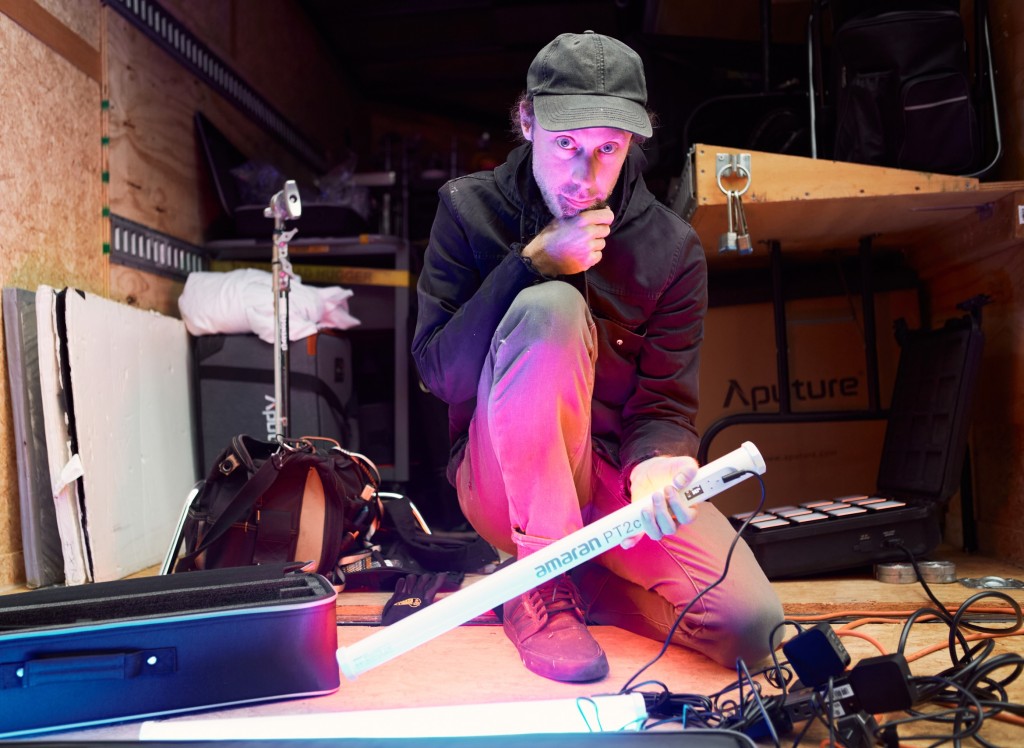
Joel Potrykus — filmmaker, actor, and father — has built recognition far beyond the Midwest, but his work is deeply rooted in Michigan soil. The Grand Rapids-based filmmaker has made five feature films, all shot in his home state, including his latest, Vulcanizadora, which has pushed him to new heights of critical acclaim.
Premiering at the Tribeca Film Festival in 2024, Vulcanizadora earned longtime collaborator and co-star Joshua Burge a Special Jury Mention for Performance, before taking home Best Narrative Feature at the Oak Cliff Film Festival. The film has since screened internationally, receiving universal acclaim and a 98% rating on Rotten Tomatoes, and was praised by The Film Stage as “a dark, hilarious, and contemplative new vision from Joel Potrykus.”
But even as his films travel the globe, Potrykus has never left Michigan — and doesn’t plan to.
A Michigan filmmaker
Potrykus, 48, grew up in Ossineke, a rural town in Alpena County. From there he built a filmmaking life that never strayed far from his home state. He studied film at Grand Valley State University, where he now teaches as an associate professor, and he has shot every one of his films in Michigan, from Grand Rapids to the backwoods of Manistee.
“I stay in Michigan,” Potrykus told Watershed Voice in an interview. “It was never the plan that I was going to be this ultra-committed Michigan filmmaker, and that would be my voice — Michigan films. But I started making movies here because this is where I lived, this is where my friends were, and this is where the people lived who could help me find things. If I needed a restaurant or apartment to shoot in, there were always friends and family around who were willing to help.”
When his first feature film Ape (2012) premiered at the Locarno Film Festival, audiences asked how he’d cleared out the streets to make them look so empty. Potrykus had to laugh — he and his crew hadn’t touched a thing. They were roaming the streets of Grand Rapids with a camera, shooting as they went, without permits or cleared streets. An extension of the wholly independent filmmaking ethos he and his films embody.
“Especially people in Europe — they’re used to seeing LA or New York as America, and they probably don’t get a lot of opportunities to see the Midwest. That’s just how it looks in Grand Rapids when we filmed,” Potrykus said. “That’s when I started to realize that Michigan is just as much of a character in these movies as the people are.”
While other filmmakers fled after Michigan’s film tax incentive ended in 2015, Potrykus stayed.
“They wanted to relocate a movie idea of mine to Louisiana, and I just couldn’t wrap my head around why I’d want to do that,” he said. “Obviously, a tax incentive is a great reason to go to any state to save money. Michigan lost theirs about 10 years ago, and that’s what dissuaded most filmmakers from staying here. But the truth is, my films never even qualified for those incentives, so it didn’t affect me directly. Part of me now just wants to prove people wrong — that you can stay in Michigan, even without an incentive, and still be a relevant filmmaker. At this point it’s just the only place I know how to make movies.”
Though he loves the state, Potrykus’s goal isn’t to beautify it.
“When we’re filming on the beach of Lake Michigan, there’s always the temptation to wait for the sunset and get that amazing cinematic shot of the waves,” he said. “But we don’t want that, because we’ve seen it on a calendar. We’re always looking for the dead trees, the dirty water — the ugly spots nobody else is pointing a camera at. Because when I say I’m a Michigan filmmaker, it’s absolutely not in the vein of Pure Michigan tourism ads. That’s not it.”
Growing up in Ossineke
Potrykus’s hometown and those who grew up around him shaped his approach to filmmaking and creative expression.
“I specifically lived on a dead-end street in this little brand-new subdivision from the mid-70s,” he said. “There were maybe 10 houses, but outside of those it was mostly cows, trees, and farms. So I was pretty isolated. But the kids on my street started to evolve into these intense stoner metalheads, and by the time I was in fifth grade, I was being introduced to thrash metal, death metal, and all things Dungeons & Dragons.”
As he got older, Potrykus got absorbed in rural Alpena’s surprisingly ambitious punk and metal scene.
“We had a really kind of amazing little scene in the early 90s of all these incredibly ambitious and talented metal and punk bands,” he said. “It was a very cool time to be a teenager in Alpena, which is not a place you’d think of as a musical mecca. But for a few years, it absolutely was, and I was lucky to be a part of that.”
That DIY, garage-band ethos stuck with him, eventually becoming the model for how he runs his film sets.
Films like bands
“Everything I do with movies, I relate to music,” Potrykus said. “So many big sets feel like construction work. I wanted it to feel like a band — a small group of people, the same people, everybody with equal creative input. Ideally, we rise up together and make careers together.”
That mentality is evident through his collaborators. His wife produces his films, his brother Chuck designs props (including the “death mask” in Vulcanizadora), and cinematographer Adam Minnick — who grew up in Alpena — drives from Texas with his camera gear to shoot each feature.
“If you’re a punk band, it’s just unheard of that anybody outside of your group would come in there and inject ideas — and that you would take that seriously and listen to it,” Potrykus said. “So many filmmakers have to compromise and try to make everybody happy, and it gets diluted. I just never needed that much money, so I can keep it like a band.”
That commitment extends to those closest to him.
“It really is me, my friends, and family. My wife is my producer. My son acted in Vulcanizadora. And my brother Chuck has always worked in some capacity on everything I’ve made. He was the first person I made movies with in high school.”
Building an army of Michigan filmmakers
Beyond his own work, Potrykus is an associate professor of Film and Video Production at Grand Valley State University.
“They invited me once, about 10 years ago, to come speak to a class after I’d made my first film,” he said. “The students really connected with what I was saying about Michigan and making movies here. The faculty asked if I wanted to teach one screenwriting class, and I loved it. I went and got my master’s degree so I could do it full time. I’ve been teaching for about eight years now.”
Potrykus is determined to empower young filmmakers.
“The first day of class, I tell my students: you are not a student filmmaker. You are a filmmaker,” he said. “Because we’re all still learning, and I want to empower armies of Michigan filmmakers.”
Each summer, Potrykus and his students collaborate on a 20–30 minute short film. These “summer film projects” are part of his own catalog.
“I tell them this isn’t a student film, it’s part of my body of work,” he said. “And they take it just as seriously as my crew does. For students to be involved in a project that ends up on Criterion, that’s amazing.”
Fatherhood and mental health
Vulcanizadora is Potrykus’s fifth feature — following Ape (2012), Buzzard (2014), The Alchemist Cookbook (2016), and Relaxer (2018) — and his first since becoming a father. That new beginning, he says, is embedded all throughout the film.
“There’s a real heavy father-son dynamic in the movie,” he said. “All kinds of new anxieties found their way in — heavier than my previous films. It felt like expelling demons, vomiting out toxic thoughts that are related, sometimes indirectly, to fatherhood. Nobody warned me about those fears. Everyone just talks about the fuzzy times. Those are real, too. But there are weird, dark, scary thoughts that come with having a kid, and that’s what made it into Vulcanizadora.”
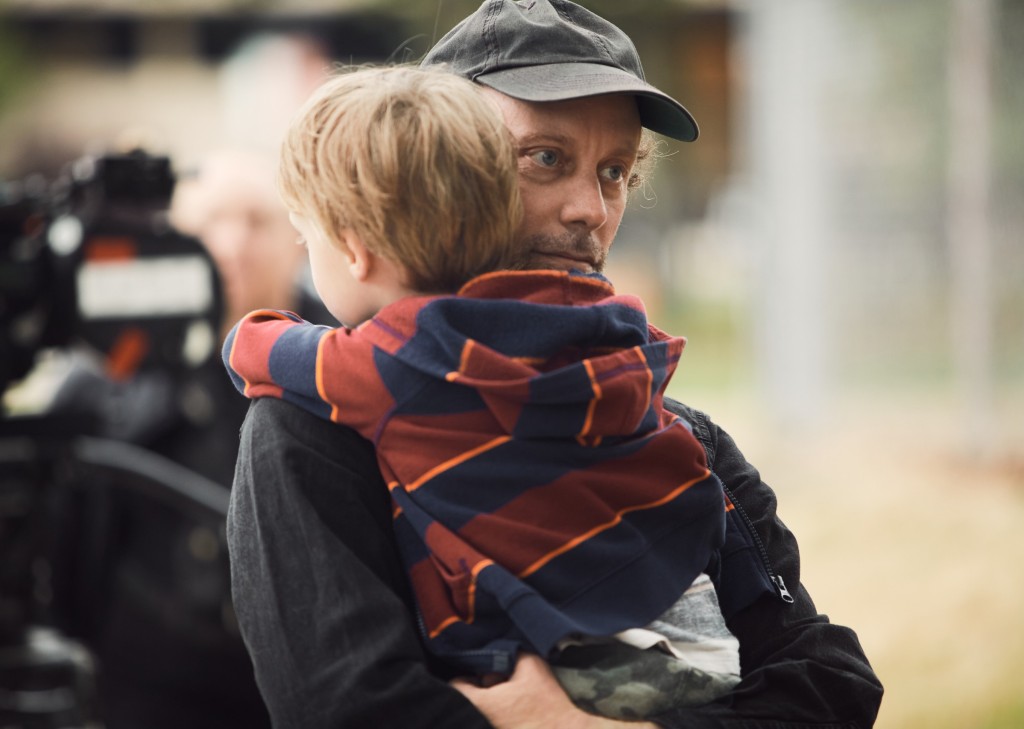
Potrykus also battles situational anxiety, often dreading the stress of film sets. Despite this, he admits he can’t stop making movies.
“I wish I could just stop and ride my bike for a few years,” he said. “But I’ve always got these little ideas that won’t shut up in my head. I have to write them down, and eventually they turn into movies.”
Still, he says, the ideas that won’t leave him alone led to his most accomplished work yet.
“I’m grateful because every new movie I’ve made is what I consider my best work. Vulcanizadora so far is like the pinnacle of what I’ve been trying to do as a filmmaker.”
Maxwell Knauer is a staff writer for Watershed Voice
Author

Related Articles

Watershed Voice: Year in Review
Before our three-week publishing pause, Watershed Voice invites our readers to take a look back at the past year in local news. For Watershed Voice, it was a year marked by change, as we transitioned from one staff writer — Najifa Farhat for the first half of the year — to another, Maxwell Knauer, for the second half of the year.
No matter the author of our stories, we aimed to bring prompt, fact-based, independent reporting to Southwest Michigan. Here’s a look at some of our favorite, most impactful, and most-read stories of 2025.

Doug Sears, Jr.: Shining a Light on Audience Behavior
Watershed Voice’s Doug Sears, Jr. writes about a recent experience at the movie theater that induced anger, reflection, and ultimately empathy.
“My rage was palpable, as movie theater misbehavior is high on my list of modern pet peeves. But I’m trying really hard to stay in the ‘live and let live’ mentality, and I don’t want to compound her distraction by calling it out. I’d hate to initiate a prolonged argument with a stubbornly rude individual and draw everyone in the theater, even those who don’t notice the Beacon of Gondor from their seat, into my distraction.”

Watershed Voice 2025: By the Numbers
As the year comes to an end, Watershed Voice takes a look back at a year of keeping readers across Southwest Michigan informed.
In 2025, Watershed Voice published 322 stories, averaging 27 articles per month. Over the course of the year, our reporting reached 137,762 total page views from 79,435 visitors.
