
‘One Battle After Another’ review: There will be bud
Watershed Voice’s Matt Erspamer says Paul Thomas Anderson’s new film is both a propulsive stoner action comedy and a moving father/daughter tale.
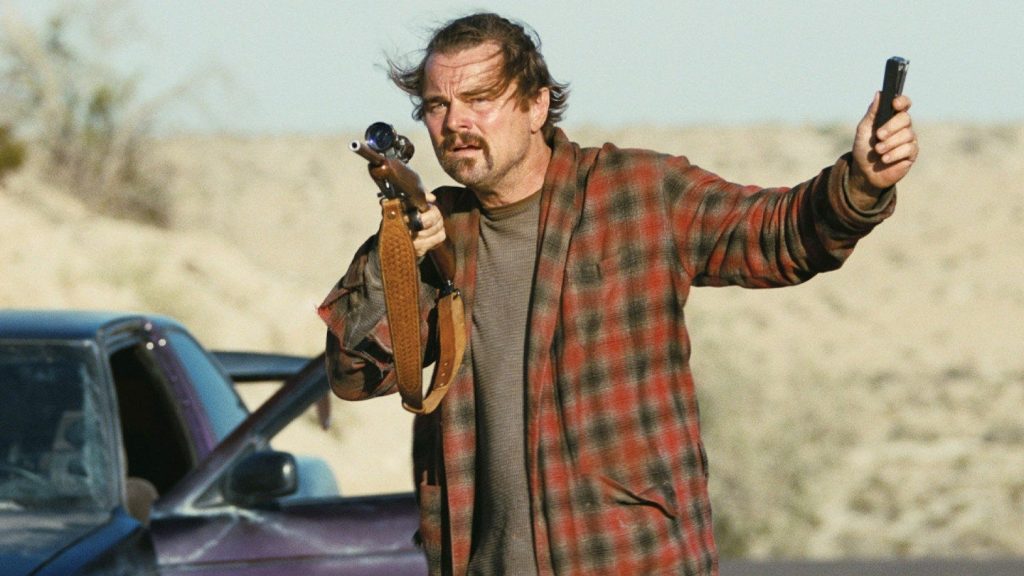
In my favorite moment from Paul Thomas Anderson’s 2014 film Inherent Vice, two lovers walk on a beach, ethereal narration from Joanna Newsom declaring:
“There is no avoiding time. The sea of time. The sea of memory and forgetfulness. The years of promise gone and unrecoverable. Of the land almost allowed to claim its better destiny only to have that claim jumped by evildoers known all too well and taken instead and held hostage to the future we must live in now, forever.”
It begins with a statement that almost every artist who stays around long enough lives to reckon with: Aging, death, the unrelenting passage of time, etc. But it grows more complex with each sentence. Blunt declarations and descriptions turn leisurely on a dime, four short sentences that yield to a fifth that is longer than all of them combined.
In the span of a paragraph, the characters are no longer avoiding time, but resigned to it; along for the ride, or maybe more aptly, passengers on a sinking ship.
Inherent Vice was Anderson’s first direct adaptation of another person’s work, and I can feel his artistic kinship with Thomas Pynchon in the same way I could with the Coen Brothers and Cormac McCarthy. There is a shared authorial sensibility on the page that translates beautifully to the screen in their respective hands.
For his new film, Anderson has returned to Pynchon, sort of.
One Battle After Another is a riff on the author’s Vineland rather than a straightforward rendering. The book chronicles the seismic shifts in American culture from the ’60s to the ‘80s, from the point of view of a former hippie radical during the Reagan years.
Anderson, who for the last 20+ years has become an obsessive chronicler of the bizarre, charming, and violent characters held hostage by various points of the 20th century, here comes storming violently back into the present moment. He transposes elements of Vineland onto the current American political climate, with hilarious yet righteous fury.
Reader, my jaw was on the floor for the first 30 or so minutes of this film, which sees a group of revolutionaries storm an internment camp in southern California, ostensibly sometime in the mid to late 2000s, take federal operatives hostage, and free a slew of immigrants. During this sequence, Anderson immerses us in the intricacies of this organization, The French 75, rapidly establishing inter-group relationships and hierarchies through propulsive action and idiosyncratic performance choices.
We meet nearly all the key players who will pop back up sporadically throughout the movie, save for a middle-aged martial arts instructor and a character who hasn’t been born yet. There’s Bob (Leonardo DiCaprio), a bomb maker; Perfidia (Teyana Taylor), a volatile, determined soldier; Deandra (Regina Hall), a commander of the group; and Col. Lockjaw (Sean Penn), the ruthless, humorless villain who will hunt them all across presidential administrations.
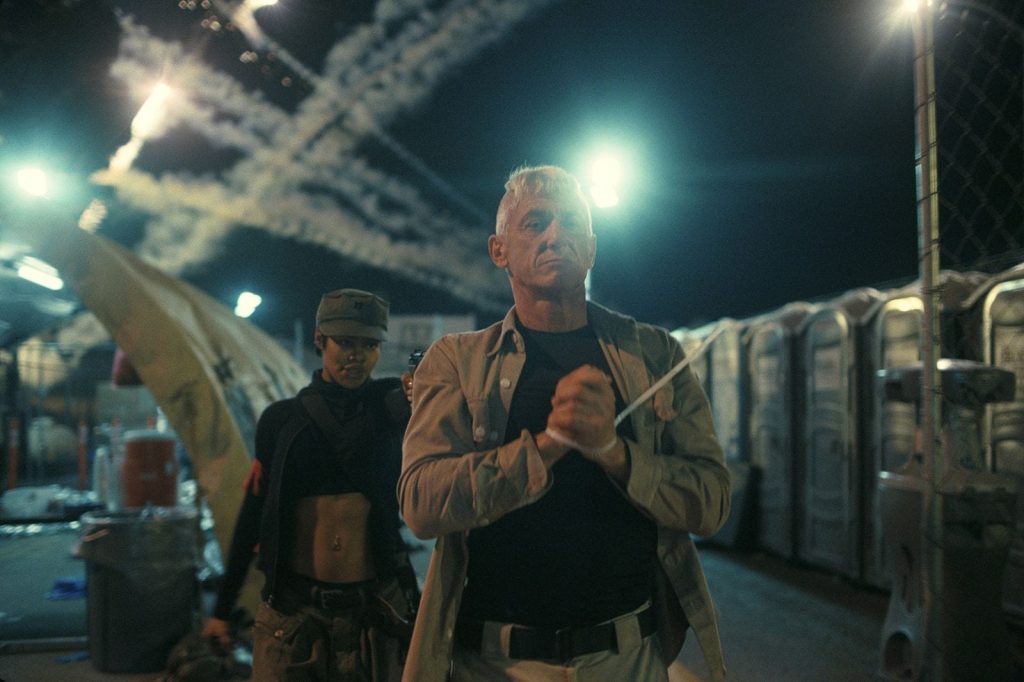
There are many more characters in this sprawling, flash-bang film, but unlike Inherent Vice or an early Anderson film like Magnolia, that sprawl is in service to a story that keeps moving relentlessly forward. While his films have never been boring to me, this one hits at a consistently energetic register that I don’t think he’s attempted since Punch-Drunk Love.
He sustains this pace for 2 hours and 43 minutes, perfectly blending character with increasingly large-scale set pieces. I did not expect an all-up action film from him, but he has made one.
After the initial immigration camp raid, One Battle chronicles the continued exploits of the French 75, and the subsequent fallout. Amid their work, Col. Lockjaw continues to track them, specifically Perfidia. The two have an antagonistic, warped romance; his obsession with her, and other Black women in general, is something that will come to dominate his character and perpetually, comically, ruin his life.
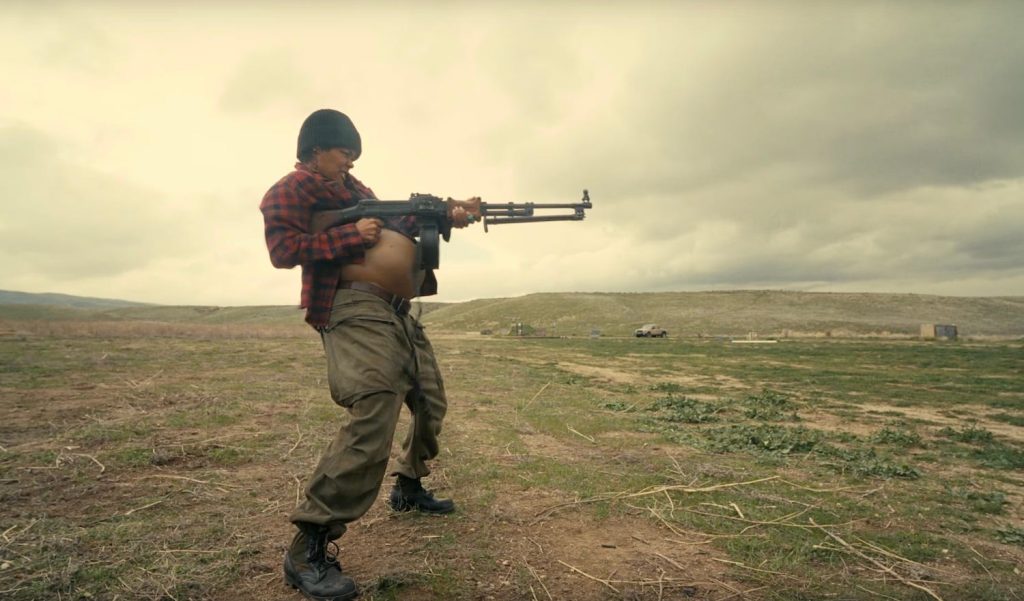
Perfidia is also romantically involved with Bob, and becomes pregnant at one point during this opening stretch. One of the film’s most indelible images is a side profile of Perfidia in a field, firing an assault rifle, her expectant belly poking out of her shirt.
Family life is not for her, though. She flees her life with Bob, leaving him alone with their newborn daughter, Willa. Meanwhile, Lockjaw’s grip on the French 75 tightens; many of its members are hunted down and unceremoniously executed. Perfidia is eventually captured, a horde of officers posing for selfies with her beaten, sullen face.
When news hits that she has turned state’s witness, Bob, Deandra, and other members of the French 75 scatter to the wind. Bob takes Willa to a secluded cabin, off the grid for people accustomed to city life but still close enough to civilization that she can go to school, make friends, and take martial arts classes.
It’s during one of those combat lessons that we learn the movie has jumped ahead 16 years. Willa (Chase Infiniti) is practicing with her Sensei (Benecio Del Toro), who is also secretly involved in the never-ending revolution. The rest of the film takes place in this off-kilter vision of the present, a place where, by Willa’s own admission, “not much has changed.”
The ongoing fight against oppression and government tyranny has continued without Bob, who has withdrawn not only from that fight but from society at large. Now, he is a paranoid stoner who is just trying to be a good dad.
After nearly two decades of silence, Lockjaw resurfaces with a vengeance, and so too do revolutionaries from Bob’s past. This kicks off a relentless odyssey of kidnapping, car chases, white supremacist groups, and radical nunneries. You can sense Pynchonian influence throughout, and Anderson seamlessly transposes it over the story without losing sense of its moment-to-moment urgency.
And One Battle is above all else a battle cry. While it’s set in an alternate historical version of the U.S. and carried swiftly on surges of screwball action, the movie feels bracingly, often alarmingly prescient. Fusing Pynchon’s Reagan-era revolutionary tale with the current political climate pulls out layers of rage and absurdity that are worth citing alongside Radu Jude, a contemporary master of both.
Still, the core of One Battle is a father/daughter story, one about past generations yielding to the wisdom and vigor of younger ones. Anderson conveys this in the film’s structure, hopping back and forth between Bob and Willa’s diverging storylines but giving more and more screen time to the latter as the film continues.
Anderson has always been a great director of actors, and many of his films are explicitly about diverging performance styles. This is a hallmark of There Will Be Blood, The Master, and Phantom Thread, thorny emotional landscapes where classical, composed screen presences do battle with more unwieldy and mischievous ones.
There isn’t the same battle for narrative or thematic control in One Battle, though; instead, Anderson and DiCaprio, who, aside from Tom Cruise, is probably the most famous movie star in the world, repeatedly pass the torch to Infiniti. I found this quite moving, in the fleeting moments where the film stopped to let me catch my breath.
Infiniti gives a star-making turn here; Willa is a character whose practiced composure is repeatedly tested, who has been prepared her whole life for a conspiratorial endgame that she thought was the ramblings of her overly protective pothead dad.

It’s clear to me that, amid all the shootouts, hidden networks, and secret societies, Anderson is acknowledging his unique place in modern cinema, someone who can siphon $150 million from a major studio and come back with this. However, buried within One Battle is a deeply moving and even hopeful confession: The world will outgrow and outlast him, and that’s okay.
One Battle After Another is now playing in theaters.
Matt Erspamer is a writer and movie lover who lives in Seattle.
Any views or opinions expressed in this letter are those of the author and do not necessarily reflect the views or opinions of the Watershed Voice staff or its board of directors.
Related Articles
Watershed Voice: Year in Review
Before our three-week publishing pause, Watershed Voice invites our readers to take a look back at the past year in local news. For Watershed Voice, it was a year marked by change, as we transitioned from one staff writer — Najifa Farhat for the first half of the year — to another, Maxwell Knauer, for the second half of the year.
No matter the author of our stories, we aimed to bring prompt, fact-based, independent reporting to Southwest Michigan. Here’s a look at some of our favorite, most impactful, and most-read stories of 2025.

Doug Sears, Jr.: Shining a Light on Audience Behavior
Watershed Voice’s Doug Sears, Jr. writes about a recent experience at the movie theater that induced anger, reflection, and ultimately empathy.
“My rage was palpable, as movie theater misbehavior is high on my list of modern pet peeves. But I’m trying really hard to stay in the ‘live and let live’ mentality, and I don’t want to compound her distraction by calling it out. I’d hate to initiate a prolonged argument with a stubbornly rude individual and draw everyone in the theater, even those who don’t notice the Beacon of Gondor from their seat, into my distraction.”
Watershed Voice 2025: By the Numbers
As the year comes to an end, Watershed Voice takes a look back at a year of keeping readers across Southwest Michigan informed.
In 2025, Watershed Voice published 322 stories, averaging 27 articles per month. Over the course of the year, our reporting reached 137,762 total page views from 79,435 visitors.
