
Pavilion Township cancels data center hearing as residents organize in opposition
Thursday’s meeting was expected to bring a decision, but the township canceled it because the data center amendment was the only agenda item and the property owner decided to “step back and better inform residents before moving forward,” Township Supervisor John Speeter told Watershed Voice. The proposal is expected to return in November.
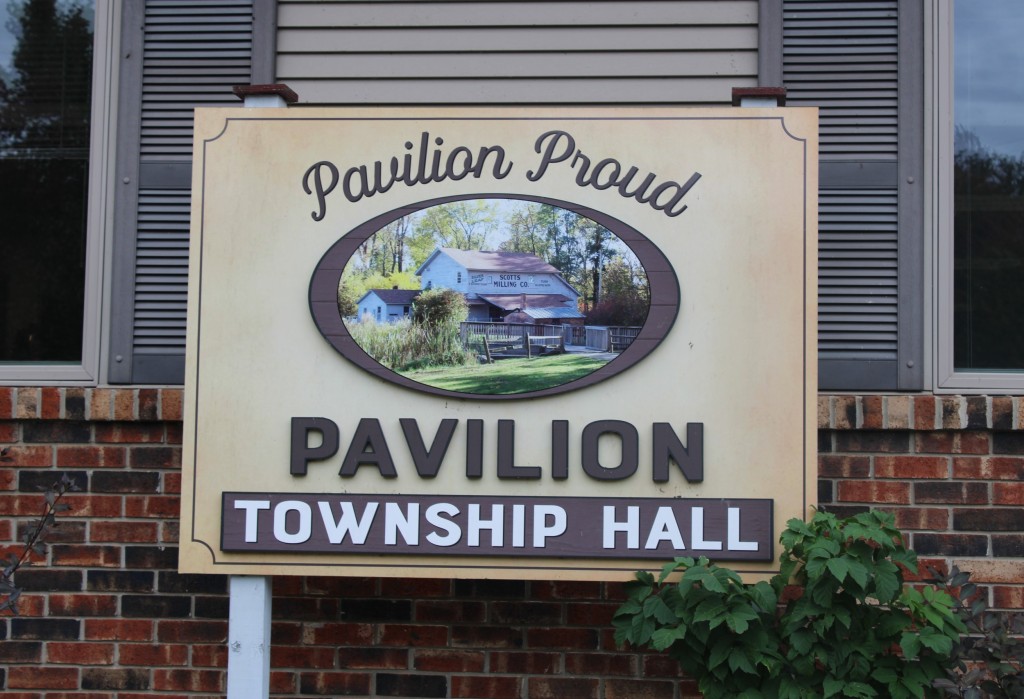
Pavilion Township’s Planning Commission was scheduled to hold a second hearing Thursday, October 16, on a potential “data center” language addition as a special land use in its I-2 zoning district. The commission postponed a vote last month after attendees were unable to review a hard copy of the proposed zoning language changes.
Thursday’s meeting was expected to bring a decision, but the township canceled it because the data center amendment was the only agenda item and the property owner decided to “step back and better inform residents before moving forward,” Township Supervisor John Speeter told Watershed Voice. The proposal is expected to return in November.
The property owner, who has not begun any development, said they plan to hold informational sessions before taking further steps.
After last month’s meeting, many of the more than 60 residents in attendance gathered outside township hall to talk strategy. More than 20 spoke in opposition during public comment, while representatives from Consumers Energy and the property owner were also present.
Retired union organizer Bill Farmer, who spoke during that meeting, began circulating a clipboard to collect names and emails.
“We needed to organize,” he said.
That night he met Katelyn Clarey, a stay-at-home parent and National Guard veteran, who said she had no plans to become an organizer.
“The data center caught my eye. I had no intention of organizing anything,” Clarey said. “I just wanted people to be informed. There was a void of information, and most folks didn’t even know the meeting was happening or what a data center is.”
In the weeks since, Clarey has used her ties through Indivisible Vicksburg, a civic group she helps lead, to give residents a place to talk and plan. The organization already met twice a month to discuss local issues like library funding, and Clarey said the group naturally shifted its focus once the data center proposal surfaced.
“It’s not an informational session about the project itself,” she said, “just an opportunity for people from Pavilion and nearby communities to come together, share concerns, and learn from one another.”
What is a data center?
A data center is a large, warehouse-style facility that houses servers and other computer equipment used to store, process, and transmit digital information for companies and cloud services. These centers often require massive amounts of electricity to power and cool their machines, and some use significant water resources for cooling. While they can bring tax revenue or infrastructure upgrades, they also raise questions about energy demand, environmental impact, and local control — especially in rural or residential areas.
Another key aspect is the disparity between community impact and job creation. Despite their scale and infrastructure needs, data centers typically employ relatively few full-time workers once construction is complete, offering limited long-term economic benefit compared to other types of industrial development.
Community concerns
For many residents, the uncertainty lies in what they don’t yet know. Pavilion Township officials have not released any data on the potential water or energy demand of a future facility, leaving residents to research how data centers have affected other communities.
At present, Pavilion Township has no concrete development proposal — only a zoning language amendment under consideration.
Clarey said her concern began when she learned how large-scale “hyperscale” data centers — the type expected to be developed in Pavilion Township — operate.
“I follow groups that have covered communities where these facilities were built,” she said. “People there talk about higher electricity bills, noise from the cooling systems, and sometimes even air-quality issues.”
Clarey noted while all of these outcomes might not occur in Pavilion, her priority is to make sure residents have enough information to decide for themselves.
“I just wanted a way for people to inform themselves and to be able to talk to other people to learn more about what a data center is, so they can make an informed decision from there,” she said.
Farmer said the issues extend beyond utilities to environmental and quality-of-life impacts.
“We’re talking about water consumption, energy consumption, and the cumulative effect of another industrial-scale project in a rural area,” he said. “A lot of people here are on private wells. They’re not connected to city water or wastewater systems, so there’s concern about what happens if groundwater levels change.”
He added that once zoning changes open the door, the township could lose leverage over the scope of development.
“You can’t easily put the genie back in the bottle,” Farmer said.
Environmental groups such as the Kalamazoo Climate Crisis Coalition have since connected with the Pavilion organizers to share data and advice. Clarey said that partnership has helped residents learn how to evaluate claims about water use and power supply.
Where community efforts stand now
What began as a seven-person email list has grown into more than 200 residents and a Facebook group with nearly 300 members. The network, led by Farmer and Clarey, has become a hub for updates and coordination.
“It wasn’t something I was looking for — I’m an introvert,” Clarey said. “But sometimes you have to do things that make you uncomfortable to grow. I just wanted to make sure people could advocate for themselves.”
Farmer said he was motivated by what he saw as a pattern of decisions made “without due diligence.”
“This started with one phone call that precipitated a proposal to change a zoning ordinance that would affect an entire community without seemingly any due diligence,” he said. “That’s my motivation — this is no different from any other fight for fairness.”
Both organizers emphasized that the group’s work is peaceful and transparent.
“We value peaceful organizing highly,” Clarey said. “We tolerate absolutely [no threats]. We’re here to peacefully collect and respectfully have conversation.”
Farmer, who spent decades as a union organizer for the American Federation of State, County, and Municipal Employees (AFSCME), said Pavilion’s effort is about protecting what residents already have.
“This community wants to protect the elegance that currently exists here — the beauty, the quality of life, the air and water quality,” he said. “There’s agriculture that feeds people. So we’re talking aquifers, electricity, and everything that makes this place livable.”
The group has started reaching out to environmental and energy experts for independent analysis. Clarey said one of their main goals is to separate corporate assurances from independent data.
“Consumers Energy says our rates won’t go up,” she said, “but people already have time-of-use pricing. We just want independent voices who can speak to what really happens when data centers move in.”
Farmer sees their local campaign as part of a larger conversation about who benefits from development.
“All this is man-made — and I’ll say white man-made — for people to gain more power through the accumulation of wealth,” he said. “We’re not the only community fighting this, but what’s missing is connecting the dots about why we’re in this situation.”
The Township website currently states, “Proposed Data Center informational meetings have not been scheduled yet. NO VOTES ON THIS UNTIL NOVEMBER 20,2025.”
Watershed Voice will continue to provide updates on this developing story as they become available.
Maxwell Knauer is a staff writer for Watershed Voice.
Author

Related Articles

Candidate questionnaire: Aaron Miller
Aaron Miller, Sturgis At-Large Commissioner candidate filled out our questionnaire, here are his answers.
Candidate questionnaire: Justin Wickey
Justin Wickey, Sturgis Second Precinct Commissioner candidate filled out our questionnaire, here are his answers.
Candidate questionnaire: Barry Cox
Barry Cox, Sturgis First Precinct Commissioner candidate filled out our questionnaire, here are his answers.
