
Mayor profile: Dowagiac Mayor Patrick Bakeman
Watershed Voice spoke with the new Dowagiac mayor about his first month in office, the goals he hopes to pursue, and his approach to transparency. Bakeman has served as mayor for just over a month, or three City Council meetings. He emphasized that significant policy changes take time.

In November’s election, Bakeman Barbers owner Patrick Bakeman unseated one of Michigan’s longest-serving mayors. Bakeman defeated 27-year incumbent Donald Lyons with 81% of the vote (958), while Lyons received 19% (220).
Watershed Voice spoke with the new Dowagiac mayor about his first month in office, the goals he hopes to pursue, and his approach to transparency. Bakeman has served as mayor for just over a month, or three City Council meetings. He emphasized that significant policy changes take time.
“I’ve been mayor for a month, so it takes time to develop plans. Right now, my main goal is to get a good lay of the land,” Bakeman told Watershed Voice during a phone call Tuesday.
A lifelong Dowagiac resident who is raising three children with his wife, Bakeman said he has been spending as much of his free time at City Hall as possible.
“I’m at City Hall more than I ever have been,” he said. “I would periodically visit before, but now I make it a point, whenever I have free time, to be up there so I can stay as involved as I can be.” Bakeman has served on the Dowagiac City Council for the past eight years.
Goals and initiatives
Before discussing specific goals, Bakeman noted the pace of government and why it exists.
“Government moves slow because there’s a process and procedure things have to go through to ensure they’re being done right and legally, and that we’re using taxpayer dollars efficiently,” he said. “Another thing I learned is that you can be honest and be yourself in this work. It’s politics, but you can still be honest, and I’m doing my best.”
Bakeman said visibility and accessibility are early priorities. As a parent of young children, he said he is naturally out in the community more, giving residents opportunities to share feedback. Being approachable, he said, is important to him in the role.
“As far as plans, my job is to work with our city administration and City Council to develop them,” he said. “Right now, we’re trying to build chemistry and talk about what we want to do and what we want to see together. Then we’ll lay out a plan to implement those ideas. Government isn’t just one person. It’s a whole body, and you need a majority to agree.”
Bakeman avoided overpromising or laying out detailed initiatives, again noting he has only presided over three meetings.
One example he offered was being “tougher on blight,” a frequent concern he said he hears from residents who want the city to be more aggressive in addressing neglected or code-enforcement issues.
Bakeman also said he plans to use the Mayor’s Facebook page for direct communication. He addressed in a post the recently announced closure of Harding’s Market, which will close on January 15, 2026, after decades of operating in Dowagiac.
“Transparency, to me, is people wanting to hear from a person and not an entity,” he said. “That’s why I made a Facebook announcement – a statement from me as the mayor.”
Policy stances
Bakeman discussed several policy areas and how he hopes to support Dowagiac’s growth while highlighting what he described as its family-friendly atmosphere.
On the issue of losing businesses and population – one he identified in his Watershed Voice Candidate Questionnaire — Bakeman pointed to the recent passage of the Sinking Fund millage as a reason for optimism.
“I think one big driver [of business and population decline], even though it’s separate from the city, is the school system,” he said. “The community answered that when they voted in our Sinking Fund. Our schools are going to continue to get better, and that’s important for families. It’s going to be exciting to see what the district can do now with improvements they couldn’t make before.”
When asked for more specific initiatives, Bakeman again noted the pace of government but referenced several ongoing projects, including the South Front Street revitalization project set to begin next year, the construction of a new water treatment plant, and final work on the wastewater treatment plant.
“Brownfield Redevelopment is one area where we want to put information in one place so it’s easier to find,” he said. “It’s tough to speak about details because things must go through City Council. But as we develop plans, we’ll highlight opportunities for the community.”
Bakeman pointed to available industrial properties and new home construction on Washington Street as examples of growth.
“Hopefully that, combined with the schools, will help the city take another step forward as City Council, the administration, and I work together to put plans in place,” he said.
A long-term plan for marijuana revenue was another priority Bakeman listed in his questionnaire. He said the city currently receives “somewhere around $50,000 per license,” with two active licenses. He highlighted projects supported by the revenue, which he referred to as “Wow money.”
“We helped pay for the Russom Park trail,” said Bakeman, who serves on the Russom Park Board. “We just got recognition from the state for that.” He added that the city is considering using the revenue to fund downtown holiday decorations.
“These are improvements people will see and respond to,” he said. “As we fill gaps in the budget, we’ll eventually need a longer-term plan. But the state is also changing how it taxes this revenue, so we’ll have to see how that affects it.”
Returning to his earlier point, Bakeman added, “I’ve been mayor for a month. It takes time to develop plans. My main goal is to get a good lay of the land, build more knowledge as mayor, and then start making those plans. It’s a four-year term, and so far in the first month, we’ve done okay.”
Transparency
Watershed Voice also asked Bakeman about livestreaming Dowagiac City Council meetings. He said he would be open to the idea but noted it must go through the appropriate channels.
“That’s something that will be considered,” he said. “We don’t currently. It has to go through the process, develop a plan, implement it, and then it has to be voted on. Until that happens, nothing is a guarantee. It’s just an idea.”
Maxwell Knauer is a staff writer for Watershed Voice.
Author

Related Articles

Three Rivers Pride pauses festival, identifies key organizational needs
The board, which is made up of four members — President Riley Mains, Secretary Alexis Jacobs, Treasurer Ziggy Standish, and member Desireé Horrocks — said the organization is using this year to strengthen its structure and improve long-term sustainability.
“At this point, we really have to focus on strengthening the organization so that we can provide you all with the festival that the town deserves,” Standish said.
The Pride festival is the group’s largest event of the year and has cost about $20,000 to $35,000 to host in past years, the board told Watershed Voice.
Hyperscale Data announces planned land acquisition; Dowagiac officials say they were not informed
The announcement prompted questions locally, particularly in Dowagiac, where the company already operates a data center. City officials first responded Tuesday morning, saying they were not informed of the planned purchase and have not received any development proposals tied to it.
On Wednesday, April 1, Watershed Voice spoke with Dowagiac City Manager Kevin Anderson, who said the city has no additional information about the property.
“We don’t have any documentation identifying what property this is,” Anderson said. “We’re in the same position as the public.”
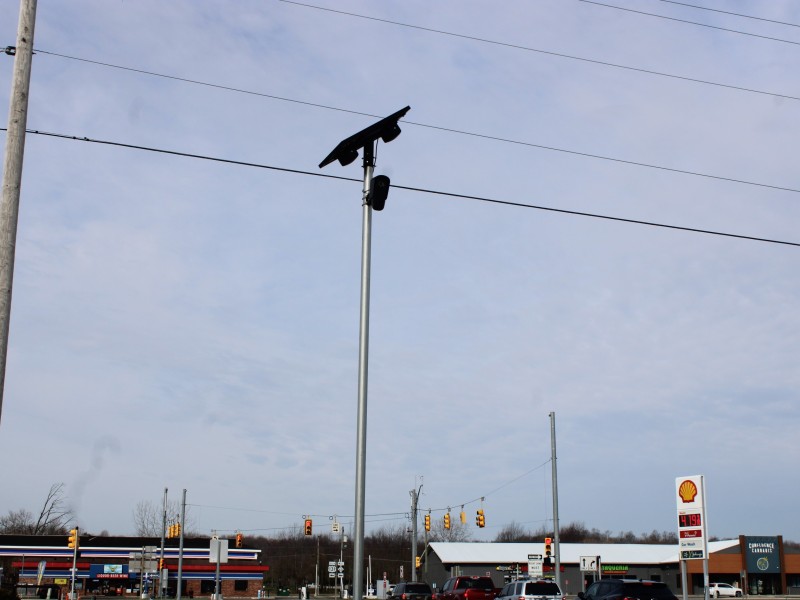
TRPD confirms continued use of Flock surveillance technology, says city added seventh camera in 2025
In an exclusive interview with Watershed Voice, Three Rivers Chief of Police Scott Boling and Detective Sgt. Steven Dibble said the cameras provide an additional investigative tool to help identify vehicles connected to crimes.
Flock Safety’s license plate reader system has drawn national criticism from civil liberties groups, particularly the American Civil Liberties Union, which argues the technology enables a form of mass surveillance that extends beyond its original purpose.
Boling said there is no “backdoor access” to the system, including for federal agencies such as ICE, and that any data sharing must be approved by the department.
