
Chaotic Three Rivers meeting includes emergency briefing, closed-door discussion of city manager
The meeting, which lasted more than three hours Tuesday, included several tense exchanges among commissioners, a closed-door discussion about City Manager Joe Bippus, and an emergency management briefing featuring city officials, first responders, and representatives from the American Red Cross and Samaritan’s Purse.
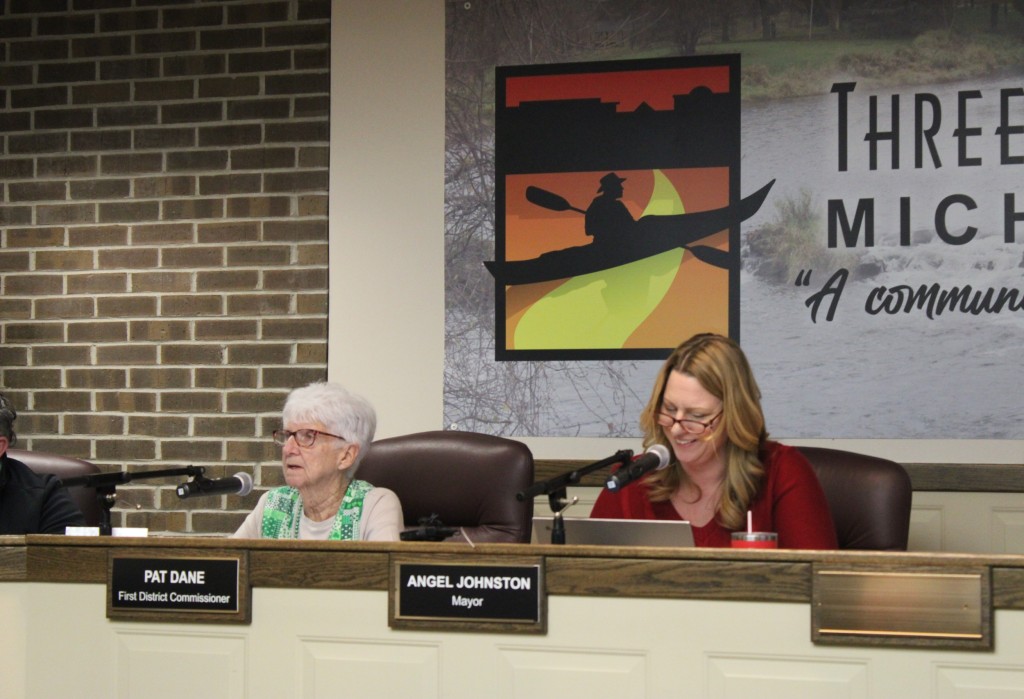
The Three Rivers City Commission met on Tuesday, March 17, for the first time since an EF-2 tornado struck the city on March 6, in a meeting that lasted more than three hours and included an extended emergency management briefing, tense exchanges among commissioners, and a closed-door discussion about City Manager Joe Bippus.
Watershed Voice streams all Three Rivers city commission meetings, including Tuesday’s, which is available to watch on its YouTube channel.
The meeting began with an emergency management briefing featuring city officials, first responders, and representatives from the American Red Cross and Samaritan’s Purse.
City Planner John Beebe said the tornado traveled just over 12 miles through the city with a width of about 450 yards. He estimated roughly 330 structures were affected, including 12 to 15 with “catastrophic” damage and about 45 commercial properties.
Emergency response and challenges
City Manager Joe Bippus opened the briefing by outlining the city’s response and the framework guiding it.
Bippus said the city followed the state’s Emergency Management Act, also known as Act 390 of 1976, which it adopted in 2004.
“It’s the standardized program run throughout the state,” Bippus said, adding that following the framework helps determine eligibility for state reimbursement during recovery.
Fire Chief Paul Schoon then walked through the city’s four-phase emergency response: emergency response, hazard control and infrastructure stabilization, organized community assistance, and long-term recovery.
The first phase focused on life safety and scene stabilization, including immediate response from public safety agencies. Schoon said 10 fire departments assisted, bringing 25 fire trucks and nine ambulances.
“Access is restricted until hazards are controlled,” city staff wrote about phase one in a slideshow presented during the meeting.
The second phase involved clearing hazards such as downed trees and power lines and stabilizing infrastructure.
“Public access and volunteer operations cannot begin until hazards such as live power lines are mitigated,” city staff wrote.
The third phase allowed for organized volunteer efforts, with the city serving as “more of an informational hub,” Schoon said.
“Volunteers must be deployed in controlled and safe conditions,” city staff wrote.
The city is now in the fourth phase — recovery — which Schoon described as a longer-term process focused on returning to normal operations.
Volunteer coordination tensions
Police Chief Scott Boling said one of the biggest challenges during the response was “uncontrolled spontaneous volunteers and curious onlookers,” which he said created safety risks, diverted emergency resources to traffic control, and delayed infrastructure operations.
Boling described an incident the morning after the tornado, when nearly 150 volunteers gathered at the Huss Project to assist with cleanup efforts.
Officers shut down the effort, citing safety concerns.
“We had some liability concerns letting our volunteers into the area because it was not safe,” Boling said during Tuesday’s meeting.
Huss Project co-founder Rob Vander-Giessen Ritesma asked whether volunteers could be redirected to areas without hazards, such as Scidmore Park, however, the chief declined any alternatives and shut the operation down.
Boling reported that an initial search was completed before dark on Friday and a second on Saturday morning.
Aid response
The American Red Cross reported that 40 to 45 homes in St. Joseph County sustained major damage or were destroyed.
The organization opened a shelter in Three Rivers around 8 p.m. Friday, just hours after the tornado hit the city. The organization has since begun what it calls “accelerated outreach,” expected to continue locally for about two weeks, according to Southwest Michigan representative Raul Galvan.
Samaritan’s Purse reported its volunteers have logged about 8,500 hours in the city since the tornado.
The American Red Cross and Samaritan’s Purse were the only organizations that presented reports on their volunteer efforts during the meeting.
State Rep. Steve Carra also addressed the commission following the emergency management presentations.
Public frustrations
During general public comment, a number of residents shared their disappointment with the commission and the way things are going.
Former Commissioner Chris Abel — who chose not to seek reelection this past November — called the commission a “circus.”
“It’s turned into a circus up here, some of you are embarrassing yourself and embarrassing us as a city in front of the camera. I understand you guys are trying to get your 15 minutes of fame but is it really worth it to make the city look like this in front of everybody? Come on guys, do better, please.”
Another resident spoke about Mayor Johnston’s “character assassinations” on City Manager Joe Bippus and expressed frustration with her leadership style.
Multiple other residents spoke in favor of City Manager Bippus during general public comment.
Many residents also spoke out echoing frustrations with the lack of sirens once the tornado was seen and confirmed by city officials.
Tensions over city manager
Following the briefing, commissioners began discussing the city’s emergency response, where tensions quickly escalated.
Johnston had previously told Watershed Voice she intended to call for Bippus’ firing at the meeting, and quickly turned the discussion toward his handling of the city’s emergency response.
“If we’re paying Joe special to be the Emergency Coordinator, and he knows that there’s a storm coming through, and he doesn’t call to have our sirens set off. That is just ungodly to me,” Johnston said before reading her and Bippus’ messages moments before the storm.
“3 minutes. Sirens????” Johnston texted Bippus at 3:51 p.m.
Johnston continued to press Bippus about the sirens before Fire Chief Schoon outlined the city’s policy regarding their use. He said sirens are activated when the National Weather Service issues a warning and are intended primarily for people outdoors to seek shelter.
Schoon added that the city does have the ability to activate sirens independently, however, chose not to do so to avoid confusion. He said the response would be reviewed as part of the city’s post-incident evaluation.
Johnston also questioned Bippus’ salary, citing two different figures — $125,000 and $134,000. City Clerk Leslie Wilson clarified that the difference reflects Bippus’ additional roles, including responsibilities related to emergency management, and public safety.
As the discussion continued, Bippus requested that the conversation be moved into closed session.
City Attorney T.J. Reed confirmed that employees have the right to request closed sessions when discussions involve discipline or performance.
Commissioners then agreed to add a closed session at the end of the meeting to discuss Bippus. All but Commissioner Steven Haigh voted in favor.
No action was taken following the closed session.
Exchange among commissioners
There were several tense exchanges between commissioners throughout the meeting.
The lead-up to the closed session included a tense exchange between Johnston and Commissioner Carolyn McNary, when McNary grew frustrated with Johnston’s comments about Bippus’ salary instead of talking about the city’s tornado response.
“There’s a lot of good things that came out of how our whole city and neighbors and everybody, and now we’re talking about…” McNary began.
“What’s your point of order?” Johnston interrupted.
“My point of order is we’re talking about–” McNary began again.
“Only good things?” Johnston interrupted again.
“No, we’re talking about a salary, whereas we should be talking about,” McNary said.
Johnston again interrupted, asking the city attorney — who serves as the meeting parliamentarian — if McNary’s point of order was valid. Reed said it was before commissioners eventually took a vote to add the closed session at the end of their meeting.
Regular business
Eventually, commissioners moved to the regular business agenda and unanimously approved two items: design services for Middle Street water service replacements and a fireworks permit for the city’s annual Water Festival.
Middle Street, which incurred significant damage from the storm, was already planned for improvements. Commissioners approved the use of $16,500 from the city’s water fund balance to Fleis & VandenBrink for the design and bidding of water service replacements.
The city said it will also be replacing lead service lines on Middle Street as part of the project.
Maxwell Knauer is a staff writer for Watershed Voice.
Author

Related Articles

Keep Your Voice Down: Let’s Talk About Cake
Canadian journalist and baker Chantal Hortop, who serves as managing editor of The Gleaner in Quebec, stops by Keep Your Voice Down to talk cake and shop with hosts Doug Sears, Jr. and Alek Haak-Frost. The wide ranging conversation includes how Chantal and Alek met, the impact of the LION Independent News Sustainability Summit on both their organizations, what local journalism looks like in Canada, and Chantal’s penchant for creating dazzlingly delicious baked goods.

Glen Oaks names more than 335 students to fall 2025 honors lists
Watershed Voice would like to congratulate all students who have made the honor roll on their success and we wish you luck in your continued pursuit of excellence — academic or otherwise.
Students named to the President’s List earned a 4.0 grade point average. Students named to the Dean’s List earned a GPA between 3.75 and 3.99. Students are listed alphabetically by hometown.
Whitmer appoints new judge to Michigan Court of Appeals serving Southwest Michigan
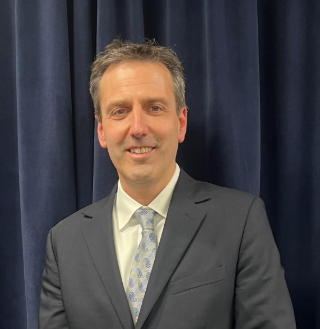
Governor Gretchen Whitmer has appointed Andrew Lievense to the Michigan Court of Appeals, First District, a court that hears appeals affecting residents in Kalamazoo and St. Joseph counties.
Lievense, of Northville, currently serves as an assistant U.S. attorney. He previously worked as a litigation associate at Honigman LLP in Detroit and clerked for U.S. District Judge Avern Cohn.
