
Local meeting primer: Sturgis City Commission
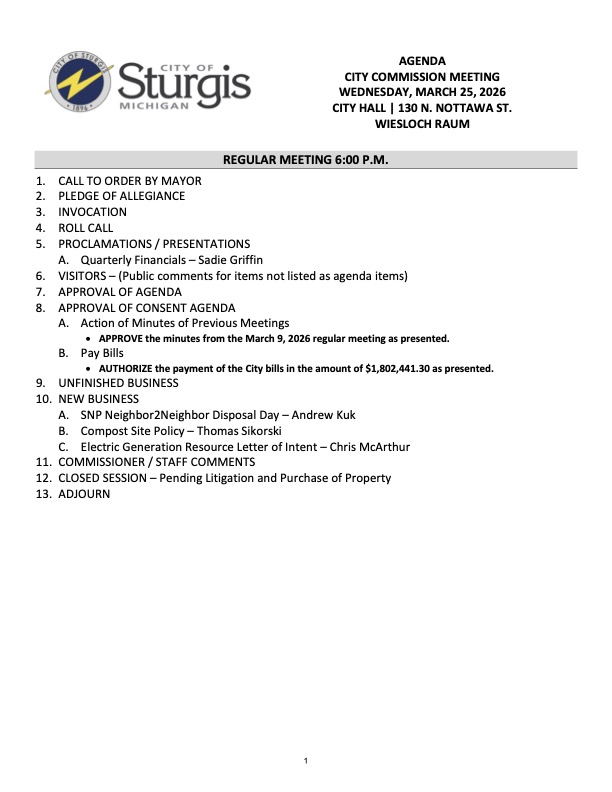
A quarterly finance report, compost site rule changes, and a letter of intent on three electric generators round out the Sturgis City Commission’s agenda for its meeting on Wednesday, March 25.
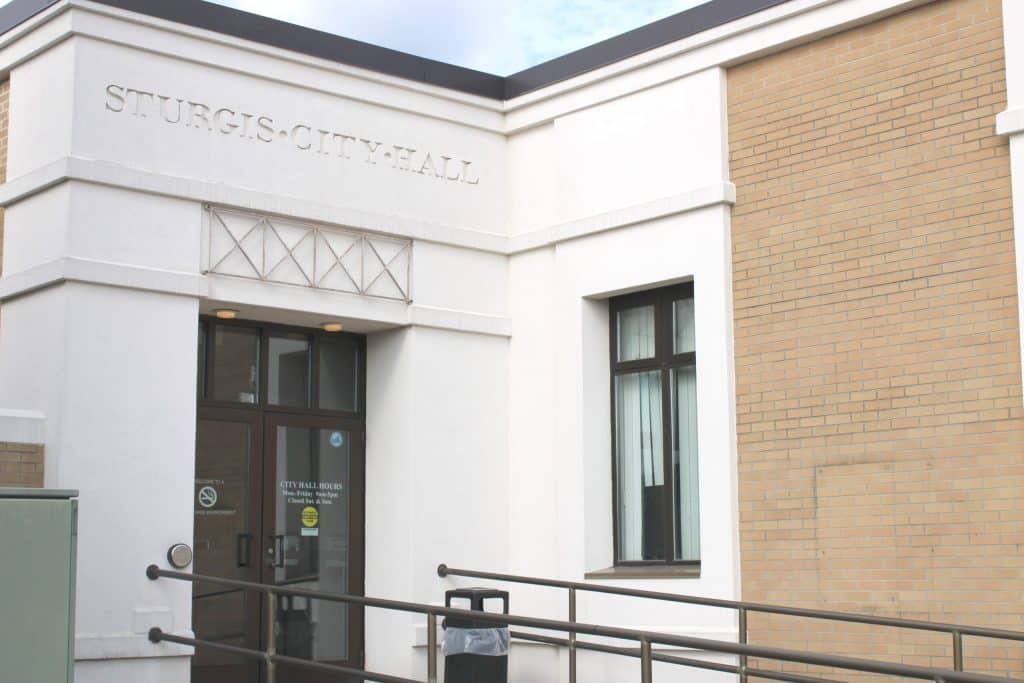
A quarterly finance report, compost site rule changes, and a letter of intent on three electric generators round out the Sturgis City Commission’s agenda for its meeting on Wednesday, March 25. Commissioners will meet for the second time this month.
Commissioners will hear a quarterly financial report from City Controller Sadie Griffin. December marks the end of the first quarter of the City of Sturgis’ fiscal year, and this is Griffin’s first financial report since taking over the position from Julie Berkey, who retired in late 2025.
Griffin will present the numbers and field questions from commissioners.
Griffin’s report shows most revenue items are tracking at or slightly below budget early in the fiscal year, while total expenditures currently exceed revenues by $409,813.
Through the first quarter, the city’s general fund recorded about $2.05 million in revenue and $2.46 million in expenditures — representing 18.6% and 23.7% of the annual budget, respectively.
The city’s general fund has about $955,000 in cash on hand and a total fund balance of roughly $2.9 million.
Property tax revenue totaled about $869,000 for the quarter, up slightly from about $824,000 during the same period last year. Payments in lieu of taxes from city utilities were also slightly higher than last year.
Some revenue sources, particularly state funding, are currently behind budget projections due to the timing of Local Community Stabilization Authority payments, according to the report.
On the spending side, public safety remains the largest category of general fund expenditures, with police and fire services accounting for the majority of costs. Overall spending is tracking slightly ahead of revenue early in the fiscal year.
The quarterly report reflects selected funds and does not include all city operations, such as enterprise funds like electric, water and sewer.
Commissioners will also consider a number of rule changes to the city’s compost site. The site has posed ongoing challenges for staff, who have expressed frustration with misuse. In addition to the proposed policy changes, staff say they are continuing “to refine the layout of the site this year as they look to improve operational flow and address misuse.”
Some of the proposed changes include adding a “large volume drop-off fee” for residential users — a $10 fee for loads of four cubic yards or greater. Generally, four cubic yards or less would cover a full pickup bed or small trailer.
The proposal would also remove language allowing Sturgis Township residents free access to the site. That access was tied to a now-expired 425 agreement — a type of state agreement that allows a city to share tax revenue and services with a township for a defined area of land, often tied to development.
Other changes would restrict which non-residents can purchase a compost pass, limiting eligibility to those within St. Joseph County. The proposal would also change access hours for compost card holders from 24/7 to 7 a.m. to 7 p.m. daily.
Commissioners will also consider a letter of intent related to adding electric generation resources, a project included in the city’s capital plan at roughly $13 million.
The letter outlines a potential future purchase of three natural gas–powered reciprocating engines with a total output of 7.5 megawatts, according to the agenda packet.
The units would be located at the Fawn River Road substation, where a high-pressure gas line is already in place.
City staff say the letter of intent is needed because of rapid changes in the electric industry, with vendor MacAllister CAT reporting increased demand and longer lead times for equipment needed to complete projects.
Commissioners are being asked to approve a non-binding letter of intent signaling support for the project. If the commission later decides not to proceed, the city would not be financially obligated.
Maxwell Knauer is a staff writer for Watershed Voice.
Author

Related Articles

Three Rivers Area Community Foundation awards $20,000 grant to St. Joseph County United Way for tornado recovery
Together with support from the Sturgis Area Community Foundation (SACF), a combined $20,000 grant has been awarded to the St. Joseph County United Way to assist individuals and families impacted by the storm.

Glen Oaks names more than 335 students to fall 2025 honors lists
Watershed Voice would like to congratulate all students who have made the honor roll on their success and we wish you luck in your continued pursuit of excellence — academic or otherwise.
Students named to the President’s List earned a 4.0 grade point average. Students named to the Dean’s List earned a GPA between 3.75 and 3.99. Students are listed alphabetically by hometown.
Whitmer appoints new judge to Michigan Court of Appeals serving Southwest Michigan
Governor Gretchen Whitmer has appointed Andrew Lievense to the Michigan Court of Appeals, First District, a court that hears appeals affecting residents in Kalamazoo and St. Joseph counties.
Lievense, of Northville, currently serves as an assistant U.S. attorney. He previously worked as a litigation associate at Honigman LLP in Detroit and clerked for U.S. District Judge Avern Cohn.
