
State likely to move mental health services from community-informed hands to private insurance companies
The plan would consolidate the state’s 10 Prepaid Inpatient Health Plans (PIHPs) into just three super-regions.
“I worry our clients will just become numbers in a system,” says Amy Davidhizar, provider network manager at Woodlands Behavioral Healthcare Network in Cass County. “We’ve built a safety net that only works because of trust and follow-through. That doesn’t exist when decisions are made hundreds of miles away.”

In a move that local officials and advocates warn could destabilize mental health care across Michigan, the Department of Health and Human Services (MDHHS) has issued a Request for Proposal (RFP) that will likely transfer control of billions in Medicaid behavioral health dollars from public, community-based entities to private insurance companies.
The plan would consolidate the state’s 10 Prepaid Inpatient Health Plans (PIHPs) into just three super-regions. For southwest Michigan, that would mean Southwest Michigan Behavioral Health — which now oversees eight counties — would likely be absorbed into a new 44-county region, governed not by local boards but by insurance carriers.
Local connections at risk
For clients in Cass County, care typically begins at Woodlands Behavioral Healthcare Network, the county’s community mental health agency. Woodlands staff handle crisis calls, perform intake assessments, and connect eligible residents with a network of trusted local providers. That network includes therapists, psychiatrists, residential homes, substance use programs, and vocational supports.
Amy Davidhizar, provider network manager at Woodlands, spends her days building and maintaining those connections. She is the point person for dozens of providers — credentialing them, conducting site audits, and ensuring compliance with Medicaid rules. Just as importantly, she knows which homes are accessible, which staff specialize in certain conditions, and which providers will pick up the phone at 9 p.m. when a crisis hits.
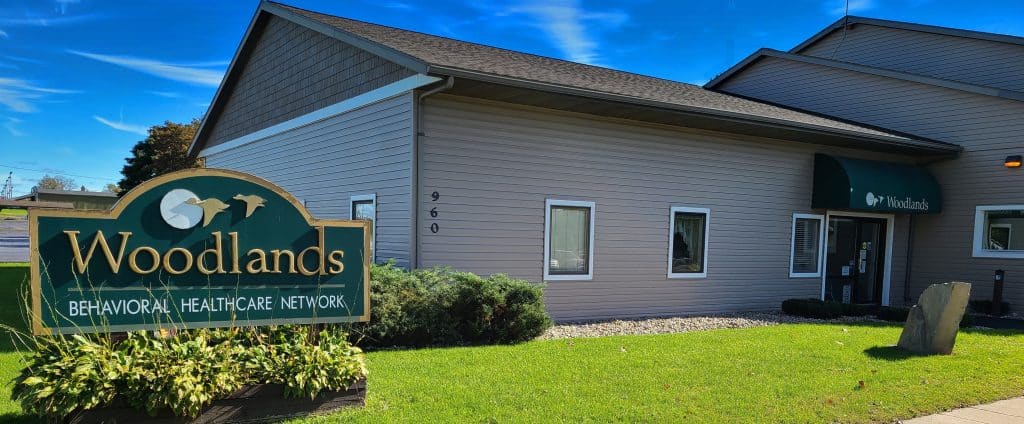
“I spend a great deal of time building relationships with our providers to make sure they’re supported so they can, in turn, support our clients,” Davidhizar said. “With this procurement process, you lose that local knowledge, that local concern and care.”
Under the proposed system, those responsibilities would no longer be delegated to local Community Mental Health Service Programs (CMH) like Woodlands. Instead, providers would contract directly with the new PIHPs — expected to be insurance companies — and authorization decisions would be made by centralized staff overseeing dozens of counties.
“I worry our clients will just become numbers in a system,” Davidhizar said. “We’ve built a safety net that only works because of trust and follow-through. That doesn’t exist when decisions are made hundreds of miles away.”
Why PIHPs are locked out

Since the late 1990s, PIHPs have been responsible for managing Medicaid’s specialty behavioral health carve-out. They were created by law — under the Michigan Mental Health Code — as public entities formed by Community Mental Health boards, which are themselves county-based public authorities.
Robert Sheehan (pictured on the left), CEO of the Community Mental Health Association of Michigan (CMHA), said the state has now turned that structure into a disqualifier.
“The state required PIHPs to be set up with CMHs on their boards,” Sheehan said. “Now they’re saying that makes them ineligible to bid. The way this (Request for Proposal) is written, only insurance companies are positioned to win.”
Not only are the current PIHP’s not in a position to win, they are legally restricted from bidding on the RFP as Michigan law only authorizes each PIHP to operate within its existing service area, and the state’s new RFP redraws the map into three much larger regions that don’t match those boundaries, effectively disqualifying them from bidding on their own procurement process.
The requirements in the proposal go far beyond regional oversight. Winning bidders must demonstrate “immediate operational readiness” to process claims, contract directly with providers, and generate data reports from day one. That’s infrastructure insurers already maintain. PIHPs, designed for local management and quality assurance, would need months or years to build it.
“It’s written for insurance providers,” Sheehan said. “They’re the only ones with the infrastructure.”
How care works now — and how it might change
Today, a Cass County resident seeking help for serious mental illness, substance use, or developmental disabilities starts at Woodlands. After eligibility screening, a clinician designs a treatment plan. Woodlands then connects the client to providers in its network — often people they know personally.
Funding flows through Southwest Michigan Behavioral Health, the PIHP that holds the Medicaid dollars and authorizes care. Clients have rights to appeals if services are denied, and complaints are reviewed by Recipient Rights offices.
If the state’s plan proceeds, insurers like Blue Cross or Meridian would take over. That would mean:
- Prior authorizations and utilization reviews before many services are approved.
- Narrower provider networks, cutting out some smaller or rural agencies.
- Appeals and oversight housed within the insurer’s system, not open public meetings.
- More documentation and re-certification requirements for clients already struggling to navigate the system.
“Our clients already face enormous barriers,” Sheehan said. “If you add layers of bureaucracy, they’ll fall through the cracks. A person with schizophrenia may have to prove their diagnosis every six months. Someone with cerebral palsy may have to prove it over and over just to keep services. These are people whose lives literally depend on stability.”
Transparency on the line
Currently, PIHPs operate as public or quasi-public entities. That means their board meetings are subject to the Open Meetings Act. Their financial records — budgets, audits, Medicaid settlements — are available through the Freedom of Information Act. Their board members are appointed by county commissions, giving residents a direct line of accountability.
All of that would disappear under insurers.
“A private insurance company is not going to open its books to the public,” Sheehan said. “They’re not going to let people see their authorization process. They’re not going to open their board meetings. That’s just not how they operate.”
The state has suggested it could require insurers to comply with transparency laws, but Sheehan is skeptical. “I’ll believe that when I see it,” he said. “Six years ago they made the same claim, and insurers flat-out said those laws don’t apply to them.”
In a statement to Watershed Voice, the Michigan Department of Health and Human Services defended the RFP as a way to improve quality and accountability. The department said the plan was shaped by “extensive feedback” from beneficiaries, families, and advocates, who cited fragmentation and inconsistency as major problems with the current 10-PIHP structure. The RFP, MDHHS noted, requires compliance with the Open Meetings and Freedom of Information acts, restricts eligibility to nonprofit entities, and prioritizes proposals from public or public-private partnerships.
“This procurement reflects significant structural changes designed to improve service quality, increase accountability, and enhance administrative efficiency,” the department said.
A financial shift
The dollars at stake are significant. Michigan’s public PIHPs currently operate on roughly $4 billion annually. According to Sheehan, overhead in the public system averages just 2%. Private insurers typically keep 15% or more.
“That difference is half a billion dollars,” Sheehan said. “That’s half a billion cut directly from services if this goes through.”
Davidhizar worries rural areas like Cass County will be hit hardest. “It’s already difficult to recruit providers out here,” she said. “Cutting rates or adding more hoops isn’t going to help. People will go without care.”
Legal and political pushback
The pushback has been swift. Earlier this month, three PIHPs — Region 10 PIHP, Southwest Michigan Behavioral Health, and Mid-State Health Network — alongside a number of local providers , filed a lawsuit in the Michigan Court of Claims to stop the rebidding process, arguing it violates the state’s mental health code, which requires the state to fund community mental health programs.
Dozens of county commissions across Michigan — including Allegan, Berrien, Macomb, Oakland, Saginaw, Van Buren, and Washtenaw — have passed formal resolutions opposing the state’s plan. Major advocacy groups such as NAMI Michigan, the Arc of Michigan, the Association for Children’s Mental Health, the National Association of Social Workers–Michigan, and the Michigan Psychological Association signed onto an open letter urging MDHHS to withdraw the RFP. They were joined by the Michigan Association of Counties, AFSCME Council 25, the Michigan Catholic Conference, Integrated Services of Kalamazoo, Macomb County Community Mental Health, and more than 50 CMHs and PIHPs statewide.
Advocates and families held a rally at the Capitol last week.
“This is not something to stand by and watch unfold,” Sheehan said. “We’ve had over 5,000 emails sent to lawmakers in the past few weeks. People need to make their voices heard.”
What’s at stake
For Sheehan, the bottom line is simple: safety nets don’t exist in the private market.
“Community mental health centers can’t leave town,” he said. “We’re like a fire department. Insurance companies can. Providers can. And when they do, it’s the most vulnerable people in Michigan who are abandoned.”
Davidhizar sees the same risk from the ground level. “If we didn’t have the team we have, so many people would fall through the cracks,” she said. “They’re not going to advocate for themselves. They’re not going to chase down case managers. Some are nonverbal. Some rely on us for housing, food, or just getting through the day. Without these services, their lives would unravel.”
The RFP bids are due in October, with contracts expected to begin October 1, 2026. Unless the lawsuit or legislative action halts the process, Michigan’s public mental health system could soon be privatized.
Sheehan urged residents to stay engaged. “This is a political third rail,” he said. “If enough people speak out, the administration can stop it. But if they don’t, the safety net we’ve built for 60 years could disappear almost overnight.”
Maxwell Knauer is a staff writer for Watershed Voice.
Author

Related Articles
OutCenter hosting open house Friday in downtown Dowagiac
“We’re talking about a sizable portion of our communities that need support, need to be able to find community, and need folks out there that are advocating for them,” Executive Director Gerik Maverick said. “We have been working with schools for just over a decade. We work with healthcare systems on training to make sure folks are able to get resources. We’re working with the area agency on aging on some very exciting new projects.”
Three Rivers Athletic Club to host ribbon cutting ceremony Friday
The fitness center once thought to be closing for good will host a ribbon-cutting ceremony Friday after its new owners reopened the gym under a new name, Three Rivers Athletic Club.

Findings of investigation into Sturgis City Commission conduct leaves key questions unanswered
After a closed session during their September 23 meeting, the Sturgis City Commission unanimously voted to release the findings of the external investigation by Miller Johnson that looked into alleged wrongdoing by commissioners. The report details the events leading up to the public controversy, the investigator’s findings, and his legal conclusions regarding the commissioners’ conduct.
This story presents the events chronologically, drawing on the investigator’s findings and the accounts of those interviewed.
