
Three Rivers mayor proposes homelessness prevention and response task force
The task force could include seven to 15 members appointed by the mayor and city commission, including city leadership (mayor or designee, police chief and city manager), a county Department of Health and Human Services representative, a school district liaison, a local housing authority or landlord representative, a mental health provider, a nonprofit or faith-based representative, a foster care transition coordinator, two community members with lived experience, a local business representative and, if possible, a legal aid or court representative.
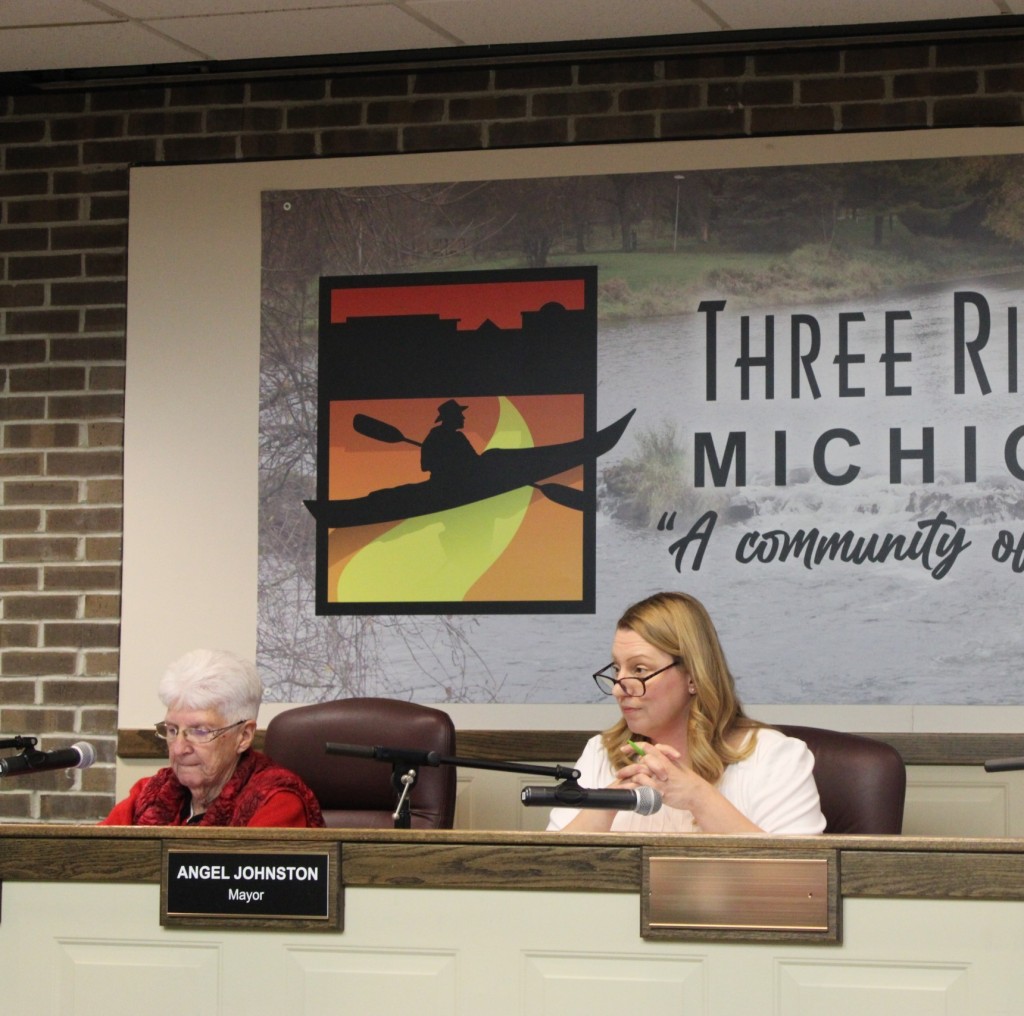
On Wednesday afternoon, Mayor Angel Johnston wrote in a Facebook post that she, City Manager Joe Bippus, and City Attorney TJ Reed discussed how the city could work to “reduce the number of problematic homeless encampments” in Three Rivers.
Johnston wrote that the three agreed the city needs to be more proactive in getting feedback from residents when issues arise, adding, “If you see something, say something.”
Johnston has developed a tentative plan for a “Homelessness Prevention and Response Task Force,” which she plans to present and discuss with the city commission at its next meeting on January 6, 2026. According to Johnston’s post, the task force’s mission would be to “ensure that everyone is treated with dignity and compassion and has access to all available resources, while balancing community safety, too.”
Johnston shared an outline of the proposal with Watershed Voice and discussed its goals, details and potential challenges, emphasizing that the idea is still in its early stages.
“This is just a proposal. Nothing is set in stone,” Johnston said. “If people who are smarter than me and have more experience than me — which I hope to gather — come in and say, ‘Actually, this should be a third-quarter goal,’ or, ‘Instead of this, we should do that,’ I’m all ears. This is really just to get the conversation started.”
According to the document, the task force would include seven to 15 members appointed by the mayor and city commission, including city leadership (mayor or designee, police chief and city manager), a county Department of Health and Human Services representative, a school district liaison, a local housing authority or landlord representative, a mental health provider, a nonprofit or faith-based representative, a foster care transition coordinator, two community members with lived experience, a local business representative and, if possible, a legal aid or court representative.
The board would serve in an advisory role, bringing ideas developed during its monthly meetings to the city commission. Several of the proposed member backgrounds could also allow the task force to coordinate with existing efforts throughout Three Rivers.
Johnston said her initial focus would be on establishing the group and identifying existing services.
“We need to establish it. We need to find the people,” she said. “One of the hardest parts is going to be getting the volunteers. And we can measure our success or failure by whether or not we established it and got it full of volunteers. Were we able to map existing services and identify overlaps and gaps?”
When asked how the proposal addresses the immediate need to keep people experiencing homelessness out of the cold, Johnston said she does not yet have answers, and emphasized the task force is still far from being established.
“I don’t have the answers. I’m very open about that,” Johnston said. “Maybe ask me again next winter, and I’ll have something better for you. I don’t have a magic wand to wave. I wish I did, because getting people out of the cold would be one of the first things I’d wave it for.”
What would the task force provide?
Johnston said one potential role of the task force would be ensuring residents are aware of available resources and helping people make more informed financial decisions. She said her academic study of homelessness often showed that relatively small financial setbacks — sometimes only a few hundred dollars — can be the tipping point between someone remaining housed and becoming homeless.
“I think a lot of times, for some folks, it is a matter of helping them juggle their money and make better decisions,” she said.
She also said she has had preliminary conversations with a local church about potentially offering cooking classes, though she declined to name the church because discussions are still early.
Johnston said homelessness is a complex issue and reiterated she does not have solutions for every contributing factor, such as addiction, generational poverty or aging out of foster care.
“I don’t want to prescribe something that I don’t truly understand,” she said. “So I need the right people all in the room together to bounce ideas off each other.”
She said much of the group’s early work could involve brainstorming and identifying next steps.
As a measure of success, Johnston said she would like to see resources clearly mapped and accessible.
“I would like to be able to say that we have all of our resources mapped, that anybody who is about to become homeless or is currently homeless knows where to go for help,” she said. “I want to make sure that resources are obvious and accessible. I want them to be hard to miss, not hard to find.”
Johnston said that information could be shared through a hotline or a clearly marked section of the city’s website, rather than relying on police officers to serve as the primary point of contact.
“I would like to see a hotline established. I don’t know how we’re going to fund that,” she said. “But even just a really obvious tab on a website that can be promoted on social media, that has accessible information.”
She added that fear of embarrassment can prevent people from asking for help and said she would want the process to be as low-barrier as possible.
Johnston also suggested creating business card-sized resource guides with hotline numbers or service information that could be distributed by city staff.
Another idea included in the proposal is a “no wrong door” policy, meaning anyone seeking help — whether at city hall, the library or a police station — would be directed to appropriate resources rather than turned away.
Timeline
Johnston said the earliest realistic start for the task force would be Q2 of next year. If approved by the commission, the city would begin seeking members, after which the group would meet monthly and provide updates to the commission.
“I would say the first real quarter is going to be Q2 of next year,” Johnston said. “But I will be going out begging people to join this board, come to the meetings and try to participate in whatever way they can.”
Maxwell Knauer is a staff writer for Watershed Voice.
Author

Related Articles
Watershed Voice’s warming shelter resource list
As winter continues and temperatures stay unbearably cold, Watershed Voice has compiled a list of warming centers in St. Joseph and Cass counties. If you know of any additional resources, please share them with maxwell@watershedvoice.com so they can be added to this list.

Letter to the Editor: Not Left, Not Right. Together.
Layne Deuel of Lockport Township writes, “I humbly ask that all of us stand up to ICE and demand immediate, tangible change to this armed force. By speaking out, it does not make you less conservative or more liberal, it makes you truly American. The rebellious spirit to stand up to the wolf at the door is something that has been instilled in all of us. We cannot let that fire burn out now. We must stand together and push for change immediately. As Americans, we cannot fail the spirit of Americans before us or those who come after us.”

Watershed Voice: Year in Review
Before our three-week publishing pause, Watershed Voice invites our readers to take a look back at the past year in local news. For Watershed Voice, it was a year marked by change, as we transitioned from one staff writer — Najifa Farhat for the first half of the year — to another, Maxwell Knauer, for the second half of the year.
No matter the author of our stories, we aimed to bring prompt, fact-based, independent reporting to Southwest Michigan. Here’s a look at some of our favorite, most impactful, and most-read stories of 2025.
