
When silence is betrayal: Am I not my brother’s keeper?
“White Americans, no matter their profession or standing in life, can no longer stand silent. We can no longer quietly judge the actions of others and hope the problem will fix itself, because it won’t.”

The fatal shooting of Ahmaud Arbery, a 25-year-old black man who was shot down in broad daylight by two white men in February after being misidentified as a burglar, is nothing new.
Arbery had committed no crime before he was killed but neither did Emmett Till, Brandon McClelland, Trayvon Martin, Oscar Grant, Botham Jean or countless other African Americans who have died as a result of racial profiling and white fear.
As a white heterosexual male born and raised in America I do not have to live in fear of similar harm based on the color of my skin, my gender or sexual preference. It’s called privilege and I’m well aware I have plenty of it.
But I won’t hide behind it, I won’t stand by and say nothing while my brothers and sisters are targeted for simply being. It shouldn’t be OK and it isn’t, and while I can’t begin to solve the myriad of issues related to race in America, I can speak up and so can you.
“Religion reminds every man that he is his brother’s keeper. To accept injustice or segregation passively is to say to the oppressor that his actions are morally right. It is a way of allowing his conscience to fall asleep. At this moment the oppressed fails to be his brother’s keeper. So acquiescence, while often the easier way, is not the moral way. It is the way of the coward.” — Martin Luther King, Jr.
“Stride Toward Freedom: The Montgomery Story”
Dr. Martin Luther King, Jr. wrote a great many things about racial inequality and injustice during the Civil Rights movement in the 1950s and 1960s, but what stuck with me most since I first learned about Dr. King in grade school were his thoughts on the importance of speaking up when you encounter injustice.
In Stride Toward Freedom: The Montgomery Story, King writes about “acquiescence” or the reluctant acceptance of something without protest, and how the act, or better yet the inaction, only “engulfs the life of the oppressed.”
“[…] But this is not the way out. To accept passively an unjust system is to cooperate with that system; thereby the oppressed become as evil as the oppressor. Non-cooperation with evil is as much a moral obligation as is cooperation with good. The oppressed must never allow the conscience of the oppressor to slumber,” King wrote. “Religion reminds every man that he is his brother’s keeper. To accept injustice or segregation passively is to say to the oppressor that his actions are morally right. It is a way of allowing his conscience to fall asleep. At this moment the oppressed fails to be his brother’s keeper. So acquiescence, while often the easier way, is not the moral way. It is the way of the coward. […]”
White Americans, no matter their profession or standing in life, can no longer stand silent. We can no longer quietly judge the actions of others and hope the problem will fix itself, because it won’t. As King wrote in his essay Letter from Birmingham City Jail, accepting “negative peace” will accomplish nothing.
“[…] First, I must confess that over the last few years I have been gravely disappointed with the white moderate,” King wrote. “I have almost reached the regrettable conclusion that the Negro’s great stumbling block in the stride toward freedom is not the White Citizen’s Councilor or the Ku Klux Klanner, but the white moderate who is more devoted to ‘order’ than to injustice, who prefers a negative peace which is the absence of tension to a positive peace which is the presence of justice; who constantly says, ‘I agree with you in the goal you seek, but I can’t agree with your methods of direct action;’ who paternalistically feels that he can set the timetable for another man’s freedom; who lives by the myth of time and who constantly advised the Negro to wait until a ‘more convenient season.’ Shallow understanding from people of good will is more frustrating than absolute misunderstanding from people of ill will. Lukewarm acceptance is much more bewildering than outright rejection.”
There will never be a “more convenient season,” and curing this ill will never be easy no matter how long we wait. As Caucasian Americans we must expose these injustices “with all of the tension its exposing creates, to the light of human conscience and the air of national opinion before it can be cured.”
Alek Haak-Frost is the executive editor of Watershed Voice.
Any views or opinions expressed in this editorial are those of the author and do not necessarily reflect the views or opinions of the Watershed Voice staff or its board of directors.
Author

Related Articles
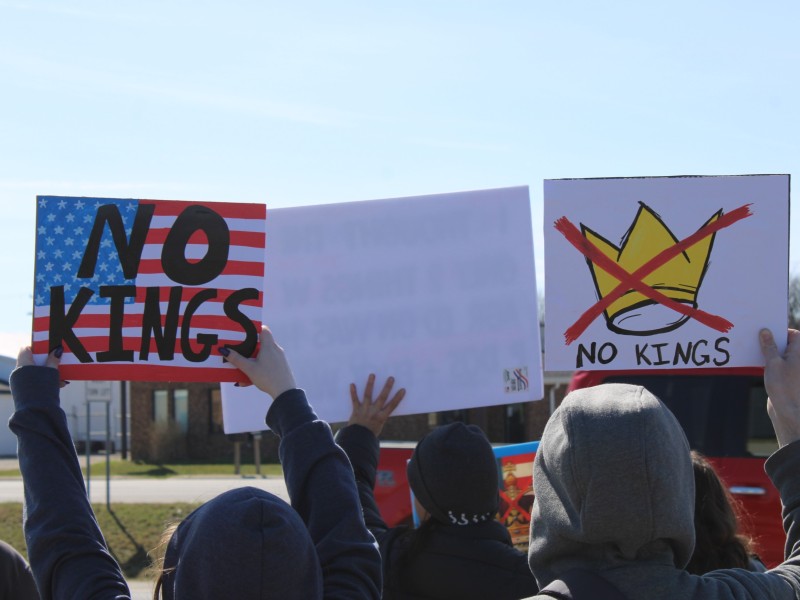
Over 350 gather for No Kings rally in Three Rivers
More than 350 people gathered at the corner of U.S. 131 and Michigan Avenue on Saturday, March 28, from 3 to 4 p.m. Supportive drivers honked as they passed, while others shouted at demonstrators from their vehicles. At least two trucks repeatedly drove past the crowd in the lane closest to the sidewalk, revving their engines and emitting diesel exhaust toward protesters.
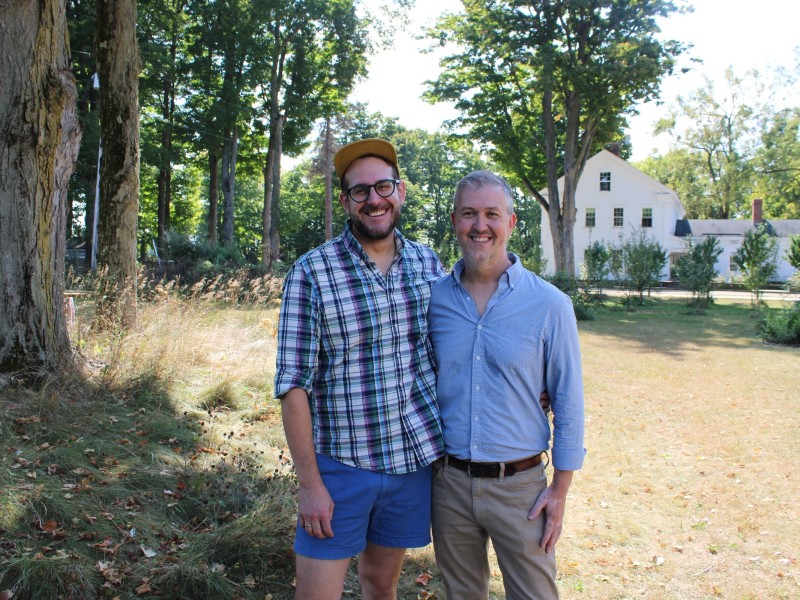
Farrand Hall hits market as owners look to pass the torch
For now, co-founder James Gray said he hopes people see the sale not as an ending forced by controversy, but as a handoff.
“Like many businesses, they get sold, owners pass the torch,” he said. “It’s a great thing that we were able to build something that could be sold. We are excited to see it continue with new ownership.”
He added: “We truly believe Farrand Hall has a soul mate out there and that person will give this property the same love and dedication that we gave it.”
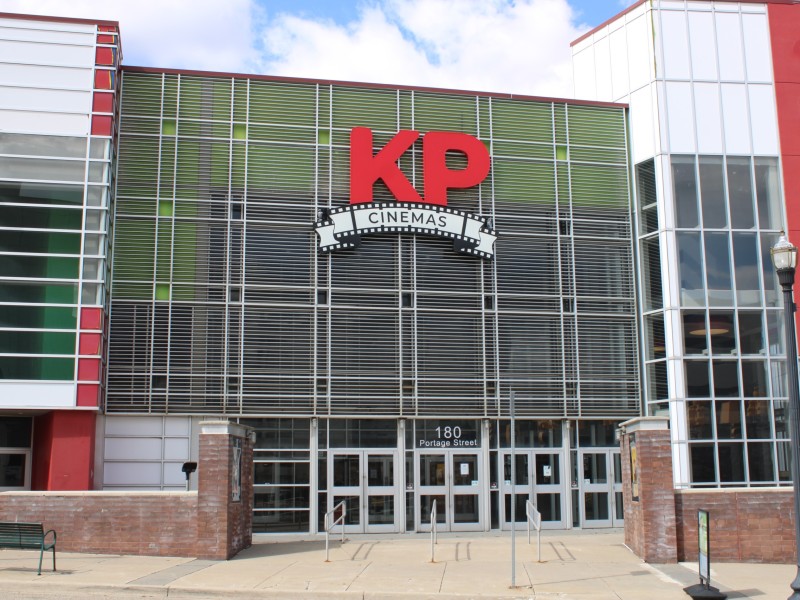
Local stories hit the big screen at Kalamazoo Film Society’s fourth annual showcase
The event features mostly filmmakers from Kalamazoo and the surrounding region, with films shot in — and in some cases about — the city itself.
One of the featured filmmakers, Jerod Kauffman, created a documentary about the final days of the longtime dive bar Harvey’s on the Mall, which closed after a buyout. Kauffman said he wanted to capture the story of a place that helped define Kalamazoo’s nightlife culture.
“The closure was sudden to everyone — the community and staff — so I wanted to immortalize a place that was loved by so many,” Kauffman wrote to Watershed Voice. “I saw a fence and bulldozer outside the building today on the way to work. I think it’s going to be torn down, so I am happy I was able to capture a piece of Kalamazoo history and the bar that stood and served the community for 40+ years.”
