
Federal funding freeze affects grant renewal for crime reduction technology used by Three Rivers Police
While the department’s primary funding comes from the city’s budget, special projects and initiatives often rely on federal grants. After successfully implementing a crime reduction program for a year, the department planned to apply for renewed funding but that was put on hold due to the federal funding freeze.
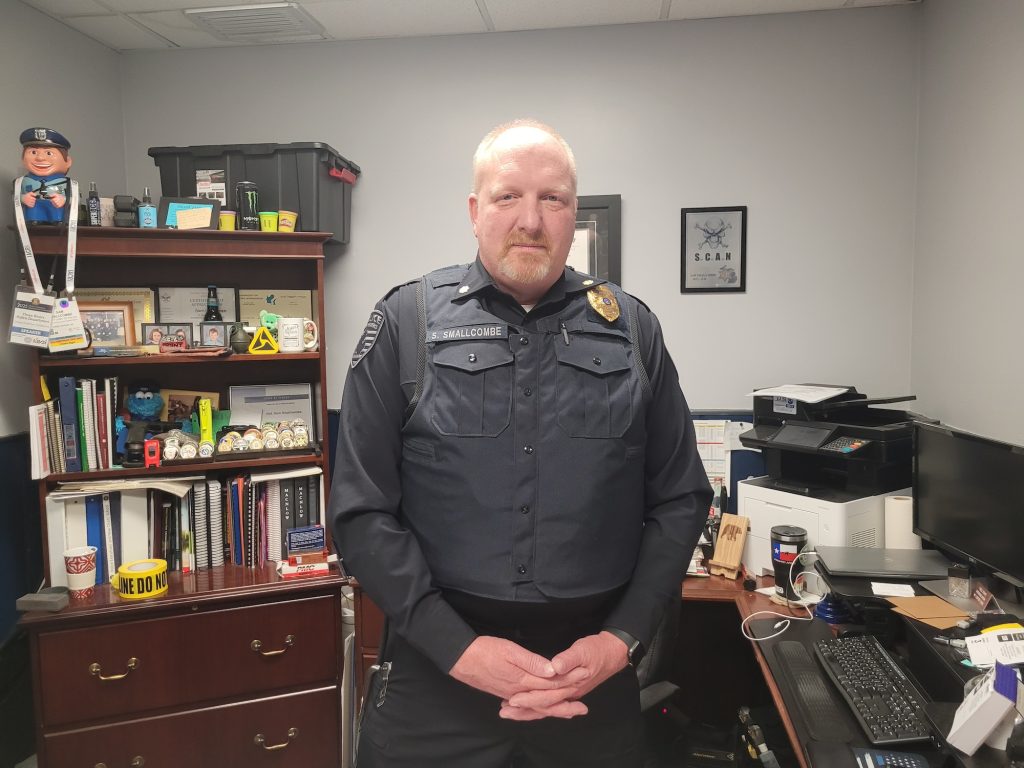
The Three Rivers Police Department had intended to use a $36,000 federal grant for license plate readers throughout the city but due to a federal funding freeze, those plans are on hold. After successfully implementing the program for a year, the department planned to apply for renewed funding but encountered an unexpected hurdle.
Deputy Chief of Police Sam Smallcombe in an exclusive interview with Watershed Voice, said the department initially received a two-year grant from the Justice Department’s Rural Violent Crime Reduction Initiative (RVRI) in 2023.
“We have funded several license plate readers that are throughout the city with the grant we received two years ago,” Smallcombe said. “We’ve had a lot of success with them, and we’d like to keep it going. But when we reapplied in January, the Justice Department told us, ‘We’d love to, but we’re locked.’”
According to Smallcombe, the freeze means all federal funding is currently under review. While the department’s primary funding comes from the city’s budget, special projects and initiatives often rely on federal grants, including RVRI. As of now, no other projects have been affected, but Smallcombe acknowledged that several programs tied to federal funding remain uncertain.
The deputy chief also discussed staffing changes within the department over the past year, the city’s current law enforcement challenges, and future goals.
Over the past year, several experienced officers have left, prompting promotions and new hires. Smallcombe himself was recently promoted to deputy chief, while longtime canine officer Steve Dibble was elevated to detective sergeant. The department has also brought in new patrol officers, who are currently undergoing training.
“So we have a lot of young, energetic, hungry officers who are ready to go and do their thing,” Smallcombe said.
Currently, four patrol officers are in training, but the department expects to be at full capacity by summer.
Assessing the city’s law and order situation, Smallcombe said crime levels are “pretty good” overall, though certain offenses — such as property crimes and opioid-related incidents — remain persistent challenges.
“We still have a high per capita crime rate,” he said. “Unfortunately, we’re seeing a lot of thefts in big-box stores like Walmart, and we’re working closely with them to catch the offenders.”
Looking ahead, Smallcombe hopes to integrate the department’s designated social worker more closely into law enforcement operations, particularly in cases involving mental health or crisis intervention. Additionally, he emphasized the department’s commitment to diversity in hiring.
“I don’t know if it’s a perception that law enforcement is bad or if we’re just competing with larger agencies that pay more,” he said. “But we’re trying to recruit minorities — women, people of color — because we want our department to reflect the community we serve.”
Najifa Farhat is a staff reporter for Watershed Voice.
Author

Related Articles

Tiny houses, big impact: Gwendolyn Hooker’s housing vision in Kalamazoo
As Helping Other People Exceed (HOPE) continued to grow, one issue kept appearing: many people had jobs and income but still could not find landlords willing to rent to them because of past criminal records.
Many were couch surfing, sleeping in cars, or moving from one temporary situation to another.
Eventually Founder and CEO Gwendolyn Hooker said, the solution became clear.
“If people aren’t going to rent to the population that I serve,” she said, “then I’m just going to build my own houses.”
Sturgis provides storm aid to neighbors, approves arts center entryway project
The City of Sturgis suffered very little damage from the storms. City staff reported during Monday’s meeting that minor damage occurred at the city’s hydroelectric facility, where a unit was knocked offline.
“It went right over the dam,” one city staff member said during the meeting.
Sturgis’ most significant involvement following the storm came through the aid and resources it provided to neighboring communities.

Three Rivers residents recount moments before and after Friday’s EF-2 tornado
The storm was among the fiercest to strike Three Rivers in recent memory. Despite the destruction, residents across the city rushed to support one another before, during, and after.
