
Abdul El-Sayed launches southwest Michigan campaign tour in Three Rivers, calling for ‘people-first’ politics
El-Sayed, a Rhodes Scholar and former health director for both the City of Detroit and Wayne County, emphasized his deep roots in medicine and public service. He is seeking Michigan’s open U.S. Senate seat following incumbent U.S. Sen. Gary Peters’ (D-Bloomfield Twp.) announcement that he would not seek re-election in 2026.
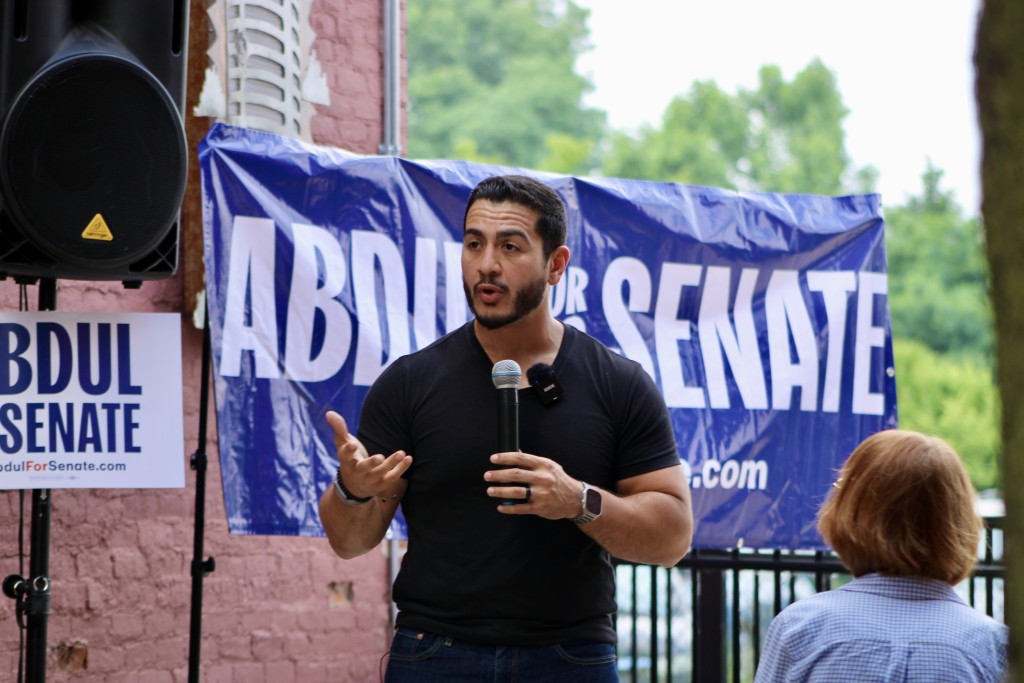
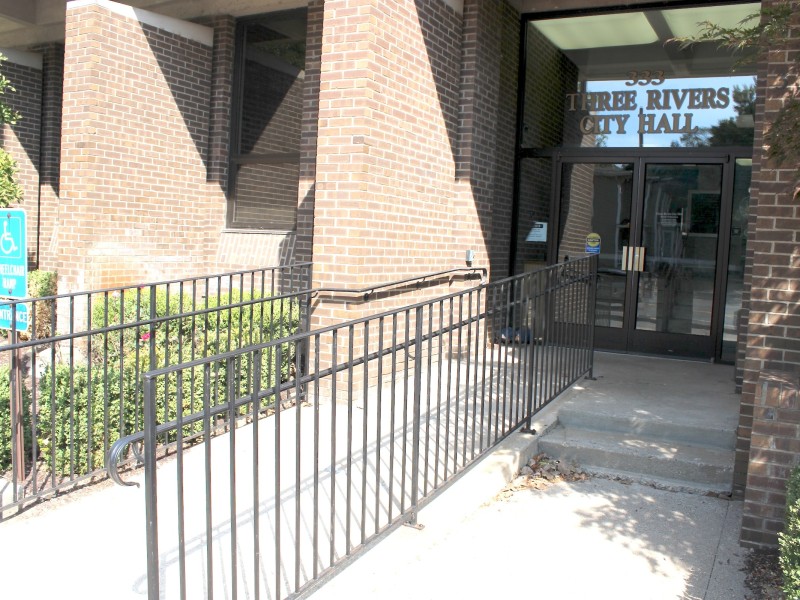
U.S. Senate candidate Abdul El-Sayed visited Three Rivers on Tuesday, kicking off a campaign tour through southwest Michigan with a fiery call for “a government of the people, by the people, and for the people.”
Addressing a crowd alongside local leaders including Mayor Tom Lowry, El-Sayed laid out a progressive platform focused on expanding health care, tackling corporate influence in politics, and restoring trust in government.
“I am running because it just should not be this hard,” El-Sayed said. “It shouldn’t be this hard to afford groceries, to drink clean water, to work a job that pays the bills or to ever dream of owning a home in the richest, most powerful country in the world.”
Lowry, who spoke before El-Sayed, endorsed the candidate and contrasted him with national politics. “This man cares for people. He was a doctor. He stepped out from his career to run for this seat,” Lowry said. “He is the exact opposite of what we’ve seen normalized in Washington.”
El-Sayed, a Rhodes Scholar and former health director for both the City of Detroit and Wayne County, emphasized his roots in medicine and public service. He spoke about being raised by immigrant parents and a stepmother from rural Michigan, and how that shaped his understanding of opportunity.
“My grandmother raised six of eight children, lost two before they turned one, and never got to go to school,” he said. “But she taught me values I carry with me now.”
Drawing a contrast between life expectancy in suburban Oakland County and nearby Detroit, El-Sayed said, “In 15 minutes, you can travel a 10-year life expectancy gap. That’s not just about medicine — that’s about politics.”
He cited his public health record, including rebuilding Detroit’s health department after the city’s bankruptcy, launching a statewide vision program for students, and fighting industrial polluters. He also touted his work as Wayne County health director, where his team helped relieve $700 million in medical debt and installed Narcan vending machines to reduce overdose deaths.
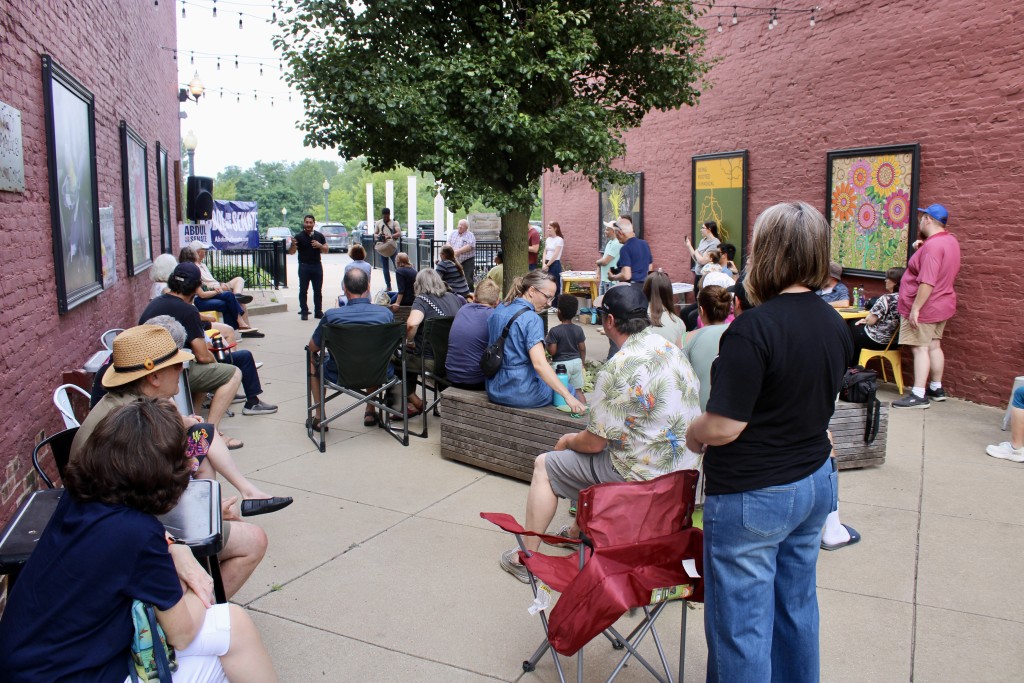
El-Sayed addressed a wide range of issues during Tuesday’s town hall, including Medicaid access, rising substance use among young people — particularly young men — and the federal government’s increased targeting of immigrant and LGBTQIA+ communities.
Three Rivers resident Elizabeth Guisinger asked what he would do to protect and restore Medicaid in the face of expected cuts. El-Sayed said the goal must go beyond simply preserving Medicaid.
“Medicaid is a critical program — but even before the cuts, it wasn’t enough,” he said. “We need guaranteed health care for every single person. That’s why we’re pushing for Medicare for All. History shows that when people are given something like guaranteed care, they don’t vote to take it away — they demand it gets better.”
David Munoz, a Sturgis resident, asked how El-Sayed plans to connect with rural immigrants, especially men of color who have leaned toward Donald Trump in recent elections.
“The challenges urban and rural young men face aren’t as different as they seem,” El-Sayed responded. “It’s about economic opportunity and mental health. If we build an economy that supports small businesses and respects workers — urban and rural — we open up paths forward for everyone.”
El-Sayed also offered sharp criticism of President Donald Trump and corporate influence in government.
“Donald Trump isn’t the disease — he’s the worst symptom,” he said. “The disease is a system that allows billionaires and corporations to rig the rules for themselves while everyone else pays the price.”
He took aim at private health insurers, monopolistic utilities, and unregulated tech platforms, arguing that unchecked corporate power has eroded American democracy and quality of life.
El-Sayed is running to replace retiring U.S. Sen. Gary Peters, centering his campaign on public health, climate justice, campaign finance reform, and working-class opportunity.
“This is a movement to do three simple things,” he said. “Take money out of politics, put money into people’s pockets, and guarantee health care for all.”
He urged supporters to contribute any amount to his grassroots, publicly funded campaign, emphasizing that he does not accept donations from billionaires. More information is available at https://abdulforsenate.com/.
Najifa Farhat is a staff reporter at Watershed Voice.
Author

Related Articles
Community input reshapes path for Winchell-Howard school safety plan
Kalamazoo City Commissioner Chris Praedel said the process reflected strong community engagement.
“It’s refreshing to see these outcomes when it happens this way. It does not always turn out this way, and I am grateful that it has — but it only happens this way when everybody is willing to lean in and try something a little bit different,” Praedel said.
The project combines improvements along two corridors — Winchell Avenue and Howard Street — under a single MDOT contract, meaning the elements cannot easily be separated for approval.
Additional damage assessments scheduled in Cass County following tornado
Three assessment teams will be deployed and will move between affected jurisdictions throughout the day Tuesday and Wednesday. Residents in impacted areas may see officials visiting neighborhoods to visually assess damage from public rights-of-way or, in some cases, briefly approaching properties to document storm impacts.
Local meeting primer: Three Rivers City Commission
Tuesday’s meeting has a short agenda with two business items. However, many residents are expected to attend and speak during public comment about their experiences during the tornado and the city’s response.
Some residents have criticized the city’s response to the storm, including coordination of volunteers and distribution of resources.
Mayor Angel Johnston told Watershed Voice during a phone call on Monday, March 9, discussing the city’s tornado response, that she is frustrated with City Manager Joe Bippus.
“I think it’s time for a new city manager and I’m not afraid to say it,” Johnston said. “That’s what I will probably be saying repeatedly on Tuesday night.”
