
Three Rivers City Commission to buy tax-delinquent lots for neighborhood improvement
City Manager Joe Bippus said the funding will come from the city’s hazardous structures line item, which currently has available resources. Commissioners approved a spending cap of $15,000 for the acquisitions.

The Three Rivers City Commission voted 4–1 Tuesday to approve the purchase of three tax-delinquent properties from St. Joseph County, aiming to prevent further blight and open the door for future redevelopment.
The city plans to acquire the parcels ahead of the county’s annual tax foreclosure auction by exercising its right of first refusal. The properties include two vacant lots at 418 S. Main St. and 819 Fifth St., as well as a residential parcel at 509 Spring St. The total estimated cost is $12,699.22, though that figure may fluctuate slightly due to county-incurred maintenance costs such as mowing or administrative processing.
City Manager Joe Bippus said the funding will come from the city’s hazardous structures line item, which currently has available resources. Commissioners approved a spending cap of $15,000 for the acquisitions.
“These are targeted properties with potential to improve their surrounding neighborhoods,” Bippus said during the meeting. “We’ve already taken down a blighted garage on Spring Street, and we’re interested in rehabbing that home like others we’re working on nearby.”
Community Development Director John Beebe reviewed all three sites. He said the Fifth Street lot is buildable, though it may need a minor variance. The Spring Street home is located on a residential block where the city is already active in home rehabilitation.
The South Main Street lot, formerly home to a Checker gas station, prompted more discussion due to potential environmental concerns. Bippus said underground storage tanks were previously removed and the city is waiting on updated state records regarding any remaining contamination. “If something terrible comes up, I’ll bring it back to the commission,” he said.
Commissioners also discussed a fourth property on Eighth Street, which was eligible for purchase but not recommended. Legal complications and a pending land contract between private parties made it a risky acquisition. Some officials noted the current occupants have a history of not paying taxes on other properties in the city.
According to City Attorney T.J. Reed, recent changes in Michigan law require municipalities to pay full market value on properties where someone has a legal interest — such as a land contract — even if the property is in tax foreclosure.
“This is still a fairly new area of law,” Reed explained. “But where there’s a claim, there’s a risk we could end up paying significantly more.”
Second District Commissioner Steven Haigh supported purchasing the lot now, rather than risking another cycle of tax foreclosure.
“If we already know they’ve lost several homes for unpaid taxes, what makes us think they’re going to keep up with it this time?” Haigh said. “It’s just going to come back again and again.”
Haigh added that if a reliable buyer — such as the original owner or a local business — were interested in the property, the city could consider selling it later under conditions, like combining it with an adjacent parcel to create a single taxable lot.
In the end, commissioners chose to proceed with the three properties mentioned in the agenda where the legal and financial risks were clearly understood. Haigh cast the lone “no” vote, and the motion passed 4–1.
Najifa Farhat is a staff reporter with Watershed Voice.
Author

Related Articles
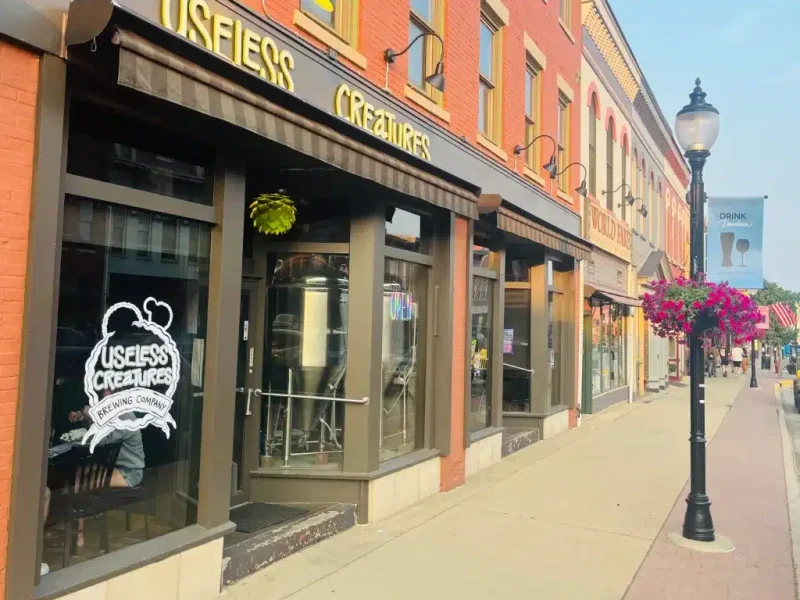
Useless Creatures to donate all of today’s sales to tornado relief
Useless Creatures Brewing Company plans to donate all sales today, Thursday, March 12 to tornado recovery efforts. All of the money will go to The Huss Project who has been organizing volunteers, collecting donations, and providing resources for those in need in the wake of the tornado.

Tiny houses, big impact: Gwendolyn Hooker’s housing vision in Kalamazoo
As Helping Other People Exceed (HOPE) continued to grow, one issue kept appearing: many people had jobs and income but still could not find landlords willing to rent to them because of past criminal records.
Many were couch surfing, sleeping in cars, or moving from one temporary situation to another.
Eventually Founder and CEO Gwendolyn Hooker said, the solution became clear.
“If people aren’t going to rent to the population that I serve,” she said, “then I’m just going to build my own houses.”
Sturgis provides storm aid to neighbors, approves arts center entryway project
The City of Sturgis suffered very little damage from the storms. City staff reported during Monday’s meeting that minor damage occurred at the city’s hydroelectric facility, where a unit was knocked offline.
“It went right over the dam,” one city staff member said during the meeting.
Sturgis’ most significant involvement following the storm came through the aid and resources it provided to neighboring communities.
