
David Munoz: A Latino story of persistence and generational stability
At 21, David Munoz, a lifelong Sturgis resident, is a father of two and the son of first-generation Mexican immigrants.
Both of Munoz’s parents made sacrifices to build a new life in Sturgis. His father worked long hours as a welder; his mother raised three children while navigating a new country with limited resources. They never owned a home. They never took a vacation. But they gave their son something more enduring, a sense of purpose.
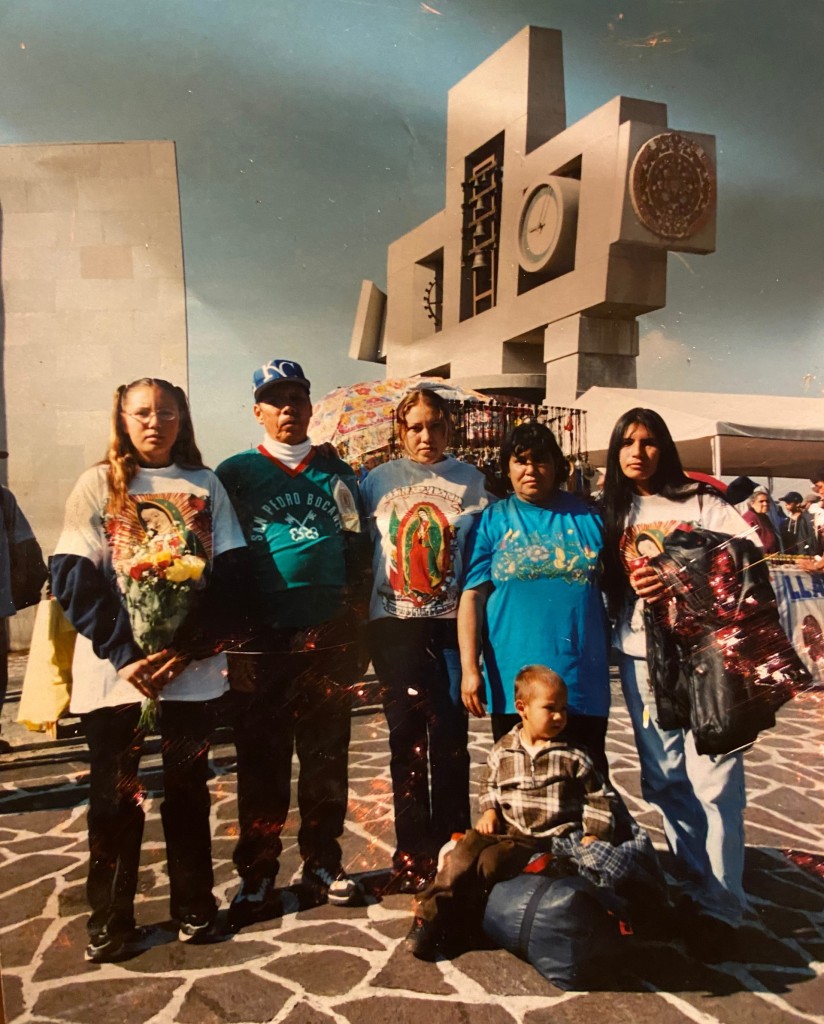
Every evening after work David Munoz remembers his father returning home from a welding plant just outside Sturgis, drained from a long shift but still ready to play with his not so tired kids. That small act, repeated day after day, left a lasting impression on David.
“You can do 10, 12 hours of work,” Munoz said, “but just coming home to your family boosts that energy of happiness and gratitude.”
At 21, Munoz, a lifelong Sturgis resident, is a father of two and the son of first-generation Mexican immigrants. He’s part of a growing population of Latino families in rural southwest Michigan, as 27.4% of Sturgis residents are considered Hispanic.
“We just need a little bit of a message out there in rural areas,” Munoz said. “There’s more to us than what people think.”
Munoz’s story begins before he was born. His mother made the journey through the desert, across the southern border in the early 2000s. Munoz recalls the details she passed down — the desert heat, the fear, and the single gallon of water she carried as she walked alongside her siblings in pursuit of a better life — for her and her family.
“She had a one-gallon water jar and a bag of clothes on her back,” he said. “She managed to get where she wanted to go based on luck and hard work.”
Both of Munoz’s parents made sacrifices to build a new life in Sturgis. His father worked long hours as a welder; his mother raised three children while navigating a new country with limited resources. They never owned a home. They never took a vacation. But they gave their son something more enduring, a sense of purpose.
Munoz was born in 2003 and raised entirely in Sturgis, he’s never even left the state. His family and the community surrounding them continued to fight for their culture, not allowing a geographical distance from their homeland limit its permanence. David and his family made sure to not only remember where they came from, but to pass its joys along to those around them.
“Maria’s was the pinnacle of Hispanic business. You saw your principal, your coach, your friend who wasn’t Hispanic, but still ate there for dinner. That was comforting,” he said.
But growing up in a predominantly white, conservative rural town came with challenges too. Like many children of immigrants, Munoz often found himself bridging two cultures — helping his American friends understand his traditions while learning theirs in return. A bright spot came when he met his partner.
“My partner is white American, with a German background. When we got together I told her, you’re going to see different stuff, different kinds of parties and gatherings. But we explained our traditions to each other, and that helped us grow,” Munoz said.
As a young father, Munoz said he’s determined to break free from the expectations that many Latino men in his family and community have faced.
“We were supposed to be gardeners, construction workers, factory workers. But I want to stop that generational ladder where it’s just work sets the cards for life. I want to show my son he can be whoever he wants to be,” Munoz said.

For Munoz, that shift hasn’t always been easy. When he pursued corporate work instead of manual labor, some family members doubted him.
“They’d say, How are you going to pay the bills doing that?” Munoz said. “But I’m thinking long term. I want to change our destiny.”
Munoz is determined to challenge the stereotypes he hears about LatinX families in rural towns, particularly when it comes to money and responsibility.
“There’s this idea that we earn money and spend it all on trucks, houses, or clothes. But when your parents have rented for 20 years and you finally buy a vehicle or home, that’s not just a symbol of wealth. That’s a symbol of growth.”
Still, he acknowledged that financial literacy is a challenge in the community, one that’s often overlooked in broader conversations about economic opportunity and generational wealth.
“We don’t always know how to manage our money. We need more education, more access, more support,” Munoz said.
His community wants to be self-reliant, especially in a conservative town where they might face discrimination, explicit or implicit.
Despite sharing many of the same traditions — church, family gatherings, rural values — Munoz says there’s still a disconnect between many white residents of Sturgis and the Latino neighbors.
“It’s disheartening when those same communal areas vote for people who don’t want us to be here,” he said.
He speaks openly about the frustration of being a rule-follower, pursuing U.S. citizenship, and still being viewed with suspicion.
“Why is it different when a Hispanic person gets a DUI than when a white American does?” Munoz asked. “It’s the same crime, but the blame always circles back to immigration status.”
For Munoz, faith is central to his family, and that disconnect. His parents, like many traditional Mexican families are devout Catholics. He baptized his son. He believes in community and grace. But, he said, those same values are sometimes weaponized by others to justify exclusion.
“They use religion as a shield to say mean things about people who look different,” he said.
To Munoz, U.S. citizenship represents more than legal status. It lays the foundation for security, stability, and self-determination.
“It’s like owning something that you can be proud of and that will be here forever,” he said.
He’s watched others in his extended family gain citizenship, start businesses, and hire employees, stepping into roles that used to feel out of reach.
“They’re not just working for someone else, they’ve got their name on the truck now,” Munoz said.
Even with the fear of ICE raids and political rhetoric that targets immigrant families, Munoz sees hope, especially when people across communities come together.
“We have our own misconceptions of white Americans,” he said. “But I’ve seen rural white folks at the No Kings protest and that brought me more gratitude. We’re neighbors. Our kids play together. We can stand up for each other.”
Munoz says young Latinos in Sturgis can and are making a difference in their community.
“Just because we live in a small area doesn’t mean we have a small voice. We can make a big difference.”
Maxwell Knauer is a staff writer for Watershed Voice.
Author

Related Articles
Monoform to show ‘Ganja & Hess,’ a pivotal film in Black cinema
Often regarded as a landmark in the history of Black cinema, Ganja & Hess (1973) uses vampirism as a metaphor for “Black assimilation and identity, white cultural imperialism, addiction, desire, and the hypocrisies of organized religion,” Monoform Cinema wrote on its website.

Sayrie: Sounding the alarm
Watershed Voice’s Aundrea Sayrie writes, “Black History Month is celebratory of Black achievement and existence, yes, but it is equally meant to continually sound the alarm on discrimination, and a means of advocating for justice. Applied pressure on the neck of oppression and erasure, a vehicle to ensure the truth isn’t lost in the footnotes of history.”
You can listen to Aundrea perform this piece via the SoundCloud player at the top of the article.
Farrand Hall diner to open Thursday in downtown Three Rivers
A new take on the classic American diner is coming to downtown Three Rivers this week.
Farrand Hall will open its diner concept on Thursday, February 5, bringing counter service, seasonal cooking and a casual, energetic atmosphere to the historic downtown.
