
Michigan residents left waiting for lawmakers to decide future of key services ahead of October 1 deadline
If lawmakers fail to strike a deal by October 1, Michigan could face a government shutdown — a reminder of how closely Lansing’s choices are tied to services local residents depend on, like access to critical mental health services, addiction treatment, and autism support programs.
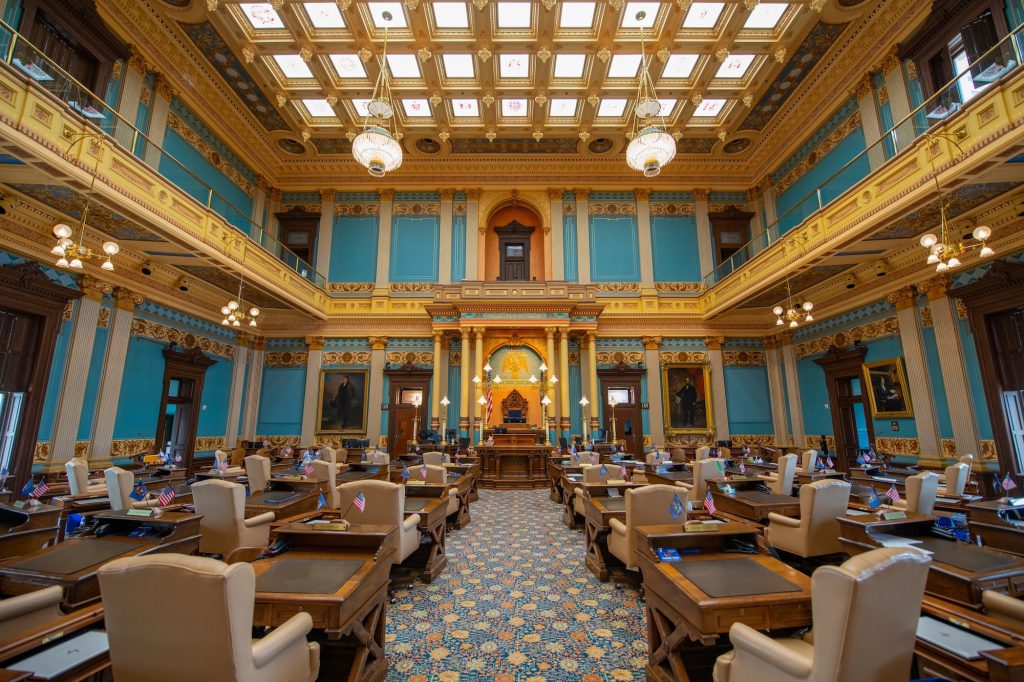
The Michigan House passed its version of the state budget in late August, moving the plan one step closer to final approval. Lawmakers have until October 1 to reach a final deal with the Senate and Governor Gretchen Whitmer to avoid a government shutdown.
The House plan shifts several major mental health and substance use funding streams, including Medicaid mental health, substance use disorder services, and Certified Community Behavioral Health Clinics into one-time appropriations. For the public mental health system that serves St. Joseph, Cass, and Kalamazoo counties, that means uncertainty. Local providers depend on stable funding to maintain crisis services, addiction treatment and autism support, and a one-year budget makes it harder to guarantee those programs will continue at current levels.
The proposal also lowers provider reimbursements. It decreases direct care agency payments by $4.56 an hour, reduces Medicaid methadone rates and eliminates nearly $10 million in local matching funds that help boost Medicaid mental health services. Those changes could put additional strain on community agencies already struggling with workforce shortages and rising demand.
Several statewide programs with local reach are also eliminated in the House plan, including MC3 telepsychiatry, which connects primary care doctors with psychiatric support; the Mental Health Diversion Council, which helps keep people with mental illness out of jails; and autism navigator programs that guide families to services.
Not all of the changes are reductions. The House expands the Michigan Opioid Healing and Recovery Fund to $81 million and adds $1.4 million for nonprofit mental health clinics that serve clients regardless of ability to pay. Specifics for how much of that money will reach providers in Southwest Michigan remains uncertain.
The proposal also leaves questions about inpatient psychiatric capacity. The House cut some existing hospital funding and provided only placeholder funding for a new state hospital in Northville, raising concerns about already long wait times for psychiatric beds statewide, a problem that could worsen if hospital funding falls short.
The budget is far from final, and many of these line items could change in negotiations. If lawmakers fail to strike a deal by October 1, Michigan could face a government shutdown — a reminder of how closely Lansing’s choices are tied to the services local residents depend on.
Maxwell Knauer is a staff writer for Watershed Voice
Author

Related Articles

Tiny houses, big impact: Gwendolyn Hooker’s housing vision in Kalamazoo
As Helping Other People Exceed (HOPE) continued to grow, one issue kept appearing: many people had jobs and income but still could not find landlords willing to rent to them because of past criminal records.
Many were couch surfing, sleeping in cars, or moving from one temporary situation to another.
Eventually Founder and CEO Gwendolyn Hooker said, the solution became clear.
“If people aren’t going to rent to the population that I serve,” she said, “then I’m just going to build my own houses.”
Sturgis provides storm aid to neighbors, approves arts center entryway project
The City of Sturgis suffered very little damage from the storms. City staff reported during Monday’s meeting that minor damage occurred at the city’s hydroelectric facility, where a unit was knocked offline.
“It went right over the dam,” one city staff member said during the meeting.
Sturgis’ most significant involvement following the storm came through the aid and resources it provided to neighboring communities.

Three Rivers residents recount moments before and after Friday’s EF-2 tornado
The storm was among the fiercest to strike Three Rivers in recent memory. Despite the destruction, residents across the city rushed to support one another before, during, and after.
