
Three Rivers lead line replacement stymied by absence of state and federal funding, according to mayor
While lead line replacement is underway in Three Rivers, most occur during major road reconstruction projects, which expose the pipes. The city is responsible for maintaining 47 linear miles of roadway and with only one or two projects completed each year, progress is gradual. Mayor Tom Lowry says meaningful progress will require state and federal funding, and until then, aging infrastructure will continue to pose risks.
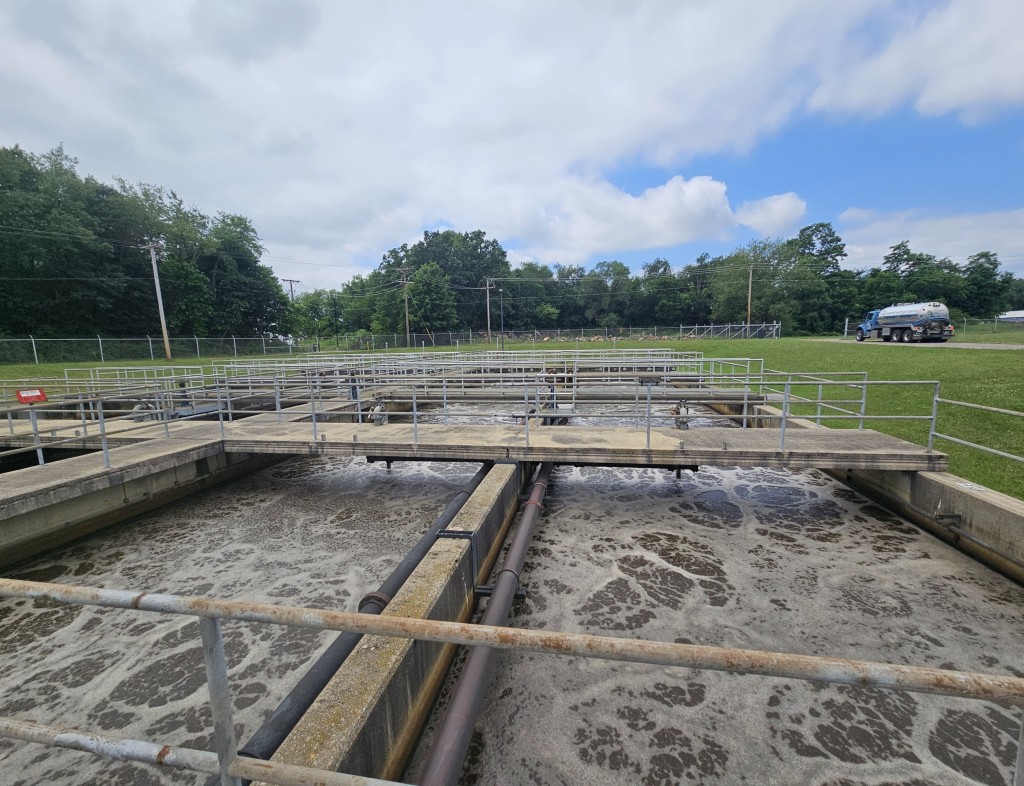
The City of Three Rivers is taking new steps to address elevated lead levels found in some homes’ tap water, an issue that Mayor Tom Lowry says comes down to aging infrastructure and limited resources. While city officials stress the water is clean when it leaves the ground and enters the system, lead can leach into water once it passes through older service lines or in-home plumbing, particularly in older houses built before the mid-70s.
“The water as it comes underground is zero lead,” Lowry told Watershed Voice. “We test it on a very regular basis. Samples go to the state. We have zero lead in the water as pumped to people. However, like many cities in the United States and worldwide, we have a lot of housing before 1975, so there’s a lot of lead lines or galvanized lines in people’s houses, or what we call the lateral – the pipe that connects your house to the city main that’s out in the street in front of you.”
State and federal law require lead and copper testing to be performed at customers’ taps, not at the wells, and Lowry said he supports that approach because it reflects what residents actually drink. Still, he criticized how the results are framed, saying water suppliers are blamed for exceedances that stem from privately owned pipes.
“This is what we call an unfunded mandate, especially at the federal level but also at the state,” he said. “We’re required to fix it, but they don’t give any money, or they give so little that it’s a pittance compared to the problem.”
The scale of that problem remains unclear. The city has roughly 3,500 water meters, most of them residential. Previous sampling efforts showed between 10 and 30 percent of tested homes had elevated lead levels, with the exact number of lead service lines in the city still unknown. According to the city’s 2024 Water Quality Report, Three Rivers had 148 known lead service lines and more than 1,200 of unknown material out of 2,691 service lines as of March 2025. Public Services Director Amy Roth said the city has since identified 265 known lead lines and reduced the unknowns to about 1,000, with a contractor set to help complete the inventory in the coming months.
In other words, the city knows the material of some service lines but has not yet been able to confirm what many of the others are made of, leaving the full scope of potential lead exposure uncertain.
Replacing those lines is expensive. Lowry said, before the COVID-19 pandemic, replacing a single lateral could cost $8,000 to $10,000.
“Now it’s, on average nationwide, $12,000 to do that job,” he said. “Most citizens can’t afford that. Most water systems can’t afford that. If there were 1,000 houses that had a lead problem, times $12,000, that’s $12 million. We have a $4 million budget for the general fund.”
Lowry also attributed this cost to the reason so few people have used the free testing offered by the city. Since people can’t afford the cost to fix it, they see no reason to find out if there’s lead in their water or not.
The city covers the cost of replacing any portion of a service line between the main and the home if it contains lead or galvanized pipe previously connected to lead, Roth said. Most replacements occur during major road reconstruction projects, which expose the pipes. The city is responsible for maintaining 47 linear miles of roadway and with only one or two projects completed each year, progress is gradual. Individual replacements also happen if a service line fails or begins leaking, though those are less common.
In the meantime, Three Rivers has turned to chemical treatment to reduce how much lead can leach from pipes. Lowry said the city budgeted last year for a new additive that coats the inside of pipes, from the mains to the laterals to household plumbing.
“We researched it, we found a chemistry that will assist us to minimize the possibility of lead being leached out,” he said. “Is the problem solved? No. But we’re making a difference.”
Roth confirmed that in early 2025 the city adjusted its chemical blend. From January through June, three of 44 samples tested above Michigan’s new 12 parts per billion action level, keeping the city below an exceedance. That means while a few homes had higher results, the citywide average stayed under the legal threshold that would require more aggressive action. Additional testing is underway, she said, and the city continues to consult with the state Department of Environment, Great Lakes, and Energy (EGLE).
Still, participation in free testing has been low. Lowry said only about 100 households have requested it, a number he finds troubling. Roth said part of the challenge is that the sampling protocol requires bypassing conditioning systems and leaving water stagnant for 6 to 8 hours before collection. “Some residents may not be willing or able to do those steps, so they have chosen not to participate,” she said.
The city continues to encourage residents with lead or unknown service lines to request free testing by calling Public Services at (269) 273-1845. For those with non-lead lines, testing is available through EGLE at a cost. Filters are not provided by the city, but some residents may qualify for assistance through the Michigan Department of Health and Human Services at 1-844-934-1315. A self-identification survey is also available on the city’s website to help speed the service line inventory process.
Lowry said the city commission will keep pressing for solutions but warned that meaningful progress will require more than local action. “Realistically, there’s going to have to be money from the state and federal government in the next 20 years to address this problem,” he said. “Right now, Three Rivers makes the news because we have lead in our water. But the bigger issue is across America, in thousands of older homes, and it’s going to take hundreds of billions of dollars to truly fix.”
Maxwell Knauer is a staff writer for Watershed Voice
Author

Related Articles

Sturgis approves Summit Polymers tax break; WBET offer raised during SYCA contract discussion
Commissioners held a public hearing and unanimously approved a resolution supporting an Industrial Facilities Exemption Certificate (IFEC) for Summit Polymers, a plastic injection molding company for the automotive industry. The certificate would reduce the tax liability on the company’s new addition by approximately 50%. The IFEC is expected to save Summit Polymers approximately $110,000 annually in taxes. The exemption was approved for 12 years.

How to vote in Michigan’s 2026 November election
This guide is intended to help voters understand how to register, choose a voting method, and make a voting plan ahead of the November 3 election.
Watershed Voice will publish additional election coverage closer to Election Day detailing the candidates, races, and ballot proposals voters will see locally and statewide. Since ballots differ depending on where a voter lives, readers can view their sample ballot through the Michigan Voter Information Center once it is available.
Kalamazoo commissioners seek broader oversight of surveillance technology
During the Kalamazoo City Commission meeting on Tuesday, September 8, commissioners decided to delay the formal adoption of a policy that would require contracts involving automated license plate reader technology to come before the City Commission, regardless of cost.
Vice Mayor Drew Duncan proposed expanding the amendment, asking that the policy incorporate all law enforcement surveillance technology, not just license plate readers.
