
From Texas to Michigan, Flock cameras are reshaping how police track vehicles
To discuss Three Rivers’ future desires for the cameras, Watershed Voice reached out to a representative of the Three Rivers Police Department but was told all media requests are now to be directed to City Manager Joe Bippus.
Multiple attempts to seek comment from Bippus were made but, as of the publication of this article, Bippus has yet to respond.
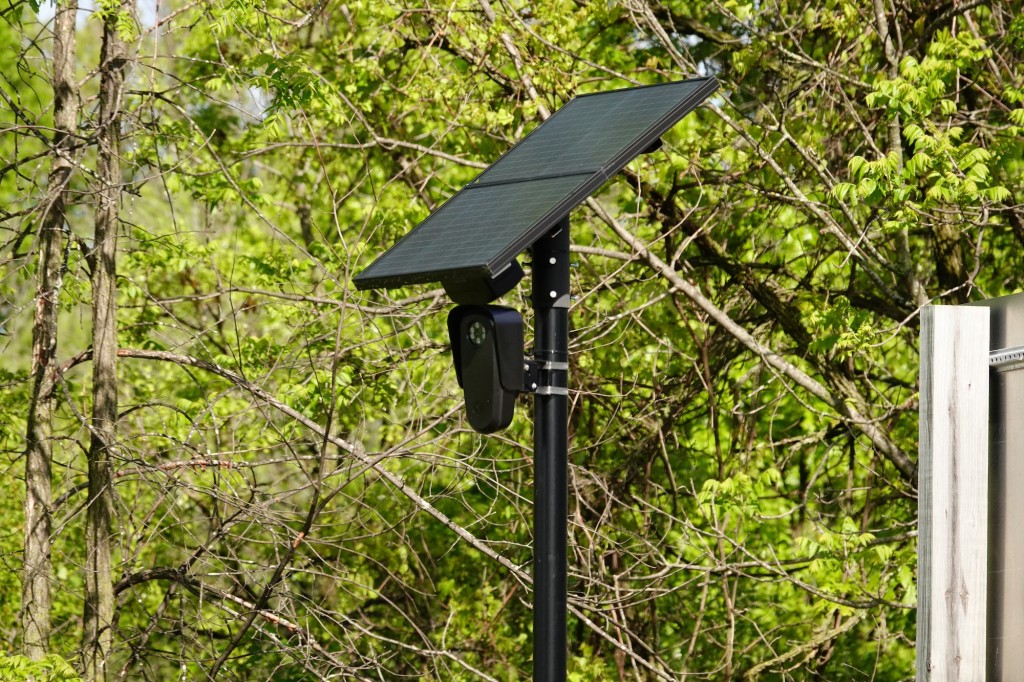
Last May, the Johnson County Sheriff’s Office in Cleburne, Texas, conducted a nationwide search of more than 83,000 Flock automated license plate reader (ALPR) cameras, listing the reason in the search log as: “had an abortion, search for female.”
Authorities searched across the country through Flock’s national network to locate the woman, publicly describing the effort as a welfare or missing-persons check. Records later released in response to public records requests describe it instead as a “death investigation” related to a self-managed abortion, a discrepancy that drew national media attention and strong public backlash from abortion-rights advocates, privacy and civil liberties groups, and some elected officials.
The cameras and their impacts reach far beyond Texas; they are also in southwest Michigan. In Kalamazoo, the cameras have been used since 2019 to “utilize LPR [license plate reader] technology to capture and store digital license plate data and images while recognizing and respecting the established privacy rights of the public,” Kalamazoo Department of Public Safety told Watershed Voice in a statement.
The cameras were also used in Three Rivers until a funding gap led the city to discontinue services. In 2023, four commissioners unanimously approved the installation of six Flock security cameras in the city for a two-year period through a $32,100 Rural Violent Crime Reduction Initiative (RVCRI) grant. RVCRI was terminated on April 22, 2025, by the U.S. Department of Justice’s Office of Justice Programs. The city did not continue the program after the federal funding ended.
To discuss Three Rivers’ future desires for the cameras, Watershed Voice reached out to a representative of the Three Rivers Police Department but was told all media requests are now to be directed to City Manager Joe Bippus. Multiple attempts to seek comment from Bippus were made but, as of the publication of this article, Bippus has yet to respond.
What’s a Flock camera?
Flock cameras are automated license plate readers that photograph passing vehicles and use artificial intelligence software to identify the plate number, make, model, color, and other distinguishing features. Unlike traditional video surveillance, they capture still images at specific points as cars drive by, creating a searchable record of vehicle movements rather than continuous footage. The cameras are typically mounted at fixed locations, such as roadways or neighborhood entrances, and send the data to a system controlled by the participating agency. In Kalamazoo, for example, the Department of Public Safety uses Flock’s platform to collect and retain this information for 30 days unless it becomes part of an active investigation, and limits access to defined investigative purposes. While policy choices such as retention, sharing, and permitted uses vary by community, the core function of Flock is the same everywhere: to catalog vehicle information and generate leads for agencies looking to identify or locate specific cars.
Public backlash
The cameras have been a sticking point for civil rights and privacy groups who argue the added surveillance is an overstepping of authority. The American Civil Liberties Union compares the technology to a fleet of police officers standing on street corners gathering data 24/7, warning that systems like ALPRs can create detailed records of people’s movements over time.
Watershed Voice spoke with Will Freeman, founder of DeFlock, a community-driven open-source project that crowdsources and maps the locations of automated license plate reader (ALPR) cameras – primarily those deployed by Flock Safety – in order to raise public awareness about surveillance infrastructure and, in his words, “deFlock” communities.
“They record everyone who drives by, and they store that long term and perform analytics on it. Any damage you have on your vehicle, any dents, bumper stickers, a miscolored tailgate – basically anything you can see with your eye, this system turns into a searchable data point. It creates what’s called a ‘vehicle fingerprint,’”Freeman said.
He added that it’s different from trackers used on phones or other devices that are optional.
“There’s no real way to opt out, because these cameras are on public roadways and people have to use public roadways. I’m not forced to buy a phone or carry it with me, but I’m also not just going to stay in my house all day. I’ve got to have a life – so being tracked isn’t really a choice.” Watershed Voice reached out to Flock Safety; however, the company did not respond by the time this article was published.
So what ‘good’ do the cameras do?
For local police departments, the surveillance tools have helped find stolen vehicles, provided leads, and located missing children. The intended use, as stated by KDPS, is to “generate objective, actionable leads that assist officers in solving investigations and protecting the community.”
“Since implementation, LPRs have provided critical investigative leads in more than 45 homicide investigations and over twice that number of non-fatal shooting cases. For example, in a 2023 homicide case involving a suspect from outside the area, an LPR read captured the suspect’s vehicle fleeing the scene. This information allowed detectives to locate and arrest the suspect – over 100 miles away – within hours of the crime. It is likely this case would not have been solved without the assistance of LPR technology. In addition, LPRs have also aided in the recovery of hundreds of stolen vehicles and the successful location of several missing and endangered children,” Deputy Chief Matthew Huber wrote in a statement to Watershed Voice.
KDPS, and all departments that use the technology, keep an audit log that is regularly reviewed to ensure officer compliance with departmental policy. KDPS only shares data with a small number of law enforcement partners within Michigan, including the Michigan State Police. KDPS does not share data with federal law enforcement agencies or general national data-sharing pools. The department says any agency that receives shared data must formally agree that it will not be used for immigration enforcement purposes or any activity related to individuals seeking reproductive or other health services.
These practices, however, are not always followed, Freeman argued.
“Flock likes to say the customer controls access to the data, and on paper that’s mostly true. But every agency I’ve seen shares with at least some others, and the number is usually a minimum of 100, often closer to 5,000 if they’re on a national network. Their transparency portals only show one-to-one sharing, so the real picture of who can search your data is much larger and a lot harder to track.”
Cities have also found ways to bring Flock contracts forward with little to no recognition from residents, often hiding them in consent agendas or other overlooked areas, he said.
“They often sneak these contracts in below the dollar threshold that would trigger a city council vote, or bury them in the consent agenda as ‘public safety equipment’ without saying it’s for AI cameras or license plate readers. That’s why they’re everywhere – most people never got a clear chance to say yes or no,” Freeman said.
Looking forward
As of 2025, Flock claims to operate in more than 5,000 communities across 49 states and performs over 20 billion vehicle scans each month. While police departments – including Kalamazoo – report that the technology provides investigative benefits, privacy advocates and grassroots organizations are increasingly calling for limits or outright removal of Flock cameras.
“The most effective way right now is to fight them at the city level, because they have contracts with cities. If you can cut those contracts, then you can get them out of your town,” said Freeman of DeFlock.
Maxwell Knauer is a staff writer for Watershed Voice
Author

Related Articles

Three Rivers residents recount moments before and after Friday’s EF-2 tornado
The storm was among the fiercest to strike Three Rivers in recent memory. Despite the destruction, residents across the city rushed to support one another before, during, and after.
‘We heard our neighbors needed help’: Local electricians union aids cleanup effort following Three Rivers tornado
On Sunday, March 10, around 30 IBEW workers, including representatives of KEI electrical construction and Perkins Electric, gathered in Three Rivers to provide free, professional support to those in need.
“We heard our neighbors needed help cleaning up after the storm, so I decided to ask my union brothers and sisters to come lend a hand,” IBEW 131 President Eddie Leboeuf said.

NYT bestselling author Shelby Van Pelt to keynote inaugural literary arts festival in Vicksburg
Kimm Mayer, planning committee lead, said establishing the festival is important because “it makes reading and literacy accessible to everybody by introducing people to authors and activities in a fun and relaxed environment.” She added that the festival complements the arts community in Southwest Michigan and could impact literacy in the region while promoting tourism.
