
Kalamazoo City Commission meeting dominated by public anger after unhoused man’s death
Residents also asked city officials for answers about a separate recent death involving a 60-year-old man found deceased near the intersection of Stockbridge Avenue and Mills Street. Chief Boysen said the death was ruled a suicide and that there was no evidence of foul play or involvement by other individuals. He said the man had a history of mental illness and other challenges.

The Kalamazoo City Commission’s regular business meeting Monday, December 15, was dominated by grief and anger from residents following the death of an unhoused man who was found outdoors during extreme cold last week.
The meeting opened with a public hearing on the city’s proposed fiscal year 2026 budget and included votes on water and wastewater rate increases. Those agenda items were largely overshadowed as residents spoke for more than an hour and a half during public comment, urging commissioners to take stronger action on homelessness, mental health care, and emergency shelter access.
Residents repeatedly referenced the death of Christopher Nurrie Jr., 29, who was found near Martin Luther King Jr. Park in downtown Kalamazoo without shoes or a shirt and was transported to a hospital, where he was later pronounced dead, according to the Kalamazoo Department of Public Safety.
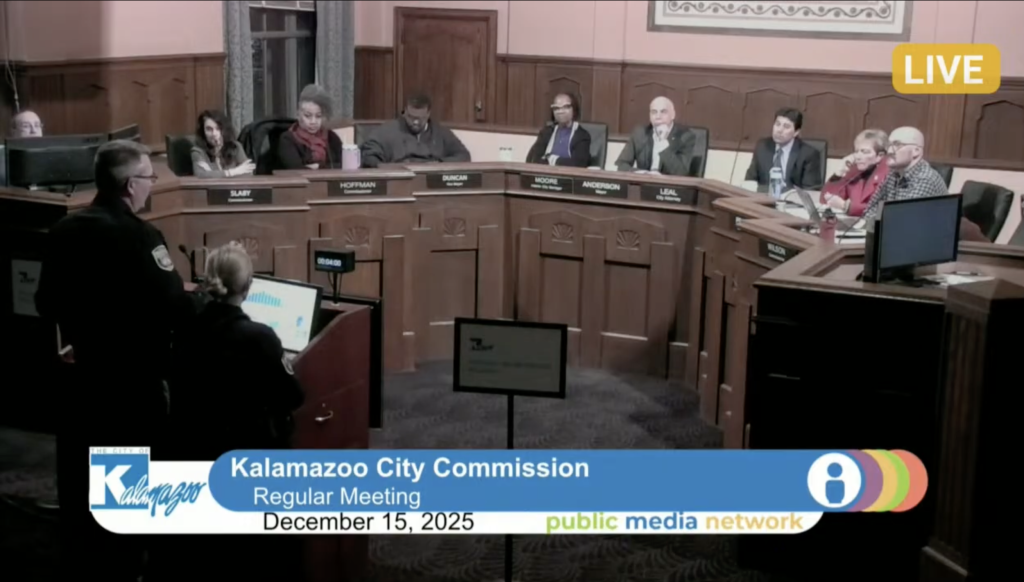
“Another sad case of someone with severe medical issues and mental health issues,” Kalamazoo Department of Public Safety Chief Dave Boysen said. “We’ve had many contacts with this individual in the past. He had a sleeping bag and warm clothes, but he removed his shirt and his shoes and laid in the snow. He was there for less than two hours before someone noticed him and called us.”
Several speakers questioned the city’s response to people experiencing mental health crises and homelessness, arguing that existing systems are failing to prevent preventable deaths.
Residents also asked city officials for answers about a separate recent death involving a 60-year-old man found deceased near the intersection of Stockbridge Avenue and Mills Street. Chief Boysen said the death was ruled a suicide and that there was no evidence of foul play or involvement by other individuals. He said the man had a history of mental illness and other challenges.
One commenter also referenced the February death of Tammy Christie, a 54-year-old woman who froze to death in the back seat of her vehicle. At a previous city commission meeting earlier this year, Vice Mayor Drew Duncan said Christie’s death influenced his decision to run.
After public comment concluded, commissioners proceeded with their regular agenda.
The commission unanimously approved increases to city water and wastewater rates, raising drinking water rates by 5% and wastewater rates by 9%. All commissioners were present. The increases will take effect January 1, 2026.
City staff said the wastewater increase reflects rising operating costs, long-term infrastructure needs, and financial planning tied to major capital investments, including future improvements to the city’s wastewater system. According to city documents, the wastewater utility is entering a multi-year financial plan that anticipates significant construction costs in the coming years, followed by long-term savings once new facilities come online. The 2026 increase is part of a broader effort to keep the system financially stable while spreading costs over time.
The water rate increase is smaller, city officials said, because the water utility’s financial outlook is more stable and does not face the same near-term capital pressures as the wastewater system.
Commissioners also approved the creation of a special-purpose committee to review, update and recommend changes to city commission policies. Commissioner Jacqueline Slaby said that after reviewing commission policies following her election, she found many that were outdated or no longer served a clear purpose.
The committee will include Slaby, Commissioner Christopher Praedel and Vice Mayor Drew Duncan. It will bring recommendations back to the full commission for consideration.
Maxwell Knauer is a staff writer for Watershed Voice.
Author

Related Articles

Huss Project offering paid summer internship for WMU students in Three Rivers
The 10-week internship generally runs through the organization’s Back to School Celebration at the August Second Saturday Farmers Market. Interns are paid $17.50 per hour and are expected to work about 20 hours per week. Every other week, they attend professional development training at Western Michigan University as part of the Broncos LEAD program.
For Co-founder Rob Vander-Giessen Reitsma, the internship is about more than seasonal help — it’s about formation.
“We hope students learn about small-scale food production, community development in a small town, and how our work is rooted in the core values of our organization,” he said.
Keep Your Voice Down: To begin with, everything
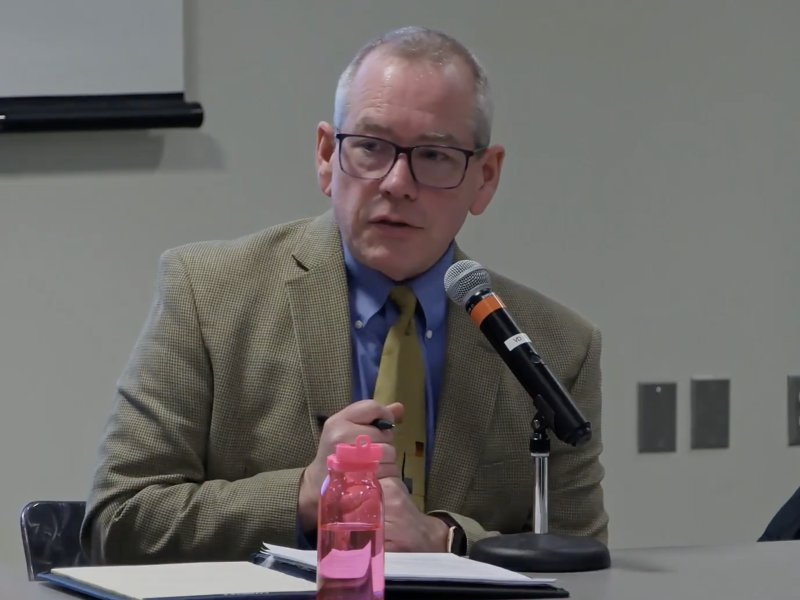
WMUK’s Gordon Evans stopped by Keep Your Voice Down this week to discuss his career in public radio, the state of journalism, how it’s changed, where it’s headed, and what gives him hope about the industry he’s dedicated his life to. Other topics include the quotability of Almost Famous, news anchors of yesteryear and the glaring absence of such figures in 2026, U.S. women’s hockey, and whether Doug Sears Jr.’s dad actually skipped class to watch the Miracle on Ice in 1980.
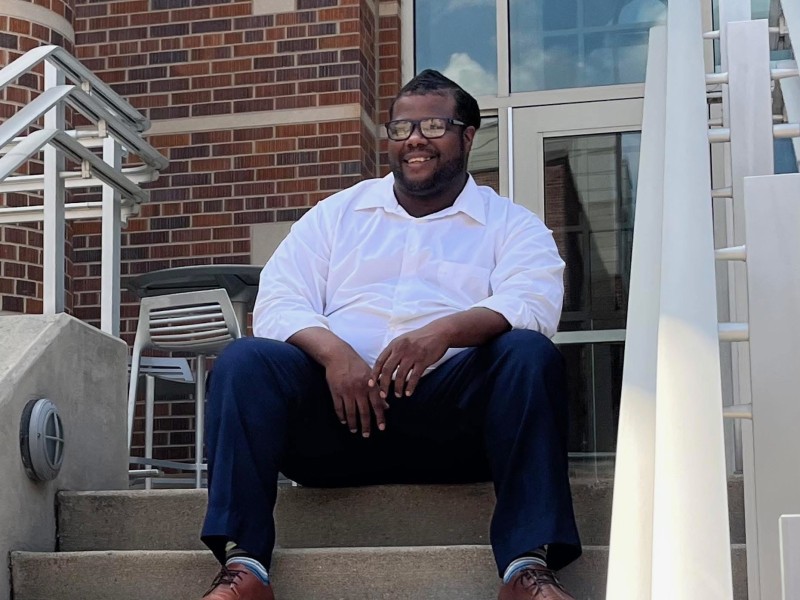
Drew Duncan says policy saved his life — now he’s shaping it
“My life was saved because of the Affordable Care Act,” Kalamazoo City Commissioner and Vice Mayor Drew Duncan said. “Without it, I would not have received care.”
Now 36, Duncan sees that period — when he was diagnosed in late 2009 and underwent treatment through 2011 — as foundational. It was the moment policy stopped being abstract.
“I have a story that is like many people — but maybe not a story people would expect,” he said. “I try to enter the room with a listening posture. I see urgency around the issues that are plaguing my constituents.”
