
KDPS chief says Flock cameras not used for immigration enforcement as residents raise concerns
Multiple speakers, including members of the advocacy group We the People, urged commissioners to remove the cameras and asked city leaders to state they would not assist federal immigration officers if they came to Kalamazoo.
In response, Kalamazoo Department of Public Safety Chief David Boysen described how the department uses Flock cameras and outlined what he said are prohibited uses of the technology.
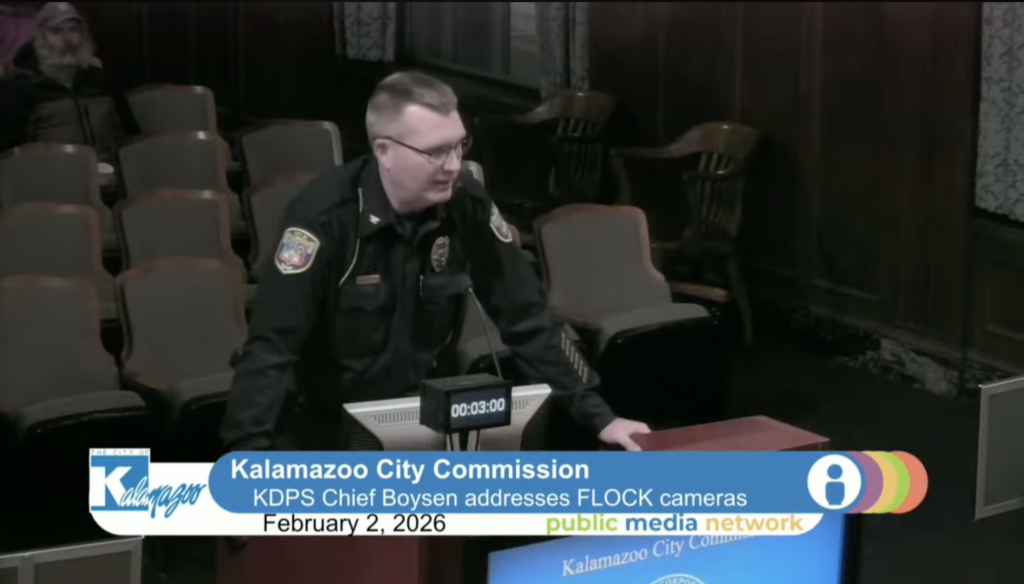
The Kalamazoo City Commission met Monday, February 2, for a regular business meeting. While the agenda included no new business items, several residents used public comment to raise concerns about a renters’ rights ballot initiative and the city’s use of Flock Safety license plate reader cameras.
Watershed Voice has previously reported on the city’s use of Flock cameras, including earlier calls from residents to remove the technology, and a separate explainer on what “Deflock” is and why the movement exists.
Multiple speakers, including members of the advocacy group We the People, urged commissioners to remove the cameras and asked city leaders to state they would not assist federal immigration officers if they came to Kalamazoo.
In response, Kalamazoo Department of Public Safety Chief David Boysen described how the department uses Flock cameras and outlined what he said are prohibited uses of the technology.
“Flock License Plate Readers (LPRs) are used as a crime-solving and life-saving tool, not for immigration enforcement,” Boysen said.
Boysen said the cameras are used to read license plates and help locate vehicles connected to criminal activity. He added that license plates are “public in nature,” noting vehicle owners are legally required to register their vehicles and display license plates publicly.
The data collected by the cameras is not considered personal identifying information, according to Boysen. He said KDPS would need to conduct additional research outside of the Flock system to connect a license plate to a specific vehicle owner. Boysen said enforcement of immigration laws is prohibited under the department’s use policy for the cameras. He also said the policy prohibits using the technology to track people seeking reproductive or other health care.
Boysen highlighted what he described as positive uses of the cameras, including assisting in homicide investigations, locating stolen vehicles, and helping in missing persons cases. He said license plate data has been “instrumental” in solving cases.
Neighborhood Enterprise Zone public hearing
Commissioners also held a public hearing on the creation of a Neighborhood Enterprise Zone, or NEZ, tied to a proposed development near Vine Street and South Burdick Street.
City planner Bobby Durkee said the NEZ is intended to support new housing and help align workforce housing with nearby employers.
“This development is helping align workforce housing for Bronson directly, or other large employers that need it in the city,” Durkee said.
There was no vote on the NEZ Monday. The item was presented as a public hearing only.
Commissioner Jeanne Hess asked whether a daycare or grocery store could be included in the development.
“The NEZ is a housing incentive, so it’s not part of those. However, with the site plan under review — and if the developer wants to speak more — it shows those uses in the space, which usually shows a really serious commitment as opposed to future commercial space,” Durkee said.
Maxwell Knauer is a staff writer for Watershed Voice.
Author
Related Articles
Keep Your Voice Down: To begin with, everything
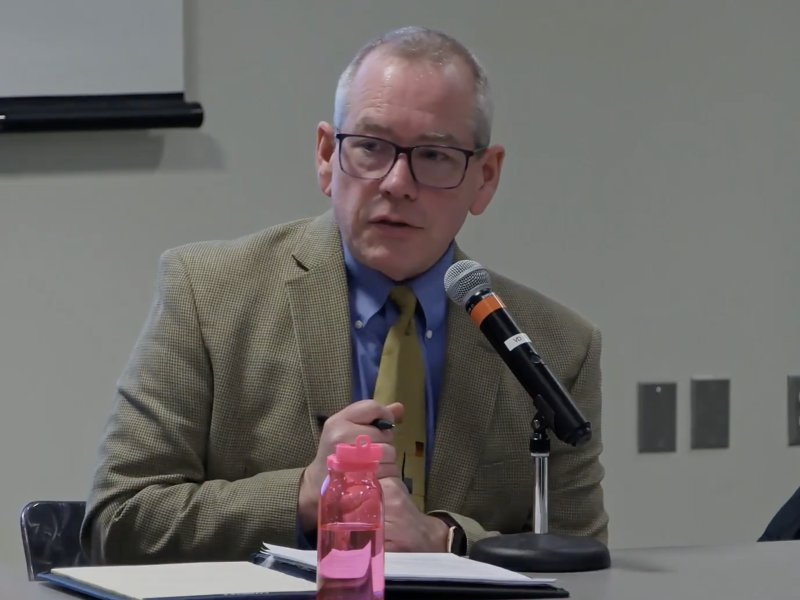
WMUK’s Gordon Evans stopped by Keep Your Voice Down this week to discuss his career in public radio, the state of journalism, how it’s changed, where it’s headed, and what gives him hope about the industry he’s dedicated his life to. Other topics include the quotability of Almost Famous, news anchors of yesteryear and the glaring absence of such figures in 2026, U.S. women’s hockey, and whether Doug Sears Jr.’s dad actually skipped class to watch the Miracle on Ice in 1980.
Drew Duncan says policy saved his life — now he’s shaping it
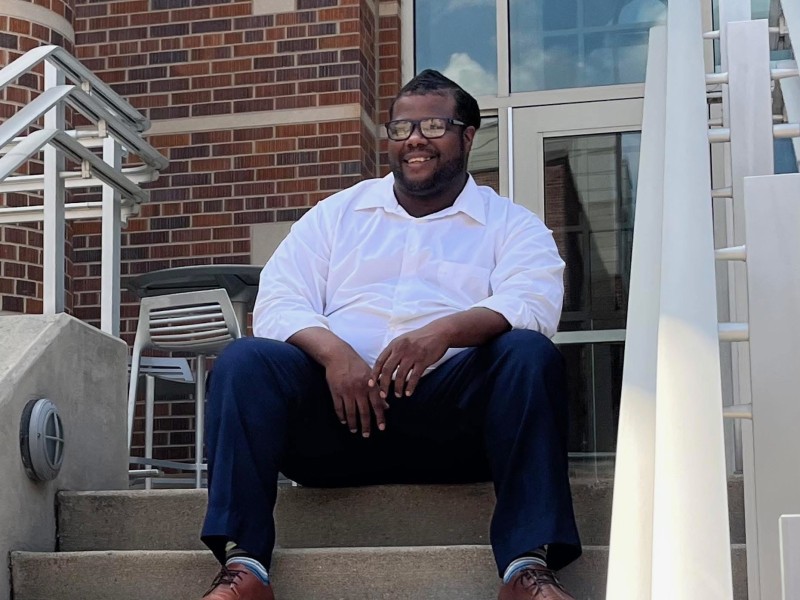
“My life was saved because of the Affordable Care Act,” Kalamazoo City Commissioner and Vice Mayor Drew Duncan said. “Without it, I would not have received care.”
Now 36, Duncan sees that period — when he was diagnosed in late 2009 and underwent treatment through 2011 — as foundational. It was the moment policy stopped being abstract.
“I have a story that is like many people — but maybe not a story people would expect,” he said. “I try to enter the room with a listening posture. I see urgency around the issues that are plaguing my constituents.”
Kalamazoo City Commission tables Safe Routes to School contract amid public pushback
Commissioners voted unanimously to table the item and revisit it at a future meeting. City staff said they plan to prepare additional information, including visuals, and hold a meeting to gather resident feedback before returning to the commission.
“If we postpone it to one more meeting, it’s not going to have a delay on receiving the funds,” Commissioner Jae Slaby said. “It will not jeopardize these funds. It will not jeopardize the contract. So why not just have the due diligence done and send the message to the community that we are hearing their concerns?”
