
Drew Duncan says policy saved his life — now he’s shaping it
“My life was saved because of the Affordable Care Act,” Kalamazoo City Commissioner and Vice Mayor Drew Duncan said. “Without it, I would not have received care.”
Now 36, Duncan sees that period — when he was diagnosed in late 2009 and underwent treatment through 2011 — as foundational. It was the moment policy stopped being abstract.
“I have a story that is like many people — but maybe not a story people would expect,” he said. “I try to enter the room with a listening posture. I see urgency around the issues that are plaguing my constituents.”
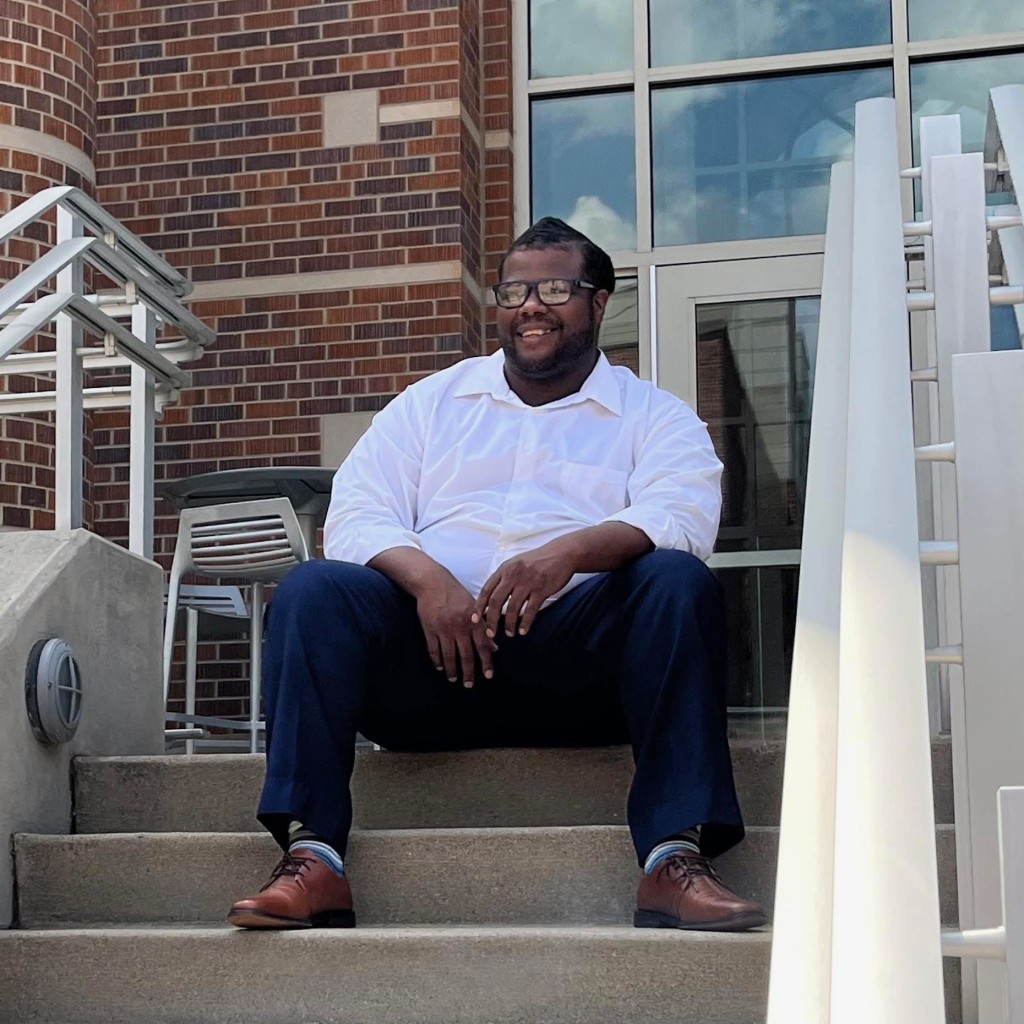
Drew Duncan is new to Kalamazoo politics, but not to public service.
In November, he won his first election to the Kalamazoo City Commission as the top vote-getter, earning the role of vice mayor for the first half of his term. He was sworn in Monday, November 17.
Though early in his tenure, Duncan’s path to public office stretches back years — shaped by illness, loss, and organizing work that he says grounded him in the realities many residents face.
Loss and a move north
For more than two decades, Duncan lived in South Bend, Indiana. That changed after his sister, Rhema Harris — a corrections officer with the St. Joseph County Police Department — was shot and killed.
“After living in South Bend for more than 20 years, when something like that happens, it rocks you to the core,” he said. “I was really looking for a change of pace, something new.”
He had visited Kalamazoo before and was drawn to the city. A job opportunity ultimately brought him here, but the relocation also marked a broader shift in how he saw his role in public life.
Duncan describes himself as a foster child, a first-generation high school and college graduate, a working-class professional, and a Black queer man. Those identities, he said, are not background details — they inform how he governs.
“I’m in a lot of communities that don’t always see themselves represented,” he said. “We need to not just vote for people we like, but people like us.”
He says shared lived experience matters in leadership.
“I feel that I have a very similar story and life experience as a lot of the people that I serve now.”
A diagnosis that changed everything
Long before running for office, Duncan had a moment that reshaped how he understood government’s power.
In late 2009, at 18, after a high school health class on self-examinations, he went home and found a lump. That night, he told his mother he believed something was wrong.
“We went to the ER, and it ended up being stage two non-Hodgkin lymphoma,” Duncan said.
He underwent surgery that same night to remove the tumor and began chemotherapy months later, a course of treatment that continued through 2011.
The Affordable Care Act was enacted in 2010 during President Barack Obama’s administration, while Duncan was undergoing treatment — a policy shift he said directly affected his ability to receive care.
“At that time, the Affordable Care Act had passed, and what a tangible difference it made in my life,” Duncan said. “That was my first taste of what having the right people at the right time, pulling the levers of power, could do.
“My life was saved because of the Affordable Care Act,” he added. “Without it, I would not have received care.”
Now 36, Duncan sees that period as foundational. It was the moment policy stopped being abstract.
“I have a story that is like many people — but maybe not a story people would expect,” he said. “I try to enter the room with a listening posture. I see urgency around the issues that are plaguing my constituents.”
For him, that approach distinguishes public service from politics.
“I think that’s the difference between being a politician and being a public servant.”
He also draws inspiration from lesser-known Black leaders whose work often goes unrecognized.
“I look up to the unsung heroes — the people who were sprayed with hoses and bitten by dogs but won’t get statues,” he said. “I seek to model myself to be effective but invisible.”
Former City Commissioner Don Cooney has served as a mentor during his campaign and early months in office, Duncan said.
Early priorities
Just under 90 days into his term, Duncan points to expanded warming shelter access this winter as an early example of what local government can do when urgency is clear.
“We wanted warming shelters — we got them. We wanted transportation to shelters — we got it,” he said, referencing feedback from constituents about access to warming shelters for people experiencing homelessness in Kalamazoo.
No one died from cold exposure in Kalamazoo this winter, according to city officials — something Duncan said should be the baseline expectation.
“We’ve experienced a winter where someone did not pass due to inclement weather,” he said. “That’s the bare minimum of what we can do.”
He acknowledges the effort does not solve homelessness.
“That doesn’t mean we’ve solved the unhoused problem,” he said. “But we’ve lifted the bar.”
Housing affordability is another area he considers urgent.
Duncan said he is exploring potential renters’ rights protections, including ways tenants could organize without fear of retaliation and higher standards for rental properties. No formal ordinance has been introduced.
“I have the appetite to get a resolution off, or some type of ordinance,” he said. “I’m working with legal right now to look at what it means to allow renters to unionize inside their buildings without fear of retribution.”
He also raised concerns about large property owners controlling significant portions of the rental market.
“If they decide rent goes up $200 for 20 or 30 percent of residents, that’s a problem,” he said. “That’s urgent to my constituents. It’s urgent to me.”
Duncan said community benefit agreements can be one tool to prevent developers from building high-end projects without providing tangible benefits to residents.
“These agreements are a formal contract between a developer and a coalition of community groups,” he said. “It spells out what the community receives in exchange for supporting the project.”
He said CBAs are often tied to developments that receive public subsidies, tax abatements or land transfers — giving the city leverage to negotiate affordability measures.
“That can look like defined unit counts and income thresholds, local hiring targets or living wage requirements,” Duncan said.
For Duncan, if a project benefits from public support, the public should see measurable returns — particularly in housing affordability.
Immigration enforcement
Another important issue to Duncan and his constituents is how to respond if Immigration and Customs Enforcement were to come to Kalamazoo.
Duncan recently spoke on a public panel about immigration enforcement, where he discussed residents’ rights if they encounter federal agents, and criticized cooperation with U.S. Immigration and Customs Enforcement.
“What we have seen from immigration enforcement has been a usurping of public safety,” he said. “When I think about cooperation, when I think about our role and what we do about immigration enforcement in Kalamazoo, what they have demonstrated to us in Minnesota and other cities and states across the country is that they will violate the law flagrantly. They will violate constitutional rights flagrantly.
“In some cases, they are kidnapping people,” Duncan continued. “In other cases, they’re taking children and holding them as hostage. If I was not speaking about immigration enforcement, you would think that I am talking about some cartel. And so what we have is a militia, a militant gang that is run by DHS, and they’re running amok in neighborhoods, in cities.”
Duncan said previously he will not cooperate with ICE and has been engaged in organizing mutual aid efforts around immigrant protections. He said he is working with the city manager and fellow commissioners to determine what formal authority the City Commission has regarding cooperation policies. A city statement on the issue is being prepared, he said.
Looking ahead
For now, Duncan says his focus remains on serving the city that elected him.
“This might be my only term,” he said. “Only the voters can turn this into a career for me.
“What I can decide is that I want to be a good public servant. I love the city of Kalamazoo. I want to show the city every single day that I appreciate it — until it tells me it doesn’t want me to anymore.”
Maxwell Knauer is a staff writer for Watershed Voice.
Editors note: This article has been updated to clarify details about Drew Duncan’s cancer diagnosis and treatment. The update was made at 8:45 p.m. on Wednesday, February 18.
Author
Related Articles
Community input reshapes path for Winchell-Howard school safety plan
Kalamazoo City Commissioner Chris Praedel said the process reflected strong community engagement.
“It’s refreshing to see these outcomes when it happens this way. It does not always turn out this way, and I am grateful that it has — but it only happens this way when everybody is willing to lean in and try something a little bit different,” Praedel said.
The project combines improvements along two corridors — Winchell Avenue and Howard Street — under a single MDOT contract, meaning the elements cannot easily be separated for approval.
Local stories hit the big screen at Kalamazoo Film Society’s fourth annual showcase
The event features mostly filmmakers from Kalamazoo and the surrounding region, with films shot in — and in some cases about — the city itself.
One of the featured filmmakers, Jerod Kauffman, created a documentary about the final days of the longtime dive bar Harvey’s on the Mall, which closed after a buyout. Kauffman said he wanted to capture the story of a place that helped define Kalamazoo’s nightlife culture.
“The closure was sudden to everyone — the community and staff — so I wanted to immortalize a place that was loved by so many,” Kauffman wrote to Watershed Voice. “I saw a fence and bulldozer outside the building today on the way to work. I think it’s going to be torn down, so I am happy I was able to capture a piece of Kalamazoo history and the bar that stood and served the community for 40+ years.”
Rapid fire film festival Kazoo 48 returns for its seventh year
Designed to introduce people to filmmaking while also challenging experienced creators, Kazoo 48 gives teams 48 hours to complete a short film between one and six minutes long. Each team must incorporate an assigned genre, line of dialogue, character, location, and prop into their film.
Once completed, the films are judged by a panel of local talent. Awards include prizes for best use of an assigned item and the festival’s signature award — a gold engraved kazoo — presented to the best films in both the amateur and professional categories.
