
Tiny houses, big impact: Gwendolyn Hooker’s housing vision in Kalamazoo
As Helping Other People Exceed (HOPE) continued to grow, one issue kept appearing: many people had jobs and income but still could not find landlords willing to rent to them because of past criminal records.
Many were couch surfing, sleeping in cars, or moving from one temporary situation to another.
Eventually Founder and CEO Gwendolyn Hooker said, the solution became clear.
“If people aren’t going to rent to the population that I serve,” she said, “then I’m just going to build my own houses.”

Gwendolyn Hooker still remembers one of the first times she was ever an “advocate” for someone else.
She was in fifth grade when she defended a classmate with a disability who was being bullied. The confrontation ended with Hooker leaving with a broken arm — but it also planted a seed.
“That really put something in me,” Hooker said. “Like, there are people who actually need someone to speak up for them.”
Years later, that instinct would shape her life’s work.
Today, Hooker is the founder and CEO of Helping Other People Exceed, or HOPE, a Kalamazoo nonprofit focused on supporting people affected by incarceration and substance use disorder. Since launching in 2016, the organization has grown into a network of programs centered around four core pillars: housing, education, employment, and self-sufficiency.
At the center of that work is one of HOPE’s most visible initiatives — the Tiny Houses of HOPE — an affordable housing project designed for people who often struggle to secure housing despite being ready to rebuild their lives.
For Hooker, the work is deeply personal.
She was incarcerated while four months pregnant and later gave birth while in custody. When she returned home, she said, she experienced firsthand how difficult it could be to rebuild a life after incarceration — even with strong family support.
“I had my mom and my family helping me,” Hooker said. “But it was still very difficult.”
That experience revealed a gap in the services available to people returning from incarceration, particularly women trying to reconnect with family and reestablish stability.
Hooker began volunteering at Ministry with Community in Kalamazoo, which eventually led to a career working with local nonprofits for nearly two decades. During that time, she repeatedly saw the same barriers affecting the people she served.
Two obstacles stood out: housing and employment.
“Because of people’s criminal background or drug use history, that puts them at the bottom of the list for housing and the bottom of the list for jobs,” Hooker said. “Our mission is to put them at the front.”
HOPE initially began as a grassroots outreach effort, meeting people where they were and helping address immediate needs. That could mean providing bus passes, helping someone pay a deposit on an apartment, covering certification fees for a job or helping someone buy work boots or a hard hat.
Today, the organizaation describes those services as “wraparound support” tailored to helping individuals overcome the specific barriers they face.
Hooker said HOPE works with participants to create what the organization calls a “life compass,” identifying the steps someone needs to take to reach their goals — whether that’s stable housing, employment, or education.
Yet as HOPE continued to grow, one issue kept appearing: many people had jobs and income but still could not find landlords willing to rent to them because of past criminal records.
Many were couch surfing, sleeping in cars, or moving from one temporary situation to another.
Eventually, Hooker said, the solution became clear.
“If people aren’t going to rent to the population that I serve,” she said, “then I’m just going to build my own houses.”
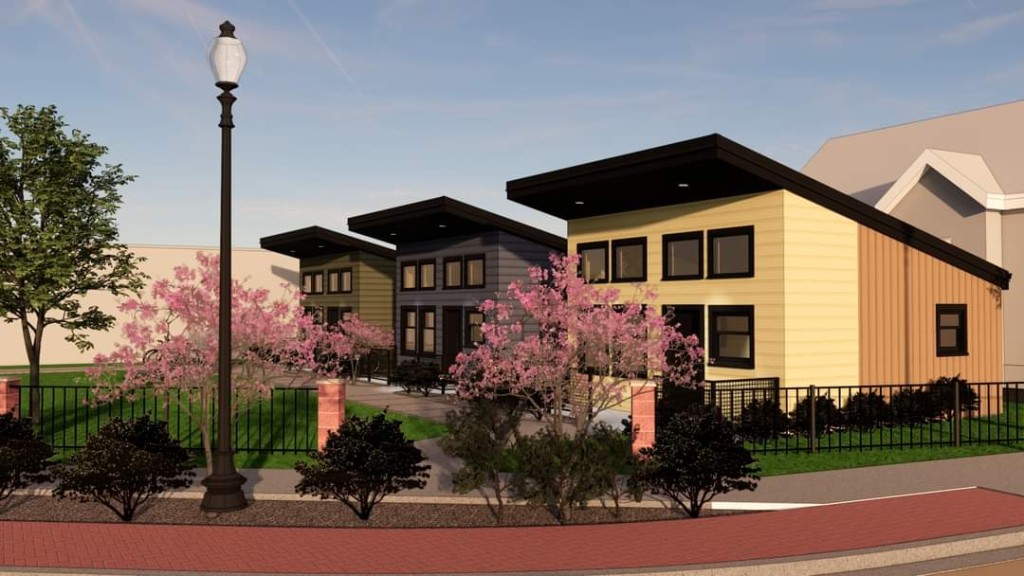
The idea that would become the Tiny Houses of HOPE began taking shape in 2019. Hooker and her partners researched affordable housing models and visited Detroit’s tiny home community for inspiration.
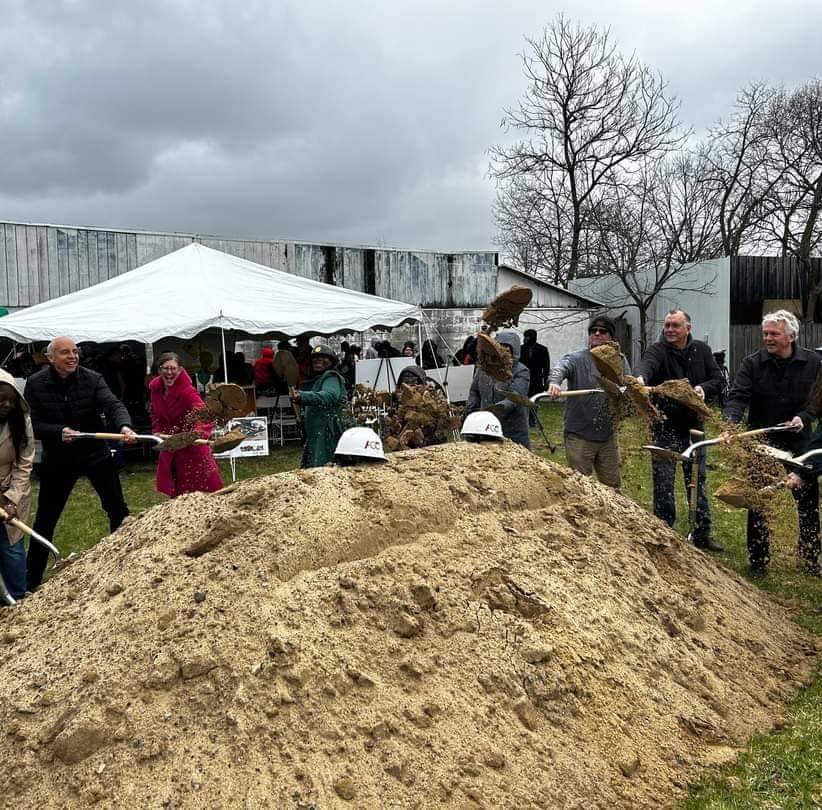
After seeing the project firsthand, they returned to Kalamazoo inspired and ready to try and build something similar. The first groundbreaking was scheduled for March 2020.
Then the pandemic hit.
Construction costs rose sharply, timelines shifted, and the project ran into a series of unexpected hurdles. Hooker said the development process itself continued to present challenges.
Navigating permits, city reviews, and site approvals required months of waiting and repeated paperwork.
“If you miss one meeting by a couple of days, you might have to wait another month,” Hooker said. “It just keeps pushing things back.”
Unexpected costs also emerged. Hooker said one parcel initially discussed at $100 later returned with a price tag of $14,000 after pandemic delays and renewed development interest nearby.
Another property sold as “development ready” revealed a buried structure underground, requiring excavation work that cost tens of thousands of dollars.
“It’s thing after thing,” Hooker said. “The hardest part about this project isn’t raising the money. It’s going through the process.”
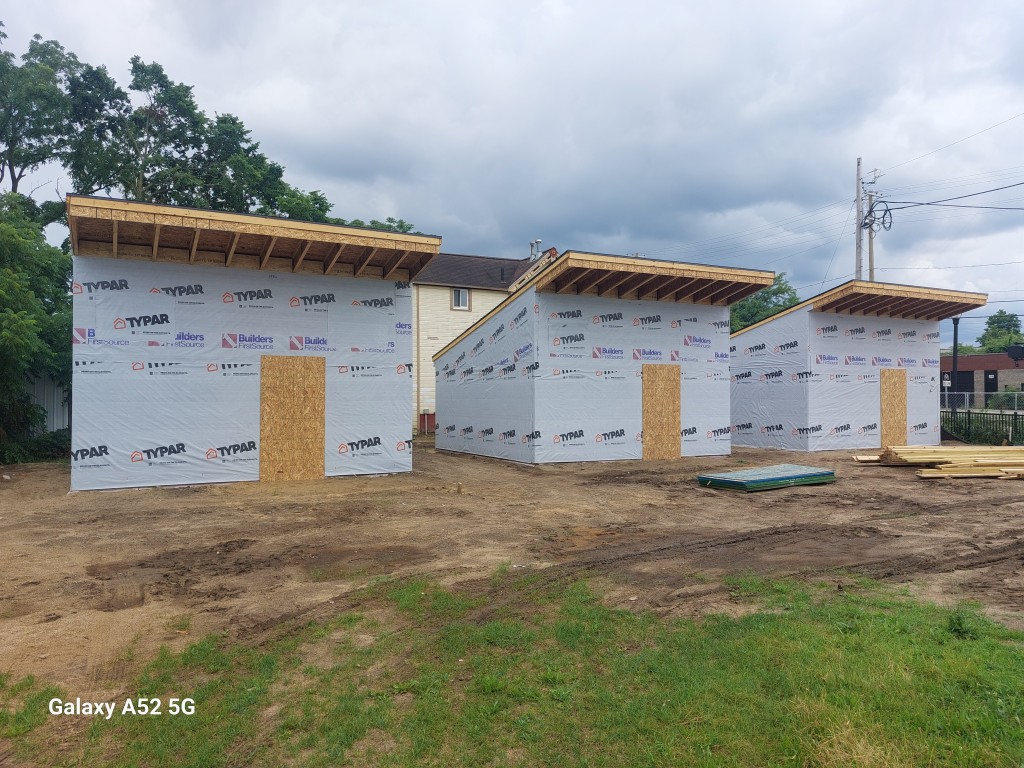
Despite all the challenges, the first tiny homes were eventually built.
The homes are designed to remain affordable, with rent set at about $1 per square foot — roughly $410 per month, plus utilities. HOPE plans to continue expanding the project, with the goal of building additional homes each year.
For Hooker, the most meaningful moments come after construction is finished.
Handing someone the keys to their own home, she said, is something she never takes for granted.
“To give them something as basic as a place that’s nice and decent — it really does bring tears to my eyes,” Hooker said.
For many residents, stable housing represents more than just a roof over their heads.
“They get the opportunity to dream just like everybody else,” Hooker said. “They’re not in survival mode anymore. They’re able to think about what’s next.”
And for Hooker, that possibility — seeing someone move from surviving to thriving — is exactly why the work continues.
Maxwell Knauer is a staff writer for Watershed Voice.
Author

Related Articles
Local stories hit the big screen at Kalamazoo Film Society’s fourth annual showcase
The event features mostly filmmakers from Kalamazoo and the surrounding region, with films shot in — and in some cases about — the city itself.
One of the featured filmmakers, Jerod Kauffman, created a documentary about the final days of the longtime dive bar Harvey’s on the Mall, which closed after a buyout. Kauffman said he wanted to capture the story of a place that helped define Kalamazoo’s nightlife culture.
“The closure was sudden to everyone — the community and staff — so I wanted to immortalize a place that was loved by so many,” Kauffman wrote to Watershed Voice. “I saw a fence and bulldozer outside the building today on the way to work. I think it’s going to be torn down, so I am happy I was able to capture a piece of Kalamazoo history and the bar that stood and served the community for 40+ years.”

Rapid fire film festival Kazoo 48 returns for its seventh year
Designed to introduce people to filmmaking while also challenging experienced creators, Kazoo 48 gives teams 48 hours to complete a short film between one and six minutes long. Each team must incorporate an assigned genre, line of dialogue, character, location, and prop into their film.
Once completed, the films are judged by a panel of local talent. Awards include prizes for best use of an assigned item and the festival’s signature award — a gold engraved kazoo — presented to the best films in both the amateur and professional categories.
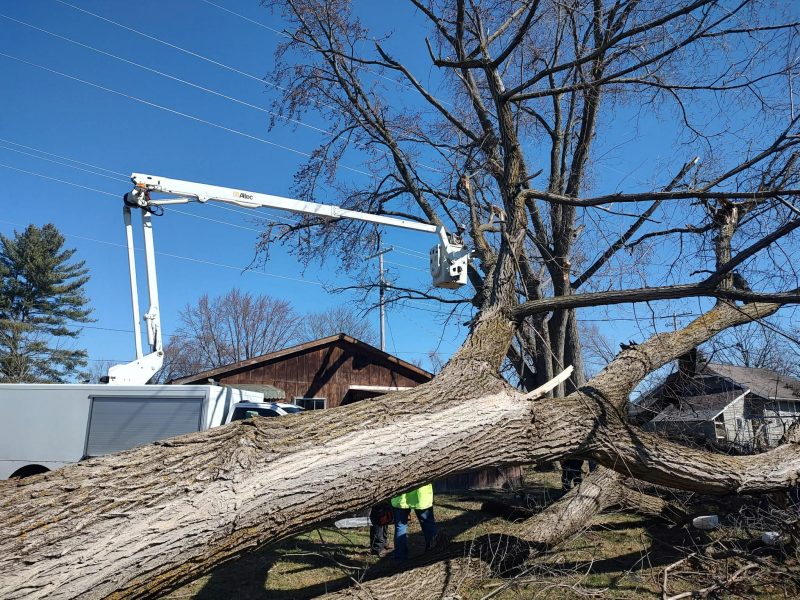
‘We heard our neighbors needed help’: Local electricians union aids cleanup effort following Three Rivers tornado
On Sunday, March 10, around 30 IBEW workers, including representatives of KEI electrical construction and Perkins Electric, gathered in Three Rivers to provide free, professional support to those in need.
“We heard our neighbors needed help cleaning up after the storm, so I decided to ask my union brothers and sisters to come lend a hand,” IBEW 131 President Eddie Leboeuf said.
