
Racist policies shaped a neighborhood. Its lone banking institution helps people overcome
The Northside is one of Kalamazoo’s poorest neighborhoods. It’s also 83% Black.
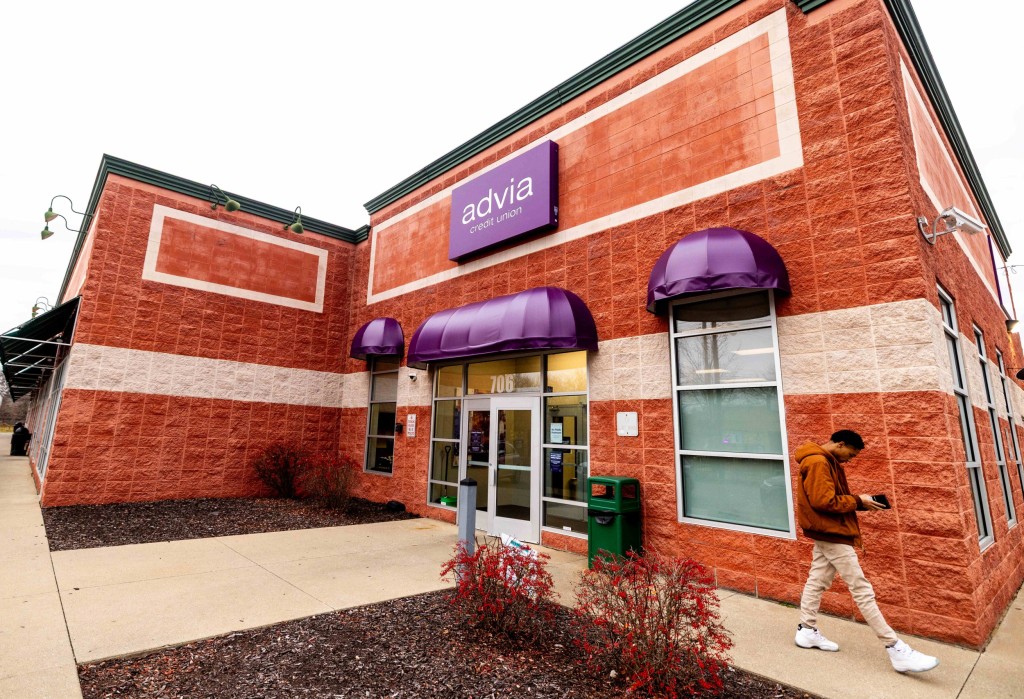
But the neighborhood of 4,500 residents has just one banking institution: Advia Credit Union at 706 N. Westnedge Ave.
It’s carrying the load to help Northside residents build financial security.
This story is part of the Southwest Michigan Journalism Collaborative’s coverage of equitable community development. SWMJC is a group of 12 regional organizations dedicated to strengthening local journalism. To learn more, visit swmichjournalism.com.
The Northside is one of Kalamazoo’s poorest neighborhoods. It’s also 83% Black.
But the neighborhood of 4,500 residents has just one banking institution: Advia Credit Union at 706 N. Westnedge Ave.
It’s carrying the load to help Northside residents build financial security.
Unlike banks — for-profit institutions operating to make money for shareholders — credit unions are member-owned and don’t operate to make a profit.
“Every dollar that we make has to be reinvested into our credit union,” said Alex Minor, Advia community development officer.
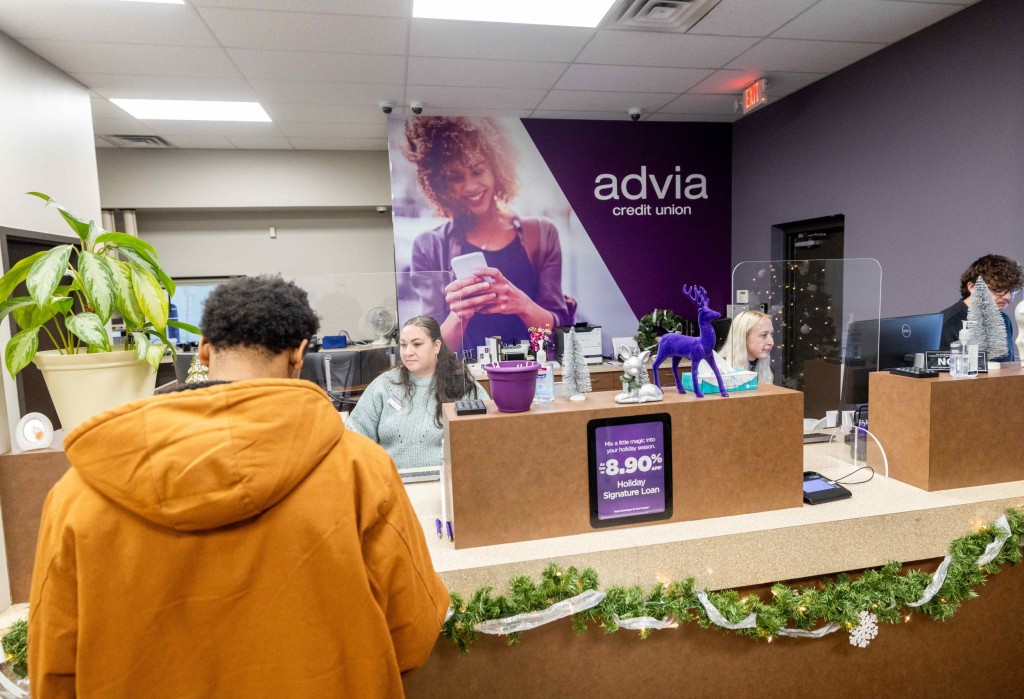
Like a bank, Advia offers financial services like loans, mortgages and insurance coverage. It also offers community workshops and consultations to discuss healthy financial decisions.
For example, employees can advise you not to take out a high-interest loan on a used car that’ll cost you more in repairs than the car cost to buy.
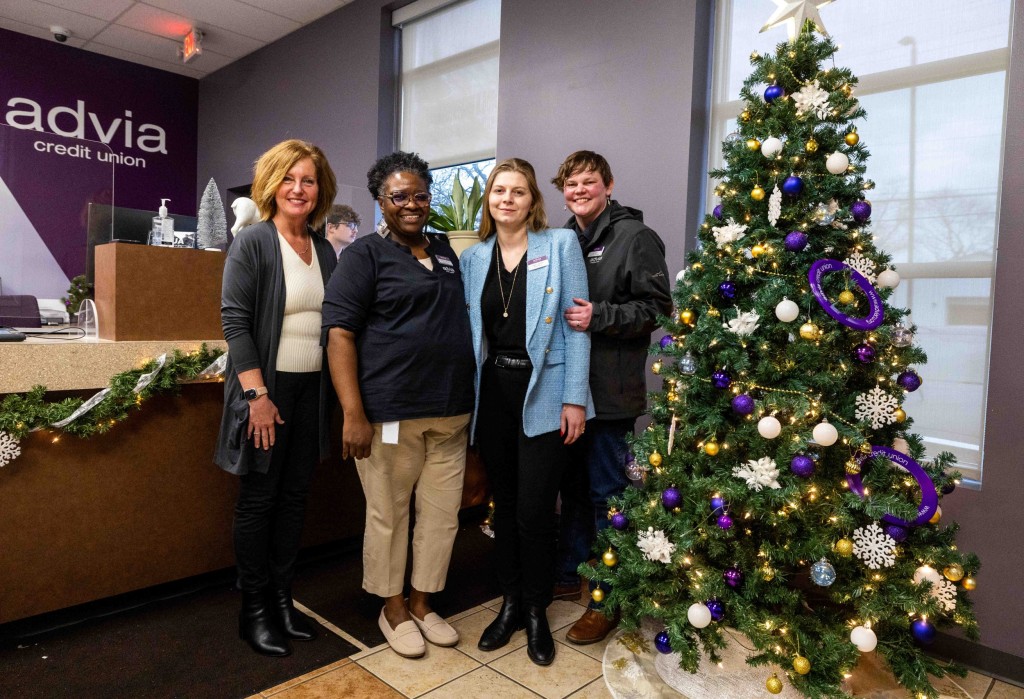
That’s a situation Rekeesha Winston — an Advia branch manager who lives in the Northside — knows from experience.
“I had paid for that car probably four times over,” Winston said of the time she worked with a predatory lender to buy a car.
Predatory lenders use deceptive tactics to convince people to accept high-interest loans, according to the National Association of Consumer Advocates.
Easy access to a nearby helping hand is vital, said Jonathan Yarbrough, Northside Association for Community Development president.
“Just because you are low-income doesn’t mean you have to sacrifice (and have) a low credit score,” Winston said.
A history of discrimination
Roughly 83% of Northside residents — about 3,750 people — are African American, according to 2023 U.S. Census estimates.
But that wasn’t always the case.
In the 1950s, the median income for Northside residents was above the city median, per Census data. At the time, the neighborhood was 87% white.
Racially discriminatory housing policies changed that.
Black individuals from the South migrated to Northern cities like Kalamazoo in large numbers from 1920 to 1970, driven by job opportunities created by World War I. As Black residents moved in, white residents moved out.
Black residents were subject to racially restrictive housing covenants, barring them from purchasing houses in certain neighborhoods.
Neighborhoods were zoned “red” in maps from the federal government, which were used as guidance on where banks should approve or deny loans for home ownership.
The Northside was zoned red because “Negro homes are all through the industrial area,” according to Kalamazoo’s redlining map created in 1937. The flight of white residents out of the Northside quickly followed.
“The banks wouldn’t give you any money to invest in your house,” said Mary Balkema, director of Kalamazoo County’s housing department, in 2024. “Those houses fell into disrepair.”
Some of those Northside homes were demolished by the county, Balkema said. Others are still standing, some with boarded up windows in disrepair.
The median income for households in the Northside’s two census tracts is lower than the city’s overall, according to the most recent Census estimates in 2023. For the neighborhood’s east side, the median household income was $25,750. For the larger west-side tract, it was $38,444.
The city’s median household income was $48,965.
Many Northside residents who own their homes today have had the property passed down through generations, Winston said. But that isn’t always properly reflected in legal documents.
“Sometimes, there might be a house that maybe a grandma left, but it might be in the uncle’s name and the niece lives in it,” Winston said.
Taylor Litchfield, branch manager of the Northside Advia, says she often sees home titles that list “unknown heir.” Without proper titles, a family may lose that home when the resident dies.
When Winston was in charge of the Northside branch, she would direct residents to an attorney who would make sure homeownership documentation was correct, free of charge.
Education
Yarbrough said the rate of private homeownership in the Northside is on the decline.
“Some people either are getting older, or they can’t afford it, and they’re not able to pass (the house) down,” Yarbrough said. “If they do pass it down, those individuals don’t keep up with it, and they just end up selling.”
Yarbrough’s mother owns a home passed down through the family from Yarbrough’s great-grandmother. Their family conversations about building generational wealth through homeownership started when Yarbrough was in high school, he said.
With land in the Northside becoming increasingly more valuable, there’s a lot of pressure on residents to sell their homes, Yarbrough said.

“One time this lady got presented a check of … almost $200,000,” Yarbrough said. “I’m like, ‘One, your house is worth way more than that and two, that’s just absurd.’”
Yarbrough said she ripped up the check after they spoke.
Most people’s financial education comes from the generations before them, Minor said. Bad advice can lead to residents being trapped in high-interest loans or in credit card debt.
“Us being the lower income side of town, it’s been that way for a very long time, simply because a lot of people are uneducated on how to manage (their) finances,” Yarbrough said. “Or when they do get a certain amount of money, they’re using it on things that aren’t going to grow in perpetuity.”
Winston consulted her mother before buying a used car from a predatory lender.
Predatory lenders exist everywhere. But in Kalamazoo, they are more common in low-income areas, Winston said.
“Her bad habits, or what she thought was best, was teaching me. And unfortunately, it wasn’t the best,” Winston said.
Litchfield worked with one member who didn’t realize they’d bought a motorcycle on a credit card. Their interest rate was 28%, Litchfield said.
“Had they gotten a motorcycle loan … that rate would have been well below 10%,” Litchfield said.
It’s important to provide education “before it comes to a point when you’re in a surviving-versus-thriving situation,” Winston said.
Some residents find themselves in situations where they have to choose what bill to pay. They need to know how not paying those bills will affect them, Winston said.
“We’re empowering them to make the best decision, because it is their decision to make. We don’t want to take the power away from them. We just want to give them the tools to be successful.”
One byproduct of redlining was a learned distrust in financial institutions. It’s a barrier Advia continuously works to overcome.
They do so by partnering with community organizations and being present in the neighborhood. Winston said she’ll have residents stop her at the grocery store with questions and she attends residents’ family events.
Author

Related Articles
Portage moves toward data center pause as concerns grow nationwide
The Portage City Council on March 24 unanimously voted to move forward with an ordinance that would establish a temporary moratorium on data centers and battery energy storage systems (BESS).
The action does not immediately enact the moratorium. Instead, it directs city staff to prepare an amendment to the city code for future council consideration.
According to the meeting agenda, the proposed change would amend Chapter 42 of the city code to establish a temporary moratorium on the developments.
If adopted at a future meeting, the moratorium would pause new development related to data centers and battery storage systems while the city considers how to regulate them.
Cass County rejects funding requests, likely nixing Lawless Park improvement project
Commissioner Samuel Barrera, who also serves on the Parks Board, expressed frustration following the vote.
“I just want the members of this board to understand what just happened,” he said. “We have $110K invested into this project — now what are we going to do? We’ve successfully killed this project, so that money is on our hands. I don’t know how we’re going to recover those funds. … I’m really not proud of us right now.”

Glen Oaks names more than 335 students to fall 2025 honors lists
Watershed Voice would like to congratulate all students who have made the honor roll on their success and we wish you luck in your continued pursuit of excellence — academic or otherwise.
Students named to the President’s List earned a 4.0 grade point average. Students named to the Dean’s List earned a GPA between 3.75 and 3.99. Students are listed alphabetically by hometown.
