
TRPD confirms continued use of Flock surveillance technology, says city added seventh camera in 2025
In an exclusive interview with Watershed Voice, Three Rivers Chief of Police Scott Boling and Detective Sgt. Steven Dibble said the cameras provide an additional investigative tool to help identify vehicles connected to crimes.
Flock Safety’s license plate reader system has drawn national criticism from civil liberties groups, particularly the American Civil Liberties Union, which argues the technology enables a form of mass surveillance that extends beyond its original purpose.
Boling said there is no “backdoor access” to the system, including for federal agencies such as ICE, and that any data sharing must be approved by the department.
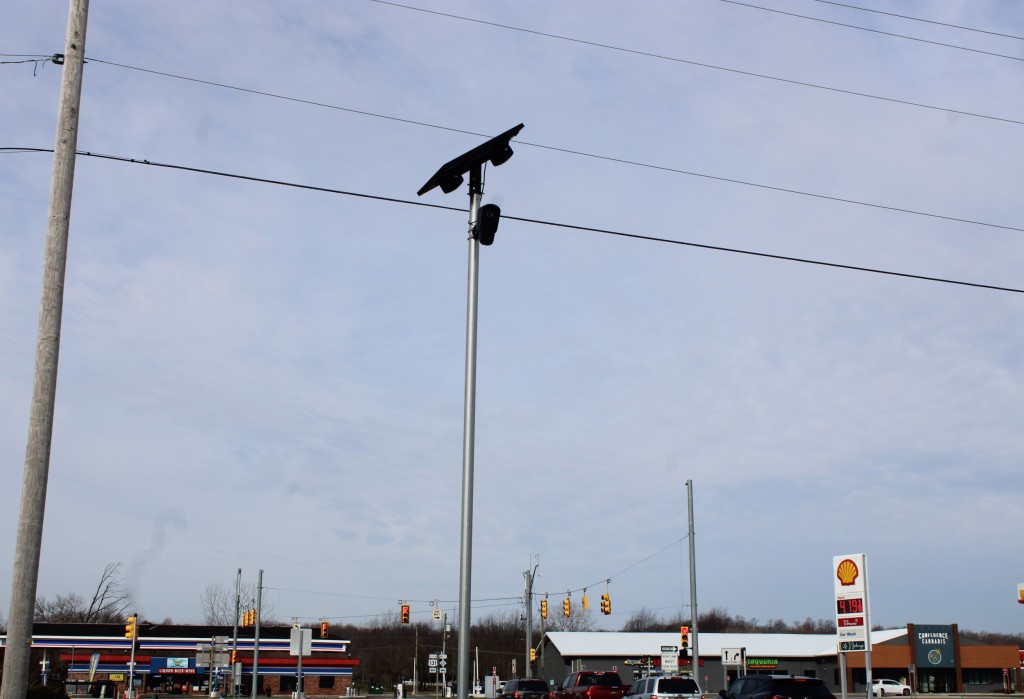
The Three Rivers Police Department confirmed in an exclusive interview with Watershed Voice on Wednesday, March 25 that its license plate reader technology is active and being used by the department to aid investigations.
As previously reported by Watershed Voice, the city has enacted a policy that requires approval from City Manager Joe Bippus before a member of the media is allowed to speak with anyone from the Three Rivers Police Department.
Bippus approved Chief of Police Scott Boling and Detective Sgt. Steven Dibble to speak with Watershed Voice about the cameras.
The department began using the cameras in 2023 through a two-year federal grant from the U.S. Department of Justice’s Rural Violent Crime Reduction Initiative, according to prior reporting by Watershed Voice.
Six cameras were installed throughout the city under that grant. In 2025, after the grant expired, the city began paying $3,000 per camera annually.
Also in 2025, the city added a seventh camera, bringing the total annual cost to about $21,000.
Boling and Dibble said the cameras provide an additional investigative tool to help identify vehicles connected to crimes, including stolen vehicles, organized retail theft and violent incidents.
“I think it’s far cheaper than seven cops posted up 24/7, on these intersections,” Dibble said. “You know, if we, if we’ve got minimum staffing and, you know, we’re not out there on all of these locations and things like that, you know, you don’t see what you don’t see. So I think that’s the biggest advantage to this system.”
How the cameras work
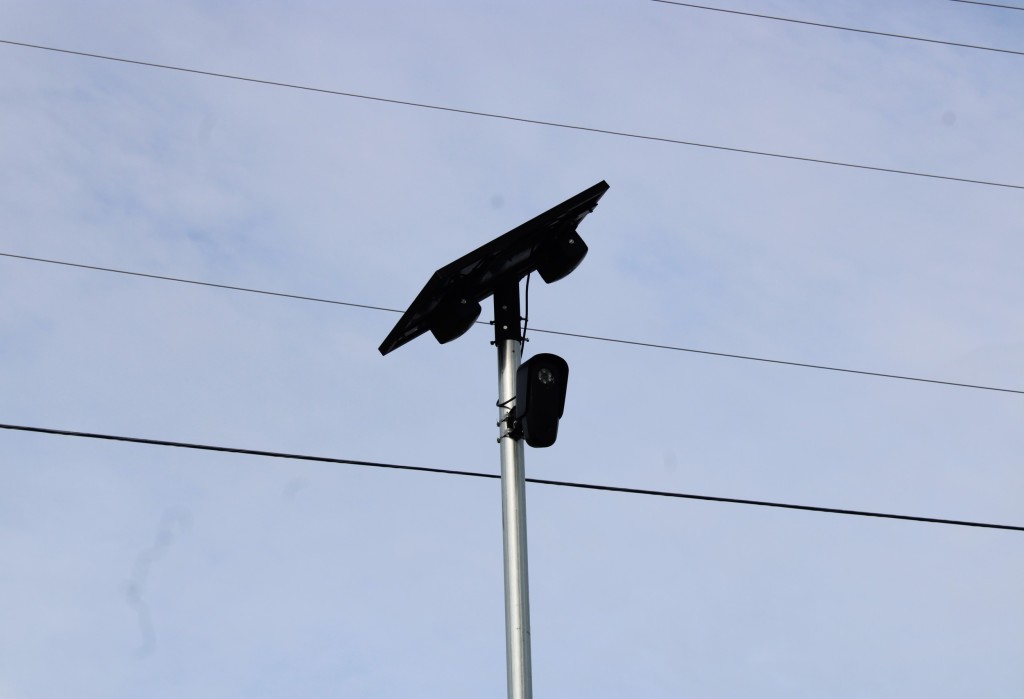
In Three Rivers, there are seven license plate reader cameras throughout the city.
Boling said the cameras are motion-activated and capture an image when a vehicle passes, identifying the license plate, make and model. The cameras are placed at locations intended to capture high volumes of traffic.
Once a vehicle is recorded, the data is stored for up to 30 days and then removed unless it is preserved as part of a criminal investigation.
“Well, the information’s there, access to 30 days,” Boling said. “Now, if it becomes part of a criminal investigation, the person can retrieve that … but that’s all tracked.”
Dibble said department policy requires officers to have a criminal complaint, report number, and documented purpose before accessing the system.
“It has to be a crime and has to be a criminal complaint number for us to even consider looking at to identify a vehicle,” Dibble said. “And obviously there’s a vehicle involved, like, if they fled on foot, we’re not looking at Flock because we do, we don’t. We’re not looking for people, we’re looking for the vehicle that was used.”
He added that the system is not used for minor violations.
“We’re not looking at vehicles because they illegally park downtown … we’re not looking at it for minor traffic infractions,” Dibble said.
Police can request access to data from other agencies, but sharing is not automatic and must be approved by each agency.
“No one has access to our cameras unless we approve it and vice versa,” Dibble said. “It’s not like just a blanket — we’re sharing with everybody.”
Controversy
Flock Safety’s license plate reader system has drawn national criticism from civil liberties groups, particularly the American Civil Liberties Union, which argues the technology enables a form of mass surveillance that extends beyond its original purpose.
In an August 2025 report, the ACLU warned that Flock is “building a dangerous nationwide mass-surveillance infrastructure” by allowing law enforcement agencies across the country to access and search a shared database of vehicle movements.
According to the report, records obtained by the tech outlet 404 Media show that some local police departments have used the system to conduct searches on behalf of U.S. Immigration and Customs Enforcement (ICE), including its Enforcement and Removal Operations division.
In April 2025, the website haveibeenflocked.com — which compiles public records of law enforcement searches using Flock — lists the Three Rivers Police Department as the searching agency in a query associated with an “NCIC ICE” warrant.
The record shows the search spanned 2,169 cameras across 135 networks.
It is unclear from the record what role, if any, the department played in the underlying case.
The report also cited a case in Texas in which a police officer used the system to search nationwide for a woman suspected of obtaining a self-managed abortion, raising concerns about how the technology could be used to track individuals across state lines.
Beyond specific cases, the ACLU warns that the system’s capabilities are expanding. The organization points to efforts by Flock to integrate its data with commercial data brokers, which could allow law enforcement to connect license plate data to personal identities.
The report also raises concerns about new features, including video footage and AI-powered search tools, which could allow police to analyze large amounts of data and identify patterns or “suspicious” behavior across broad populations.
“Flock’s system is undergoing insidious expansion across multiple dimensions. If your community adopts this technology, you need to know it’s doing more than just recording what car is driving where and at what time,” wrote ACLU Senior Policy Analyst Jay Stanley.
Boling said there is no “backdoor access” to the system, including for federal agencies such as ICE, and that any data sharing must be approved by the department.
Local response to national concerns
Boling and Dibble said the cameras are limited in scope and do not record people or use facial recognition technology.
“It takes pictures of a vehicle when it passes, and not of people,” Boling said. “It’s just the back of a vehicle.”
Boling said he does not believe the cameras violate Fourth Amendment protections because they capture images in public spaces.
“There’s argument license plates are private information — well, it’s not, it’s meant to be seen,” he said.
Dibble acknowledged privacy concerns but said surveillance is already common in daily life.
“I think privacy matters. I think privacy matters a lot to everybody,” Dibble said. “I don’t think I should have to be recorded, you know, shopping with my child at Meijer, but I am, because it’s the cost of doing business.”
What’s next
While Three Rivers police say the cameras are a tightly controlled investigative tool, national civil liberties groups argue similar systems have expanded beyond their original purpose in other parts of the country.
As the program continues locally beyond its initial grant funding, questions remain about how it is governed, how data is shared, and what oversight ensures it is used as intended.
Maxwell Knauer is a staff writer for Watershed Voice.
Author

Related Articles
Three Rivers Pride pauses festival, identifies key organizational needs
The board, which is made up of four members — President Riley Mains, Secretary Alexis Jacobs, Treasurer Ziggy Standish, and member Desireé Horrocks — said the organization is using this year to strengthen its structure and improve long-term sustainability.
“At this point, we really have to focus on strengthening the organization so that we can provide you all with the festival that the town deserves,” Standish said.
The Pride festival is the group’s largest event of the year and has cost about $20,000 to $35,000 to host in past years, the board told Watershed Voice.

Over 350 gather for No Kings rally in Three Rivers
More than 350 people gathered at the corner of U.S. 131 and Michigan Avenue on Saturday, March 28, from 3 to 4 p.m. Supportive drivers honked as they passed, while others shouted at demonstrators from their vehicles. At least two trucks repeatedly drove past the crowd in the lane closest to the sidewalk, revving their engines and emitting diesel exhaust toward protesters.

Three Rivers Pride to host public board meeting this Wednesday
Three Rivers Pride is hosting an informational event this Wednesday, April 1 at 6 p.m. at GG’s Cookies to provide information and clarity as to why there won’t be a Pride event sponsored by the nonprofit this year.
