
Early guide to Michigan’s August 4 primary election
While many voters focus on November, the primary narrows the field in races that will shape state and local government for years to come.
Watershed Voice has assembled this early guide to help readers prepare well in advance. Additional candidate profiles, questionnaires, and proposal explainers will be published closer to Election Day.
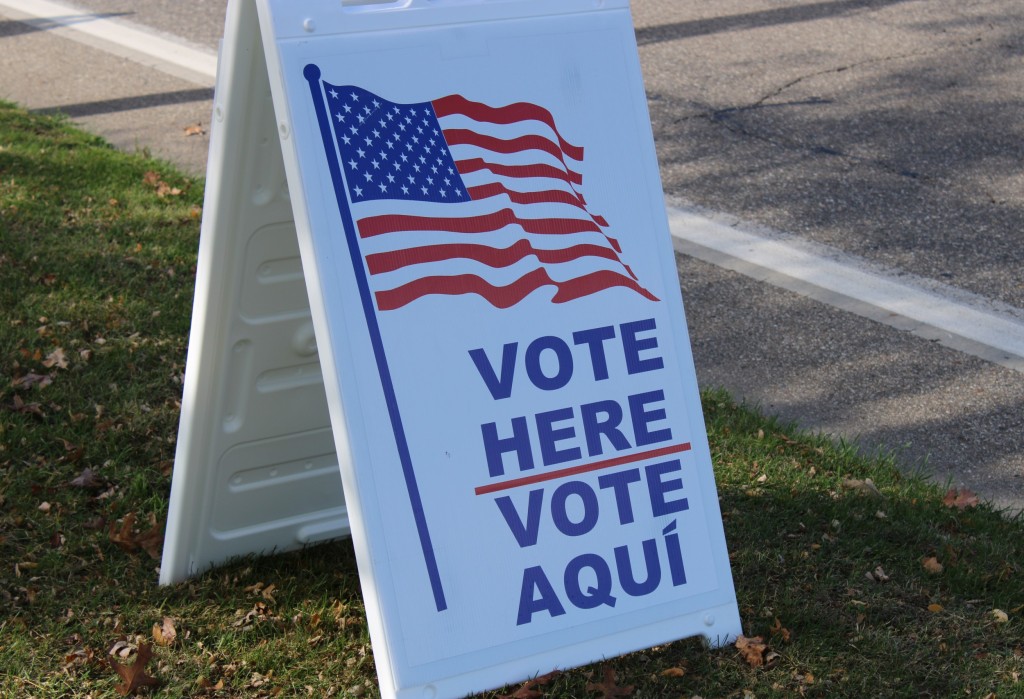
The August primary election is still over a month away, but now is the time for voters to start making their plans.
Michigan’s primary election will be held Tuesday, August 4. Voters across St. Joseph, Cass, and Kalamazoo counties will decide party nominees for several major offices, including governor, U.S. Senate, and state legislative seats. In some communities, local races and ballot proposals will also be decided.
Watershed Voice has assembled this early guide to help readers prepare well in advance. Additional candidate profiles, questionnaires, and proposal explainers will be published closer to Election Day.
First, when and where?
- July 20: Last day to register online or by mail
- August 4: Election Day
Michigan voters may also register in person with their local clerk through Election Day.
Absentee ballots are available to any registered voter. Voters can request an absentee ballot through their local clerk’s office. Online and mail requests for absentee ballots must be received by a township or city clerk no later than 5 p.m. the Friday before the election.
If a voter is already registered at their current address, they may request an absentee ballot in person at their clerk’s office anytime up until 4 p.m. the day before the election.
Voters can also check their registration status, preview their ballot, and find local clerk information through Michigan’s voter information portal.
Next, why vote in a primary?
Primary elections determine which candidates will appear on the November general election ballot.
While many voters focus on November, the primary narrows the field in races that will shape state and local government for years to come. It gives voters the opportunity to decide which candidates they believe should represent each political party in the general election.
Michigan law provides for open primaries, meaning voters may participate in either party’s primary regardless of their personal political affiliation.
In Michigan, the winner of a primary election is the candidate who receives the greatest number of votes cast for that office, even if they do not win an outright majority.
Additionally, some local nonpartisan races may appear on the August ballot to narrow the field ahead of the November general election. In Three Rivers, voters in the City Commission’s 2nd District race will vote in August before that race moves on to the November ballot.
So, who’s on the ballot?
Statewide, voters will see primary contests for:
- Governor
- U.S. Senate
- U.S. House of Representatives
- Michigan Senate
- Michigan House of Representatives
Not every statewide office appears on the August ballot. Candidates for attorney general, secretary of state, and the Michigan Supreme Court are nominated through party conventions and will first appear on the November ballot.
This year, voters will help shape races to replace term-limited Gov. Gretchen Whitmer, Secretary of State Jocelyn Benson, and Attorney General Dana Nessel, as well as Michigan’s open U.S. Senate seat.
Some of the major races voters will see include:
Governor
Democratic candidates
- Jocelyn Benson
- Christopher Robert Swanson
Republican candidates
- Mike Cox
- John James
- Perry Johnson
- Aric Nesbitt
U.S. Senate
Democratic candidates
- Abdul El-Sayed
- Mallory McMorrow
- Haley Stevens
Republican candidates
- Mike Rogers
Locally, voters will help shape races for State Senate, State House of Representatives, and Three Rivers City Commission.
State legislative races function as traditional partisan primaries, where each party selects a nominee for November. In Three Rivers, voters in the City Commission’s 2nd District race will vote in August to determine which candidates advance to the November election.
Among the local races Watershed Voice will be following are:
State Senate District 17
- Ashleigh Baker (D)
- Mike D. Jones (D)
- Brett Muchow (D)
- Jonathan Lindsey (R)
State House District 36
- Cole Slaski (D)
- Steve Carra (R)
- Max Coon (R)
- Luke Lori (R)
Three Rivers City Commission District 2
- Steven Haigh
- Josh Hoeppner
- Maurice D. Kelly
Races Watershed Voice will be covering
Watershed Voice plans election coverage focused on races directly affecting readers in St. Joseph, Cass, and Kalamazoo counties.
Because statewide races such as governor and U.S. Senate already receive significant coverage from larger media outlets, Watershed Voice’s election reporting will focus primarily on local races that directly impact residents in our coverage area.
Watershed Voice will send candidate questionnaires to candidates in the following races: State Senate District 17, State House District 36, and Three Rivers City Commission District 2.
Responses will be published as they are received and later compiled into a voter guide ahead of Election Day.
Additional election guides, ballot proposal explainers, and local race coverage will be published throughout July leading up to the August 4 election.
Maxwell Knauer is a staff writer for Watershed Voice.
Author

Related Articles
OutCenter hosting open house Friday in downtown Dowagiac
“We’re talking about a sizable portion of our communities that need support, need to be able to find community, and need folks out there that are advocating for them,” Executive Director Gerik Maverick said. “We have been working with schools for just over a decade. We work with healthcare systems on training to make sure folks are able to get resources. We’re working with the area agency on aging on some very exciting new projects.”
Three Rivers Athletic Club to host ribbon cutting ceremony Friday
The fitness center once thought to be closing for good will host a ribbon-cutting ceremony Friday after its new owners reopened the gym under a new name, Three Rivers Athletic Club.
Findings of investigation into Sturgis City Commission conduct leaves key questions unanswered
After a closed session during their September 23 meeting, the Sturgis City Commission unanimously voted to release the findings of the external investigation by Miller Johnson that looked into alleged wrongdoing by commissioners. The report details the events leading up to the public controversy, the investigator’s findings, and his legal conclusions regarding the commissioners’ conduct.
This story presents the events chronologically, drawing on the investigator’s findings and the accounts of those interviewed.
