
Journalists and advocates gather in Kalamazoo to discuss affordable housing
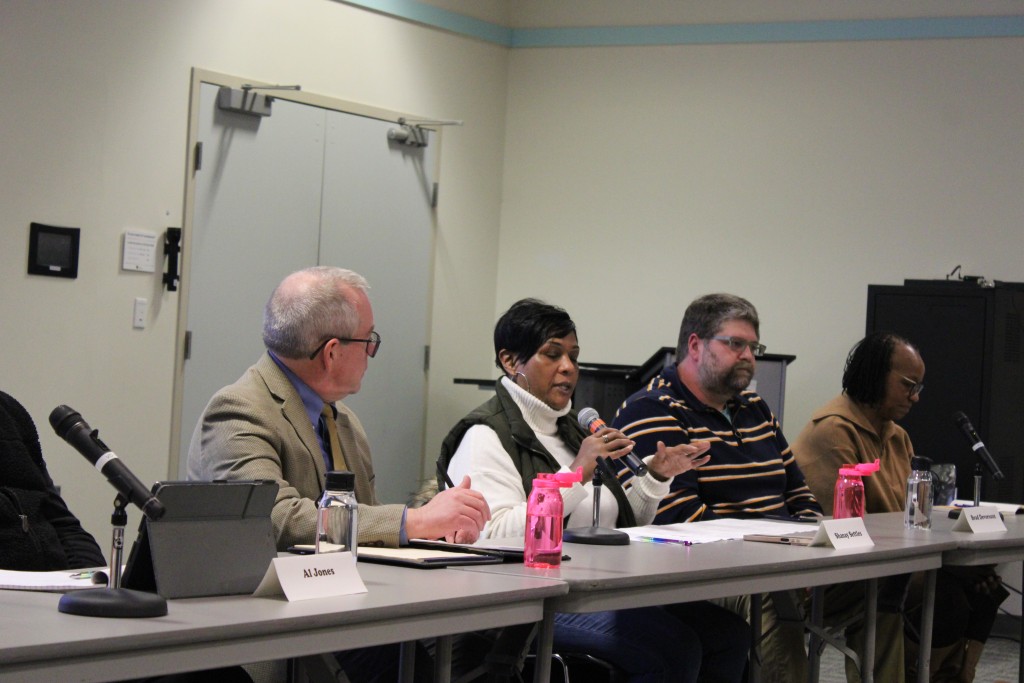
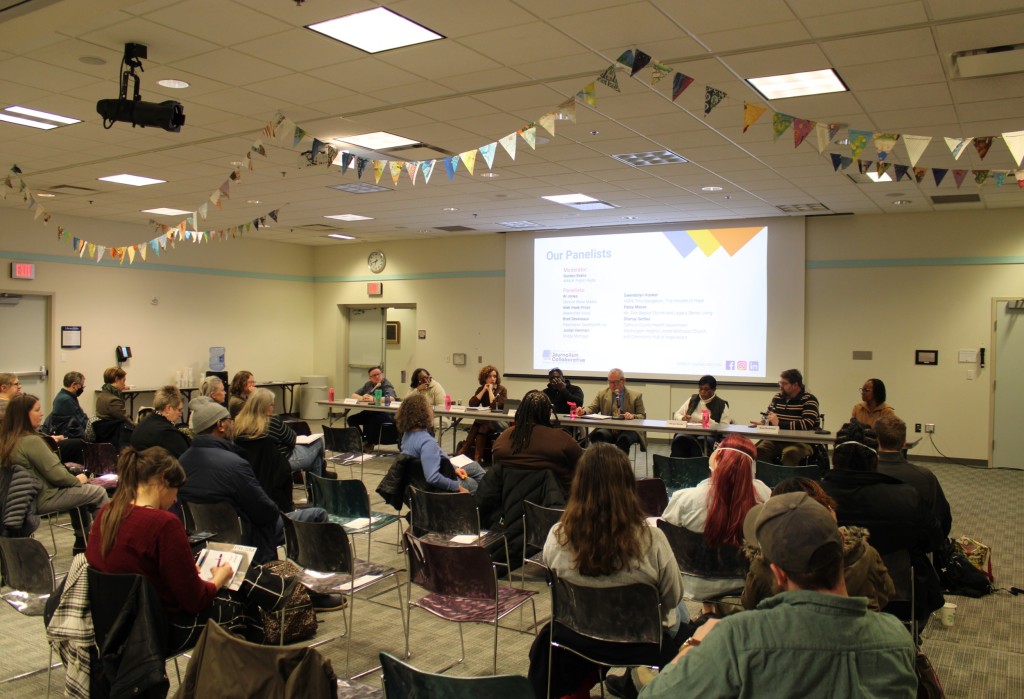
Panelists included journalists who regularly cover housing and community issues — Watershed Voice editor-in-chief and founder Alek Haak-Frost, Brad Devereaux of MLive, Jordyn Hermani of Bridge Michigan, and freelance journalist Al Jones, project editor for On the Ground Kalamazoo — as well as housing advocates Gwendolyn Hooker of Kalamazoo-based Hope Through Navigation, Shanay Settles of the Calhoun County Health Department, and Patsy Moore of Mount Zion Baptist Church and Legacy Senior Living.
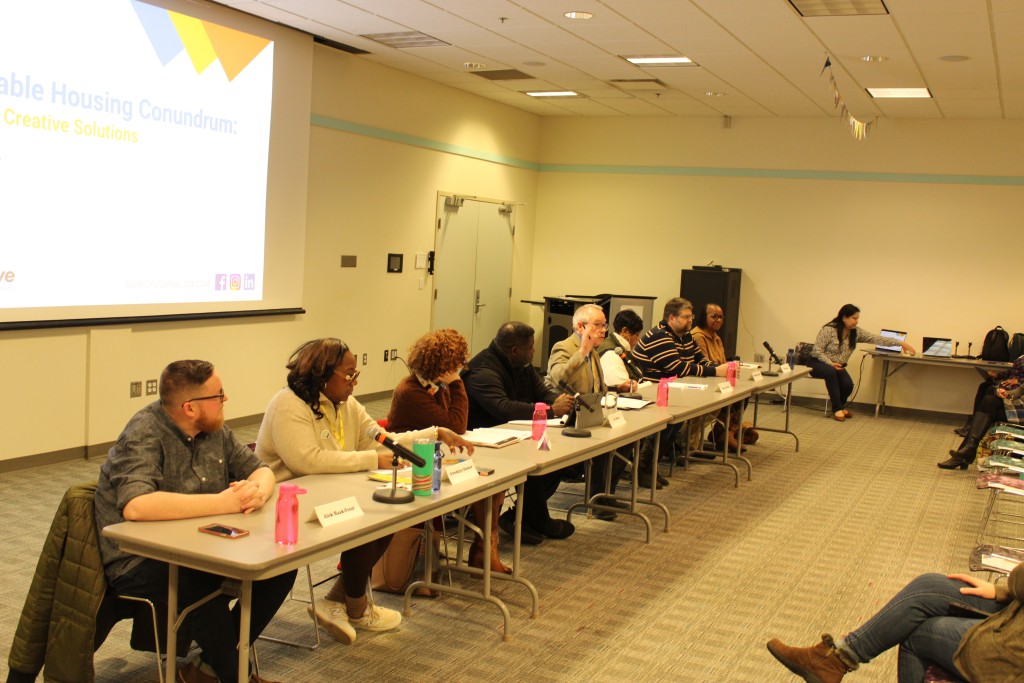
Housing advocates and journalists gathered in Kalamazoo for a panel discussion examining the region’s ongoing affordable housing crisis, highlighting systemic barriers, community resistance and the need for new approaches to an issue panelists said has persisted for decades.
The discussion, moderated by WMUK’s Gordon Evans, director of content operations and audience development, explored what “affordable housing” actually means, why proposed solutions so often stall, and how outdated systems struggle to meet current needs.
Panelists included journalists who regularly cover housing and community issues — Watershed Voice editor-in-chief and founder Alek Haak-Frost, Brad Devereaux of MLive, Jordyn Hermani of Bridge Michigan, and freelance journalist Al Jones, project editor for On the Ground Kalamazoo — as well as housing advocates Gwendolyn Hooker of Kalamazoo-based Hope Through Navigation, Shanay Settles of the Calhoun County Health Department, and Patsy Moore of Mount Zion Baptist Church and Legacy Senior Living.
The event was hosted by the Southwest Michigan Journalism Collaborative, a regional partnership of media, educational and community organizations working to strengthen local journalism and elevate diverse perspectives across Kalamazoo, Calhoun, St. Joseph and Cass counties. The collaborative brings together outlets and reporters to address shared regional issues through coordinated coverage and public engagement.
While the conversation ranged widely, several themes dominated: how communities define “affordable housing,” the bureaucratic and political roadblocks that limit development, and the lived realities of people facing housing insecurity.
What “affordable housing” means
Haak-Frost opened the discussion by referencing the standard definition of affordable housing — housing costs that do not exceed 30% of a household’s income — but panelists quickly questioned whether the term itself has become a barrier.
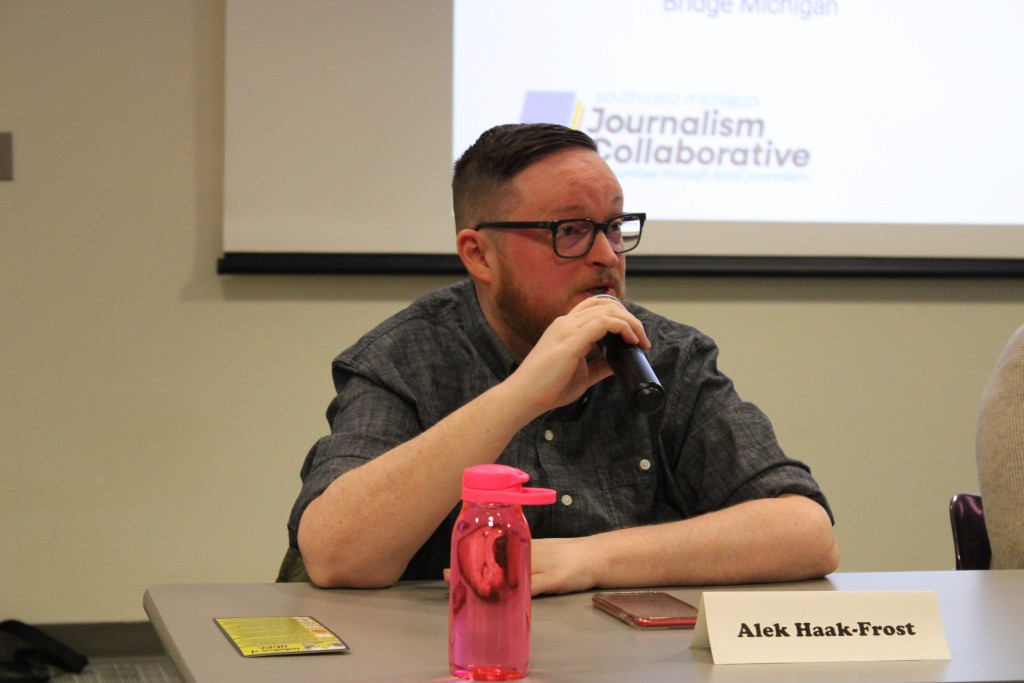
Alternatives such as “accessible,” “low-income” or “attainable” housing were raised as ways to reframe the issue and move past negative assumptions associated with the word “affordable.”
Hermani, speaking from her perspective as a journalist covering housing issues, said she has repeatedly encountered resistance when developments are labeled “affordable.”
“It’s almost used as a slur at this point,” Hermani said, describing how the term can trigger opposition before conversations even begin. She said developers she has spoken with are often hesitant to pursue projects branded as affordable because of the added scrutiny, stigma and neighborhood resistance that can follow.
Hermani also pointed to a trend in which developers purchase older, lower-cost homes — many built before 1970 — renovate them and sell them at higher prices, shrinking the supply of housing available to lower-income buyers.
Jones cited figures showing a widening gap between what it costs to build homes in Michigan and what many residents can afford. According to the data he referenced, the median price of newly built homes statewide is about $325,000, while the median price affordable to many homebuyers is closer to $175,000 — a difference of roughly $150,000.
Haak-Frost added that even people who secure affordable housing often cannot move into more stable options as housing costs continue to outpace wages, particularly for households near the poverty line.
Systemic roadblocks
Beyond terminology, panelists emphasized systemic barriers that continue to hinder progress.
“The funding may never come, but the problem will persist,” Haak-Frost said, pointing to the uncertainty surrounding long-term investment.
Housing advocates described resistance not just from funding structures, but from community pushback. Hooker said that while people may support affordable housing in theory, they often oppose developments near their own neighborhoods.
“We’ll give you the money right now, but not for that group of people,” Hooker said, describing sentiments she has heard from potential investors.
She emphasized that people seeking affordable housing often include formerly incarcerated individuals, people recovering from substance use and disproportionately minoritized groups — populations that frequently face stigma.
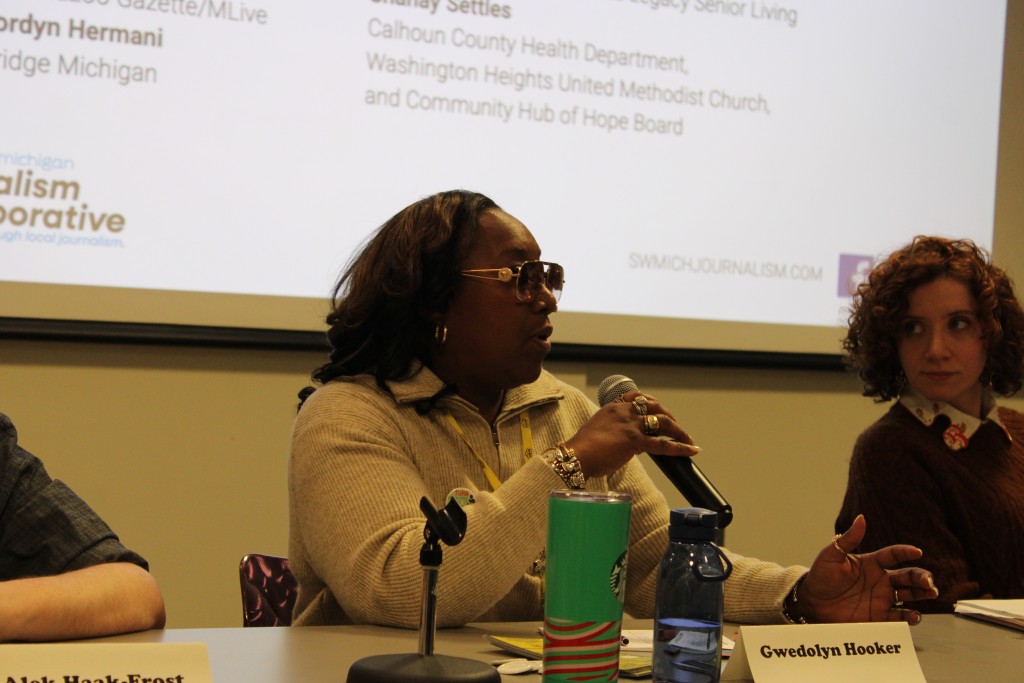
“The streets cannot be a waiting room for unhoused people,” Hooker said. “It’s an issue about the system evolving to meet people now.”
Hooker described outdated zoning codes and ordinances as major obstacles, citing difficulties launching a tiny homes project in Kalamazoo due to regulatory hurdles.
“I wouldn’t say it’s changed — it’s evolved,” Settles said, responding to a question about how the affordable housing landscape has shifted over time.
Haak-Frost also highlighted challenges in rural areas, noting that in parts of St. Joseph County, much of the housing stock is built for people who do not live there year-round, driving up prices and limiting options for residents.
Local obstacles: NIMBYism
Panelists repeatedly returned to NIMBYism — “not in my backyard” opposition — as one of the most persistent local barriers to affordable housing development.
Hermani cited Housing Resources Inc.’s attempt to bring modular “pod” housing units to Kalamazoo as an example. Despite the need for additional housing options, the organization was unable to secure a location for the units in the city, ultimately forcing the group to explore sites elsewhere, including Lansing where they are now.
Hermani said such resistance often comes from residents who support affordable housing in theory but oppose projects near their own neighborhoods, effectively stalling developments even when funding and plans are in place.
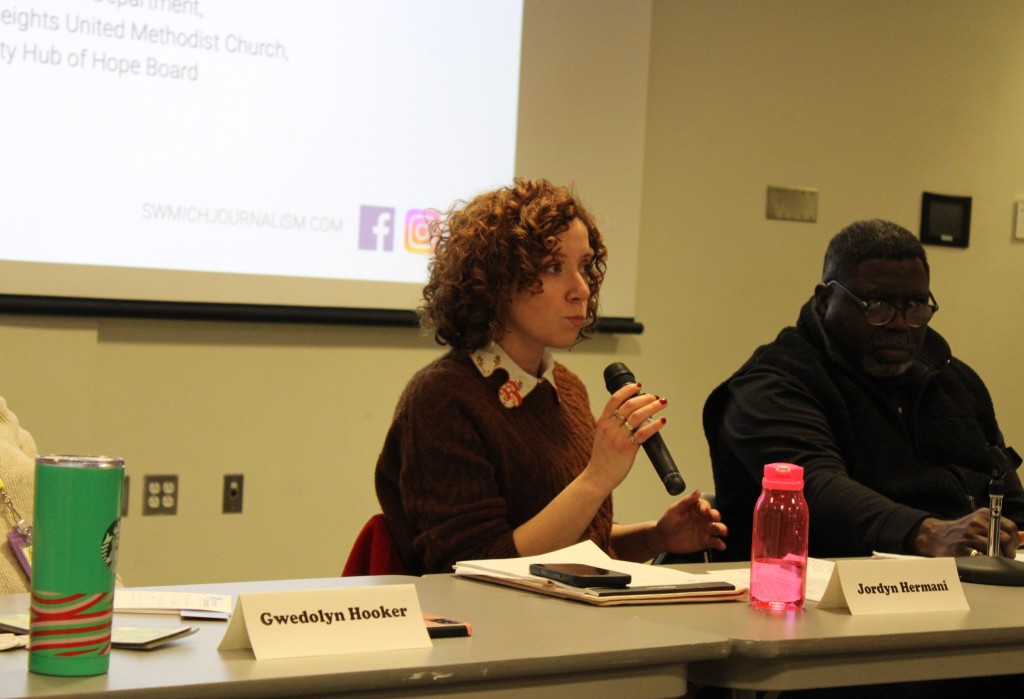
She also pointed to a growing response to NIMBYism rooted in faith communities known as YIGBY — “yes in God’s backyard” — a movement that frames housing access as a moral and religious responsibility.
Evans directed a question about the initiative to Moore, who was representing a Christian organization on the panel.
“We do feel it is a call of God to best serve the needs of our community,” Moore said, framing housing advocacy as a faith-driven obligation rather than a political stance.
Panelists said movements like YIGBY highlight how opposition to affordable housing is being challenged not only by policy arguments, but by moral and ethical appeals as well.
Creative approaches and solutions
Despite the challenges outlined throughout the discussion, panelists emphasized that progress will require creativity, flexibility and a willingness to rethink how housing is built and regulated.
“There’s not a specific way this needs to get done — it just needs to get done,” Hooker said.
Jones proposed a housing village model that would integrate homes with grocery access, shared spaces and services, helping residents build community and stability. He said the lack of connection in traditional housing interventions can make it harder for people in vulnerable situations to remain housed.
Hermani suggested repurposing underused or abandoned spaces — such as malls, warehouses and vacant apartment complexes — as a faster and more efficient way to expand housing options. Hooker pointed to her ongoing tiny homes project as an example of innovation already underway.
Devereaux said Kalamazoo County has made some progress toward its housing goals, with approximately 2,500 of an estimated 8,000 needed housing units built toward local affordability targets, but said the pace remains far too slow to meet demand.
Panelists agreed that addressing the region’s housing crisis will require cooperation across all levels of government, updated zoning and building codes, and sustained public pressure to overcome resistance to change.
Maxwell Knauer is a staff writer for Watershed Voice.
Author

Related Articles
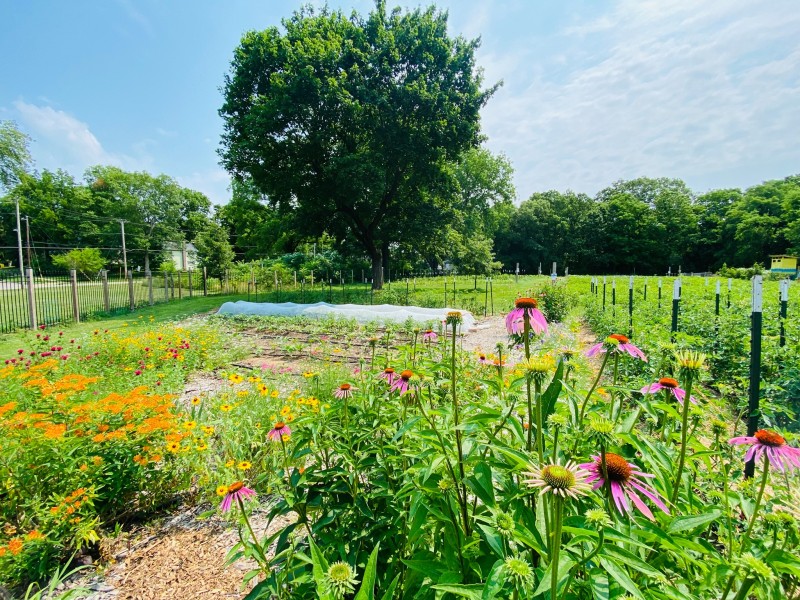
Huss Project offering paid summer internship for WMU students in Three Rivers
The 10-week internship generally runs through the organization’s Back to School Celebration at the August Second Saturday Farmers Market. Interns are paid $17.50 per hour and are expected to work about 20 hours per week. Every other week, they attend professional development training at Western Michigan University as part of the Broncos LEAD program.
For Co-founder Rob Vander-Giessen Reitsma, the internship is about more than seasonal help — it’s about formation.
“We hope students learn about small-scale food production, community development in a small town, and how our work is rooted in the core values of our organization,” he said.
Keep Your Voice Down: To begin with, everything
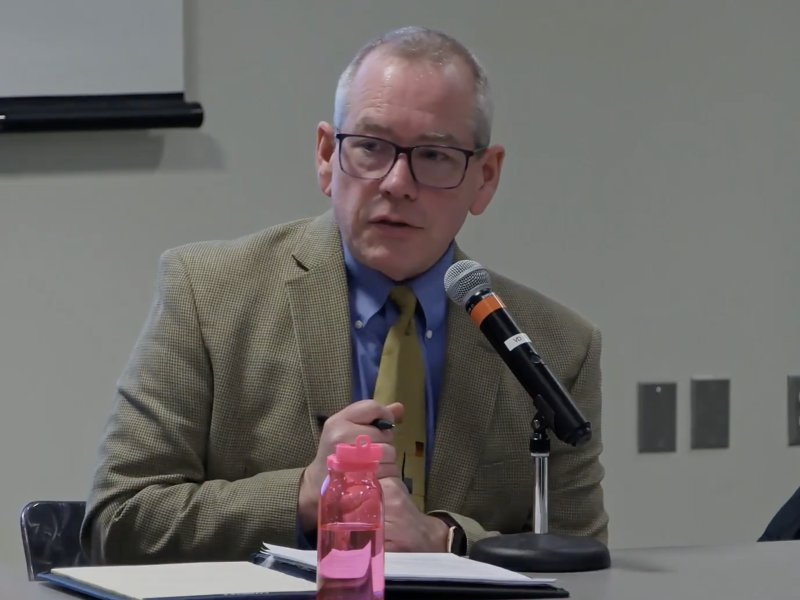
WMUK’s Gordon Evans stopped by Keep Your Voice Down this week to discuss his career in public radio, the state of journalism, how it’s changed, where it’s headed, and what gives him hope about the industry he’s dedicated his life to. Other topics include the quotability of Almost Famous, news anchors of yesteryear and the glaring absence of such figures in 2026, U.S. women’s hockey, and whether Doug Sears Jr.’s dad actually skipped class to watch the Miracle on Ice in 1980.
Drew Duncan says policy saved his life — now he’s shaping it
“My life was saved because of the Affordable Care Act,” Kalamazoo City Commissioner and Vice Mayor Drew Duncan said. “Without it, I would not have received care.”
Now 36, Duncan sees that period — when he was diagnosed in late 2009 and underwent treatment through 2011 — as foundational. It was the moment policy stopped being abstract.
“I have a story that is like many people — but maybe not a story people would expect,” he said. “I try to enter the room with a listening posture. I see urgency around the issues that are plaguing my constituents.”
