
‘We just can’t compete’: Southwest Michigan farmers caught between high labor costs and cheap imports amid immigration uncertainty
Over the last decade and a half, Michigan has lost specialty crops at nearly twice the rate of the U.S. on average, according to a report released in March by the Michigan State University Extension. More than 1,700 Southwest Michigan farms ceased operation between 2012 and 2022, the most recent year for which data is available.
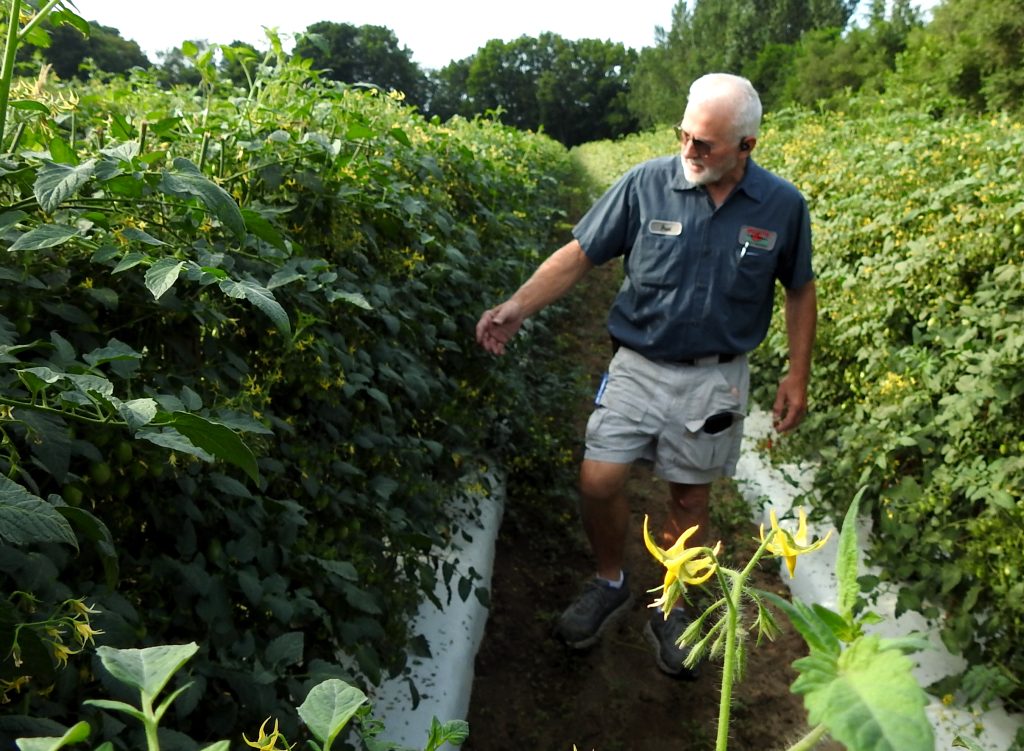
When Berrien County grower Fred Leitz gave a Mexican farm worker her first paycheck, the woman started to weep.
Leitz asked an interpreter if he’d done something wrong.
“She said, ‘It takes her eight months to make what she just made in a week here,’” Leitz says. “And it wasn’t even a big week.”
Foreign-born farm workers come to the U.S. ready to work hard to earn salaries they could never dream of at home. Without them, the growers that underpin the state’s multi-billion dollar specialty crop industry couldn’t survive.
But high labor costs and an influx of foreign produce have reduced profit margins and forced some Southwest Michigan farms to close. Other farmers say they could go under, too, if nothing changes.
That change, however, could come in the form of fewer workers in local fields as the federal government enacts new and vigorous immigration policy. So far, Michigan farmers have not reported raids or large numbers of workers refusing to work. But even farms who hire documented workers could feel the pinch if deportation efforts ramp up locally, migrant advocates say.
Recent closures of numerous farms in the region have a ripple effect impacting entire communities, says Chris Bardenhagen, farm educator for the Michigan State University Extension, who has studied the impacts of the loss of specialty crops in Michigan.
“There’s not a lot of pithy solutions right around the corner,” Bardenhagen says. Advanced farm machinery and changes to food regulations may, some day, ease the strain on Michigan farmers trying to make a living raising needed food, he says. “The question to me is, are we going to keep our specialty crop industries long enough to reach those solutions?”
Documented and undocumented
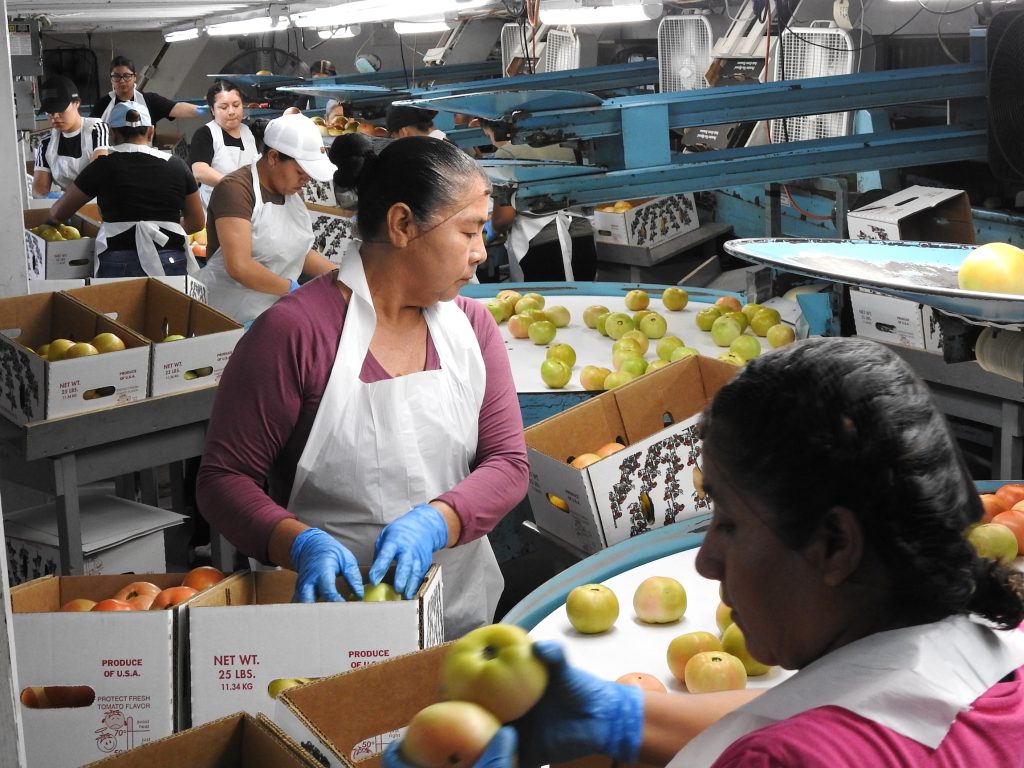
Michigan ranks second in crop diversity only to California, thanks largely to the accommodating climate and sandy soils of Southwest Michigan. The region’s 6,400 farms boast a wide range of specialty crops, from fruits and vegetables to tree nuts and nursery plants.
Southwest Michigan farms make up 14% of farms in the state but hire a third of its migrant farm workers ― more than 6,000 of the 19,000 reported in the state ― with most of those workers employed in Van Buren and Berrien counties, according to the most recent U.S. Department of Agriculture census.
Unlike seasonal workers, who live close enough to their work to commute from home, migrant workers travel from their home to perform agricultural work ― some with legal status, others as undocumented workers. Migrant workers might come from another country and return home at season’s end, or they may travel within the U.S., working in northern states in summer and in southern states in winter.
Some of the workers who have returned to Leitz’s farm over generations came to the U.S. illegally. Many of their U.S.-born children settled in the area and now contribute to the community as doctors, lawyers, teachers and other professionals.
Today, he uses a federal visa program that allows laborers from other countries to work U.S. fields legally. Rumors of deportation elsewhere don’t worry him or his workers, at least not too much, Leitz says.
“It weighs on you a little bit,” he says.
Workers from other countries come to Southwest Michigan to do the work local workers aren’t willing to do, says Daniel Oropeza, Michigan organizer for the UFW Foundation, a nonprofit organization that advocates for protections for farm workers.
Most sources believe about 40% to 50% of U.S. farm workers are undocumented, although farm workers in Midwestern states are more likely to have legal status than those on the West Coast.
In recent years, increasingly more U.S. farmers have shifted away from hiring undocumented workers in favor of using the federal H-2A Temporary Agricultural Workers Program, often called the H-2A visa program. The program allows U.S. growers to legally hire workers from other countries to perform short-term farm work.
Farmers who continue to hire undocumented workers instead of using the H-2A program know they run the risk of getting caught and fined, says Amanda Villa, Oropeza’s co-organizer for the Michigan arm of the UFW Foundation. They do it because “they have to have somebody,” Villa says.
A risky occupation
Farm raids like those in California in recent weeks, in which immigration officials arrested hundreds of farm workers on allegations of being in the country illegally, make going to work terrifying for Michigan farm workers, Villa says. As part of their work with the UFW Foundation, she and Oropeza educate workers on what to do if confronted by an immigration official.
Carry your legal paperwork everywhere, they advise. If an immigration official appears on your doorstep, stay quiet, don’t open the door, and only say, “Lawyer.” Make plans for who will take care of your kids if you disappear.
“It’s scary to talk about it,” Villa says. “But it’s even scarier to not be prepared.”
Many workers, even those with legal status, are reluctant to learn about deportation rules, Oropeza says. He distributes bilingual “Know Your Rights” cards to discourage unnecessary detentions that could hurt both workers and their employers.
Increased risk of detention also exacerbates rights violations sometimes found in the farm work sector, says Anna Hill Galendez, managing attorney at the Michigan Immigrant Rights Center.
Such violations happen even absent the current focus on migrant workers. A survey of farm workers by the Center for Migrants’ Rights indicated farm workers from other countries face underpayment, discrimination, unsafe conditions, and other rights violations.
Workers who find their way to an attorney may eventually get help, but H-2A workers are still regularly denied their rights. Workers without legal status have even less security and greater danger if they raise a complaint, Hill Galendez says.
“An employer who wants to take advantage has a lot of leeway to do so,” the attorney says ― and workers “have very few options other than to keep working and hoping they’ll be paid.“
Undocumented workers already established on Michigan farms currently have no way to seek legal status to avoid deportation. That’s something the government could tackle to support the nation’s farmers, but, Hill Galendez says, “there’s not been the political will to pass those laws.”
A 2021 bill reintroduced to the federal legislature in May could, if approved, create a path to American citizenship for some undocumented farm workers. A version of the bill passed the U.S. House of Representatives in 2021 with bipartisan support but was not passed into law.
Hill Galendez has not heard of any large-scale raids on Michigan farms, although she knows of workers picked up at their homes or on their way to work, including in Southwest Michigan. She has heard, though, of Michigan farms firing workers en masse, saying they have received notice the farmers will face federal fines if they get caught employing undocumented workers.
Watershed Voice was not able to speak to any farmers who acknowledged hiring non-H2A workers. One Southwest Michigan grower said he couldn’t speak to the media for fear of reprisals from the U.S. Department of Labor.
This spring’s opening of a large immigrant detention center in northern Michigan worries Hill Galendez, who anticipates ramped-up federal enforcement in the state, potentially including large-scale farm raids this summer and fall.
Untenable costs
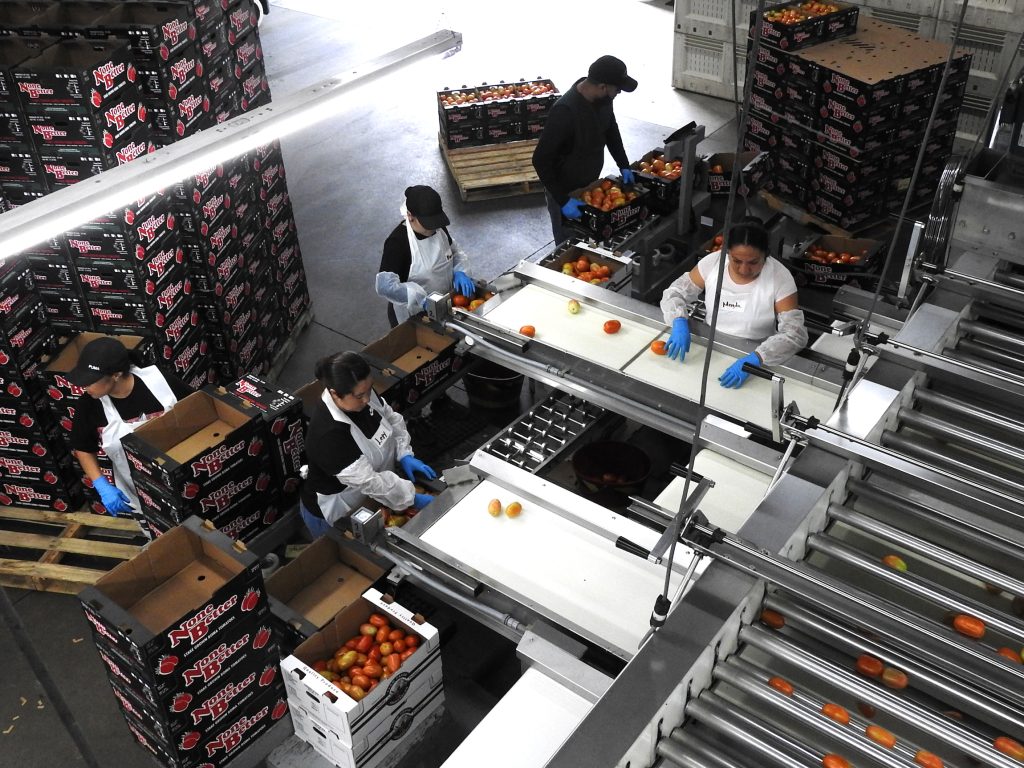
Meanwhile, even farmers unconcerned about losing workers to deportation feel the pinch of a difficult farm labor market.
The manager of one Van Buren County farm says the farm’s 35 workers, all from Mexico, are all in the country legally. As on other farms, the undocumented workers he used to hire often quit unexpectedly, leaving him short-handed.
The federal visa program has stabilized the farm’s labor force. An increasing minimum pay rate for H-2A workers ― up 34% in Michigan since 2019 ― puts ever-increasing strain on its profit margins, however.
In 2025, Michigan farmers have to pay H-2A workers at least $18.15 per hour ― well over Michigan’s minimum wage of $12.48 per hour ― plus housing and transportation costs.
While row crops such as corn and soybeans may require few hired hands, labor costs can make up as much as 60% production expenses for specialty crop farmers. That percentage continues to increase as minimum farm worker wages climb. Southwest Michigan farms reduced their paid workforce by 20% between 2017 and 2022. Despite that decline, their combined payroll increased by 17%.
Increasing production costs and seed and fertilizer prices also add to Michigan farms’ unstable bottom line.
Specialty crop farmers can’t recoup those costs by charging more ― not when they’re competing with imported produce from countries that pay a fraction of the cost in labor expenses.
In Mexico, farm workers earn the equivalent of $2.50 or less an hour. The higher U.S. rate attracts foreign workers eager to support their families, and without them, local farmers would struggle to get their produce to market.
But foreign produce priced low because of cheap labor costs caps Michigan farmers’ profits.
In Berrien County, Mick Klüg Farms co-owner Abby Schilling employs 16 H-2A workers, most from Mexico and one from Brazil, each on a six-month contract.
Rising labor costs constitute her biggest expense, but Schilling hasn’t considered not using H-2A to save on labor costs. The program has driven up the going rate for all workers, and, she says “Not using the program is actually, at this point, not a way to save money.”
Leitz, in Berrien County, hires one staff person almost entirely dedicated to running the H-2A program on his farm, where he needs more than 200 workers to grow, harvest, and process his blueberries, cucumbers, tomatoes and apples.
The program’s strict requirements mean his workers net upwards of $22 per hour after figuring in the additional H-2A requirements. And with the U.S. importing increasingly more foreign produce, he says, the $10 box of tomatoes that means a profit for a Mexican grower means a loss for him.
“And it’s not just tomatoes,” Leitz says. “It’s everything.”
Loss and ripple effects
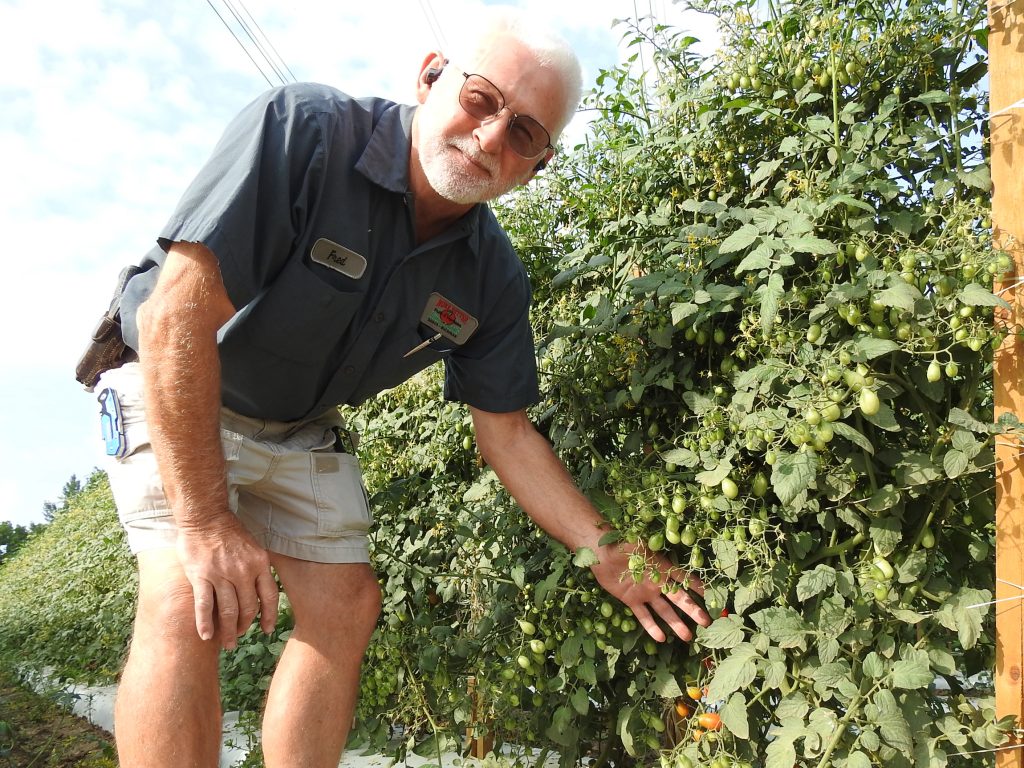
Improved international passageways ramped up Mexican produce imports starting around 2012. Since then, “Michigan growers are just going out of business left and right,” Leitz says. “We just can’t compete.”
Over the last decade and a half, Michigan has lost specialty crops at nearly twice the rate of the U.S. on average, according to a report released in March by the Michigan State University Extension. More than 1,700 Southwest Michigan farms ceased operation between 2012 and 2022, the most recent year for which data is available. Not all of those reported hiring migrant or other paid labor.
And one farm going under has ripple effects that stretch across communities and imperil other growing operations.
Specialty crop farms contribute $6.3 billion to Michigan’s economy and support nearly 41,700 jobs, according to recent research by the Michigan State University Extension. Most of Michigan’s specialty crops are eventually sold and consumed elsewhere, bringing a substantial amount of revenue into the state.
Farms in heavily agricultural areas support local businesses, from laundromats and lunch counters that cater to migrant workers to ag-focused service providers that earn the majority of their income from a handful of farming customers.
In such an environment, the loss of one farm upsets the economic stability of its entire community, says Bardenhagen, of the MSU Extension.
Many specialty crops share equipment and facilities over several growing seasons. Such interdependence means one lost crop imperils others. If fewer migrant workers make their way to Michigan because they can’t rely on consistent work across several seasons, communities will see lower tax income and fewer dollars earmarked for local schools. Such losses would also impact a growing agritourism industry currently showing strong interest in “back to the farm” opportunities, Bardenhagen says.
At least one Michigan farm that hired hundreds of workers succumbed to high labor costs since the Extension report’s release in March. The loss “was a pretty big deal,” Bardenhagen says.
Robotics could someday ease labor strains. Machinery capable of replacing farm workers “is being worked on, but we’re actually pretty far from that being feasible,” Bardenhagen says.
The state could bolster its specialty crop farmers by developing region-specific marketing and getting local products in front of buyers “to boost that social and economic support,” Bardenhagen suggested. He also advocates for World Health Organization policy revisions that would impact import regulations.
Targeted tariffs or seasonal restrictions to imported produce might help keep Michigan specialty crop farms in business, other farmers say.
For Leitz, national security in the form of affordable food from farmers who can afford to grow it hinges on a secure and reliable workforce not guaranteed in current labor conditions.
“You either import the people or you import the products,” Leitz says. “We gotta make a decision as a country whether we want to import it all or whether we want to keep our production here.”
This story is part of Southwest Michigan Journalism Collaborative’s coverage of equitable community development. SWMJC is a group of 12 regional organizations dedicated to strengthening local journalism. Visit swmichjournalism.com to learn more.
Related Articles
TRPD confirms continued use of Flock surveillance technology, says city added seventh camera in 2025
In an exclusive interview with Watershed Voice, Three Rivers Chief of Police Scott Boling and Detective Sgt. Steven Dibble said the cameras provide an additional investigative tool to help identify vehicles connected to crimes.
Flock Safety’s license plate reader system has drawn national criticism from civil liberties groups, particularly the American Civil Liberties Union, which argues the technology enables a form of mass surveillance that extends beyond its original purpose.
Boling said there is no “backdoor access” to the system, including for federal agencies such as ICE, and that any data sharing must be approved by the department.

Southwest Michigan Journalism Collaborative to host “Women in Media” event in Kalamazoo
The Southwest Michigan Journalism Collaborative (SWMJC) will host “Women in Media: Behind the Headlines” on April 16 from 5:30 to 7 p.m. at the Epic Center in downtown Kalamazoo.
The free event, which is open to the public, will feature a panel of local women working in journalism and media. Space is limited, and RSVPs are recommended.

Over 350 gather for No Kings rally in Three Rivers
More than 350 people gathered at the corner of U.S. 131 and Michigan Avenue on Saturday, March 28, from 3 to 4 p.m. Supportive drivers honked as they passed, while others shouted at demonstrators from their vehicles. At least two trucks repeatedly drove past the crowd in the lane closest to the sidewalk, revving their engines and emitting diesel exhaust toward protesters.
