
‘Love thy neighbor’: Centreville ‘No Kings’ protest draws 400
Co-organizer Dan Moyle said the challenge now is to translate a two-hour rally into sustained civic habits such as checking in on neighbors, showing up at meetings, supporting local service organizations, and making time for conversations across differences.
“I can’t fix Washington, D.C., but I can help in my community,” he said. “Love thy neighbor — it’s pretty simple.”
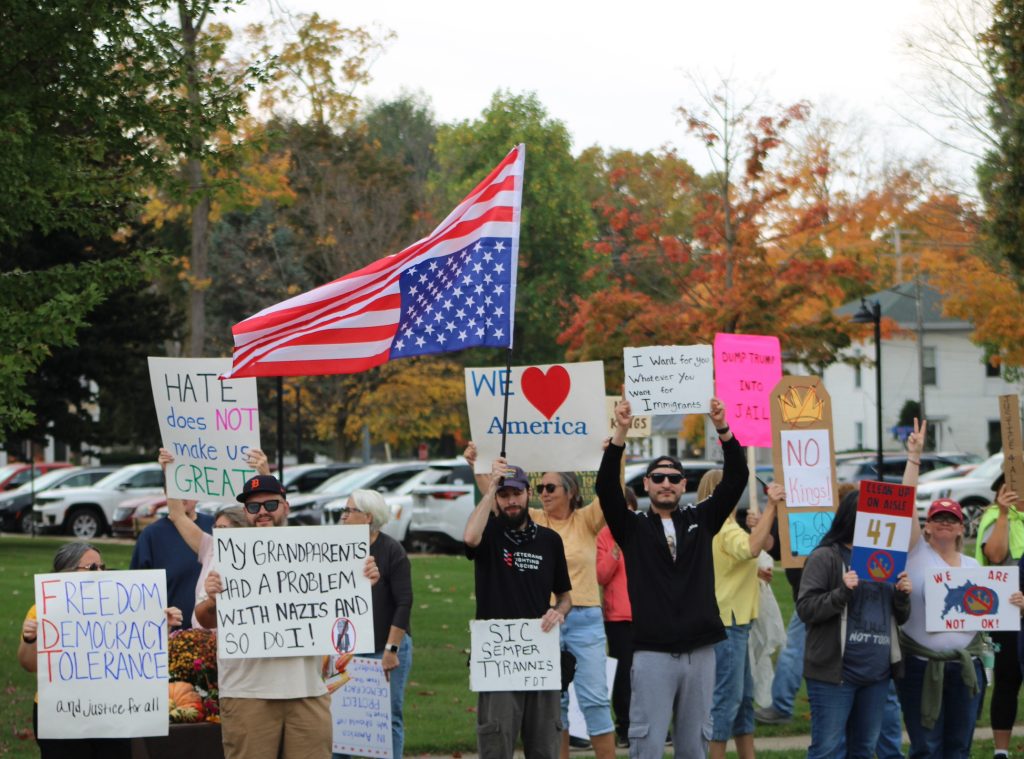
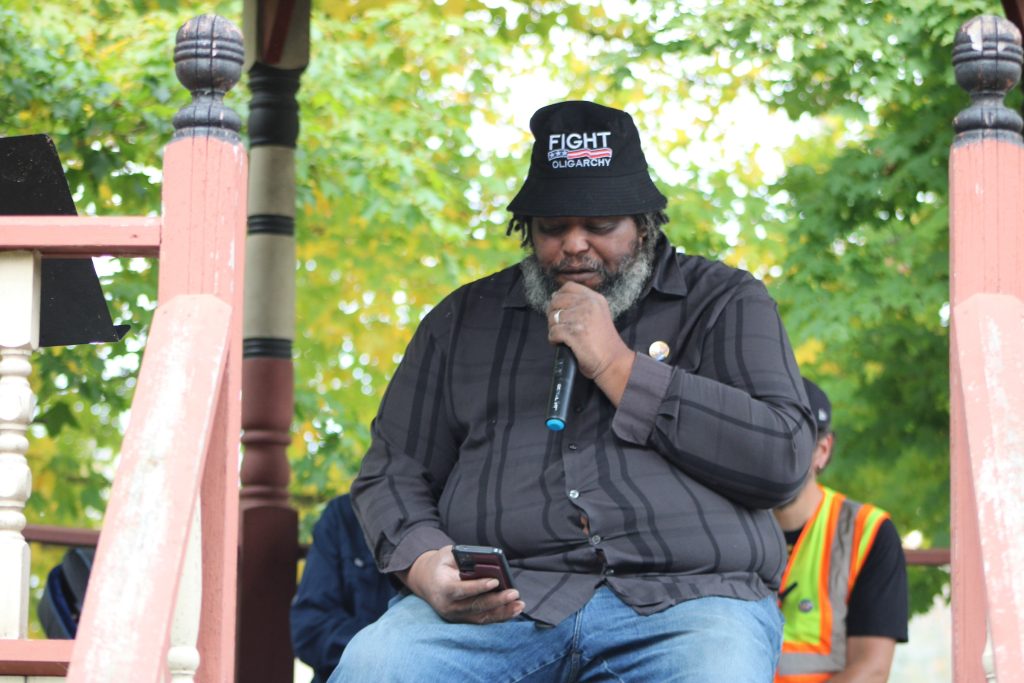
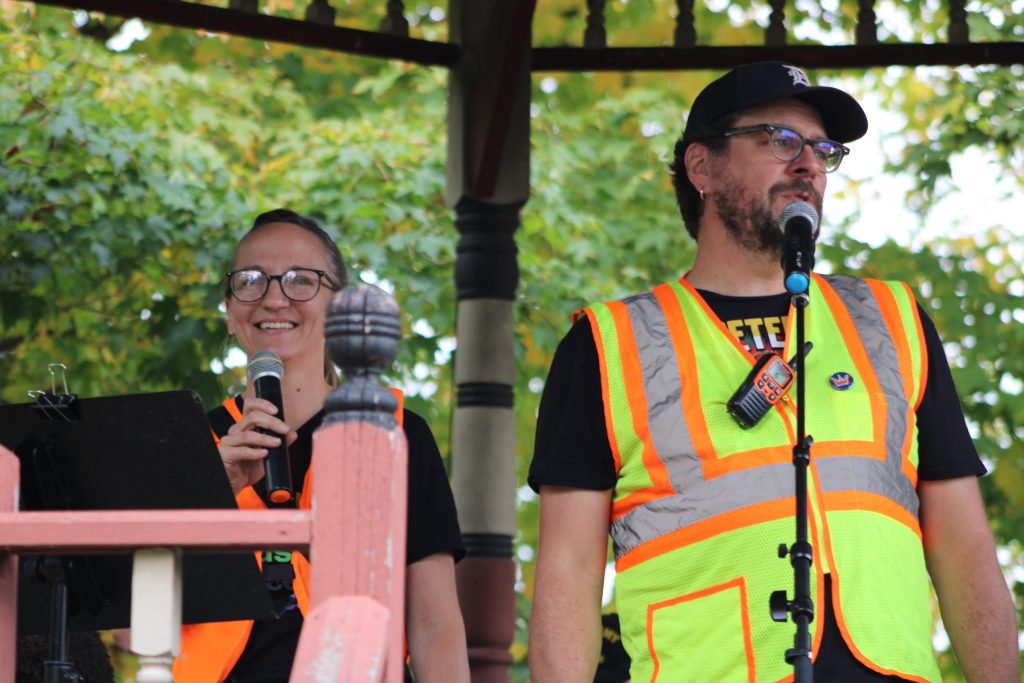
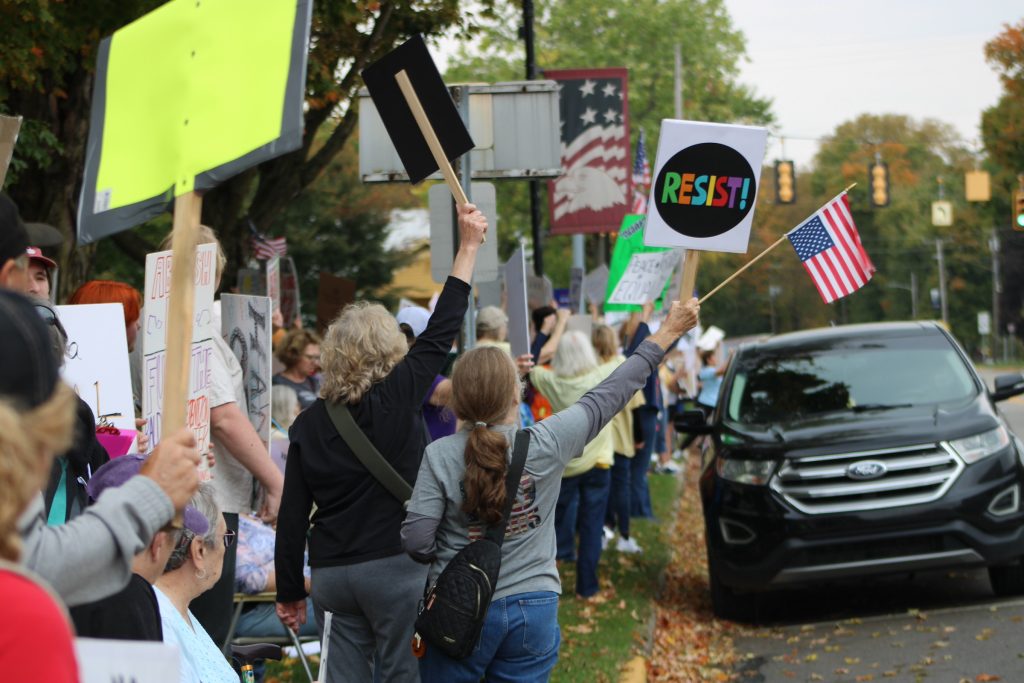
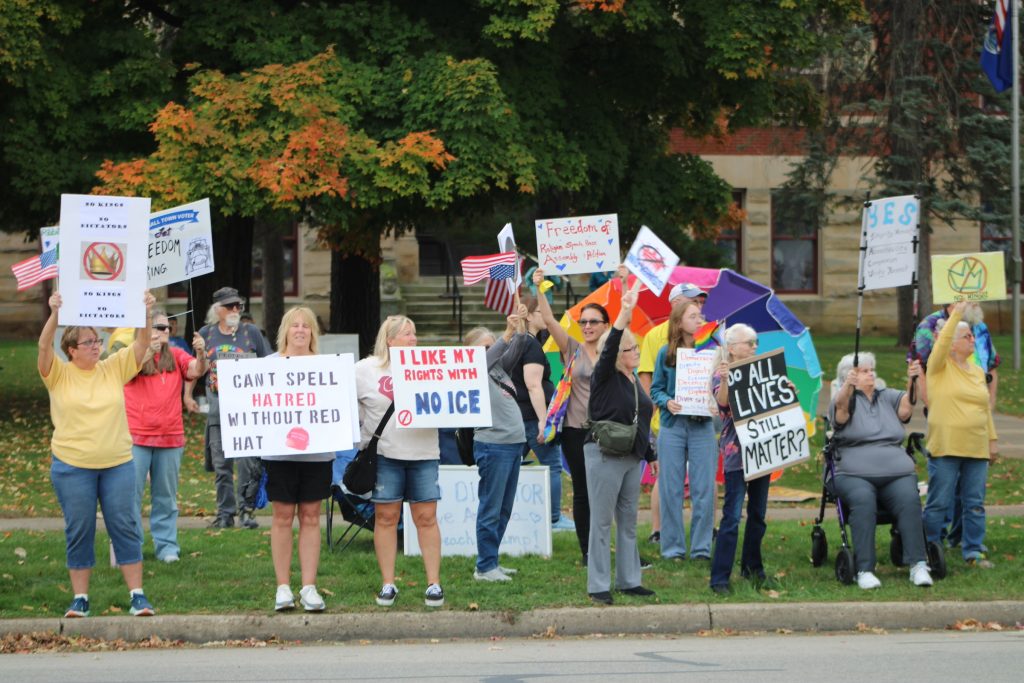
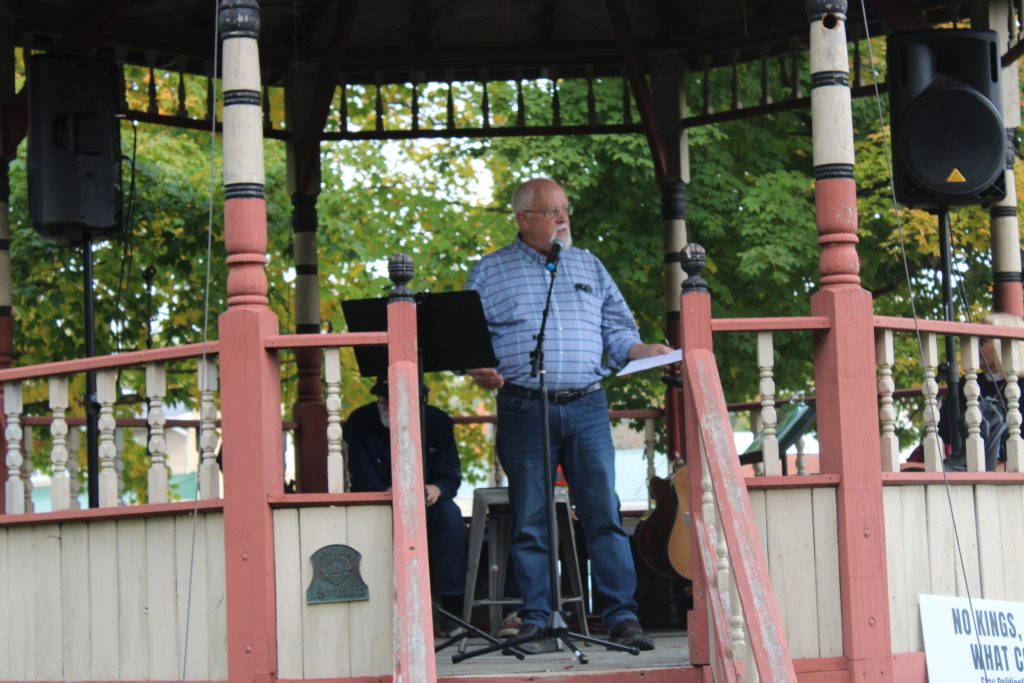
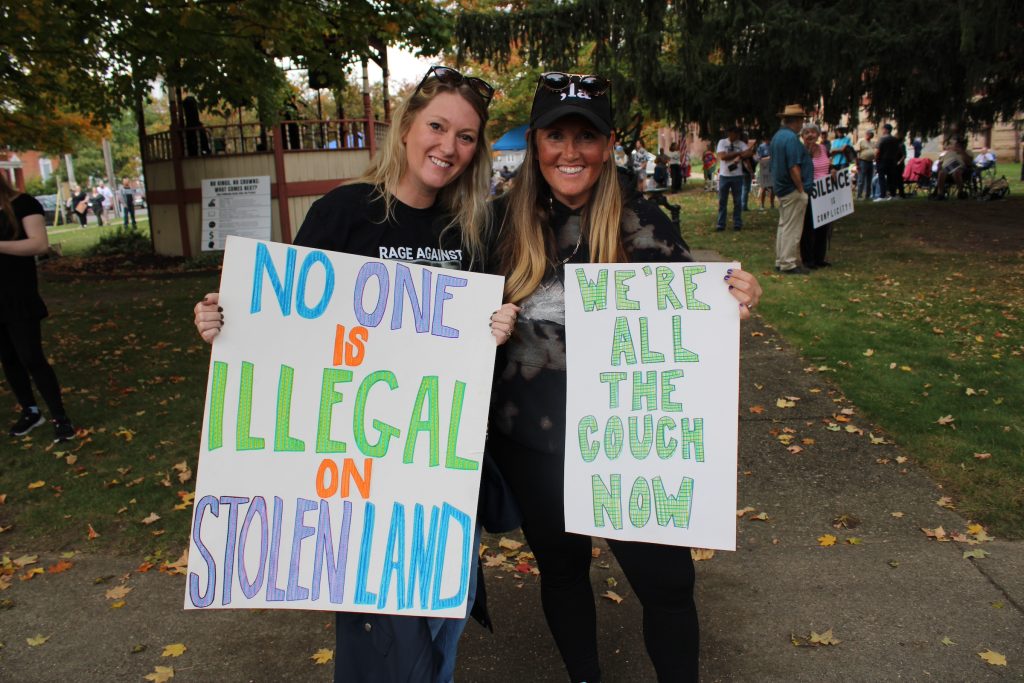
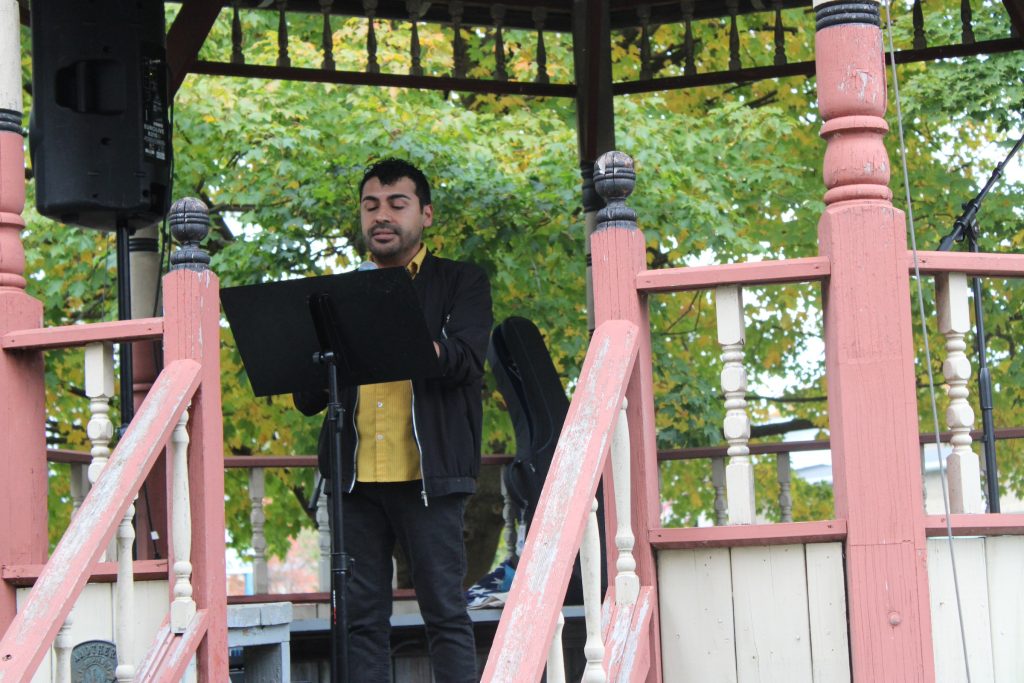
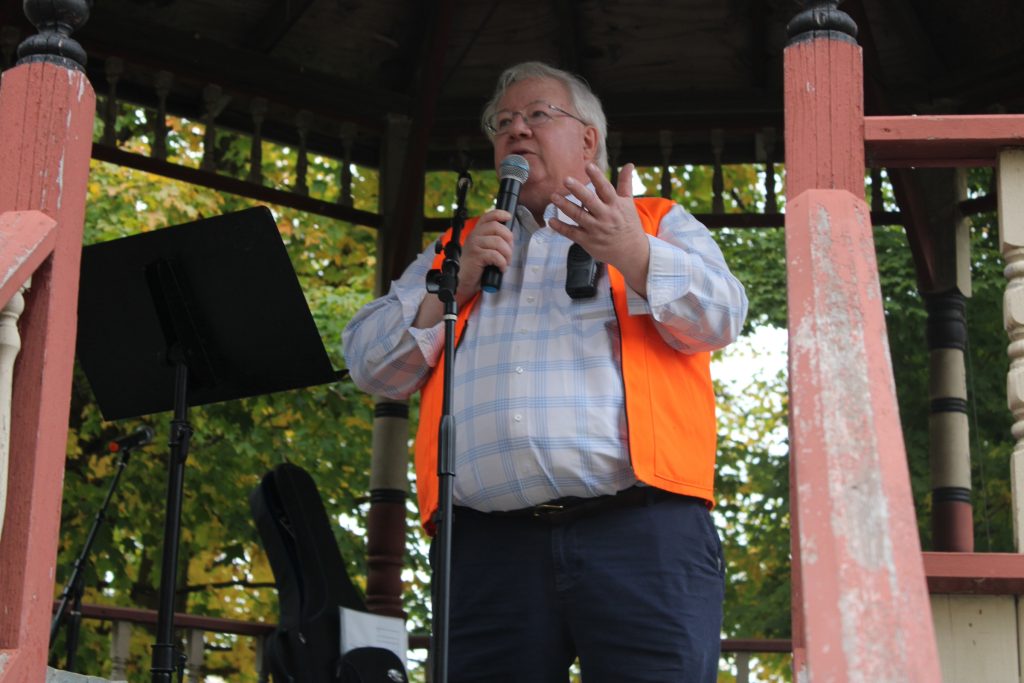
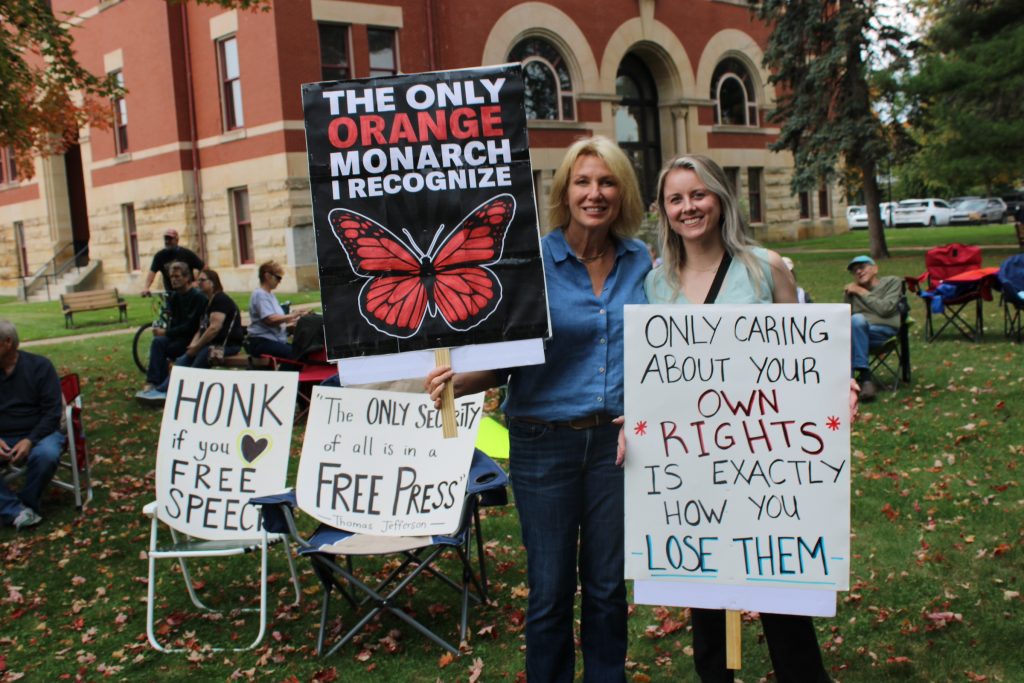
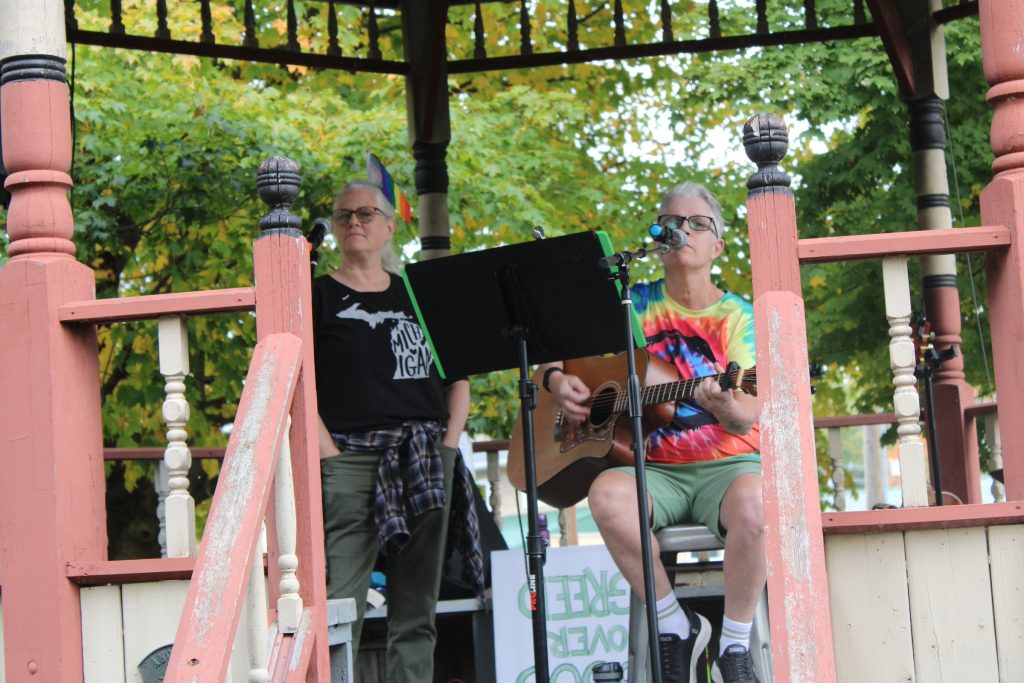
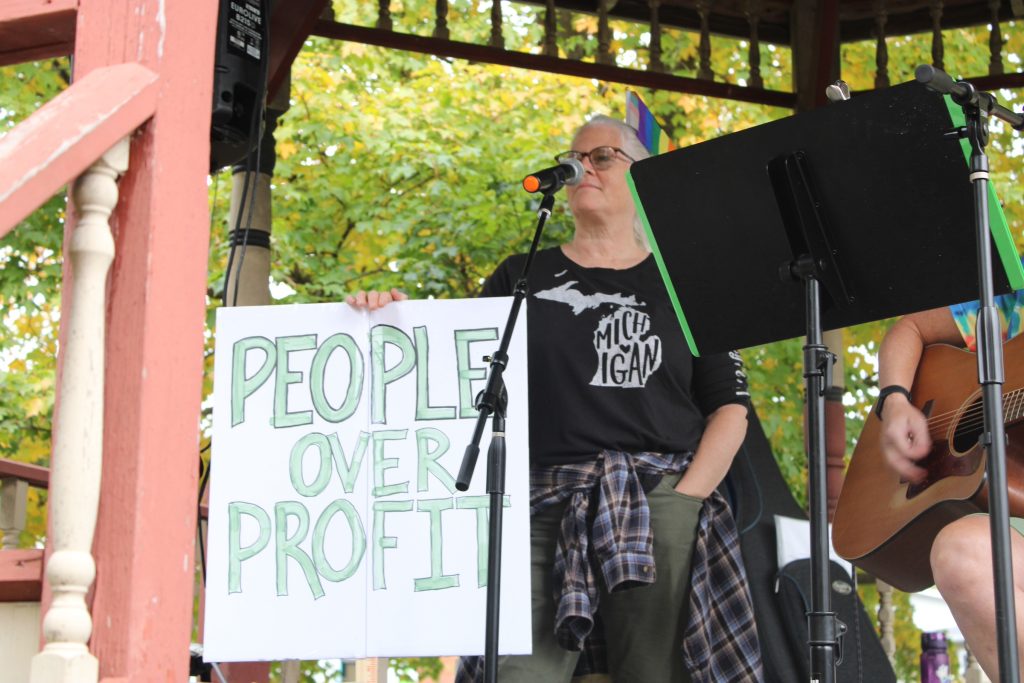
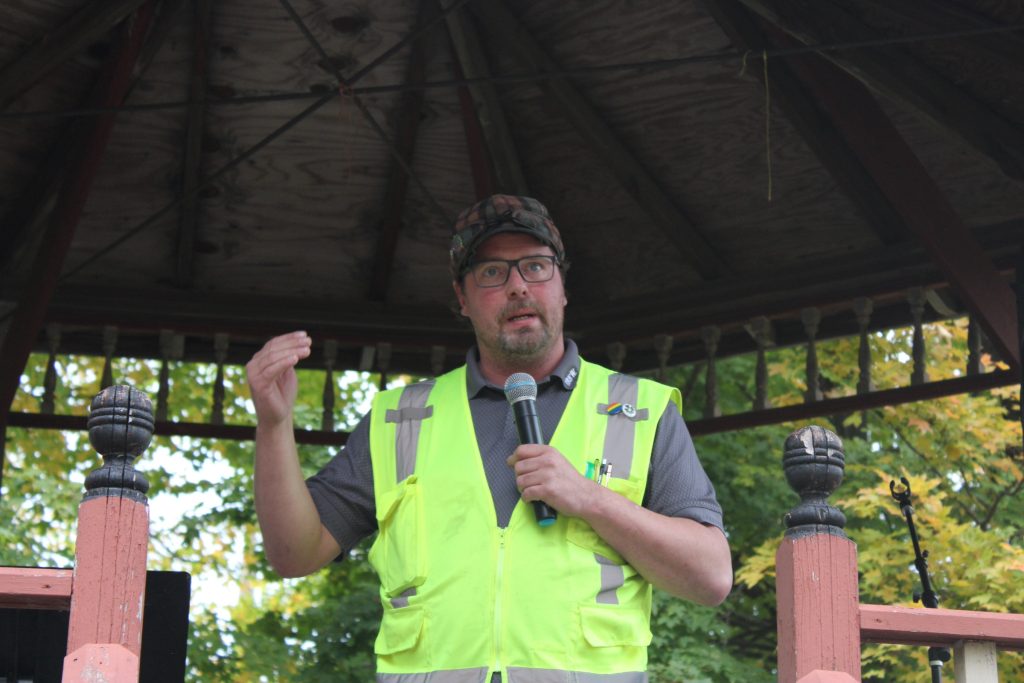
More than 400 people gathered at the St. Joseph County Courthouse on Saturday, October 18, from 3–5 p.m., as part of the national No Kings movement, according to organizer estimates. Attendees came from Mendon, Colon, Constantine, Nottawa, White Pigeon, Three Rivers, Sturgis and surrounding communities, carrying hand-lettered signs and settling into lawn chairs as a rotation of nine speakers and musicians took the gazebo stage.
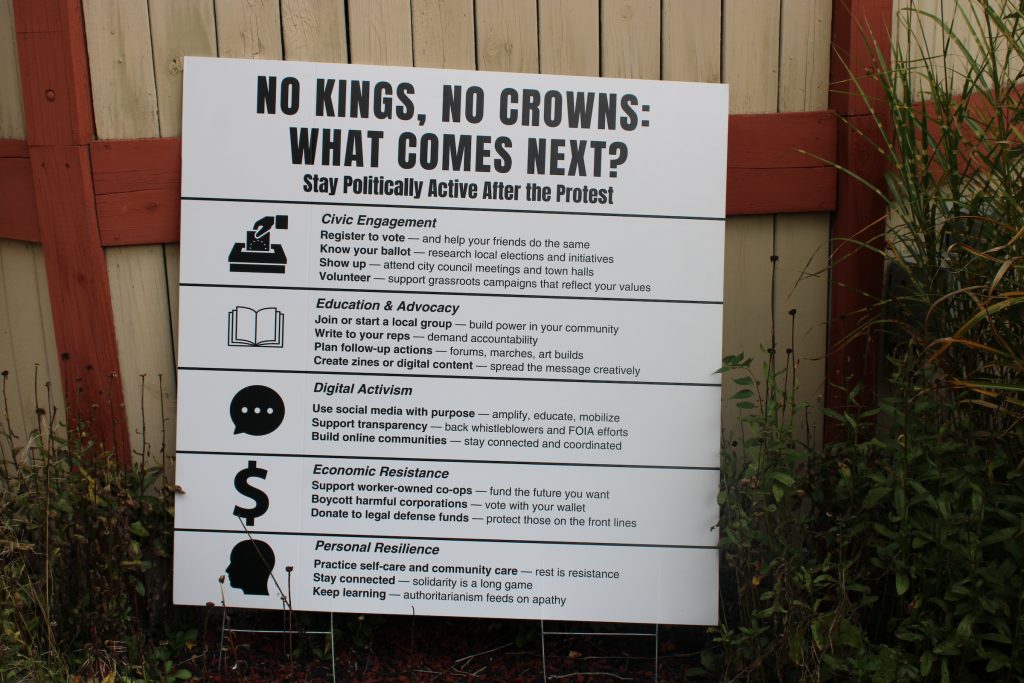
While chants and applause punctuated the afternoon, organizers said the point wasn’t only to protest but to channel momentum into local action.
“We wanted it to bring people together, show that community is out there, and ask the question, what’s next?” co-organizer Dan Moyle of Mendon told Watershed Voice. “Protests are great, they’re needed. Standing up against what our current administration is doing is important. But then what else can we do?”
Moyle said volunteers from Three Rivers and Sturgis coordinated this event as part of local No Kings chapters, choosing the county courthouse to emphasize countywide unity. “This is the county seat, we just wanted to show up for our county and say, everybody, wherever you are, we’re not all separate — come here for the county,” he said.
No Kings is a national movement that drew more than 7 million participants across about 2,700 rallies nationwide. The movement’s stated goals include rejecting authoritarian presidential power, defending democratic rights and civil liberties (i.e. healthcare, immigration protections, LGBTQIA+ inclusion), and mobilizing grassroots civic engagement in towns and cities across all 50 states.
Themes: Rights, belonging, and what comes next
The program opened with Torrey Brown, a local activist and at-large Three Rivers city commissioner, who performed an original poem, “Through the Tainted Mirror,” about race, fear, and perceived innocence.
“What if your peaceful dance was to your enemy’s violent song?” Brown asked, later sharing that his family’s reliance on healthcare makes policy cuts feel existential. “I have three kids and my daughter has a lifelong illness that she won’t survive if she doesn’t have healthcare.”
Several speakers framed the day as both resistance and civic participation. One read the preamble to the U.S. Constitution to cheers, then challenged the crowd to “make our voice heard by calling our legislators,” Reverend Liz Kinsey from St. John’s Episcopal Church in Sturgis said, holding up a pocket Constitution.
Co-organizer Rob Vander Giessen-Reitsma described the goal as building a “beloved community,” adding, “We’re here for a livable future for our children, our grandchildren. We’re here to actually try out this democracy thing.”
Between speeches, organizers urged attendees to meet local groups at information tables and to keep relationships going after the rally. The St. Joseph County Democrats and River Country Solidarity had tents at the event.
“We wanted this to be more of a ‘next steps’ rally,” co-organizer Ben Karle told the crowd, pointing to volunteer opportunities in public education and mental health as examples of local systems where residents can make a difference. Another organizer emphasized the November election as a near-term focus.
Desireé Horrocks, introduced as “a righteous local agitator,” spoke about LGBTQIA+ rights, recent state-level protections, and fears of rollback. “By definition, human rights belong to every single one of us,” she said. “They are not gifts or favors from an elected — or increasingly unelected — person in power.” She argued that “the cruelty is the point” for some policymakers, and urged neighbors to stand up for those who can’t safely advocate for themselves: “If they can come for one of us, they can come for all of us.”
Tom Lowry, owner of Lowry’s Books in Three Rivers and Sturgis and mayor of Three Rivers, encouraged attendees to cultivate friendships and “safe faces” close to home. He invoked classic literature including “1984” and “Animal Farm” as cautionary texts about language and power. “The sheep bought it all, and I never thought I’d see that in America,” Lowry said about “Animal Farm,” before urging people to find “that moment of beauty and peace” to stay resilient for the work ahead.
From Sturgis, Didimo Arreola said fear has kept some Hispanic residents from attending public events amid immigration enforcement. “In Sturgis, they’ve taken about half a dozen of our community members,” he said. “We know that this country does not belong to kings, it belongs to us.” He ended partly in Spanish, telling the crowd he would no longer hide a skill he was once discouraged from using publicly.
The program closed with Eddie Lebeouf of the International Brotherhood of Electrical Workers Local 131, who outlined that labor organizing remains a path to safer workplaces and fair wages. “This is not a Democrat thing, a Republican thing… this is a working-class thing,” he said, adding, “If you die on the job, your job listing is going to be posted way before your obituary.”
Voices from the crowd
Attendees said the countywide turnout mattered as much as the speeches.
One attendee, Sue Horton, who described herself as a longtime independent voter and former social worker, said she came after missing a previous rally. “I absolutely do not like Trump and his government,” she said. “I see people suffering.” She compared the present to protests she joined decades ago. “Back then it wasn’t about hate or vindictiveness… this feels different.” She added that she calls her members of Congress and writes letters, even simple ones, as a way to “fight it.”
Another attendee, William Baltz said he came to stand with “freedom, liberty and justice for everybody,” citing the First Amendment and the right to assemble. He emphasized the importance of small-town participation: “It’s grassroots — we are the people, and it’s everywhere in the country.” Noting the area’s history, he pointed to local traditions of service and mutual aid. He said he hopes gatherings like this spark “real action,” including rethinking cuts to services that “people need,” and a return to “common-sense” policymaking.
There stood one lone counterprotestor displaying a Trump flag across the street from the No Kings protestors. Throughout the protest cars drove by honking in solidarity, and a number of honks and yells expressing disdain for No Kings. All activities remained peaceful throughout and organizers thanked law enforcement and courthouse staff for accommodating the gathering.
Moyle said the challenge now is to translate a two-hour rally into sustained civic habits such as checking in on neighbors, showing up at meetings, supporting local service organizations, and making time for conversations across differences. “I can’t fix Washington, D.C., but I can help in my community,” he said. “Love thy neighbor — it’s pretty simple.”
Maxwell Knauer is a staff writer for Watershed Voice. Alek Haak-Frost is executive editor and publisher of Watershed Voice.
Gallery (Alek Haak-Frost|Watershed Voice)

Authors


Related Articles
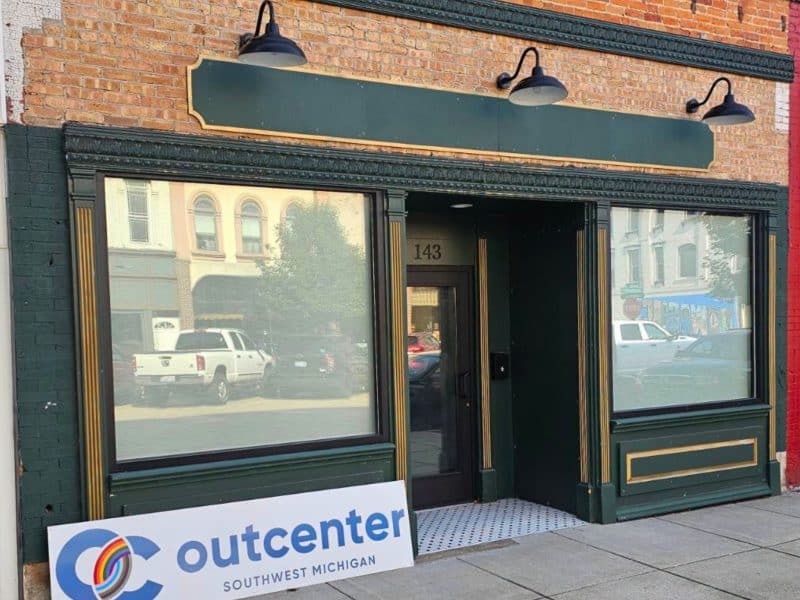
OutCenter hosting open house Friday in downtown Dowagiac
“We’re talking about a sizable portion of our communities that need support, need to be able to find community, and need folks out there that are advocating for them,” Executive Director Gerik Maverick said. “We have been working with schools for just over a decade. We work with healthcare systems on training to make sure folks are able to get resources. We’re working with the area agency on aging on some very exciting new projects.”
Three Rivers Athletic Club to host ribbon cutting ceremony Friday
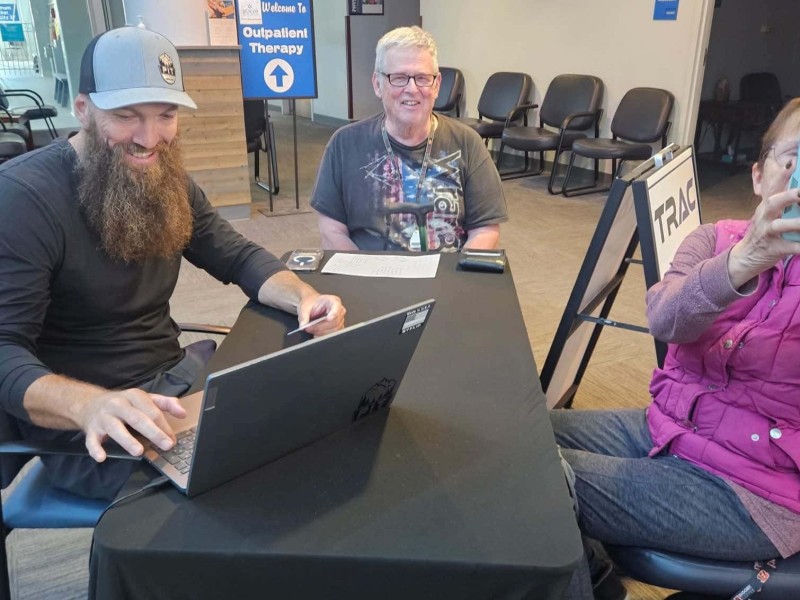
The fitness center once thought to be closing for good will host a ribbon-cutting ceremony Friday after its new owners reopened the gym under a new name, Three Rivers Athletic Club.
Findings of investigation into Sturgis City Commission conduct leaves key questions unanswered
After a closed session during their September 23 meeting, the Sturgis City Commission unanimously voted to release the findings of the external investigation by Miller Johnson that looked into alleged wrongdoing by commissioners. The report details the events leading up to the public controversy, the investigator’s findings, and his legal conclusions regarding the commissioners’ conduct.
This story presents the events chronologically, drawing on the investigator’s findings and the accounts of those interviewed.
