
Women in media panel in Kalamazoo explores progress, persistent challenges in journalism
Hosted by the Southwest Michigan Journalism Collaborative, the event — “Women in Media: Behind the Headlines” — featured professionals from print, radio, nonprofit and academic media backgrounds who reflected on both the progress women have made in the industry and the barriers that remain.
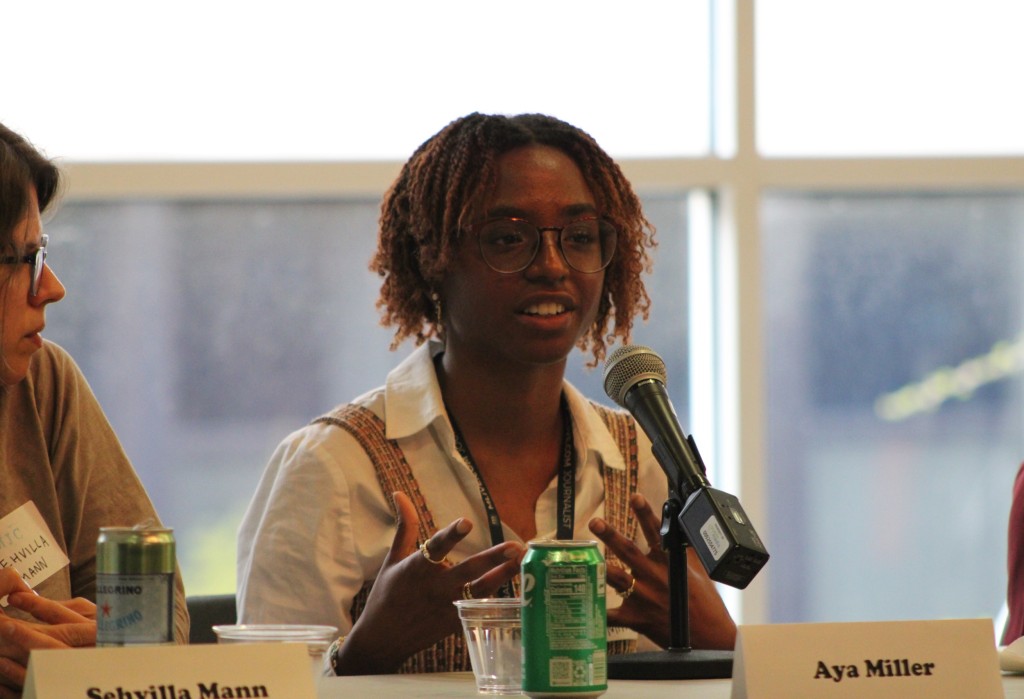
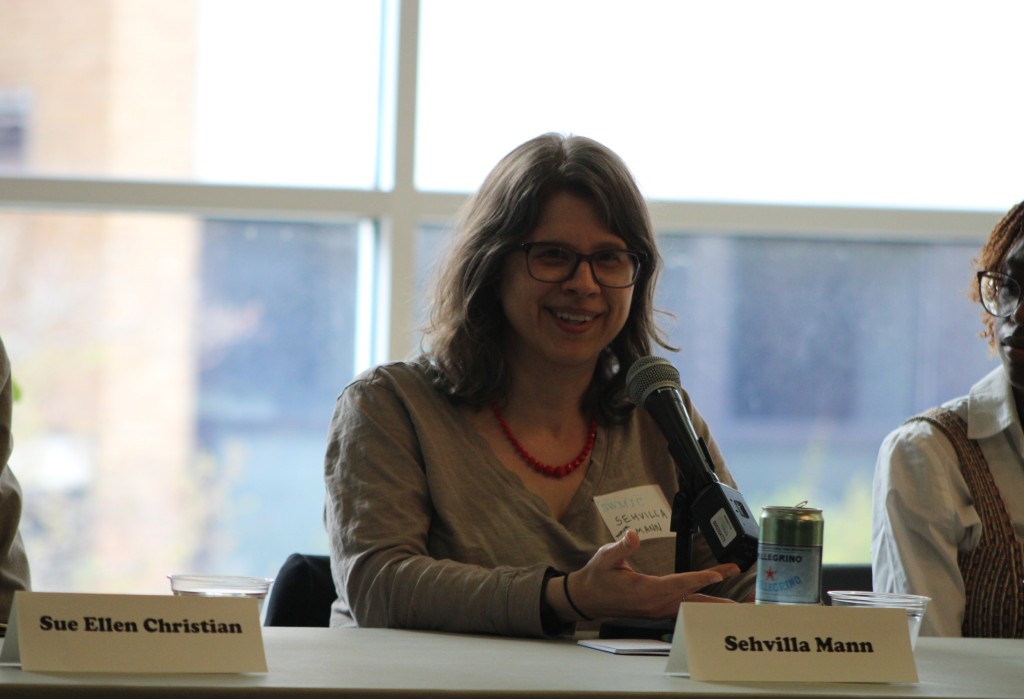
The panel included Sue Ellen Christian, professor at Western Michigan University’s School of Communication and former Chicago Tribune reporter; Sehvilla Mann, news director at WMUK Public Radio; Kristie May, managing editor at NowKalamazoo; Aya Miller, reporter at MLive/Kalamazoo Gazette; and Theresa Coty O’Neil, managing editor at Second Wave Media. The discussion was moderated by Marie Lee, editor and publisher of Encore Magazine.
A panel of women working across journalism and media gathered Thursday evening at the Epic Center in Kalamazoo for a conversation about representation, leadership, safety and the future of local news.
Hosted by the Southwest Michigan Journalism Collaborative, the event — “Women in Media: Behind the Headlines” — featured professionals from print, radio, nonprofit and academic media backgrounds who reflected on both the progress women have made in the industry, and the barriers that remain.
The Southwest Michigan Journalism Collaborative is a regional partnership of local news organizations that works on shared reporting projects, community conversations, and efforts to strengthen local journalism. Watershed Voice is among its participating members.
The panel included Sue Ellen Christian, professor at Western Michigan University’s School of Communication and former Chicago Tribune reporter; Sehvilla Mann, news director at WMUK Public Radio; Kristie May, managing editor at NowKalamazoo; Aya Miller, reporter at MLive/Kalamazoo Gazette; and Theresa Coty O’Neil, managing editor at Second Wave Media. The discussion was moderated by Marie Lee, editor and publisher of Encore Magazine.
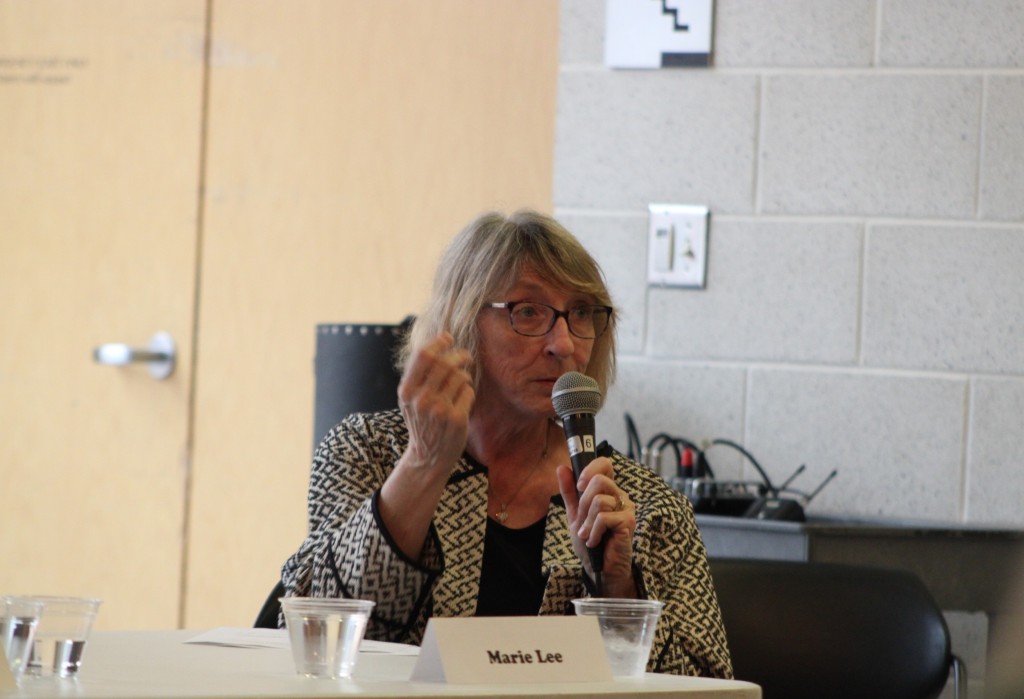
Lee opened the evening by asking what advantages women may bring to newsroom work. Several panelists pointed to empathy, trust-building, and the ability to put sources at ease.
“You’re less threatening,” Christian said, explaining that many people may feel more comfortable opening up to women reporters.
May shared a recent reporting experience involving men who had recently been released from prison. What could have been a tense setting instead felt calm, something she partly attributed to her presence.
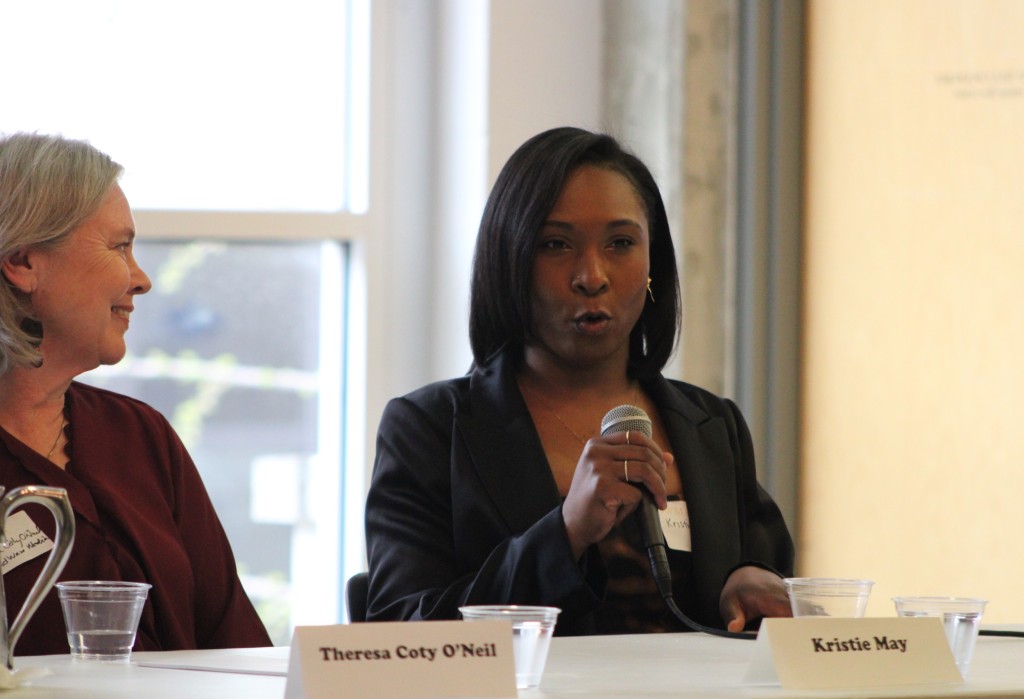
“It kind of just softens everything,” May said.
Mann added that she often wonders whether girls are socialized from an early age to be attentive and empathetic in ways that later become strengths in journalism.
The discussion then turned to representation and leadership in the profession. Lee noted that in 1995, women made up just 28% of reporters in traditional newsrooms, compared with 41% today.
While acknowledging that progress, panelists said the numbers do not tell the full story.
“Women have much more of a voice in choosing news,” O’Neil said, describing how decisions about what gets covered were once shaped largely by male leadership.
May said gains in representation should not be mistaken for full equity.
“We have not come as far as, I think, sometimes we celebrate,” she said.
Christian reflected on sexism earlier in her career, saying it was not only present inside newsrooms but often came from sources and members of the public.
O’Neil said women in journalism must remain alert to how public figures can shape attitudes toward female reporters. She pointed to recent instances in which President Donald Trump has insulted women journalists over their appearance or intelligence while responding to questions.
The conversation also addressed racial representation in media. Miller said MLive, one of Michigan’s largest news organizations, currently has only two Black reporters — herself and one mixed-race male reporter — along with one Black editor.
Her comments came during a broader discussion about who is represented in local newsrooms and how staffing diversity can influence coverage.
The panel later shifted to the unique safety concerns women journalists may encounter while reporting.
Miller recalled attending a recent Portage meeting where the superintendent offered to walk her to her car afterward. Once outside, she said, there was a man lingering near her vehicle.
The story was shared in response to a question about whether women in media face risks that male colleagues may not experience as frequently.
“Just coming to terms with navigating spaces and just being savvy,” Christian said, describing the awareness many women develop while working in public settings.
Questions about journalism’s future prompted some of the evening’s most reflective answers.
“I think journalism needs re-envisioning,” O’Neil said. “We inherited things we haven’t really questioned, like what is news?”
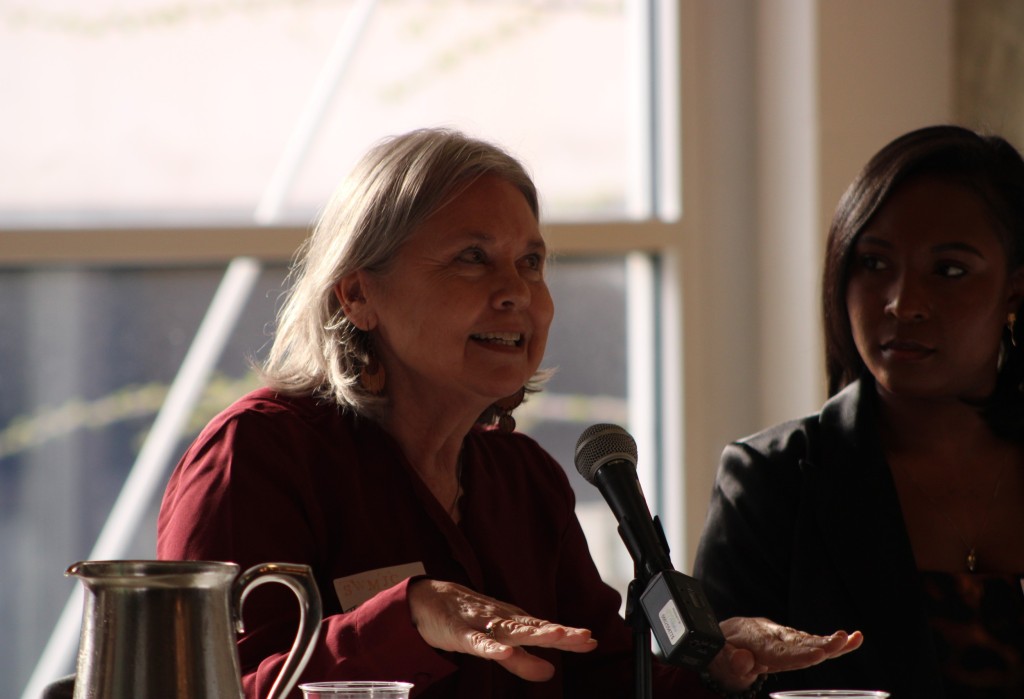
She argued that changing audience habits and emerging technology are forcing the industry to reconsider old assumptions.
Artificial intelligence, she said, may increase the volume of content online while making authentic local voices even more valuable.
Christian agreed that technology has limits when it comes to original reporting.
“AI can’t go knock on the door,” she said.
Panelists also urged journalists to broaden whose stories get told.
“I would like to see more older people telling their stories,” O’Neil said.
Christian offered a similar principle for reporters covering communities.
“Write for a group of people, not about them,” she said.
The final question of the night came from a young journalist in the audience asking how to begin a career in the field.
“Bloom where you’re planted,” Christian said.
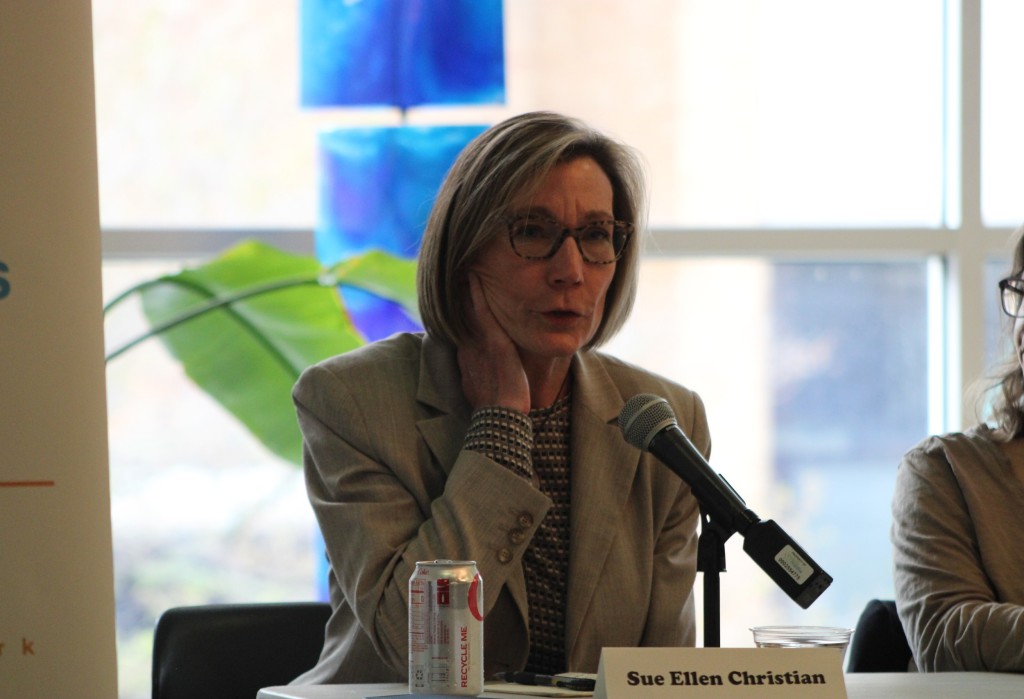
She encouraged aspiring reporters to keep producing work, learn through mistakes and chase opportunities wherever they appear.
Even small assignments, panelists suggested, can become the foundation for a career built one story at a time.
Maxwell Knauer is a staff writer for Watershed Voice.
Author

Related Articles
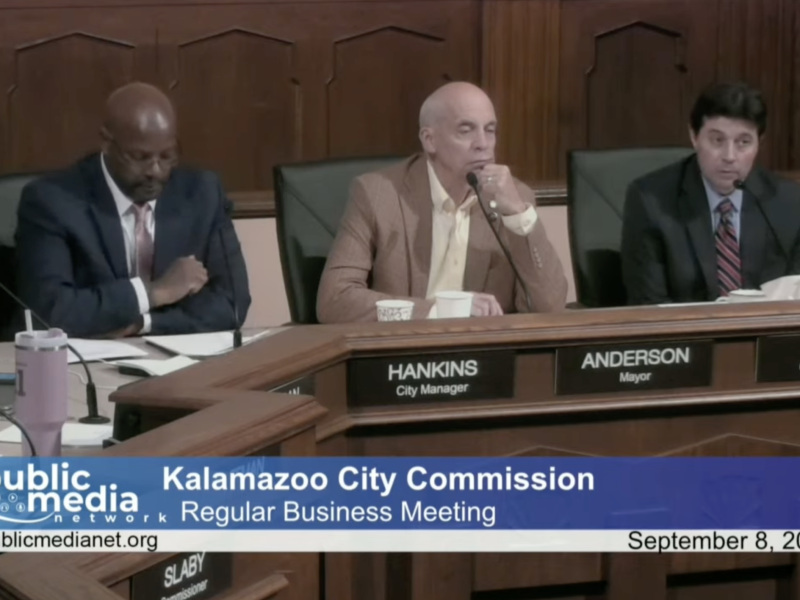
Kalamazoo commissioners seek broader oversight of surveillance technology
During the Kalamazoo City Commission meeting on Tuesday, September 8, commissioners decided to delay the formal adoption of a policy that would require contracts involving automated license plate reader technology to come before the City Commission, regardless of cost.
Vice Mayor Drew Duncan proposed expanding the amendment, asking that the policy incorporate all law enforcement surveillance technology, not just license plate readers.

Kalamazoo to consider data center ‘task force’ alongside moratorium
Planning commissioners unanimously recommended the data center moratorium zoning amendment, along with the task force recommendation, to the City Commission. The task force idea came up during public comment when resident Katie Bloom, who said she also serves on the city’s Environmental Concerns Committee, expressed support for the moratorium and called for a task force representing a wide range of stakeholders. Commissioners agreed with Bloom and added the amendment to their recommendation.

A different kind of house music
This Saturday in Kalamazoo roughly a dozen performers and bands will play mini-concerts around the Vine neighborhood during a five-hour Vine Porch Crawl.
The plan is to start at 2 p.m. at the Vine Neighborhood Association (806 S. Westnedge Ave.) with a set by Persian Rugg to kick off the neighborhood tour. For the full lineup and locations, read this article.
