
Three Rivers Commissioners act to improve audio quality for meeting livestreams
City staff has been directed to draft a formal policy governing media access to the city’s audio-visual system, a policy the Three Rivers City Commission could consider adopting as soon as their next regular meeting on June 2.
Watershed Voice asked City Manager Joe Bippus on April 9 for permission to connect directly to the city’s audio system in an effort to improve the sound quality of its livestream. Bippus responded April 14 and denied the request.
“I think it would be best if you found another option for improving your sound quality,” Bippus wrote in an email to Watershed Voice. “If I allow you access, I have to allow anyone else access to our system. I don’t think that is a good idea for the city.”
Tuesday’s vote reversed that position and formally began the process of establishing a policy that would permit media access.

Three Rivers commissioners took a major step Tuesday toward improving public access to city commission meetings by voting unanimously to create a policy allowing media organizations to connect directly to the city’s audio-visual system.
The motion directs city staff and the city attorney to draft a formal policy governing media access to the system. Commissioners are expected to consider adopting that policy at their next regular meeting on June 2.
The discussion began after a resident raised concerns about the audio quality of Watershed Voice’s livestream of commission meetings and asked commissioners to address the issue.
Commissioner Anthony Stanfill said he had experienced the same problem while watching the streams himself, and introduced a motion to create a policy that would allow media outlets to plug into the city’s audio-visual equipment.
Watershed Voice currently provides the only livestream of Three Rivers City Commission meetings. While some viewers report no issues, others say the audio can be difficult to hear.
Watershed Voice asked City Manager Joe Bippus on April 9 for permission to connect directly to the city’s audio system in an effort to improve sound quality. Bippus responded April 14 and denied the request.
“I think it would be best if you found another option for improving your sound quality,” Bippus wrote in an email to Watershed Voice. “If I allow you access, I have to allow anyone else access to our system. I don’t think that is a good idea for the city.”
Tuesday’s vote reversed that position and formally began the process of establishing a policy that would permit media access.
During public comment, Watershed Voice Staff Writer Maxwell Knauer told commissioners while the publication is willing to continue livestreaming meetings, it should not be considered a permanent substitute for a city-run broadcast.
“We can do this, and we’ll try and make it as good as we can, but that’s not the goal, and that’s not the role, we believe, of a city to not be livestreaming,” Knauer said. “If I’m not at this meeting, there’s no stream, so I don’t want it to be reliant on me.”
Knauer added that Watershed Voice was not asking commissioners to take any specific action to begin city-operated livestreaming, but wanted to emphasize the importance of public accessibility.
“Make whatever motion you want,” Knauer said. “I’m not telling you what to do, but we don’t want to be the long-term solution for the city’s accessibility. We’re happy to do it as long as we have to.”
Mayor Angel Johnston thanked Knauer for continuing to livestream the meetings, and said the commission’s action was an important first step.
“That’s a darn good start. I feel really happy about that,” Johnston said. “Maxwell, thank you for what you’re doing. You’re right, it’s not your responsibility, and I am incredibly grateful to you for taking this on.”
City Attorney T.J. Reed advised commissioners to begin by creating a policy allowing media outlets to access the city’s audio-visual equipment to improve their recordings and broadcasts.
“What I would suggest is start off with a policy allowing for media access to the audio-visual equipment to enhance their broadcasting or recording of the meetings,” Reed said.
Several commissioners, including Mayor Angel Johnston, voiced support for the idea of the city eventually operating its own livestream. No formal action was taken on that proposal.
Commissioner Steven Haigh questioned whether city-run livestreaming should be a municipal responsibility, but he voted in favor of creating the media access policy.
Haigh said he believes government and the press serve different roles.
“The press is essentially supposed to report on government, not government reporting on itself,” Haigh said.
Once the policy is formally adopted, Watershed Voice plans to use the city’s direct audio feed in future livestreams, which is expected to improve sound quality for viewers.
Related Articles
Three Rivers Athletic Club to host ribbon cutting ceremony Friday
The fitness center once thought to be closing for good will host a ribbon-cutting ceremony Friday after its new owners reopened the gym under a new name, Three Rivers Athletic Club.
Tie-dyed to eternity: Remembering Pat McKenzie
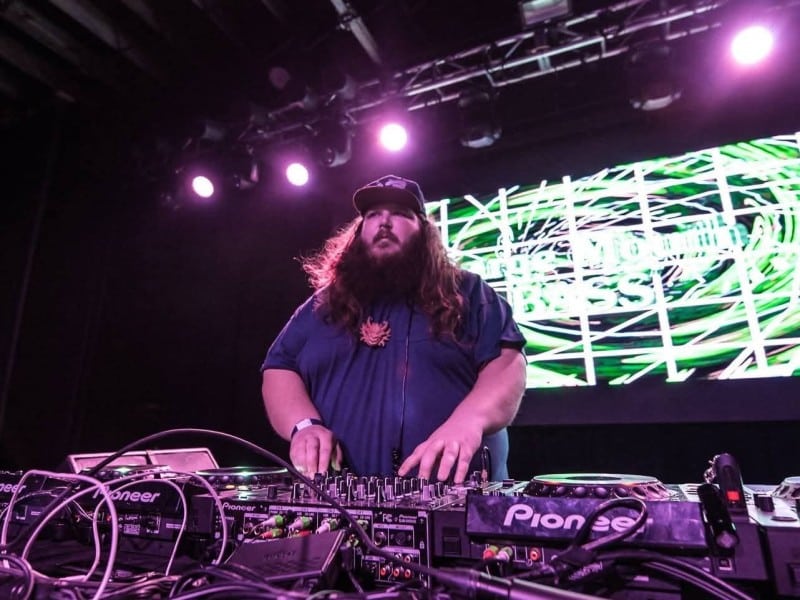
Patrick “Largemouth Bass” McKenzie was a performer many described as larger than life. Whether you saw him DJing under the name “Largemouth Bass” or performing alongside Travis Wagner as the duo “Fendz,” you were left with an impression that would be difficult to forget.
He was known for his tie-dye shirts and his ability to engage a crowd. He was a beloved performer, brother, friend, and son. On September 4, 2026, McKenzie passed away peacefully in his sleep.

Why talking about suicide matters
September is Suicide Prevention Awareness Month, and Watershed Voice encourages you to check in on your loved ones, yourself, and reflect on ways to look out for signs that people in your life are struggling.
The topic of suicide is often considered taboo and difficult to talk about. However, Nicolette Cole, a veteran navigator at Pivotal and instructor for its QPR suicide prevention training, says avoiding the topic can be part of the problem.
