
A play inspired by the Flint crisis is coming to Kalamazoo this October
The Poisoner, a neo-noir thriller inspired by the Flint water crisis, is coming to Kalamazoo’s Judy K. Jolliffee Theatre for three performances from October 22 through October 24 as part of a seven-city national tour.
Written by first-time playwright M.M. Haney and directed and developed by two-time Obie Award-winning director Lee Sunday Evans, the fictional story follows a journalist who returns to his hometown and begins investigating a water crisis.
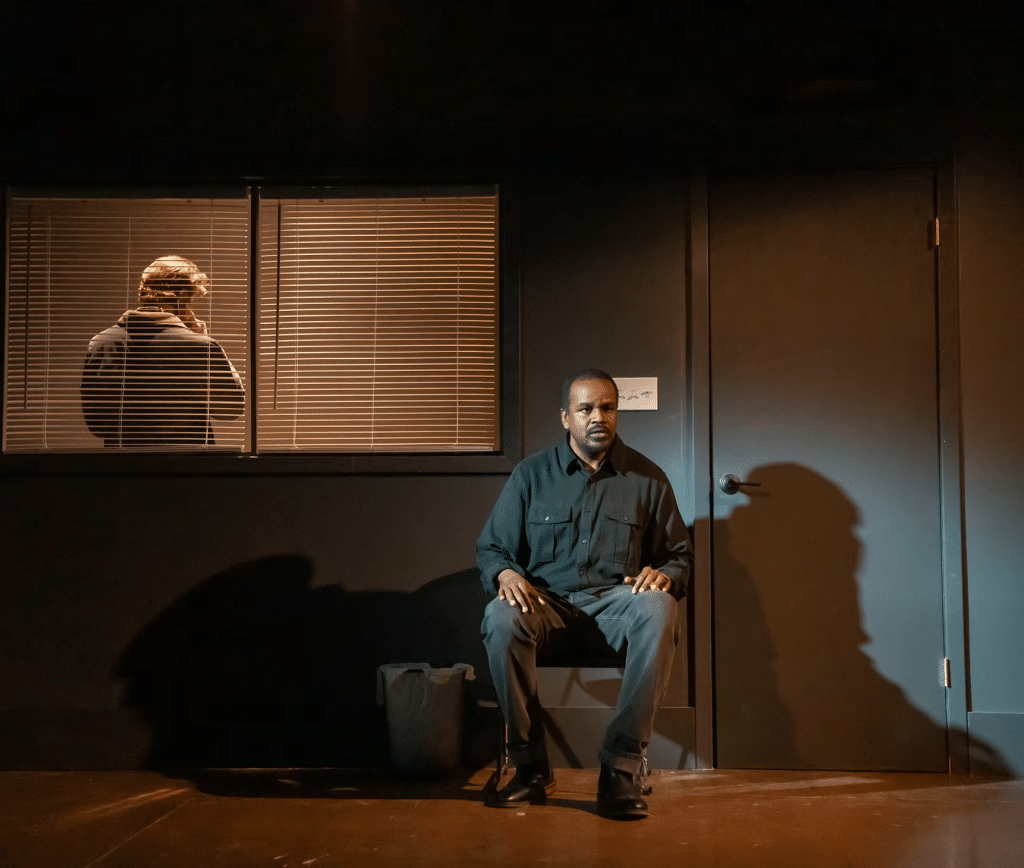
More than a decade since the Flint water crisis began, a new theatrical production is exploring broader questions about government, political power, and the consequences those decisions still have on people living under them.
The Poisoner, a neo-noir thriller inspired by the Flint water crisis, is coming to Kalamazoo’s Judy K. Jolliffee Theatre for three performances from October 22 through October 24 as part of a seven-city national tour.
Written by first-time playwright M.M. Haney and directed and developed by two-time Obie Award-winning director Lee Sunday Evans, the fictional story follows a journalist who returns to his hometown and begins investigating a water crisis.
For Haney, whose background is in producing and contributing to films, the play’s inspiration comes from not only what happened in Flint, but how the political structures that surrounded the crisis contributed to it.
Beginning in 2014, Flint switched its water source to the Flint River while the city was under the control of a state-appointed emergency manager. Without adequate corrosion control treatment, lead from the city’s plumbing seeped into the residents’ drinking water, resulting in a public health crisis that is now known nationally.
“What was most interesting to me about the Flint water crisis was the kind of structural and political reasons that it happened,” Haney said.
Those questions became the foundation for The Poisoner, but Haney and Evans said they did not want to simply tell the exact story of what happened in Flint. Instead, the play uses a fictional town and characters to examine the dynamics they believe extend beyond a small Michigan town.
“It’s a universal story,” Haney said. “There are hundreds and thousands now of towns that are suffering from water issues across America.”
At the center of the story is a journalist, who acts as a kind of detective for the audience as he uncovers information about what happened in his hometown.
“The journalist acts as a detective, and you get to follow along with this journalist,” Haney said. “He enters the town at a certain point in time, and then he gets to uncover these facts.”
One central actor plays the journalist, serving as the audience’s anchor throughout the production, while three other actors take on multiple roles — a subtle but intentional choice.
For Evans, making the central character a reporter also created a way to turn the often complicated and technical work of understanding government into something dramatic for the audience.
“The journalist is the truth bearer, the witness who is doggedly, against all odds, creating that truth-telling in the society,” Evans said. “I am interested in what are the things the journalist is able to decipher that are deliberately obscured for the public.”
Evans said information can sometimes be deliberately kept from the public while, at other times, the complicated nature of government procedure can itself make understanding what is happening more difficult.
The consequences of that confusion, she said, can extend beyond procedure.
“The stakes of what gets obscured for the public, sometimes deliberately and sometimes just by the nature of procedure being kind of obfuscating, [are] very high,” Evans said. “It affects people’s lives in extraordinary ways.”
The play also examines questions about the role of government and what happens when authority is taken away from elected officials.
Evans said she was interested in exploring the consequences of efforts to reduce government’s ability to function, particularly when those changes affect officials working in areas such as environmental protection and public health.
“The structural power dynamics that are at work in The Poisoner are applicable to many different situations,” Evans said.
She added that treating Flint as an one-off event can make it easier for people elsewhere to distance themselves from the circumstances that contributed to the crisis.
“In actuality, those same structural dynamics affect communities all across the country in really different ways,” Evans said.
Throughout the seven-city tour, which began September 18 in Bethlehem, Pennsylvania, and concludes October 31 in Detroit, the production is connecting with community advocates and holding talkbacks after each show about environmental issues affecting individual communities.
Haney said those conversations include water contamination as well as concerns surrounding data centers and their use of local resources.
She also sees a contrast between those technologies and the experience of bringing people inside a theater.
“The irony is these data centers are going in, and the data centers are helping us be farther away from each other,” Haney said. “Theater is the opposite of that. In a way, it’s old-fashioned. But I think people are craving that feeling now of being together.”
Evans describes theater as its own type of public forum, where people with different experiences can gather around the same story.
“I think of the theater as its own kind of public square,” Evans said. “It’s a place where essentially strangers are coming together to listen to a story.”
For Haney and Evans, Flint provides the inspiration for that story, but the conversations started by The Poisoner are intended to follow audiences back into their own communities.
The Poisoner will be performed October 22-24 at the Judy K. Jolliffe Theatre in Kalamazoo. All Kalamazoo shows will begin at 7:30 p.m. Tickets can be purchased here.
Maxwell Knauer is a staff writer for Watershed Voice.
Author

Related Articles

Listen: Good Grief. Podcast, Episode 10
In this episode of Good Grief., Watershed Voice’s Aundrea Sayrie discusses psychological refuge tools, and the ways we learn to protect ourselves when life becomes too painful or overwhelming.
See ‘A Better World A Comin,’ Woody Guthrie tribute at the Riviera this month
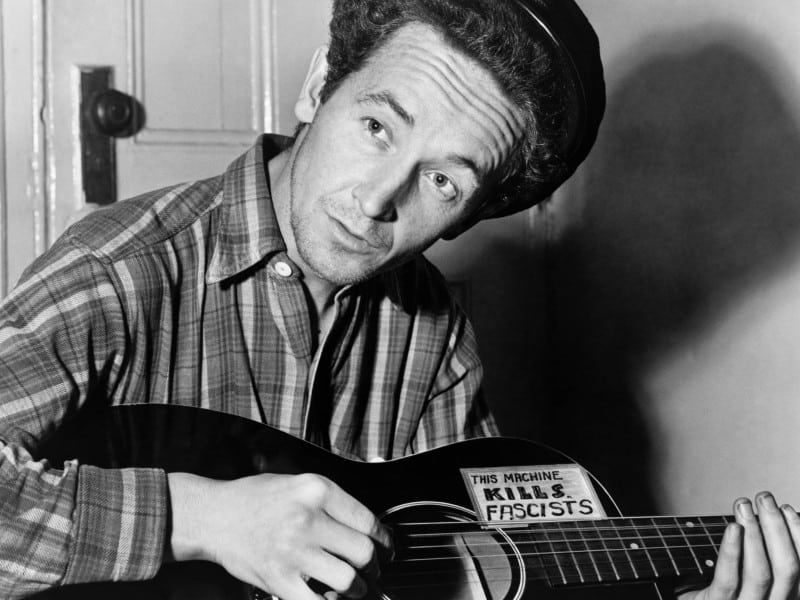
A group of local musicians will present an evening of music by Woody Guthrie at the Riviera Theatre and Bar in Three Rivers on Saturday, October 24 at 7:30 p.m. Proceeds will benefit The Huss Project, a community center owned and operated by Three Rivers nonprofit *culture is not optional.
Geek Fest returns to Kalamazoo this weekend
Geek Fest returns to the Kalamazoo County Expo Center on Saturday, October 10, from 11 a.m to 3 p.m., bringing together gaming enthusiasts, artists, and fans of all things geek-related for an afternoon of activities.
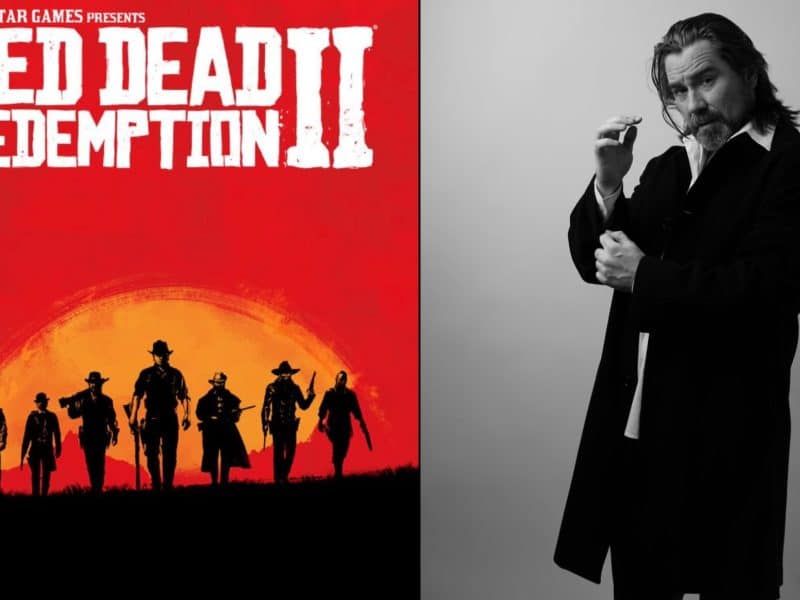
One of this year’s featured guests is Roger Clark, the actor best known for portraying Arthur Morgan, the main protagonist of Rockstar Games’ critically acclaimed 2018 video game Red Dead Redemption 2.
