
Listen: Good Grief. Podcast, Episode 10
In this episode of Good Grief., Watershed Voice’s Aundrea Sayrie discusses psychological refuge tools, and the ways we learn to protect ourselves when life becomes too painful or overwhelming.

Trigger warning: This episode contains a description of the physical and psychological abuse of a child.
In this episode of Good Grief., we will be talking further about psychological refuge tools and the ways we learn to protect ourselves when life becomes too painful or overwhelming.
Good Grief. Psychological Refuge: Intellectualization: Thinking instead of Feeling
Much of what happens when we first experience grief is simply looking for relief from it.
Because grief hurts.
And when something hurts, the mind and body naturally begin searching for a way to make it hurt less.
Sometimes we distract ourselves.
Sometimes we numb.
Sometimes we stay busy.
Sometimes we sleep.
Sometimes we don’t sleep.
Sometimes we laugh.
Sometimes we analyze.
Sometimes we do anything we can think of to get a little distance between ourselves and the thing that hurts.
Psychologically.
Physically.
Sometimes both.
And that’s where these psychological refuges come in.
I remember the first time I felt what I now recognize as righteous anger.
I was around six years old.
This was before my adoptive home.
In this particular foster home, seconds weren’t allowed.
“Your eyes are bigger than your stomach, Aundrea!”
I also ate at a separate little table in the corner.
Big eyes or not, I was often hungry.
One night, after bedtime, I went into the kitchen looking for something to quiet that hunger.
There was a single piece of chocolate cake sitting inside a glass cake holder.
I wanted nothing more than to eat it.
But I knew better than to touch it.
I was beaten daily. “Just in case because surely I was going to be bad at school” I’d shrug thinking, well, I already got my beating so I’m going to exercise my free will every chance I got.
That night, I wasn’t looking to give anybody a reason to beat me.
So I looked in the pantry instead.
And I found a bag of uncooked rice.
In my six-year-old brain, that looked like a pretty good option.
I snuck it back to my room, crawled underneath my bed, and probably shoved three handfuls into my mouth before deciding it was entirely too difficult and entirely too unappealing.
So I stopped.
Got back into bed.
Went to sleep.
The next morning, I woke up and went through the normal morning routine.
I went to school.
After school, I was playing with the other foster children when suddenly I was being yanked by the arm and pulled down the hallway toward my bedroom.
I don’t remember what was being yelled.
I remember the energy.
Frantic.
The scowl.
The accusatory finger pointing toward the evidence underneath my bed.
I had hardly begun to understand why I was in trouble before I felt the sting of being whipped repeatedly across the backs of my buttocks and legs.
I cried.
But this time was different.
Because underneath those tears was something else.
Righteous anger.
I remember thinking:
I cannot wait to grow up.
I cannot wait to get out of foster care.
And when I do, I am going to tell on this evil woman.
I hated being powerless.
I hated that I was little and she was big.
As young as I was, I was smart enough to know that what was happening to me wasn’t right.
And that little girl?
She was strong.
She was angry.
She was determined to fight.
That little girl got me here.
I think that may have been one of the places where the advocate in me was born.
I knew what it felt like to be marginalized
I knew what injustice felt like.
I discovered another way to protect myself.
If I couldn’t overpower what was happening around me, I would gain power through understanding it.
I would study it.
Anticipate it.
Think ahead.
Stay in front of it.
That became another piece of psychological armor.
“Intellectualization.”
Intellectualization is the second psychological refuge tool I want to talk about.
It is something I have used over and over again to navigate my way from powerlessness to victor.
Because fool me once.
That’s about all you’re getting with me.
I’ve been called overanalytical more times than I could possibly count.
And it’s true.
But there’s a reason.
My childhood wasn’t carefree.
Different forms of abuse taught me to pay attention.
Watch.
Listen.
Calculate.
Stay several steps ahead.
Because before I was adopted, I had learned that I had me to depend on.
Every place was temporary.
Every person was a variable.
Nothing felt guaranteed.
So I thought.
And thought.
And thought some more.
I wasn’t just a good student because I wanted good grades.
Learning was power.
Knowledge is power.
Being prepared is power.
After I was adopted, being a good student carried something else, too.
All I wanted was to bring honor to the mother who chose me.
So even then, I was carrying another burden:
Being a good girl.
Intellectualization worked for me.
In many ways, it still does.
It has helped make me curious.
Observant.
Analytical.
Resourceful.
It has helped me advocate for myself and others.
It has helped me find language for experiences that once only felt like grief.
It has helped me survive.
These tools have also shown up for me as a griever.
When my father died, intellectualization kicked in almost immediately. I became consumed with retracing his last steps… who he was with, camera footage, arrangements, passwords, securing his possessions. When my mother died, it looked like figuring out all of the right steps for probate and guardianship of my younger sibling.
There were many things to do. Things I could figure out.
Grief couldn’t be solved, but those things could.
And that’s one of the benefits of intellectualization. It can give a griever structure, clarity, and enough emotional distance to handle what needs to be handled.
But it can also become overthinking, obsessive searching, hyper-independence, or trying to understand every detail so we don’t have to sit with what we feel.
Creative refuge showed up after my mother died, I couldn’t write. There was a wound in that space, and it didn’t open again until I wrote what I still consider one of the best pieces of my life, a tribute to her.
For someone else, that refuge might be dark humor, music, art, poetry, or laughing at something that probably isn’t supposed to be funny.
These things can give us release, perspective, and somewhere to put the pain. But they can also become ways to deflect, minimize, or keep other people from seeing how much we’re hurting.
Refuge isn’t the problem.
Forgetting to leave the refuge is.
A shelter can protect you from a storm.
But you aren’t supposed to spend the rest of your life there.
Every coping mechanism that protects us can become limiting when we don’t know when to put it down.
Last episode, I talked about absurdity.
“Gotta laugh to keep from crying.”
Humor, poetry, art, satire; sometimes they give us just enough distance from something painful to breathe.
But absurdity has pitfalls, too.
Sometimes the joke keeps us from saying, “No, seriously. That hurt me.”
Sometimes humor makes everybody else comfortable while allowing us to remain hidden.
Sometimes we can become so skilled at turning pain into art that people applaud the performance without ever realizing we need help.
Sometimes even we don’t realize we need help.
Intellectualization can do something similar.
Except instead of turning pain into a joke or a poem, it’s turned into a problem to solve.
We research it.
Analyze it.
Explain it.
Categorize it.
Plan around it.
Predict every possible outcome.
And sometimes become so busy understanding what happened to us that we never actually allow ourselves to feel what happened to us.
I know that one.
I can explain exactly why something hurt me and still have difficulty simply saying:
It hurt.
I can understand someone’s childhood.
Their trauma.
Their motivations.
Their behavioral patterns.
I can see the whole complicated picture.
And stay far too long leaning on understanding instead of accepting that none of that changes the fact that they hurt me.
Understanding is not the same thing as healing.
And understanding someone else’s behavior does not obligate me to continue accepting it.
That’s another lesson I’m learning.
Intellectualization can also create the illusion of control.
If I know enough…
If I prepare enough…
If I think far enough ahead…
maybe nothing will catch me off guard again.
But life doesn’t make that promise.
Grief certainly doesn’t.
And that kind of hyper independence can make asking for help incredibly difficult.
Because when your earliest lesson was, “I’ve got me,” dependence can feel dangerous.
Delegating can feel dangerous.
Trust can feel dangerous.
Not knowing can feel dangerous.
Rest can even feel irresponsible.
So you carry it.
You figure it out.
You become the dependable one.
And everybody tells you how strong you are.
Meanwhile, strength can become its own prison.
That’s why I want to be careful with these psychological refuge tools.
I don’t want to demonize the things that helped us survive.
I am grateful for that little girl’s intelligence.
I’m grateful she watched.
I’m grateful she learned.
I’m grateful she got angry.
I’m grateful she started planning for a future she couldn’t even see yet.
I’m grateful she knew:
“This is not right.”
She protected me until I was old enough to protect myself.
I’m not six anymore.
And maybe part of healing is allowing the adult me to thank the survival mechanisms that brought me here without requiring them to run my entire life.
I can think and feel.
I can prepare and ask for help.
I can understand and still have boundaries.
I can be intelligent without needing to predict everything.
I can be strong and still need somebody.
I can laugh and still cry.
I can create refuge without turning refuge into residence.
Maybe that’s what healthy self-soothing asks of us.
Not to stop the pain at any cost.
Not to outrun grief.
Not to think our way out of every feeling.
But to give ourselves enough relief to stay present.
Whether you’re in a place of numbness or crying every day you’re not doing grief wrong.
Give yourself permission to sit with it as long as you need.
Enough shelter to weather the storm.
Enough safety to eventually step back outside.
Because the goal was never to become so good at surviving that we forgot how to live.
The goal was to survive long enough to have the choice.
And that little girl underneath the bed?
She made sure I did.
Good Grief.
Aundrea Sayrie is a writer, narrator, advocate, and the creator of Good Grief., a reflective platform exploring grief, belonging, identity, healing, and intentional living through storytelling and spoken reflection. Drawing from lived experience, community advocacy, and creative expression, her work centers emotional honesty, connection, and giving language to the experiences many people struggle to name. She truly believes the only thing worse than hurting is hurting alone and hopes to be a companion to others through their healing journey.
If you would like to support her work as an independent writer and creative, donations can be sent via Cash App: $Asayrie
Any views or opinions expressed in Good Grief. do not necessarily reflect the views or opinions of the Watershed Voice staff or its board of directors.
Author

Related Articles

Listen: Good Grief. Podcast, Episode 9
In this episode of Good Grief., Aundrea Sayrie explores Black grief, the toll of repeated loss and racial injustice, and the psychological refuge mechanisms folks develop to survive what sometimes feels impossible to process.
Listen: Good Grief. Podcast, Episode 8
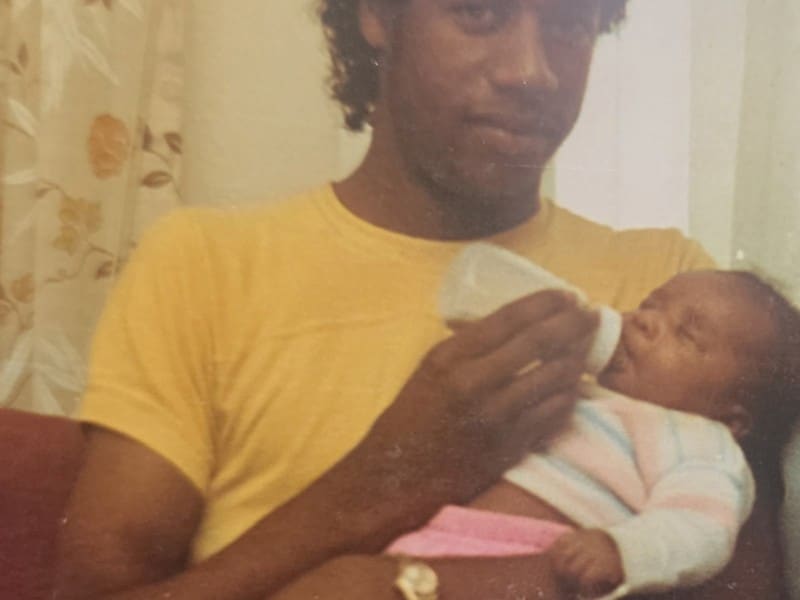
In the eighth episode of the Good Grief. Podcast, Aundrea Sayrie reflects on her late father who died just over a year ago. Aundrea writes about memories, trials, and tribulations related to her father, and how she has navigated through her grief over the past year.
Listen: Good Grief. Podcast, Episode 7
Grievers are all around us and most of the time, we have no idea.
In recognition of National Grief Awareness Day, August 30, this episode of Good Grief. explores what awareness asks of all of us.
