
A closer look at Kalamazoo’s healthcare proposal, criticized by mayor as ‘dark money’ ploy
At face value, the proposal appears aimed at improving healthcare access and affordability. However, local officials argue it is a political tactic designed to influence two congressional races by drawing attention to healthcare issues in those districts.
The amendment is on the ballot in six cities: Lansing, East Lansing, Kalamazoo, Battle Creek, Benton Harbor, and Portage. These cities fall into Michigan’s fourth and seventh congressional districts, represented by Republicans Bill Huizenga and Tom Barrett, respectively.
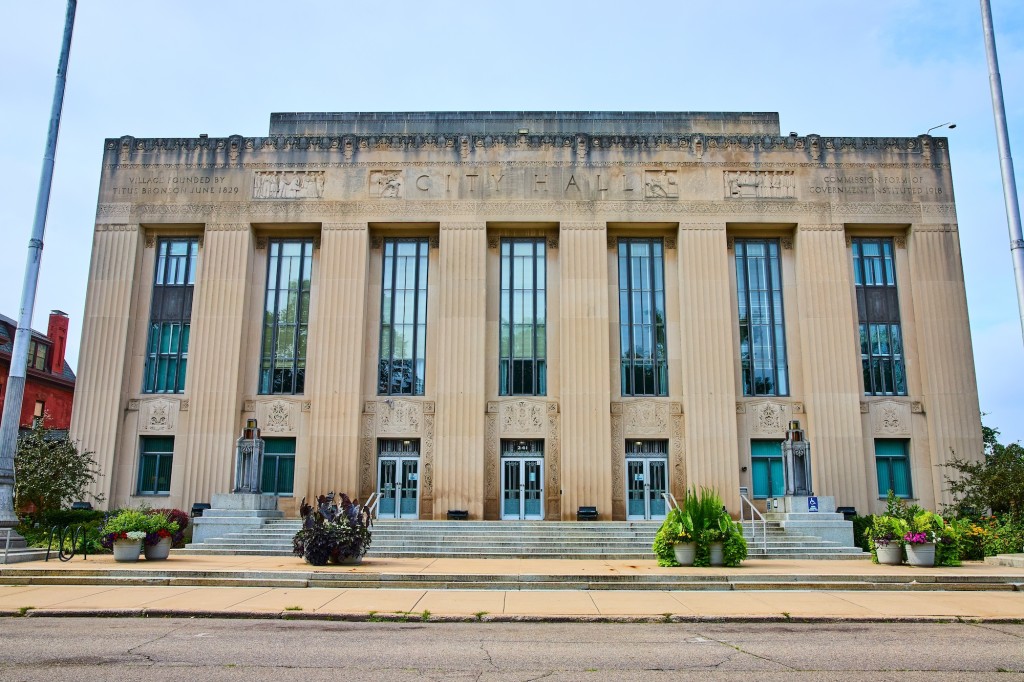
This November, in six cities across Michigan, voters will decide on a proposal that would amend local charters and establish healthcare advisory committees. Local officials, however, are calling it a sham.
The ballot initiative — in Kalamazoo, one of the six cities — is titled “A Proposal to Amend the Kalamazoo City Charter and Establish a Citizens’ Advisory Healthcare Action committee and Require a Healthcare Action Plan,” and requires the commission to establish a committee that would analyze healthcare access and affordability throughout the city. That would be done by gathering public testimony from the community, analyzing data, reviewing how policies have affected affordability and access, and producing a biennial Healthcare Action Plan.
If passed, the proposal would amend the city charter, making the committee and its associated requirements a permanent part of the charter unless changed through a subsequent amendment.
At face value, the proposal appears aimed at improving healthcare access and affordability. However, local officials argue it is a political tactic designed to influence two congressional races by drawing attention to healthcare issues in those districts.
“It’s in two districts where Democrats are hoping to flip the district from Republican to Democrat, and you know that’s not hidden, and that’s fine,” Kalamazoo Mayor David Anderson told Watershed Voice. “Everyone can make their point about who they think is good on the candidate’s side, who’s good for health care, who’s not good for health care, you know, who should be elected, and I’m fine with that, that’s politics. Spend all your money, whether it’s dark money on either side. That’s what the rules are right now. But I think it’s entirely unnecessary to, in your effort, to try to politically flip a district to leave the legacy of an amended charter behind, which I’m going to be quite honest about, I don’t think you’re going to give a hoot about on November 4th going forward.”
The amendment is on the ballot in six cities: Lansing, East Lansing, Kalamazoo, Battle Creek, Benton Harbor, and Portage. These cities fall into Michigan’s fourth and seventh congressional districts, represented by Republicans Bill Huizenga and Tom Barrett, respectively.
The proposal made its way onto the ballot through signature collections which, once enough were gathered, were presented to the local clerks in those municipalities and then placed on November’s ballot. Anderson is skeptical of that too, questioning if the signature gatherers were paid and where the money came from to begin with. Anderson has repeatedly called this a “dark money campaign.”
“There was no communication in any way, shape, or form,” Anderson said, regarding whether the city commission was contacted by the petition gatherers at any point. “This was paid petition circulators, who may or may not even be from Kalamazoo. I don’t know who any of them were. They were paid with dark regulated funds. You don’t have to even identify where the money came from.”
The parent organization is called City Action Michigan and has organizations by the same name except with the city’s name in place of “Michigan.” The organization is registered as a nonprofit and political action committee in Michigan. Although campaign finance disclosures exist, the identities of the original donors behind some of its funding remain unclear.
Watershed Voice reached out to City Action Michigan for comment, however, did not hear back prior to publication.
The email listed at the bottom of their website gives an “error” message when contacted. Their name was recently “Community Action Michigan,” however, a separate organization called “Michigan Community Action” was mistakenly contacted regarding the ballot proposal. Michigan Community Action Executive Director Brian McGrain told Watershed Voice that their legal team reached out to City Action Kalamazoo’s legal team and requested they change their name, which they did. McGrain added that other than the communications between their legal teams, he was not able to contact the organization directly.
On City Action Kalamazoo’s Facebook page, the website currently linked takes you to a page on Community Action Michigan’s website that states, “Michigan Community Action and Community Action Michigan are not affiliated. To visit Michigan Community Action, please click here.”
Anderson is concerned with what he calls an “unfunded mandate” that the city would have to comply with if the resolution were to pass in November. The Kalamazoo City Commission has limited authority over healthcare policy, particularly at the state and federal levels. Although the proposed committee could gather data, analyze healthcare access and affordability, and make recommendations, it would not have the authority to implement changes to state or federal healthcare policy.
“This is going to affect our budgeting too,” Anderson said. “You know, the city commission has to budget that general fund dollars for the costs associated with hiring consultants, you know, staffing this thing, and that would just end up being a new budget line every other year for this work.”
Anderson believes it is likely a way to try and get people to the polls.
On Monday, the Kalamazoo City Commission unanimously passed a resolution formally opposing the proposed charter amendment. The city does not often pass resolutions stating its position on a topic, Anderson cited the Ukraine-Russia war as another time they passed such a resolution. The resolution is sponsored by Anderson and Commissioner Jae Slaby.
“We do not have the authority as a local municipality to address healthcare,” Slaby said during Monday’s meeting. “We can certainly advocate for affordable healthcare, among other issues, but that doesn’t require another committee.”
Commissioner Chris Praedel expressed frustration with what he described as billionaires using untraceable funds to pay for signatures to get proposals on teh ballot, likening the practice to the healthcare ballot initiative. He then expressed support for the resolution opposing the charter amendment.
Commissioner Jeannie Hess asked City Attorney Aaron Leal how residents can “spoil” their absentee ballots if they had already voted on the issue but would like to change their vote after learning additional information. Leal said those voters can submit a signed, written request to their local clerk, either in person, by mail, or by email. Under Michigan law, voters who have already returned their absentee ballots have until Friday, October 23 at 5 p.m. to request that their ballots be spoiled and receive new ones. Ballots already inserted into a tabulator during in-person voting cannot be changed.
Maxwell Knauer is a staff writer for Watershed Voice.
Author

Related Articles
Candidate questionnaire: Aaron Miller
Aaron Miller, Sturgis At-Large Commissioner candidate filled out our questionnaire, here are his answers.
Candidate questionnaire: Justin Wickey
Justin Wickey, Sturgis Second Precinct Commissioner candidate filled out our questionnaire, here are his answers.
Candidate questionnaire: Jonathan Lindsey
Jonathan Lindsey, incumbent State Senate District 17 candidate filled out our questionnaire, here are his answers.
