
Sturgis Dam could be going away, here’s what the city is considering
Currently, the dam produces 6.6 million kilowatt hours of energy per year. The city uses about 219.8 million kilowatt hours, so the dam produces about 3% of the city’s total electricity in a year, Sturgis Public Services Director Thomas Sikorski told Watershed Voice.
Sturgis is known as the “electric city” and the dam is a core part of the city’s identity. This is something Sikorski noted during their last meeting when expressing some of his hesitancy to consider more invasive options like decommissioning. However, the dam’s relatively small contribution to the city’s electricity supply has promoted questions about whether its operating and maintenance costs are justified.
During their October 28 Sturgis City Commission meeting, commissioners unanimously approved an agreement with Camas, an environmental and regulatory consulting firm, to provide guidance to the city about its options for the dam moving forward.
The agreement authorizes up to $46,740 for the first phase of Camas’ assessment, which will examine the regulatory options available to the city. Any additional phases would require separate authorization and funding following the completion of the initial assessment.
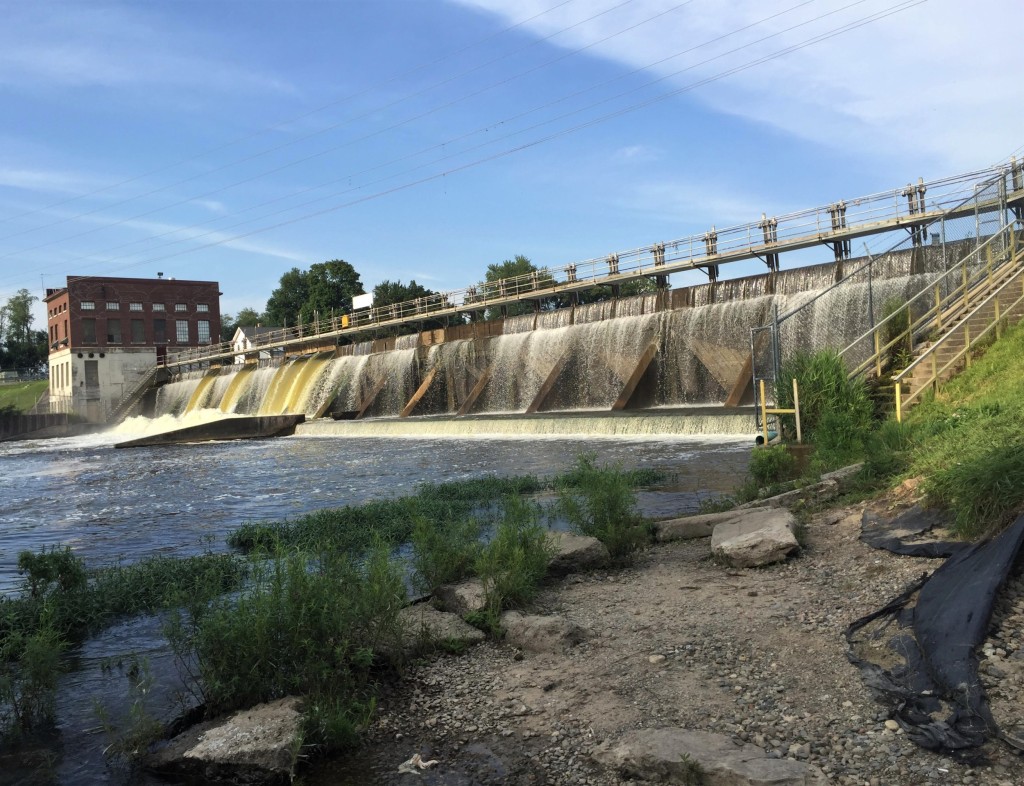
The Sturgis Dam, located on the St. Joseph River, outside the city, has been in operation since 1911.
In light of the agenda item passing, Watershed Voice spoke with Sturgis Public Services Director Thomas Sikorski about what the consulting agreement means, and what the city’s options are going forward. Sikorski explained that although the city’s federal license does not expire until 2036, the city will need to determine its next steps well before then. According to the agenda packet, the city must identify a path forward ahead of a regulatory filing window in 2031.
“I need to give them a heads up as to when we plan to start to relicense this because ultimately, what it comes down to in the end is it’s kind of a negotiation with FERC, DNR, EGLE, all these entities have a say in what they want us to do with with the dam if they were to relicense it,” Sikorski said. “So I have to have a recreation plan. I have to have a wildlife management plan. We have to perform all these studies because we have a dam.”
Sikorski says the proposal is the city doing its due diligence, updating and educating the commission on the continued costs to own and operate the dam. That cost? Sikorski says it’s about $500K to operate the dam each year. There are other costs too, including engineering studies as part of FERC and EGLE requirements that he says can be hundreds of thousands of dollars.
Another cost is the required maintenance of the dam and all its moving parts.
“Two and a half years ago, we finished overhauling units three and four, that was about a $2 million project,” Sikorski said, adding that now the city has to do embankment upgrades which is why the impoundment is currently lowered. “We estimate that to be about four and a half million dollars to do those improvements as well. So after that, I don’t foresee anything approaching or anything new. But there’s always some sort of an improvement that needs to be made there.”
What are the options?
In the agenda packet from the October 28 Sturgis City Commission meeting, during which the agreement with Camas was approved, city staff described their concerns as follows:
“City staff has become increasingly concerned about dam safety issues and associated costs related to repairs at the dam and are evaluating whether the potentially high costs of repairing the dam and pursuing relicensing are justified, or if alternative regulatory pathways may be more viable.”
Camas identifies four potential pathways in the packet:
- Relicensing: Apply for a new federal license to continue generating electricity, including any required repairs, safety upgrades and environmental measures. This is basically business as usual, keeping the dam and its current operations.
- Exemption: Determine whether the dam qualifies for an exemption from certain FERC licensing requirements, potentially reducing the city’s ongoing regulatory obligations and costs.
- Full surrender and decommissioning: Surrender the federal license, remove the dam and generating facilities, and restore the river channel.
- Partial surrender: Surrender the federal license while leaving the dam in place as a non-generating structure subject to state dam safety oversight.
One factor Sikorski kept noting were the FERC regulations, and how it added an increased cost that, in his view, is not worth it to the city.
Currently, the dam produces 6.6 million kilowatt hours of energy per year. The city uses about 219.8 million kilowatt hours, so the dam produces about 3% of the city’s total electricity in a year, according to Sikorski.
Sturgis is known as the “electric city” and the dam is a core part of the city’s identity. This is something Sikorski noted during their last meeting when expressing some of his hesitancy to consider more invasive options like decommissioning. However, the dam’s relatively small contribution to the city’s electricity supply has promoted questions about whether its operating and maintenance costs are justified.
Just a couple of months ago, Sturgis Public Safety Director Ryan Banaszak told Watershed Voice that the department was ending its agreement with Flock Safety, discontinuing its use of the company’s license plate-reading cameras to save money. While unrelated to the dam, the decision is another example of city officials looking for opportunities to reduce expenses.
Ultimately, Sikorski wants to save the city money and keep the dam around.
“The way I see it is, it takes us out from underneath the purview, or maybe it’s some sort of less stringent standard that they would hold us to because of our size,” Sikorski said, talking about the potential of an exemption. “We’re a small hydro unit. We don’t necessarily need to be held to all these other, you know, standards that they would hold, you know, larger hydro units across the United States to. I don’t know what all those are. I don’t know all the details of those, but that’s what’s going to come out in this report. Is what that pathway [exemption] looks like if that is even an option.”
According to the agenda packet, Camas’ first phase is expected to take four months and will include a regulatory strategy report, a workshop and planning-level cost estimates to help commissioners compare the costs, timelines, and requirements of different options for the dam’s future.
Maxwell Knauer is a staff writer for Watershed Voice.
Author

Related Articles

Sturgis City Commission returns to business as usual after election
The Sturgis City Commission met last night, November 11, for a regular business meeting. Commissioners worked through a light agenda and shared their thoughts about last Tuesday’s election.

Tuesday’s midterm elections by the numbers
Here in Michigan, the midterm trends were no different than they were nationally. Democrats won the governor’s office, a U.S. Senate seat and nine of the state’s 13 seats in the House, flipping three congressional districts – 4th, 7th, and 10th – previously held by Republicans. Democrats also regained control of the Michigan House of Representatives and expanded their majority in the state Senate.
However, in St. Joseph County, Republican candidates remained the top vote-getters in most major races, while voters in Three Rivers delivered a different set of results.

For many veterans, hardships continue long after returning home
Watershed Voice spoke with Nicolette Cole, a Veteran Navigator with Pivotal, who helps veterans navigate the often-complicated process of accessing benefits and services.
Cole also discussed the stigma surrounding veterans seeking mental health care and the difficulties many face when navigating the system.
