
Kalamazoo commission upholds controversial DOJ-tied federal grant
Residents spoke for nearly five hours during the public comment section, almost all against accepting the grant. Despite that, Commissioners voted 4-3 in favor of accepting the grant. Commissioners Stephanie Hoffman, Jeanie Hess, Chris Praedel, and Mayor David Anderson voted in favor. Commissioners Slaby and Alonzo Wilson, and Vice Mayor Drew Duncan voted against acceptance of the grant.
After the vote, residents interrupted, yelling at commissioners for a number of minutes calling their vote “shameful.”
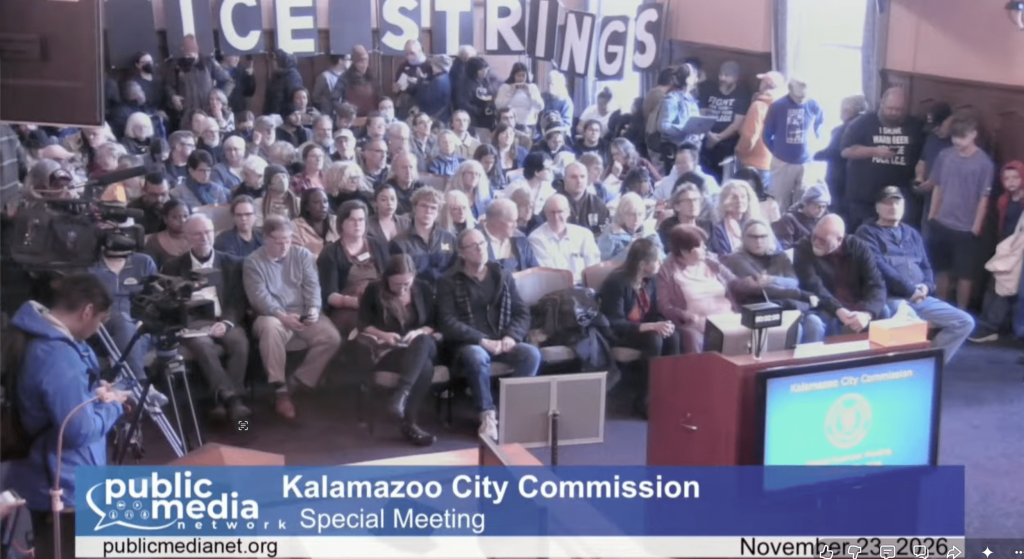
Commissioners Jae Slaby and Vice Mayor Drew Duncan and the Kalamazoo City Commission gathered for a special meeting last night to reconsider a federal grant that was previously accepted during a meeting last Monday. The grant remains highly controversial due to direct ties to the Department of Justice and their immigration enforcement.
Residents spoke for nearly five hours during the public comment section, almost all against accepting the grant. Despite that, commissioners voted 4-3 in favor of accepting the grant. Commissioners Stephanie Hoffman, Jeanie Hess, Chris Praedel, and Mayor David Anderson voted in favor. Commissioners Slaby and Alonzo Wilson, and Vice Mayor Duncan voted against acceptance of the grant. After the vote, residents interrupted, yelling at commissioners for a number of minutes calling their vote “shameful.”
Throughout the meeting, residents constantly cheered or booed. The commission chambers were completely filled and a second room opened with a live-feed of the meeting down the hall.
According to Anderson, this was the first time in more than a decade that commissioners had called for a special meeting of this kind.
“No person sitting here has the slightest bit of interest in causing risk, trauma, anything to happen to people here in Kalamazoo. That is antithetical to the values of the people that sit up here,” Mayor Anderson said during his opening comments. Residents yelled in disagreement during much of his comments.
Also during opening comments, City Attorney Aaron Leal reported that a federal judge had ruled in favor of Michigan and several other states challenging immigration-related conditions attached to Department of Justice grants. The judge issued a verbal ruling on November 4 but has yet to issue a formal written order.
Specifics of the grant
The $490,000 grant was awarded to the city on September 30 through the U.S. Department of Justice’s Bureau of Justice Assistance under its Byrne Discretionary Grants Program.
The funding will be used to replace aging and high-mieage Kalamazoo Department of Public Safety (KDPS) patrol vehicles and equip them with emergency lighting, communications systems, and other necessary public safety equipment.
The city faced a November 24 deadline to accept or reject the grant.
There are two key provisions in the funding related to immigration enforcement, condition 51 and 52.
Condition 51 prohibits use of grant funds to restrict government agencies or officials from exchanging citizenship or immigration-status information with the Department of Homeland Security. It also prohibits such restrictions within programs or activities funded by the grant.
Condition 52 prohibits the use of grant funds to publicly disclose certain federal law-enforcement information for the purpose of concealing or shielding individuals from federal authorities. This includes information concerning immigration enforcement operations.
Both conditions specify that they are enforceable only to the extent permitted by federal law and applicable court rulings.
Included in Monday’s agenda packet was a reservation of rights letter from Attorney Leal to the Department of Justice, stating that accepting the grant does not waive the city’s right to challenge its immigration-related conditions. That letter was included as part of the commission’s motion to accept the grant.
The city anticipates conditions 51 and 52 will be removed following a favorable written court order and reserves the right to terminate the grant should subsequent court rulings alter that outcome.
This story continues to develop and updates will be shared by Watershed Voice as they become available.
Maxwell Knauer is a staff writer for Watershed Voice.
Author
Related Articles
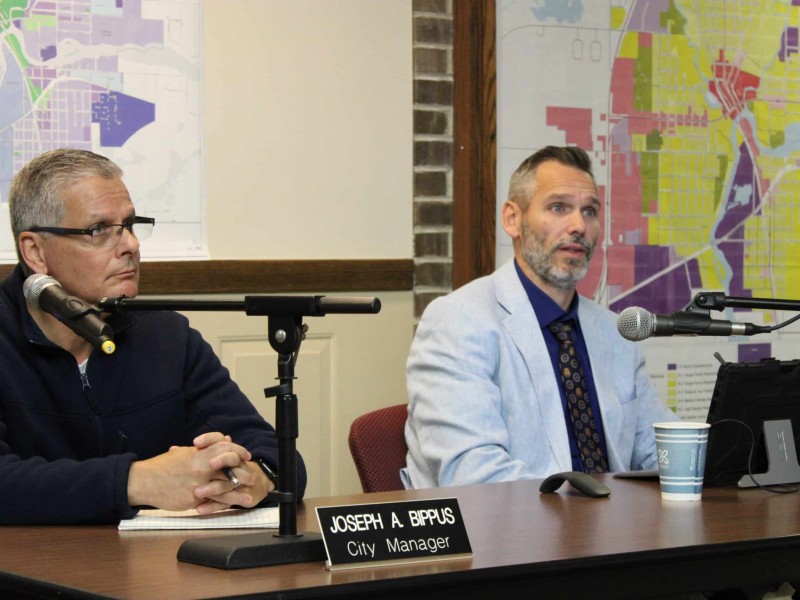
In Detail: City manager shakeups across southwest Michigan
In Watershed Voice’s coverage area, five city managers have either left their positions or announced plans to depart over the last year and a half, citing reasons ranging from controversy and new opportunities to retirement.
In this story Watershed Voice will go through each city manager, their tenure, and why they’re leaving.
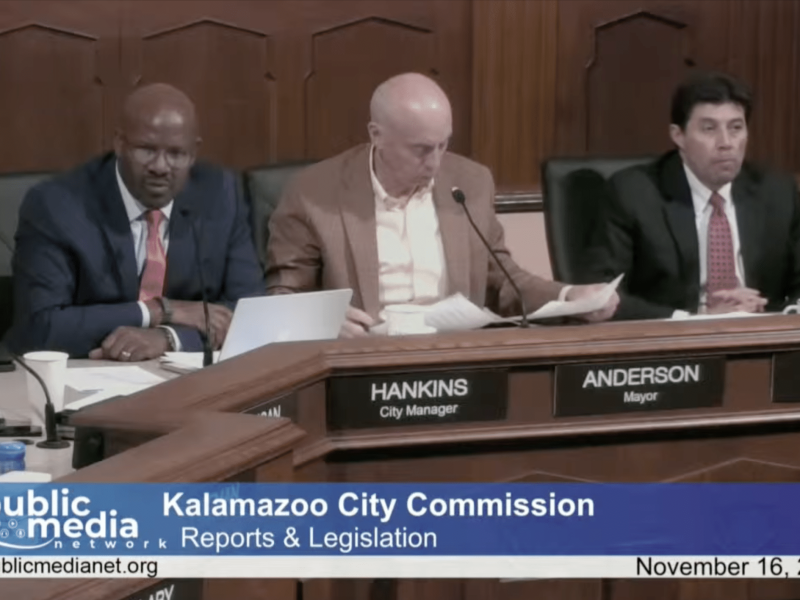
ICYMI: Kalamazoo Commission splits, approving controversial $490K grant from DOJ
The decision comes months after the commission declined to accept a separate $1.25 million grant through the DOJ’s Community Oriented Policing Services (COPS) Hiring Program. The grant would have funded 10 additional public safety officers, with the city contributing another $270,000.
The proposal was removed from the commission’s March 2 and April 6 agendas amid concerns about the grant’s conditions, including those related to immigration enforcement.

Struggling to make ends meet? Here’s where to find assistance in southwest Michigan
As winter approaches, residents of St. Joseph, Cass, and Kalamazoo counties struggling to afford groceries, housing, utilities, healthcare, and other necessities have several resources available to them.
Watershed Voice has compiled a list of organizations and programs offering assistance throughout the region.
