
Why talking about suicide matters
September is Suicide Prevention Awareness Month, and Watershed Voice encourages you to check in on your loved ones, yourself, and reflect on ways to look out for signs that people in your life are struggling.
The topic of suicide is often considered taboo and difficult to talk about. However, Nicolette Cole, a veteran navigator at Pivotal and instructor for its QPR suicide prevention training, says avoiding the topic can be part of the problem.
September is Suicide Prevention Awareness Month, and Watershed Voice encourages you to check in on your loved ones, yourself, and reflect on ways to look out for signs that people in your life are struggling.
The topic of suicide is often considered taboo and difficult to talk about. However, Nicolette Cole, a veteran navigator at Pivotal and instructor for its QPR suicide prevention training, says avoiding the topic can be part of the problem.
QPR stands for Question, Persuade, and Refer. The suicide prevention program teaches people to recognize warning signs, ask someone whether they are thinking about suicide, persuade them to seek help, and refer them to appropriate resources.
Cole said talking openly about suicide can help break down stigma surrounding the topic.
“Knowing the warning signs of suicide are important, and asking that hard question, regardless of how close you are to that person, if they’re suicidal,” Cole said. “And if they are suicidal, you know, what can we do to get you help and help them get the help that they need.”
Some warning signs, Cole said, may be direct while others are indirect. They can include changes in behavior that seem out of character.
Someone who is normally social might become withdrawn, for example. A person might make comments such as, “You’re better off without me,” begin stockpiling medication or alcohol, or start putting their affairs in order.
Cole said putting affairs in order could include making a will, determining who should receive money or possessions, or unexpectedly giving belongings away.
“You’re gonna know your person more than anybody else,” Cole said. “So you will know, hopefully, different things that are changing.”
Cole added that sometimes there are no apparent warning signs, making conversations about suicide and mental health important even when someone does not appear to be struggling.
“Sometimes they don’t give any signs or talk about it,” Cole said. “It’s hard for us to understand why they did that because there were no warning signs.”
When there are no apparent warning signs, Cole said people can still make a point of telling friends and family members they are loved, appreciated, and supported.
“Just letting people know how much they care about them, and that it’s OK that we have bad days, and there’s always somebody there to help them,” Cole said. “Just letting them know how important they are to us and everybody else around them.”
QPR also emphasizes directly asking someone if they are thinking about suicide. According to the QPR institute, asking someone about suicide does not increase their risk. The organization’s training teaches participants to ask about suicidal thoughts, persuade a person to seek help, and refer them to appropriate resources.
Why word choice matters
One word Cole said can be harmful when discussing suicide is “committed.”
The phrase “committed suicide” can associate suicide with committing a crime, Cole said, reinforcing stigma surrounding the subject.
“Changing the wording is important because if we say the word ‘commit,’ it’s more like you’re committing a crime,” Cole said.
Instead, “died by suicide” is commonly reccomended when referring to a suicide death.
Cole said langauge is important in reducing stigma surrounding both suicide and mental health struggles.
“Our wording is very powerful in anything that we do and say these days,” Cole said. “People just need to be open that people are having bad days, and it’s OK to have bad days. But if it’s more than a bad day, it’s OK to get help.”
For Cole, increasing awareness ultimately comes down to making suicide something people are willing to discuss.
“It’s just a very important thing that we need to talk about,” Cole said. “Not to be so ashamed to talk about it.”
Disproportionate impact
Suicide disproportionately affects some groups, including LGBTQ+ young people.
According to The Trevor Project’s 2025 U.S. National Sruvey on the Mental Health of LGBTQ+ Young People, 1 in 10 LGBTQ+ young people surveyed reported attempting suicide in the previous year. Thirty-six percent seriously considered attempting suicide, including 40% of transgender and nonbinary young people.
The survey included more than 16,000 LGBTQ+ young people ages 13 to 24 across the United States.
The Trevor Project also found that 90% of LGBTQ+ young people surveyed said recent anti-LGBTQ+ laws, policies, and debates caused them stress or anxiety.
“For the seventh year, the U.S. National Survey found that LGBTQ+ young people are too often placed at higher risk for suicide not because of who they are, but as a result of how they are treated and stigmatized,” The Trevor Project wrote.
Separately, about 2.3 million U.S. adults — 0.9% of the adult population — reported attempting suicide during the previous year in 2025, according to the Substance Abuse and Mental Health Services Adminstration.
The figures come from different surveys and populations. The Trevor Project surveyed LGBTQ+ young people ages 13 to 24, while the federal figure represents U.S. adults 18 and older.
Resources
Pivotal: Pivotal provides behavioral health and crisis services in St. Joseph County. Its crisis line is available 24 hours a day, seven days a week at 1-800-622-3967.
Pivotal has offices at 1020 Millard St. in Three Rivers, 677 E. Main St. in Centreville, and 1555 E. Chicago Road, Suite A, in Sturgis.
Turning Point Behavioral Health Urgent/Walk-In Crisis Care Clinic: The clinic is located at 677 E. Main St. in Centreville and is open from 7 a.m. to 5 p.m. Monday through Friday.
National resources
988 Suicide & Crisis Lifeline: Call or text 988 to reach the Suicide & Crisis Lifeline. Call, text, and chat services are available 24 hours a day.
The Trevor Project: LGBTQ+ young people can reach The Trevor Project’s crisis counselors 24/7 by calling 1-866-488-7386 or texting START to 678678.
Maxwell Knauer is a staff writer for Watershed Voice.
Author

Related Articles

Local meeting primer: Sturgis City Commission
The Sturgis City Commission will meet this Wednesday, October 14 at 6 p.m. for a regular business meeting. This will be commissioners’ first meeting since the results of the internal investigation were released, and Monday’s statements from Commissioner Aaron Miller again calling for Mayor Frank Perez’s resignation. While there are no agenda or discussion items related to the results, commissioners will likely discuss it during commissioner comments.
For regular business, commissioners will consider a number of vehicle and project plans, a diesel fuel purchase, and set the meeting date for their first procedural meeting after the November election.
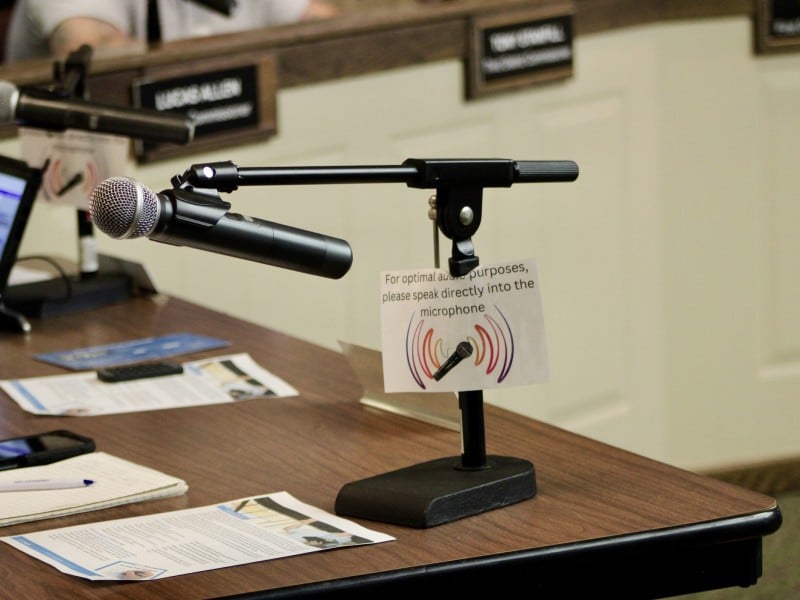
In case you missed it: Three Rivers draws one step closer to live-streaming its meetings
Commissioners approved a recommendation to allocate up to $4,000 towards the equipment and went with the second option provided: MSPoT/PTZOptics Move SE for $3,607. The quoted total cost includes the setup, training, live-streaming interface, and the equipment which includes a PTZ camera. Also included is five push-to-talk mic stands, however, commissioners decided to wait on that decision as they worry having to push to talk could make fluid conversation at the dais difficult.
Although commissioners approved the second equipment option, they decided to continue using their existing microphones for the time being.
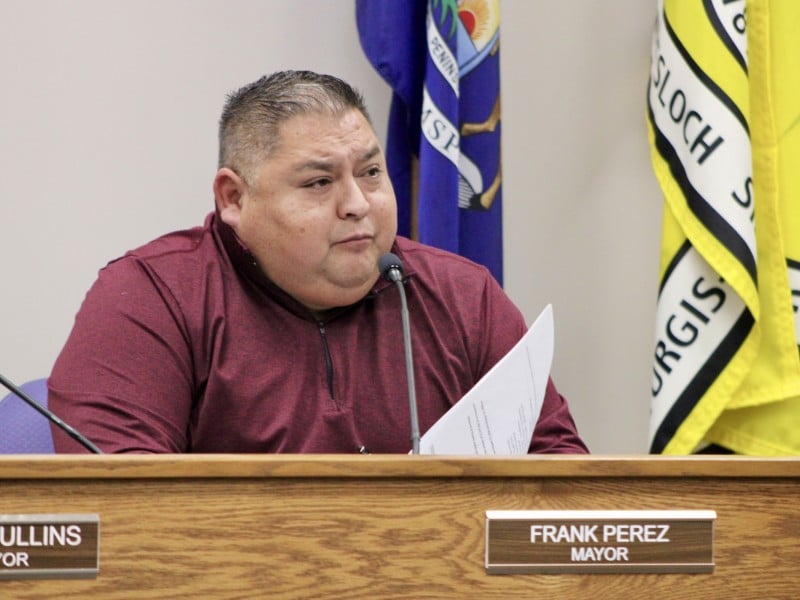
Aaron Miller calls for Frank Perez to resign, concede November election
Sturgis City Commissioner Aaron Miller says “there can be no coincidence” between the reported actions of Mayor Frank Perez, and the resignation of former City Manager Andrew Kuk.
“I have watched a long history of commissioner mistreatment of Mr. Kuk that culminated in these events,” Miller told Watershed Voice. “It has not just been this one event. His resignation was announced on the same night that the details of the secret meeting all spilled out before the entire commission, shortly after Mr. Kuk learned about the various details as well. There can be no coincidence.”
