
What the Supreme Court’s transgender sports ruling means for Michigan
The U.S. Supreme Court recently upheld state laws that bar transgender girls and women from participating on girls’ and women’s sports teams, ruling unanimously that the laws do not violate the federal civil rights law Title IX.
Michigan does not have a statewide law prohibiting transgender students from participating on school sports teams. Instead, the state has civil rights protections that prohibit discrimination based on gender identity and gender expression.
As a result, legal advocates say Tuesday’s ruling does not automatically change how Michigan schools handle transgender student-athlete participation.
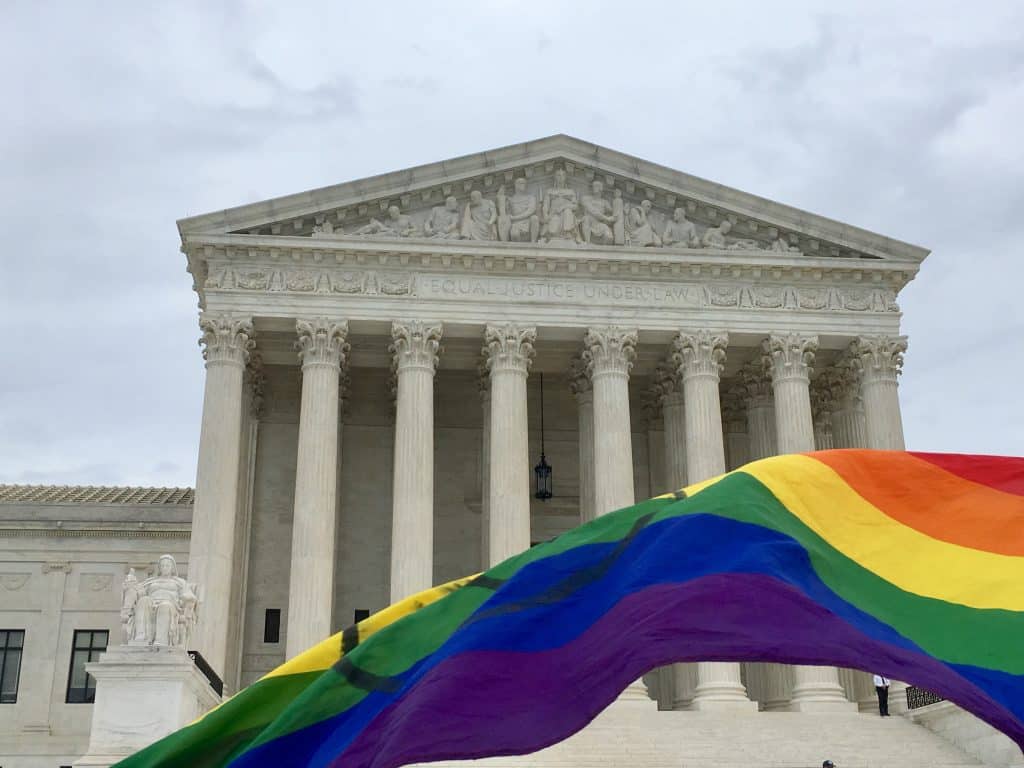
The U.S. Supreme Court recently upheld state laws that bar transgender girls and women from participating on girls’ and women’s sports teams, ruling unanimously that the laws do not violate the federal civil rights law Title IX.
In a separate 6-3 decision, the justices also ruled the laws enacted in Idaho and West Virginia do not violate the Equal Protection Clause of the U.S. Constitution. Justice Brett Kavanaugh wrote the majority opinion.
The decision stems from challenges to laws in Idaho and West Virginia that require participation on girls’ and women’s sports teams to be based on biological sex. Idaho became the first state to enact such a law in 2020, and more than two dozen other states have since adopted similar restrictions.
President Donald Trump praised the ruling as a victory for women’s sports.
What the ruling means
The Supreme Court held that Title IX does not prohibit states from restricting participation on girls’ and women’s athletic teams based on biological sex. In the constitutional portion of the case, a majority of the Court concluded the Idaho and West Virginia laws do not violate the Equal Protection Clause.
Writing for the majority, Kavanaugh said the states have legitimate interests in preserving competitive fairness and athletic opportunities for girls and women. The ruling allows states with similar laws to continue enforcing them.
However, the decision does not require states without such laws to adopt them.
Impact on Michigan
Michigan does not have a statewide law prohibiting transgender students from participating on school sports teams. Instead, the state has civil rights protections that prohibit discrimination based on gender identity and gender expression.
As a result, legal advocates say the Supreme Court ruling does not automatically change how Michigan schools handle transgender student-athlete participation.
“While we are deeply disappointed with the U.S. Supreme Court’s ruling today regarding transgender athletes and the impact it will have on transgender athletes across the country, it does not mean that Michigan school districts are required to ban transgender girls from playing sports,” ACLU of Michigan LGBTQ+ Rights Project Staff Attorney Jay Kaplan said in a statement.
“Michigan’s state civil rights laws explicitly prohibit discrimination based on gender identity and expression in school, employment and housing. Today’s ruling also does not apply to other school programs or activities, including bathrooms and respecting student names and pronouns.”
Michigan’s Elliott-Larsen Civil Rights Act prohibits discrimination based on religion, race, color, national origin, age, sex, height, weight, familial status, marital status and disability. In 2023, the law was amended to explicitly add protections for sexual orientation, gender identity and gender expression. Those protections remain in effect following Tuesday’s Supreme Court decision.
“It is simply unfair to deny a child the many benefits of teamwork and dedication because of who they are, along with the friendships and leadership development that playing sports cultivates,” Kaplan said.
“We should remove barriers for everyone in sports such as unequal pay and harassment, not create new ones. Opponents have spent millions to advance sports bans that target a handful of children instead of making sure that everyone — transgender or not — is able to have good jobs, fully funded schools, an affordable cost of living, and the health care we need.
“Transgender people are our neighbors, friends and family, and they deserve to be treated with the same respect and dignity as anyone else. Every day we see attempts to deny transgender people control over their bodies, identities and lives, and we will continue to fight for the freedom of all people to be their authentic selves, without fear or political interference.”
Background
The cases before the Supreme Court were brought by Becky Pepper-Jackson, a high school student in West Virginia, and Lindsay Hecox, a college student in Idaho. Both challenged their states’ laws after being barred from competing on girls’ athletic teams.
The Court’s ruling resolves the federal legal challenges to those laws and is expected to influence litigation involving similar laws in states across the country.
Maxwell Knauer is a staff writer for Watershed Voice.
Author

Related Articles
OutCenter hosting open house Friday in downtown Dowagiac
“We’re talking about a sizable portion of our communities that need support, need to be able to find community, and need folks out there that are advocating for them,” Executive Director Gerik Maverick said. “We have been working with schools for just over a decade. We work with healthcare systems on training to make sure folks are able to get resources. We’re working with the area agency on aging on some very exciting new projects.”

Three Rivers Athletic Club to host ribbon cutting ceremony Friday
The fitness center once thought to be closing for good will host a ribbon-cutting ceremony Friday after its new owners reopened the gym under a new name, Three Rivers Athletic Club.

Findings of investigation into Sturgis City Commission conduct leaves key questions unanswered
After a closed session during their September 23 meeting, the Sturgis City Commission unanimously voted to release the findings of the external investigation by Miller Johnson that looked into alleged wrongdoing by commissioners. The report details the events leading up to the public controversy, the investigator’s findings, and his legal conclusions regarding the commissioners’ conduct.
This story presents the events chronologically, drawing on the investigator’s findings and the accounts of those interviewed.
