
What drove turnout in St. Joseph County’s August primary?
County records show 12,200 ballots were cast in Tuesday’s primary election. By comparison, 13,544 ballots were cast during the August 2024 primary, when turnout reached about 27%, and 13,472 ballots were cast during the August 2020 primary, which saw roughly 29% turnout. This year’s election saw 1,344 fewer ballots cast than in 2024 — a decrease of about 9.9%.
As of August 5, St. Joseph County had 49,226 registered voters, putting overall turnout for Tuesday’s primary at approximately 25%.
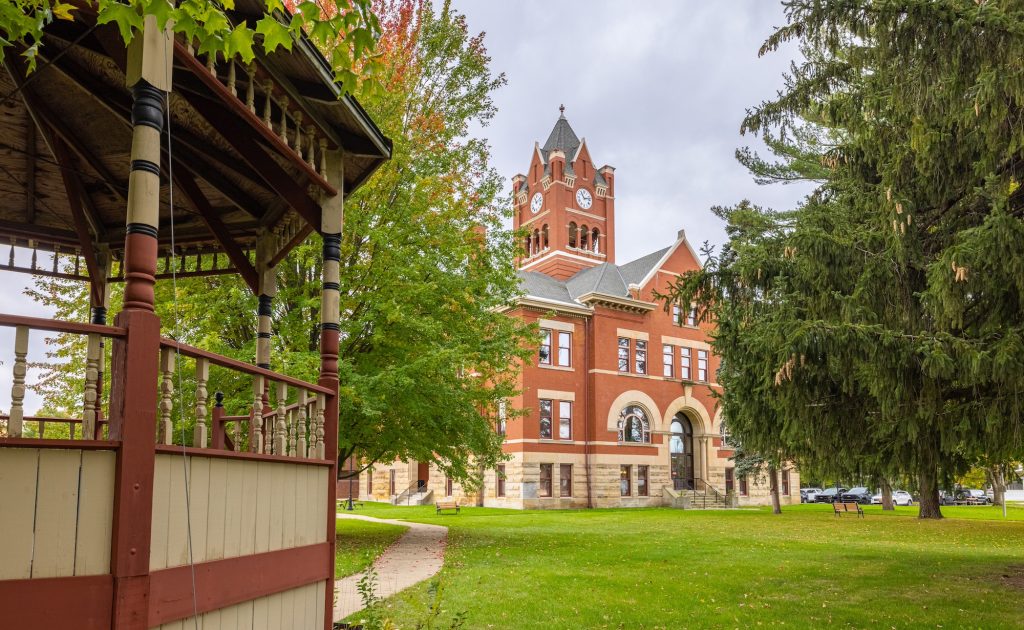
While Tuesday’s primary election decided nominees for governor, U.S. Senate, and several state and local offices, one of the biggest takeaways wasn’t who won — it was how many people voted, or not.
Watershed Voice reviewed turnout and election data from recent August primary elections to see how this year’s results compare with previous cycles. The numbers suggest voter participation in St. Joseph County has remained relatively consistent during August primaries held outside of presidential election years, with turnout generally falling between one-quarter and one-third of registered voters.
While overall turnout tends to be lower than during presidential elections, participation can still fluctuate depending on the races appearing on the ballot. Years featuring highly contested primaries often draw more voters than elections with fewer competitive contests.
County records show 12,200 ballots were cast in Tuesday’s primary election. By comparison, 13,544 ballots were cast during the August 2024 primary, when turnout reached about 27%, and 13,472 ballots were cast during the August 2020 primary, which saw roughly 29% turnout. This year’s election saw 1,344 fewer ballots cast than in 2024 — a decrease of about 9.9%.
As of August 5, St. Joseph County had 49,226 registered voters, putting overall turnout for Tuesday’s primary at approximately 25%.
It’s also important to note that Michigan’s partisan primary system allows voters to cast a ballot in either the Republican or Democratic primary, but not both. As a result, turnout within individual races can vary significantly depending on how competitive each party’s contests are. For example, while the Democratic U.S. Senate primary drew strong interest because it featured multiple candidates, several Republican races on the ballot were uncontested, and vice versa. Those differences can influence how many voters choose to participate in a primary election.
Although overall participation dipped this year, Election Day voting remained the top chosen voting method. Of the 11,903 ballots cast in partisan contests, 8,932 were cast on Election Day, 2,596 were absentee ballots and 375 were cast during early voting. That means roughly 75% of participating voters cast their ballots on Election Day, about 22% voted absentee, and just over 3% voted during early in-person voting.
Senate race splits county from statewide results
One of the more interesting trends appeared in the Democratic U.S. Senate primary.
Statewide, Abdul El-Sayed narrowly secured the Democratic nomination. St. Joseph County voters, however, favored U.S. Rep. Haley Stevens.
Stevens received 2,177 votes in the county compared with El-Sayed’s 2,060, a margin of 117 votes. Former state Senator Mallory McMorrow, who suspended her campaign in early July, still received 257 votes locally.
The vote method breakdown also revealed different strengths for the candidates. El-Sayed led on Election Day, receiving 1,482 votes to Stevens’ 1,418. Stevens made up the difference through absentee ballots, receiving 718 absentee votes compared with El-Sayed’s 493. Early voting accounted for 85 votes for El-Sayed and 41 for Stevens.
In total, 4,494 Democratic voters participated in the Senate primary.
The race saw a higher turnout countywide than the Democratic Senate primary two years earlier, when Elissa Slotkin defeated Hill Harper in St. Joseph County with 1,203 votes to Harper’s 306.
In total, only 1,511 Democratic voters participated in the Senate primary that year.
Republican participation remains higher
While Democrats had one of the state’s most competitive primaries, Republican participation remained considerably higher in St. Joseph County.
More than 6,800 Republican voters cast ballots in the GOP gubernatorial primary, compared with 4,450 Democratic voters in the Democratic gubernatorial race. Republican U.S. Senate candidate Mike Rogers received 6,419 votes in an uncontested primary, while Democratic Senate candidates combined for 4,494 votes.
Rogers will face El-Sayed in November for the seat.
Carra continues winning streak
One of the county’s most closely watched local partisan races was the Republican primary for Michigan’s 36th House District.
Incumbent Steve Carra defeated former St. Joseph County District Court magistrate Luke Lori and Max Coon, receiving 3,819 votes, or 55.1% of ballots cast in the race. Lori earned 2,680 votes, while Coon received 428.
Carra won by 1,139 votes over Lori and carried every voting method, receiving 3,168 Election Day votes, 540 absentee votes and 111 early votes. Lori received 2,102 Election Day votes, 456 absentee votes and 122 early votes.
The results continue a trend seen over multiple election cycles.
In 2022, Carra emerged from a crowded four-candidate Republican field with just under 41% of the vote — or 3,451 votes of the total 8,459 cast. By 2024, Carra more comfortably won renomination against two challengers, receiving 6,925 of the total 10,523 votes cast. This year’s victory marks his fourth consecutive successful Republican primary.
Voters pick and choose
Perhaps the biggest takeaway from this year’s election wasn’t simply which candidates advanced to November, but how voters chose to participate.
St. Joseph County has long leaned Republican, including in 2025’s Presidential Election when 65% of voters choose Donald Trump, a trend reflected again in Tuesday’s primary. Republican participation exceeded Democratic participation in many of the county’s marquee races, even when the Republican contest was uncontested.
For example, the Republican U.S. Senate candidate Mike Rogers, who ran unopposed for his party’s nomination, received 6,419 votes. By comparison, 4,494 voters participated in the Democratic Senate primary, which featured a closely watched contest between El-Sayed, Stevens, and for some voters, Mallory McMorrow who dropped out in July.
The contrast highlights how party identification can influence primary turnout as much as the competitiveness of a particular race. While some voters may choose to cross over into the opposite party’s primary under Michigan’s open primary system — especially when their desired candidate is running unopposed — the St. Joseph County results suggest most voters continued to participate in their preferred party’s primary.
On to November
With the primary complete, attention now turns to the November 3 general election, when nominees for governor, U.S. Senate, the Michigan Legislature, and local offices will return to the ballot.
Watershed Voice will be covering the election, sending out candidate questionnaires, and fielding questions from readers about what kind of candidates they are looking for.
Maxwell Knauer is a staff writer for Watershed Voice.
Editors note: This story was updated at 5:01 p.m. on Thursday, August 6, to accurately reflect State Representative Steve Carra’s past race results.
Author
Related Articles
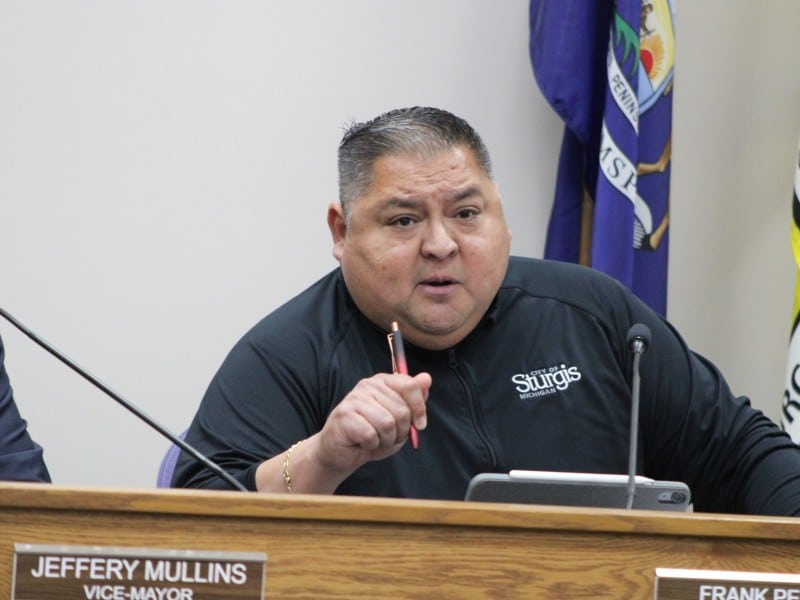
Wickey and Perez verbally spar as Sturgis City Commission turmoil continues
Commissioner Justin Wickey called on Mayor Frank Perez to resign and, if he didn’t, urged residents to vote for his opponent, Stoney Summey in this November’s election. Perez responded by questioning Wickey’s faith and role as a pastor, saying he was disappointed in Wickey “choosing to not practice the fundamental principle of forgiving one’s neighbor.”
Perez is running for reelection as Sturgis District 4 commissioner against Summey. Sturgis commissioners elect the mayor from among themselves during their annual organizational meeting each November.
Your guide to proposals on the ballot this November
Watershed Voice has outlined the different ballot proposals voters in southwest Michigan and across the state will be voting on. The proposals range from a statewide campaign finance law aiming to get “money out of politics,” and a local municipalities decision to ban marijuana establishments, all of which are detailed here.
No Kings to host early voting event in Sturgis this weekend
Community members are invited to gather at Memorial Park in Sturgis this weekend for a volunteer-organized event encouraging voter participation ahead of the November 3 election.
The event, scheduled for Saturday, October 17, from noon to 1:30 p.m., is part of a nationwide effort by the No Kings movement to encourage early voting and increase voter turnout.
