
Camp Eberhart’s ropes course goes out on top
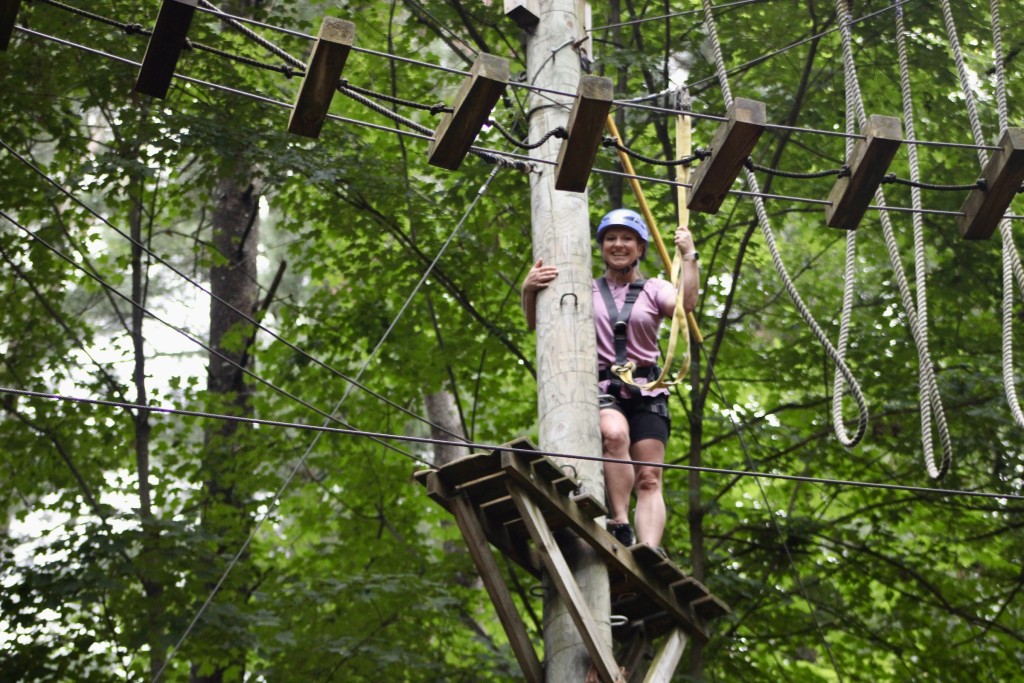
In the early 1990s, YMCA Camp Eberhart began building a ropes course that would challenge campers for years to come. Tucked beneath a canopy of towering pine trees, the course rises from the woods on wooden poles, some made from trees cut from the site during its original construction.
But after more than three decades of campers climbing through the trees, the course has seen its last summer. Eberhart retired the aging course at the end of this year’s summer camp season and is now preparing to replace it.
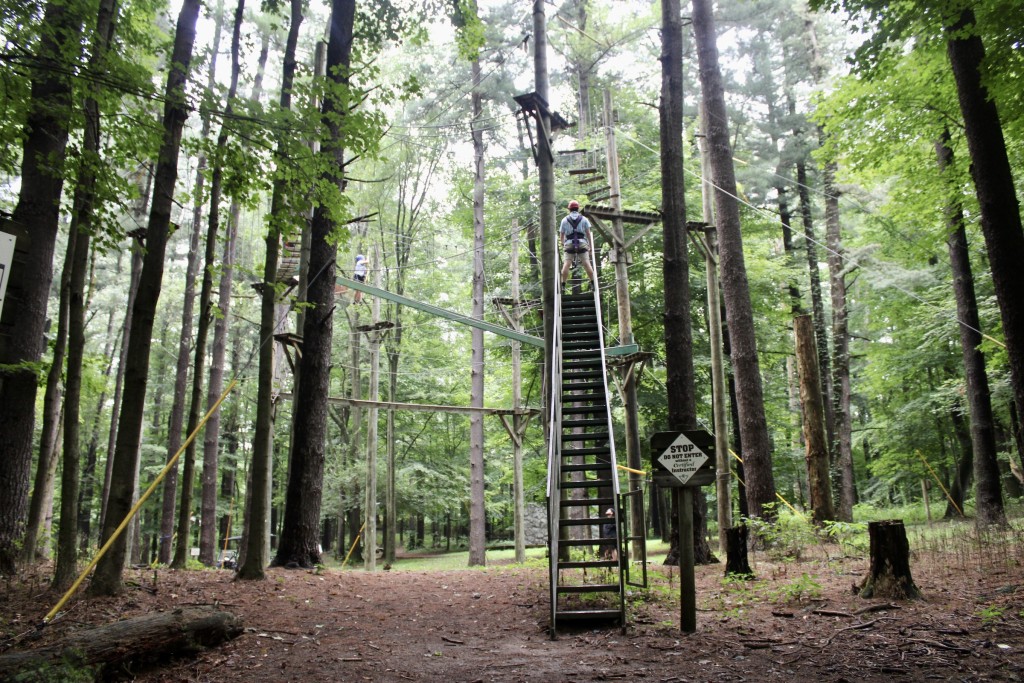
Off in the woods, beneath a canopy of trees, sits Camp Eberhart’s ropes course.
For more than 30 years, campers at YMCA Camp Eberhart have feared, failed, and for many, conquered the same ropes course. At first glance, it looks like another camp activity — something fun for kids to do during a week away from their phones. To those who work at the camp, however, the ropes course embodies much of what they hope campers take from Eberhart: the confidence and trust that come from pushing beyond their comfort zones.
But after more than three decades of campers climbing through the trees, the course has seen its last summer. Eberhart retired the aging course at the end of this year’s summer camp season and is now preparing to replace it.
In the early 1990s, Eberhart began building the ropes course that would become a fixture of camp life.
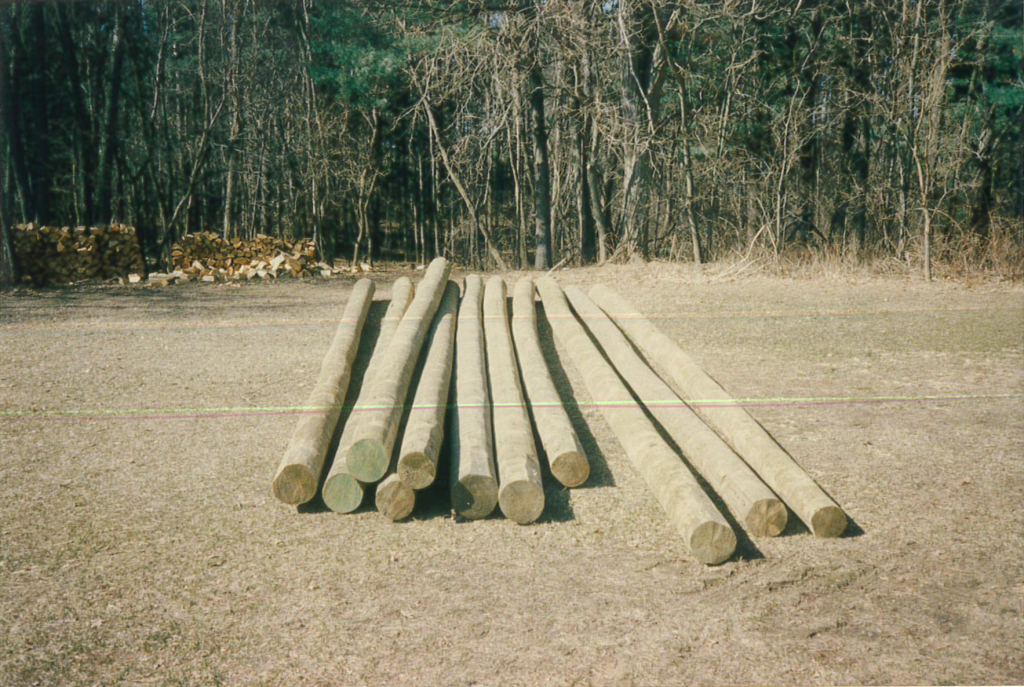
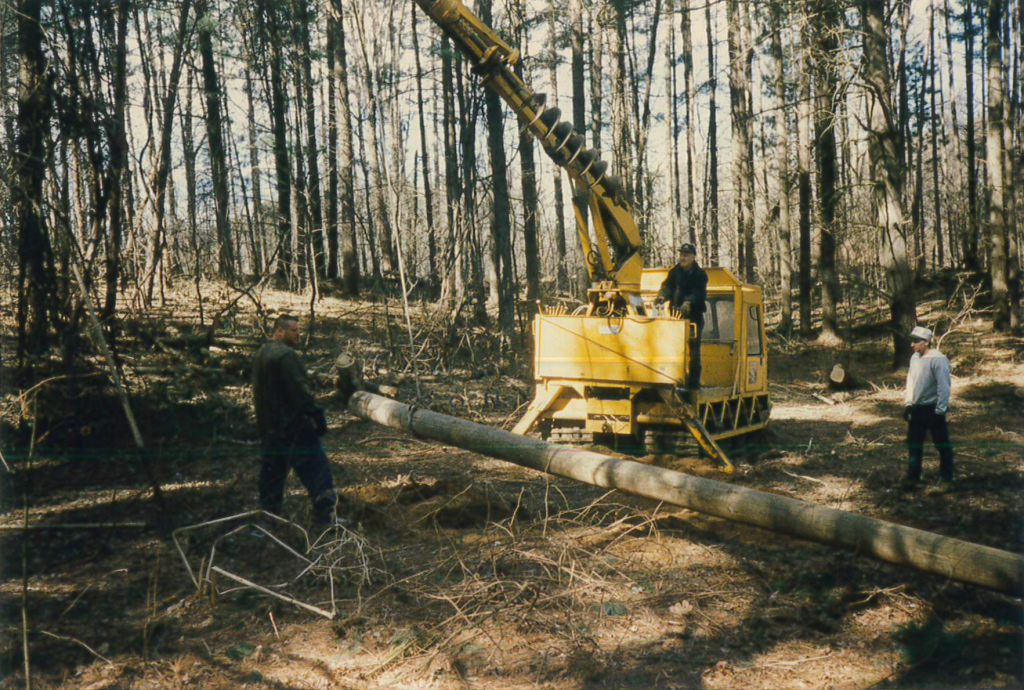
Once construction was complete, the magic began.
For Camp Director Denise Peters, the course’s impact is clearest in the small steps campers take toward something that once scared them. That growth happens throughout Eberhart, she said, but on the ropes course, it can unfold one rung, wire, and platform at a time.
“Thirty years ago, kids were climbing trees; they were outside running around,” Peters said. “Now, this is the experience to go out and to get up above the ground … and experience that higher level and that confidence building, but just that feeling of being kind of a little bit invincible up there.”
She added that students who emerge as leaders in a classroom aren’t always the same ones who take the lead outdoors. Peters said outdoor education can reveal strengths in students that aren’t always visible in a traditional classroom. No matter how tough or quiet a kid seems, the ropes course shines a light on otherwise unseen parts of their character.
“Kids that are intimidated by the classroom, maybe that’s not their comfort zone, or that’s not their strength area. And other kids shine in the classroom,” Peters said. “But when those kids, all of them, come here in a school group, you’ll see the rising up of other leaders. Teachers have explained that so many times: ‘My leaders in the classroom follow other leaders that are never a leader in the classroom when they’re here at camp’”
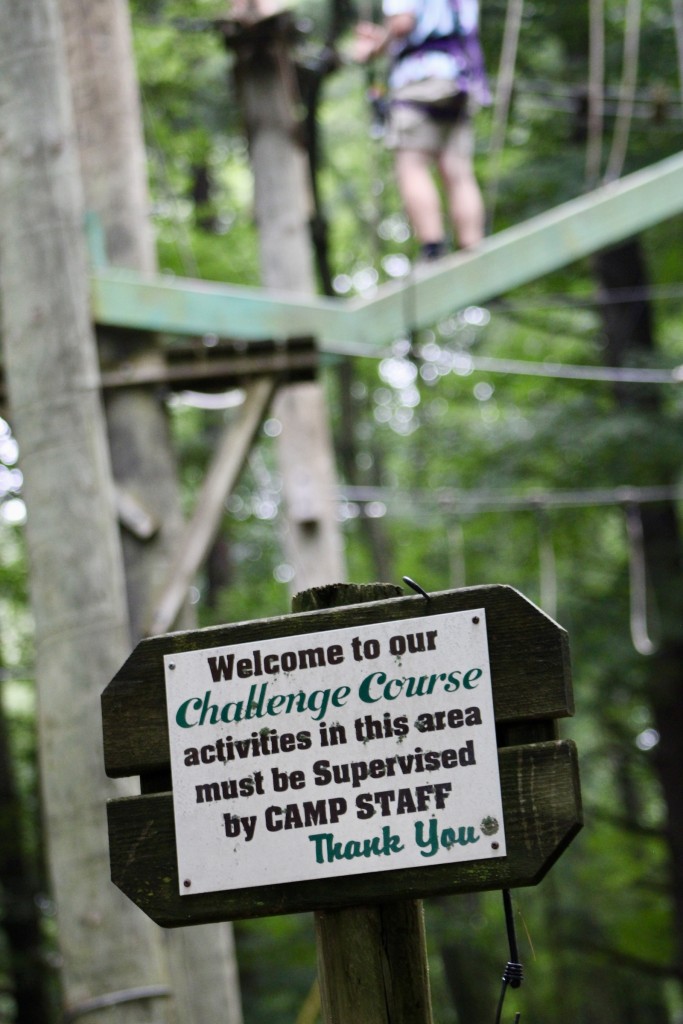
The course sits off the beaten path at Eberhart, separated from much of the noise elsewhere at camp. As you head toward the course, the noise from the beach and the rest of camp begins to fade.
Once you arrive, that tranquility among the trees is juxtaposed with the nerves of climbing high above the ground. Camp Organizer Corey VanBuskirk said that isolation allows campers to focus on the challenge at hand — and one another.
“You don’t hear what’s happening on the waterfront. You can focus on what you’re trying to achieve,” VanBuskirk said. “Then you see some of the shyest kids be the biggest leaders on top, and then your team, your school, everyone underneath just clapping or cheering you on.”
Peters also pointed to the course’s setting beneath the trees.
“You might be up on the ropes, and a hawk will swoop through, and then pick up a chipmunk or something while you’re up in the high ropes. And it’s almost like you’re part of that hawk,” Peters said.
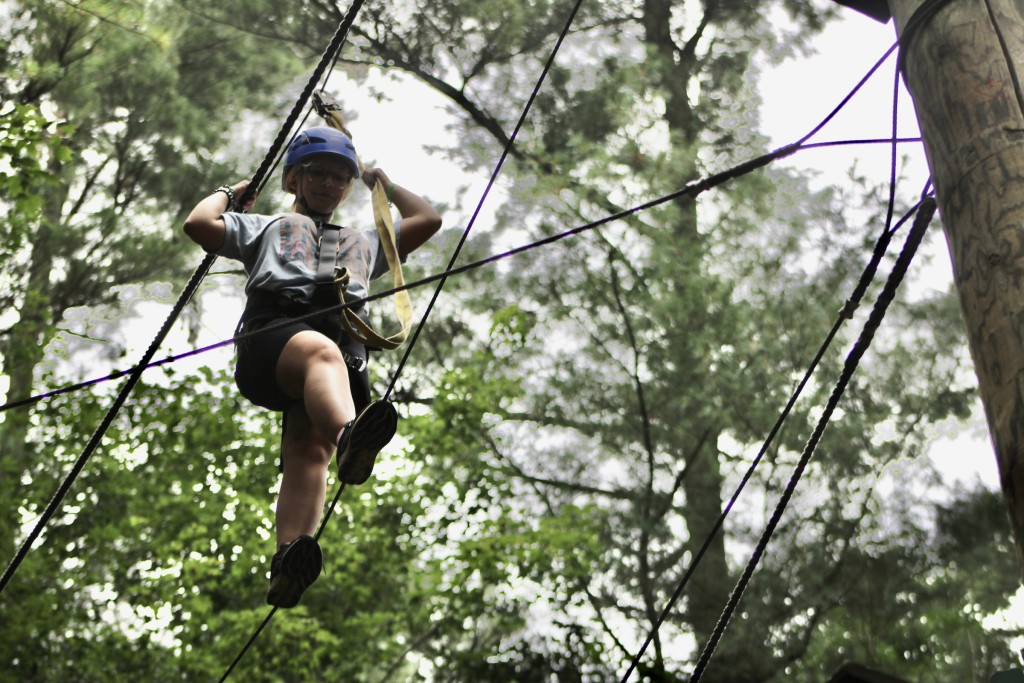
That growth also depends on campers learning to trust people who, days earlier, may have been strangers.
At the start of camp, Peters estimated that about 90% of the nearly 300 campers arrive not knowing one another. This year, Eberhart also had 52 international staff members, including its first staff members from China, Egypt, Ireland, and Poland.
Those new names and faces don’t stay unfamiliar for long. Once campers settle into their cabins and begin programs together, Peters said, they quickly form friendships with people they might never have met outside of camp.
They also do it without much of the technology that typically keeps them connected. Campers aren’t allowed to use phones or tablets at Eberhart, a transition Peters said can be noticeable during their first days away from devices.
“The first couple days, it’s like withdrawal. People are attached to their phone now,” Peters said. “But it takes that deprogramming,”
For Peters, getting campers away from their phones is only part of the growth she hopes happens during their time at Eberhart. Much of the rest comes through the relationships they build, and the activities that push them to learn something new.
“One of the most exciting things about camp is we grow people,” Peters said. “We help them grow socially, emotionally, physically, and then skills.”
Those skills come throughout the week, as campers choose four programs to focus on from 17 offered at Eberhart, while an open period gives them opportunities to try others. The options range from sailing and archery to photography, horseback riding, and, of course, the ropes course.
What’s next?
With the old course now retired, Eberhart is turning its attention to what will replace it. The camp is seeking more than $300,000 to build a new ropes course in the same wooded setting.
VanBuskirk said fundraising efforts began by approaching larger companies and donors about major gifts and potential naming opportunities. The campaign is also turning to Eberhart’s alumni and broader community for support, with donors who give $500 or more receiving recognition at the new course.
Eberhart has known for about a year that the course would need to be fully replaced, VanBuskirk said. Recent inspections added urgency to those plans, with Peters saying the camp wanted to replace the aging course rather than risk it failing an inspection before a future summer season.
The existing course is expected to be taken down in November, with construction of its replacement planned for late this year or early next. Peters said the course is expected to include 20 individual elements, several designed for multiple people, and a climbing wall.
While the course itself will change, one thing won’t: its place beneath the trees. Peters said designers worked around the wooded setting when planning its replacement.
“It’s covered by a canopy of trees, so it’s in the middle of the woods,” Peters said. “That’s what makes it magical.
Maxwell Knauer is a staff writer for Watershed Voice.
Author

Related Articles

See ‘A Better World A Comin,’ Woody Guthrie tribute at the Riviera this month
A group of local musicians will present an evening of music by Woody Guthrie at the Riviera Theatre and Bar in Three Rivers on Saturday, October 24 at 7:30 p.m. Proceeds will benefit The Huss Project, a community center owned and operated by Three Rivers nonprofit *culture is not optional.
Three Rivers City Manager Joe Bippus retiring in 2027
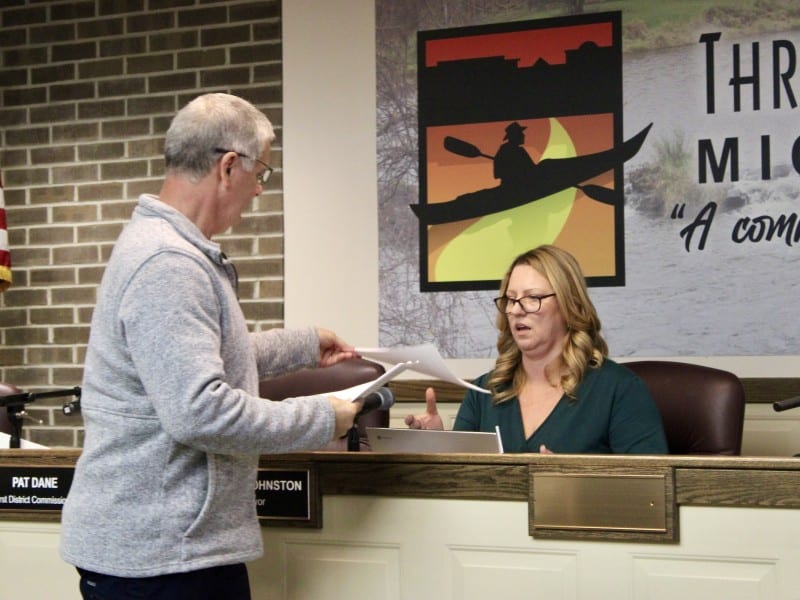
Longtime Three Rivers City Manager Joe Bippus announced his impending retirement during Tuesday’s Three Rivers City Commission meeting. Bippus, who accepted the position in 2000, said his 27-year tenure will end effective January 14, 2027.
Watershed Voice spoke with Mayor Angel Johnston and former Mayor Tom Lowry about Bippus’ decision, and what it means for the City of Three Rivers going forward.
Local meeting primer: Three Rivers City Commission
The Three Rivers City Commission will meet this Tuesday, October 6 at 6 p.m. for a regular business meeting. Commissioners will work through a four item agenda at their first meeting since September 15. On the agenda is sidewalk replacement funding totaling $100K, airport runway obstruction removal for $1,300, a $77,500 purchase to replace and paint the chlorine hoist, and $12,667 for a change to aluminum doors at the Wellfield generator project.
Commissioners will also continue their process of purchasing and installing livestreaming equipment.
