
Yellow tulips bloom in Three Rivers as Woman’s Club launches Mental Health Month event
The tulip display was inspired in part by the Yellow Tulip Project, a nationwide youth-led initiative founded to reduce stigma surrounding mental health struggles and suicide prevention. The yellow tulip has become a symbol of hope and open conversation.
Club President Jan Michaels said the local organization wanted to take that message and make it visible in Three Rivers.
“We hear so often that people need help and nobody is doing anything,” she said. “But there are services, and there are ways to help. Sometimes people just don’t know where to start.”
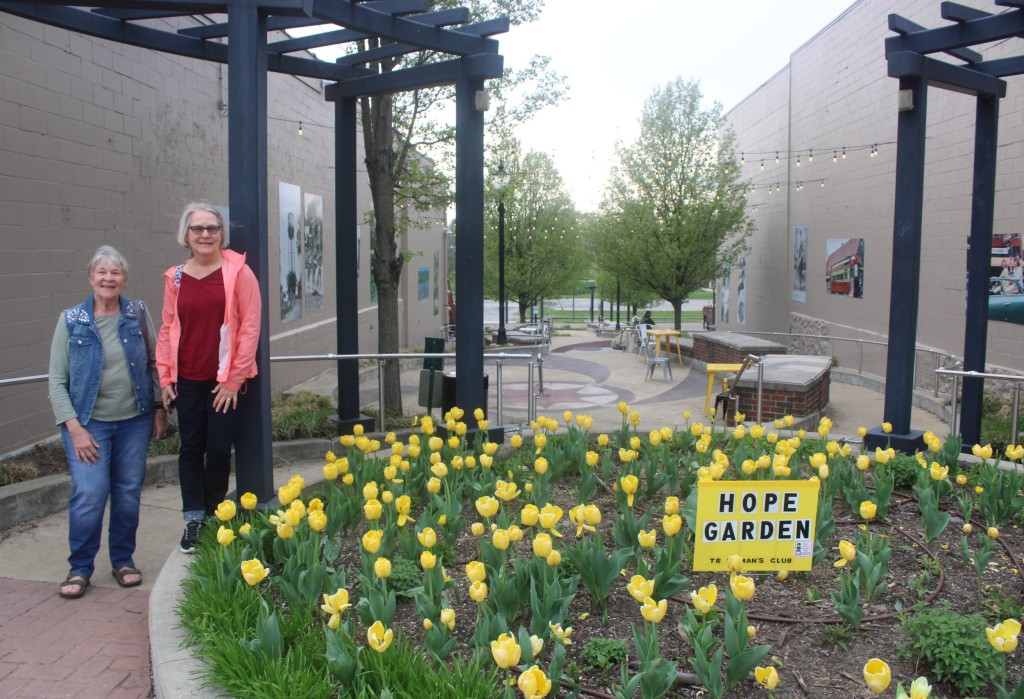
As Mental Health Awareness Month approaches, the Three Rivers Woman’s Club is hoping a field of yellow tulips in downtown Three Rivers can do more than brighten the block. Members hope it can help spring conversations around mental health, too.
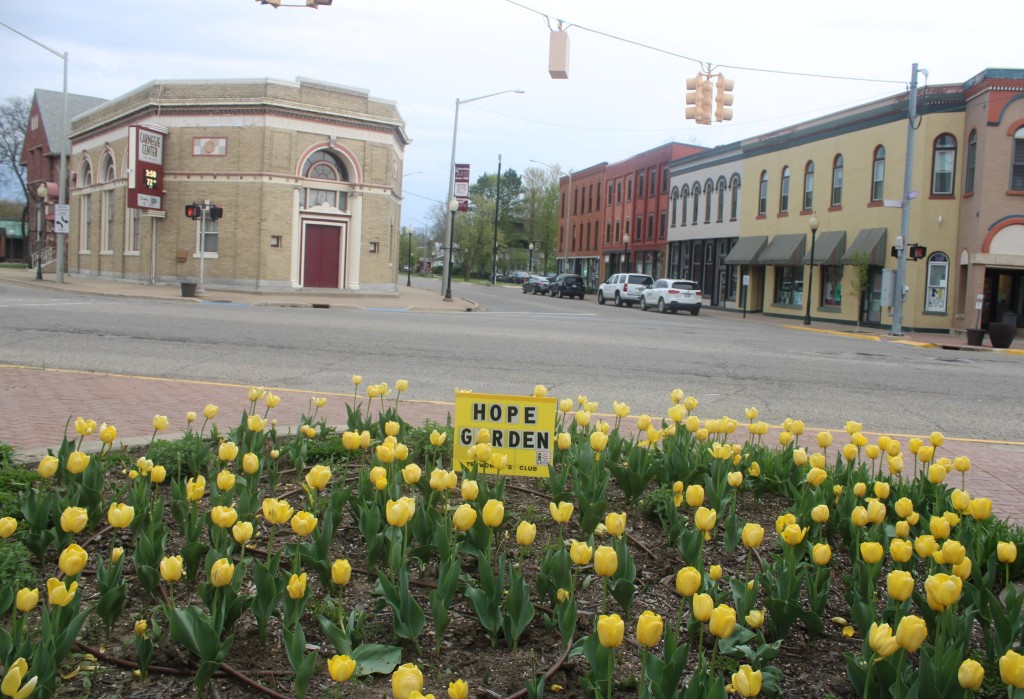
Last October, the roughly 50-member group planted 500 yellow tulip bulbs in the circular garden at the head of the Mural Mall on Main Street. The plan was, if all went well, that the flowers would bloom in late April and early May, just in time for Mental Health Awareness Month.
Sure enough, the bulbs have now turned into a garden of yellow tulips — a bright display meant to symbolize hope in the heart of downtown Three Rivers.
On May 2 at 11 a.m., the club will host a community gathering at the site, inviting residents to celebrate the blooms, learn about mental health resources, and take part in open conversations about emotional wellness.
The event is intended to bring the community together, start conversations about mental health, and help “smash the stigma” that can keep people from seeking support, organizers said.
For club President Jan Michaels, the mission is straightforward.
“It’s an issue, and it isn’t going to get resolved if you don’t talk about it and make it okay for people to say, ‘I’m having problems,’” Michaels told Watershed Voice. “Then let them know where they can go for help. We want people to be able to talk about it and not think they’re alone.”
The tulip display was inspired in part by the Yellow Tulip Project, a nationwide youth-led initiative founded to reduce stigma surrounding mental health struggles and suicide prevention. The yellow tulip has become a symbol of hope and open conversation.
Michaels said the local club wanted to take that message and make it visible in Three Rivers.
“We hear so often that people need help and nobody is doing anything,” she said. “But there are services, and there are ways to help. Sometimes people just don’t know where to start.”
Several providers are expected to participate in the May 2 event, including Pivotal and representatives from Covered Bridge Healthcare, along with a local private therapist. Informational handouts will be available, and speakers will include a recovery coach and mental health professionals.
Club member Jean Skalski, a retired social worker, said one of the most encouraging parts of planning the event has been seeing expanded services available in the county compared with years past.
“I was so happy to hear there are increased services here,” Skalski said. “The problems are still here, but to know there are resources available made me feel good.”
Organizers also wanted the project to involve younger residents. Elementary school students painted rocks with uplifting words to create a “Positivity Rock Garden,” while high school art students were invited to help design signs for the space.
Skalski said younger people face pressures previous generations never experienced, especially through constant connectivity and social media.
“Our youth need to know it’s okay to talk about this,” she said. “They’re under a lot of stress today.”
She added that mental health conversations have changed across generations.
“In generations before us, you didn’t talk about it,” Skalski said. “Now people are more willing to say it’s real and be more accepting.”
Founded in 1891, the Three Rivers Woman’s Club describes itself as the city’s oldest service organization. Its volunteer efforts have included scholarships, domestic violence support projects, arts initiatives and community wellness work.
Members say they hope the tulip garden can become an annual tradition and grow into future conversations about prevention, support, and community care.
For now, they simply want people stop by, admire the flowers, and leave knowing they are not alone.
“I hope they’ll get an idea of where services are,” Michaels said. “But more importantly, that there’s a whole community that cares.”
Maxwell Knauer is a staff writer for Watershed Voice.
Author

Related Articles
Three Rivers commissioners give SAFEbuilt another chance, table housing corporation bylaws
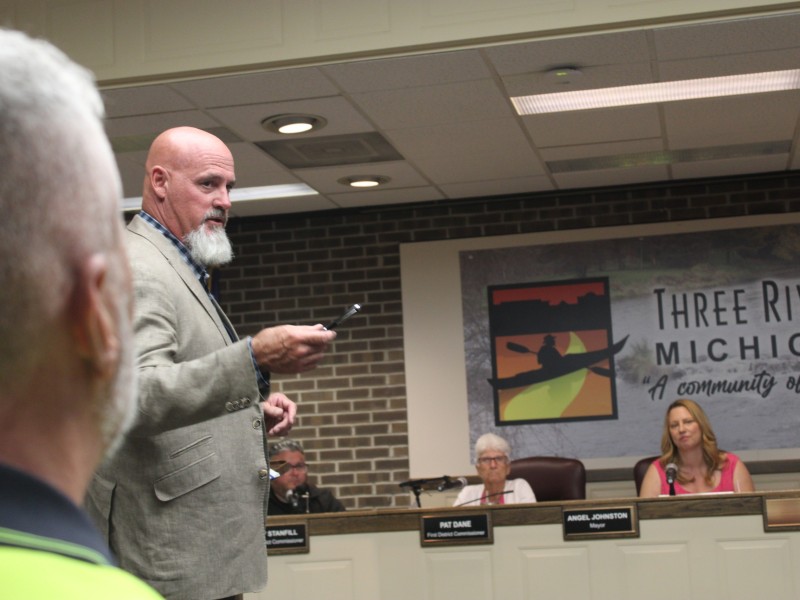
Mayor Angel Johnston, who has been highly critical of SAFEbuilt at recent meetings, said her experiences with them were one of the reasons she ran for mayor.
“One of the reasons I ran for mayor is because of the horrible experiences I’ve had with your company,” Johnston said to SAFEbuilt representatives at Tuesday’s meeting. “I’ve priced out contractors for people that can replace you and it’s not going to be that hard.”
Despite the criticism, commissioners generally agreed they were willing to continue working with SAFEbuilt while monitoring whether customer service improves.
Local meeting primer: Three Rivers City Commission
During the presentations portion of the meeting, SAFEbuilt, an outside firm that handles much of the city’s building inspection and construction-related work, will give a presentation.
The company is presenting per the request of Mayor Angel Johnston and Commissioner Lucas Allen who together requested City Manager Joe Bippus put the item on the agenda. Johnston said the presentation would give SAFEbuilt an opportunity to address concerns she has heard from residents about the company’s conduct, responsiveness, and work throughout the city.

July 4th weekend celebration guide
With Fourth of July weekend approaching, communities across southwest Michigan are preparing for parades, fireworks shows, live performances and annual hometown celebrations marking the country’s 250th year of independence.
Watershed Voice compiled a guide to events happening across St. Joseph, Cass and Kalamazoo counties, along with a few nearby celebrations worth the drive.
