
Sturgis approves Doug Terry as interim city manager
Commissioners unanimously approved Doug Terry’s agreement and he will start work on July 20. Once Terry begins, he will have a week of overlap with current City Manager Andrew Kuk.
Despite the unanimous approval, Commissioner Jeff Mullins said he remains disappointed in the fact that they were there in the first place and said the city was spending over $300K on a process that shouldn’t be happening. Mullins included the $170K to be paid to Terry, the full year salary that will be paid to Kuk as part of his separation agreement, and the costs to pay an outside firm to help the commission find a new manager.
“Those are just the tangible numbers that are in front of us. We shouldn’t be here in this spot and it disappoints me that we are because Andrew is very much capable of doing his job,” Mullins said. “I’m very sad that we’re in the position that we are in that made him make the decision to walk away.”
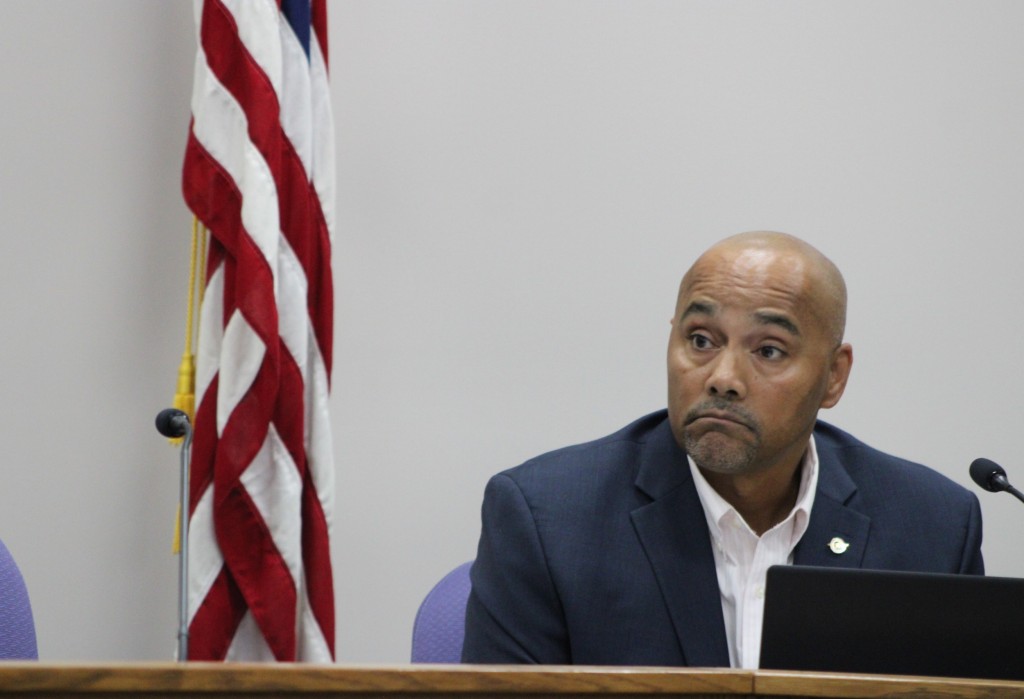
On Wednesday, July 8, the Sturgis City Commission approved an agreement with interim City Manager, Doug Terry, who will begin work July 20. The move comes amid months of controversy in which Commissioner Aaron Miller and Vice Mayor Jeff Mullins have accused Mayor Frank Perez and other commissioners of creating a work environment that effectively forced City Manager Andrew Kuk to resign.
Terry’s agreement last night marked the next—but not final—step in that process. Once Terry begins as interim City Manager he will be solely responsible for the day-to-day operations of the city administration as Sturgis does not have any assistant city managers. Terry will also be responsible for helping Sturgis find its long-term replacement for Kuk.
“The career of a city manager is not a career, it’s a lifestyle,” Terry told commissioners. “I do have goals for the commission, and for myself, and for the department heads.”
Terry said his third goal is to help the city find its long-term manager. Terry also stated he is “very modest” in the salary he is requesting from the city, and noted if they compared to city managers in other states or other cities within the state, they would see that a city manager often demands more than Terry.
Terry will be making $82 an hour and is expected to work 40 hours per week. For a full year’s work, Terry will make around $170K.
Commissioners unanimously approved Terry’s agreement and he will start work on July 20. Once Terry begins, he will have a week of overlap with current City Manager Andrew Kuk.
Despite the unanimous approval, Commissioner Mullins said he remains disappointed in the fact that they were there in the first place, and said the city was spending over $300K on a process that shouldn’t be happening. Mullins included the $170K to be paid to Terry, the full year salary that will be paid to Kuk as part of his separation agreement, and the costs to pay an outside firm to help the commission find a new manager.
“Those are just the tangible numbers that are in front of us. We shouldn’t be here in this spot and it disappoints me that we are because Andrew is very much capable of doing his job,” Mullins said. “I’m very sad that we’re in the position that we are in that made him make the decision to walk away.”
Other business
Commissioners also approved an engineering, procurement, and construction contract for the addition of three reciprocating engines with a total output of 7.5 MW at the Fawn River Road Substation. The purchase totaled $10.785 million with a $539K contingency budget. Commissioners unanimously approved the contract.
Commissioners also unanimously approved a Drinking Water State Revolving Fund (DWSRF) Street Commitment Resolution which acts as a formal commitment from the City of Sturgis to pave and resurface the roads that are already being torn up to replace lead service lines.
“This resolution is to promise that we are gonna redo those roads after replacing the lead lines,” said Director of Public Services Patrick Verderese.
The project will replace 477 lines, or about 31.2% of the city’s service lines. The city has indicated it has approximately 1,500 lead service lines, and 403 of them have been replaced since 2018, according to city documents.
Maxwell Knauer is a staff writer for Watershed Voice.
Author

Related Articles

What drove turnout in St. Joseph County’s August primary?
County records show 12,200 ballots were cast in Tuesday’s primary election. By comparison, 13,544 ballots were cast during the August 2024 primary, when turnout reached about 27%, and 13,472 ballots were cast during the August 2020 primary, which saw roughly 29% turnout. This year’s election saw 1,344 fewer ballots cast than in 2024 — a decrease of about 9.9%.
As of August 5, St. Joseph County had 49,226 registered voters, putting overall turnout for Tuesday’s primary at approximately 25%.
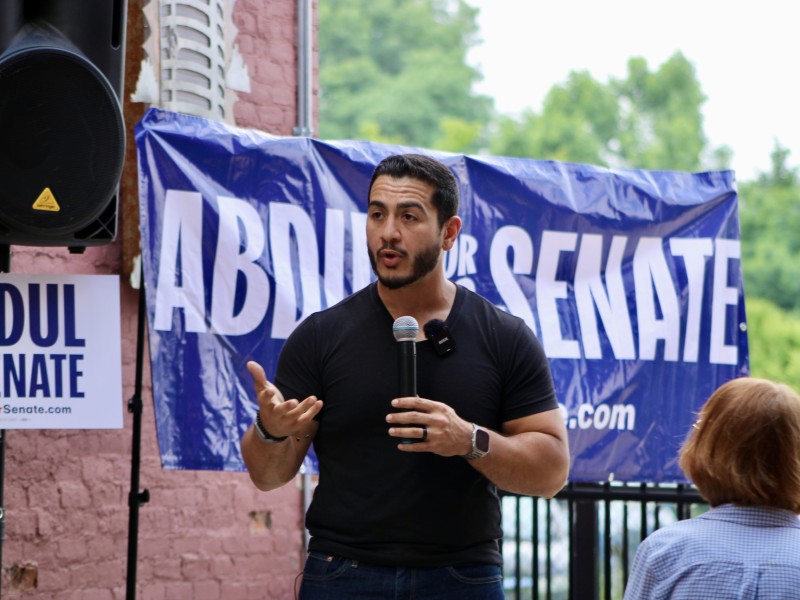
2026 Primary Election results part 2: El-Sayed wins Democratic Senate nomination, incumbent Steve Carra advances
El-Sayed narrowly won the Democratic nomination, receiving 48.48% of the vote (740,950 votes), while Stevens received 47.51% (726,057 votes). Former candidate Mallory McMorrow, who withdrew from the race in early July, still received more than 50,000 votes. While some votes are still being counted across the state, the Associated Press has called the race for El-Sayed.

2026 Primary Election results: Haigh, Hoeppner advance in Three Rivers second district commissioner race
In the Three Rivers City Commission Second District primary, Josh Hoeppner received the most votes, receiving 43.29% of the vote (410 votes). Incumbent Steven Haigh finished second, with 33.79% of the vote (320 votes). The two advance to November’s general election, where they will face-off head-to-head.
