
‘Just sitting there silent’: Sturgis Hospital closure impact goes beyond loss of health care
Former patients now have to travel farther to access hospital care. But residents and experts say the impact of such a closure goes beyond inconvenience. The loss of a rural hospital can exacerbate barriers to health care, even to the point of endangering lives. It can dent the economies of entire communities. Perhaps most devastatingly, a rural hospital closure leaves emotional scars for the residents and care workers who relied on it as a place of comfort, connectedness, and safety.

This story is part of Southwest Michigan Journalism Collaborative’s coverage of equitable community development. SWMJC is a group of 12 regional organizations, including Watershed Voice, dedicated to strengthening local journalism. Visit swmichjournalism.com to learn more.
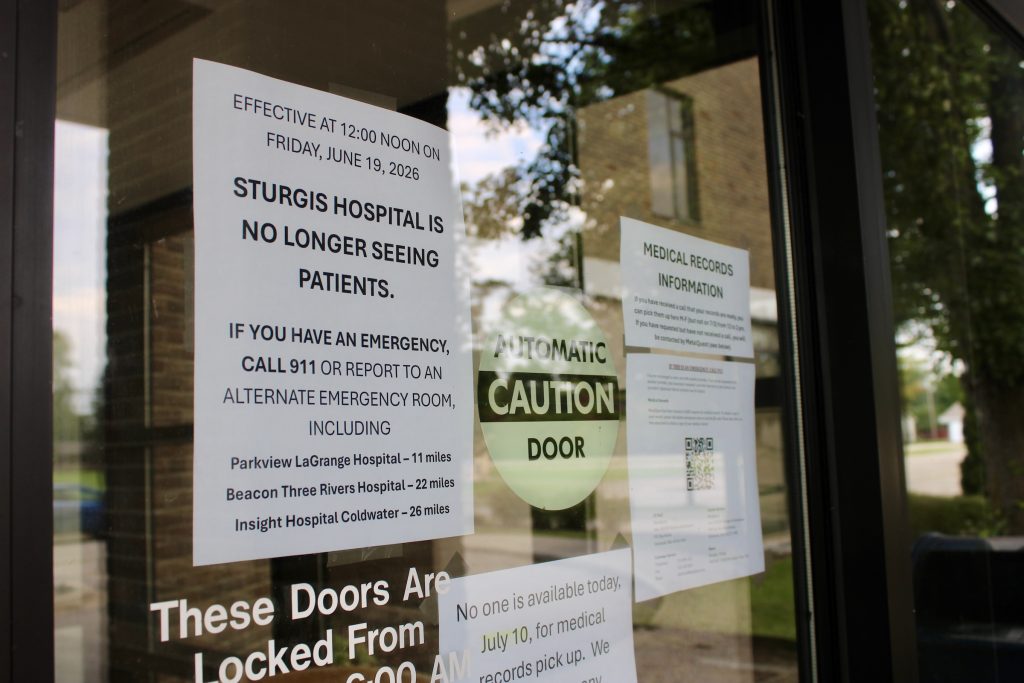
When the doors of Sturgis Hospital shut for the last time in June, the surprise announcement of its closure left many locals shaken, angry, and grieving.
The loss of a small-town hospital “is a huge deal” for its entire community, said Colon resident RuthAnn Kuhlmann, a teacher at Trinity Lutheran School in Sturgis.
As a doctor at the hospital for 50 years, Kuhlmann’s father welcomed the newest Sturgis residents to the community in the obstetrics department. That department closed some years ago as the hospital tried to stay financially afloat, an effort that included a $645,000 loan from the Sturgis City Commission in 2022, and the 2023 adoption of a new federal designation meant to protect rural health care.
Once hailed as a leader in regional health care, Sturgis Hospital gradually fell victim to factors plaguing many rural hospitals across the country: inadequate Medicaid reimbursement rates, rising operational costs, and patient loss from failing service lines such as obstetrics or specialty clinics. The hospital announced on June 16 that it would close permanently, effective June 19.
Former patients now have to travel farther to access hospital care. But residents and experts say the impact of such a closure goes beyond inconvenience. The loss of a rural hospital can exacerbate barriers to health care, even to the point of endangering lives. It can dent the economies of entire communities. Perhaps most devastatingly, a rural hospital closure leaves emotional scars for the residents and care workers who relied on it as a place of comfort, connectedness, and safety.
“It’s a far-reaching thing,” Kuhlmann said. “It’s not just about the hospital closing.”
‘Skinnier and skinnier’
Sturgis is far from alone in its struggles. Rural hospitals face mounting challenges nationwide. More than 150 rural hospitals have closed or converted to health clinics since 2010 ― including four in Michigan ― and hundreds more are in danger of closing.
Before it closed, Sturgis Hospital had been by far the least profitable hospital in the state for at least three years, with most recent profit margins of -35.6%.
In its efforts to stay open, the hospital in 2018 cut 60 jobs and reduced its inpatient beds to only four. Over time, patients lost access to the wound clinic, hospice, dedicated cancer care, and other specialty services. A nearly century-long string of residents born at the hospital was severed by the closure of the obstetrics department.
The hospital continued to close service lines and got “skinnier and skinnier,” said John Barnas, executive director of the Michigan Center for Rural Health, which provides support for the state’s critical access hospitals.
In early 2023, the hospital was the first in the state ― and one of the first in the country ― to receive approval for a newly approved Rural Emergency Hospital designation, touted as a solution for struggling rural hospitals. The designation allowed the hospital to retain some services, including the emergency department, and promised a 5% increase in Medicare reimbursement rates plus approximately $270,000 per month to support operations.
The designation also eliminated major surgeries and all inpatient beds ― and the income they generated ― and removed medication discounts that helped cover the cost of specialty care. The hospital’s emergency patient volume dropped 13% in the two years after it converted, adding to its financial loss.
Most hospitals, even those struggling financially, will crunch the numbers and realize transitioning to a Rural Emergency Hospital won’t be enough to keep them open, Barnas claimed.
Tougher times lie ahead for many Medicaid-dependent hospitals like those commonly found in rural areas. The 2025 federal budget reconciliation bill, sometimes called the One Big Beautiful Bill Act, is projected to reduce Medicaid reimbursements by $1.3 trillion in coming years, with those losses exacerbated by new Medicaid work requirements that will result in millions of newly uninsured patients.
A provision of the reconciliation bill, the $50 billion Rural Health Transformation Program, won’t be enough to offset those losses.
Not all rural hospitals struggle financially, Barnas said, noting multiple flourishing rural hospitals throughout the state. Some form networks within a region to share costs or, like Beacon Three Rivers Hospital, join an already established health system to increase stability.
Michigan Center for Rural Health helps rural hospitals share best practices and find ways to improve quality while lowering costs. Such efforts aren’t enough to prevent financial failure from claiming more Michigan hospitals, Barnas said.
The comfort of home
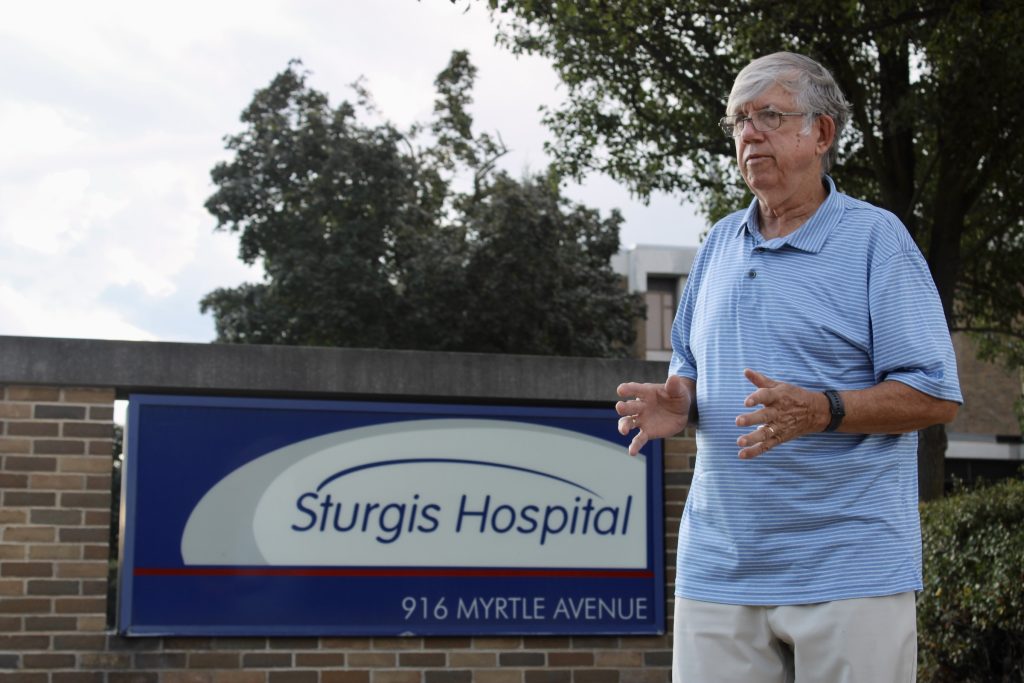
Sturgis pastor Cal Kolzow has heard many locals say the hospital’s closure has made them more afraid they will die.
Before retiring from his post at Trinity Lutheran Church, just across the street from Sturgis Hospital, Kolzow made hundreds of visits to the hospital’s emergency department and inpatient rooms. He stood at the bedsides of people in pain, frightened, or dying, caring for them and their loved ones both spiritually and with his presence.
While those people may have been experiencing some of the worst days of their lives, at least they were near home, comforted by familiar faces, Kolzow said.
A rural hospital closure ends relationships between trusted care providers and their patients. It makes it harder for family members to sit beside their sick loved ones or wait with them for long hours in the emergency department.
Sturgis lost the comfort of familiarity in a frightening time when it lost its hospital, the pastor said. “To have had it right here in town has been a real blessing to the community.”
In its closure announcement, the hospital referred emergency patients to facilities in Three Rivers, Coldwater, and LaGrange, Indiana, none of them more than half an hour from Sturgis.
The overflow from Sturgis has ramped up other local hospitals’ business, however, straining their ability to give full attention to each patient.
Recently, Kuhlmann needed emergency care for a diverticulitis flareup. The ED waiting room at Parkview LaGrange Hospital was bustling, and a worker reported a sizable uptick in patients since the Sturgis closure. The Three Rivers emergency department was “absolutely packed” when Kuhlmann accompanied her husband there. Nearly unable to walk because of joint pain, her husband was told the department had no wheelchairs available during their four-hour wait to be seen.
Three weeks after the Sturgis closure, Three Rivers Health Hospital was seeing a 10- to 20- patient increase in daily emergency department visits ― up from 45 to 55 visits a day.
“It’s a sizable jump,” said Maria Behr, Three Rivers Health president.
When one community loses its hospital, “Yes, it puts more pressure on the surrounding hospitals, physicians, providers, clinics,” Behr said.
To compensate for the influx, Three Rivers Health has hired new employees, including some who had lost their jobs in the Sturgis closure, and increased hours for some physicians and nurses.
The increased patient flow may be the hospital’s new normal, Behr acknowledged. She pledged to provide care for both Three Rivers patients and new patients from Sturgis to the best of the hospital’s ability.
“Health care close to home shouldn’t be a privilege. It really should be the standard,” Behr said.
‘It’s just sad’
The abruptness of the hospital’s closure left locals reeling, including health care workers now scrambling for jobs. Some workers decided to retire. Others, like a woman Kuhlmann knows who worked at the hospital for 20 years, have no idea what to do next.
“The way they did it was just so wrong,” Kuhlmann said, reflecting the sentiment of many in the community.
Medical staff were given the same three-day notice as the community before the hospital closed. Last month, the Michigan Nurses Association, which represents more than a dozen registered nurses at the hospital, filed a lawsuit in federal court, accusing the hospital of violating nurses’ rights to a 60-day notification before the hospital’s closure.
At least 50 full-time employees lost their jobs in the shutdown, according to court filings. Sturgis Hospital did not reply to a request for comment.
As a teacher, Kuhlmann saw the impact of the closure in her classroom. Parents who lost their hospital jobs had to pull their kids out of school, some because they could no longer afford private school tuition, others because they no longer drove into town for work or had to move away for a new job.
She, too, has heard many people voice worries about the lack of an emergency department, where car crash victims or people experiencing major medical issues could be stabilized before being shipped off to bigger hospitals.
Sturgis has improved its in-community transportation system, she said, but that doesn’t help people get to appointments in other towns. Unhoused people who commonly use the rural emergency department could lose all access to health care, she worries.
“It’s just sad,” she said. “All the little things you don’t think about.”
‘Long, slow, painful’
Stacey White worked in the hospital’s finance department off and on since the 1990s. She was there handling patient finances as insurance companies began demanding more and paying less, drowning her department in paperwork. The “unbelievable hoops” the hospital had to jump through just to admit somebody contributed to further loss. Financially, “We were bleeding out,” White said.
At the same time, economy fluctuations stripped residents of the ability to pay for health care. Unemployment rose, and fewer employers could afford to offer robust insurance packages. Meanwhile, hospital operational costs increased, but Medicare and Medicaid reimbursements were never raised to meet those additional costs.
When services closed, patients went elsewhere out of necessity. That led to still fewer dollars for the hospital and, inevitably, more decline. “It was a long, slow, painful and ugly process,” White said.
She was born at the hospital, and so were her children. She remembers it as a vibrant, energetic presence in a community that had confidence in it. When she started work there in its heyday, hundreds of workers filled the halls, many of them deeply rooted in the community. The hospital “was a living, breathing entity,” loud and busy with people helping people ― a place of purpose and meaning.
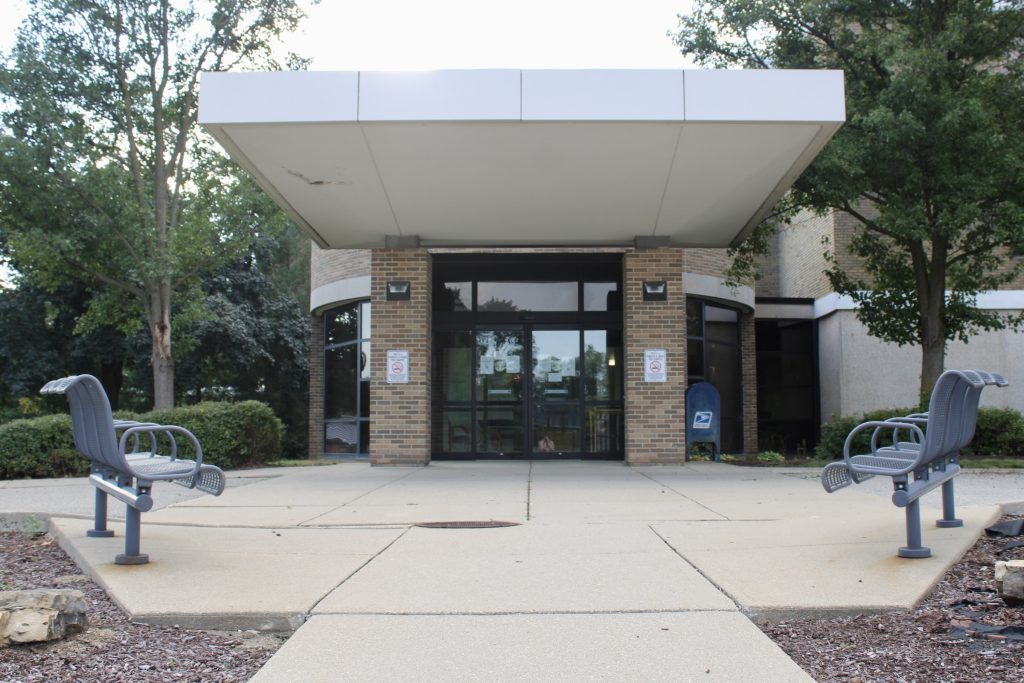
“And now,” White said, a catch in her voice, “it’s just gone. And it’s just sitting there silent.”
She hopes that, with the long-dreaded closure finally behind it, the hospital will find someone willing to buy it, clear its debt, and restart services in the building she calls “move-in ready.”
“It’s all sitting there ready to be brought back to life,” White said hopefully.
Worth fighting for
“Unfortunately, once they’re gone, they’re gone,” said Steve Barnett, president/CEO of McKenzie Health System in Sandusky. Because of Michigan’s health care licensing structures, “if you close a hospital or beds, the likelihood of those coming back online is almost zero.”
Barnett spent most of his career in an urban, multi-hospital academic system. After he became disenchanted with large systems, he transplanted to the Thumb region and discovered that small towns support their local hospital, “and they do it feverishly.”
McKenzie Health System is financially stable despite its deeply rural location. Facilities in multiple communities and relationships with larger providers have boosted the system’s ability to offer a full range of care options.
Still, the system wrestles with the same low patient volume that keeps many rural hospitals from supporting the high cost of specialty care, Barnett said.
A rural hospital is worth the work it takes to keep it open, Barnett said. Such hospitals often treat people who are sicker, poorer, and older than those in urban areas ― patients more likely to need hospital care and less able to access it.
Beyond their importance to resident health, hospitals are a significant economic driver in small towns. They attract not only workers but also vendors bringing goods to town, boosting sales at all levels of local businesses. Hospitals feed the economy by providing many well-paying and stable jobs to people who spend their paychecks locally. The closure of such a business can severely disrupt the economy of a community, until it “takes on the look of a ghost town,” Barnett said.
In rural areas especially, spending health care dollars locally is just as important as buying groceries in town. Once a hospital is gone, it may not come back, Barnett said ― and “you don’t miss the water until the well runs dry.”
Julie Riddle is a freelance journalist for Watershed Voice.
Related Articles

Wickey and Perez verbally spar as Sturgis City Commission turmoil continues
Commissioner Justin Wickey called on Mayor Frank Perez to resign and, if he didn’t, urged residents to vote for his opponent, Stoney Summey in this November’s election. Perez responded by questioning Wickey’s faith and role as a pastor, saying he was disappointed in Wickey “choosing to not practice the fundamental principle of forgiving one’s neighbor.”
Perez is running for reelection as Sturgis District 4 commissioner against Summey. Sturgis commissioners elect the mayor from among themselves during their annual organizational meeting each November.

No Kings to host early voting event in Sturgis this weekend
Community members are invited to gather at Memorial Park in Sturgis this weekend for a volunteer-organized event encouraging voter participation ahead of the November 3 election.
The event, scheduled for Saturday, October 17, from noon to 1:30 p.m., is part of a nationwide effort by the No Kings movement to encourage early voting and increase voter turnout.

Local meeting primer: Sturgis City Commission
The Sturgis City Commission will meet this Wednesday, October 14 at 6 p.m. for a regular business meeting. This will be commissioners’ first meeting since the results of the internal investigation were released, and Monday’s statements from Commissioner Aaron Miller again calling for Mayor Frank Perez’s resignation. While there are no agenda or discussion items related to the results, commissioners will likely discuss it during commissioner comments.
For regular business, commissioners will consider a number of vehicle and project plans, a diesel fuel purchase, and set the meeting date for their first procedural meeting after the November election.
