
Debate around veteran housing in Three Rivers sparks passionate testimony from veteran commissioners
The ordinance, intended to improve housing options for veterans, outlines conditions for different-sized veterans housing facilities, including restrictions, liberties, and permitted uses. The aforementioned restrictions sparked strong reactions from some Three Rivers City Commissioners.
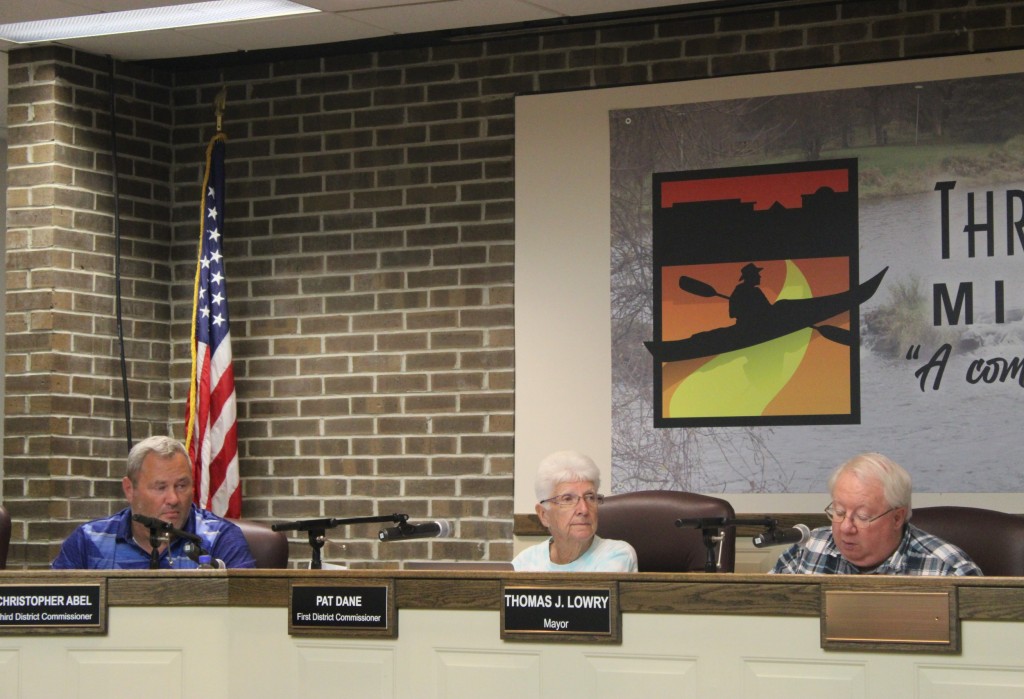
The Three Rivers City Commission met for a regular business meeting Tuesday at 6 p.m. The commission approved the sponsorship of a new police cadet, finalized the installment contract for an aerial ladder truck, and certified delinquent utility bills.
In the midst of those agenda items was a discussion on a proposed zoning ordinance amendment related to veterans housing. The ordinance, intended to improve housing options for veterans, outlines conditions for different-sized veterans housing facilities, including restrictions, liberties, and permitted uses.
Within the draft language are provisions stating such homes may not be located within 500 feet of a childcare home or other group housing, and residents would face limitations on where they can engage in leisure activities. These restrictions sparked strong reactions from commissioners.
“My concern is that this seems to be somewhat restrictive,” Commissioner Chris Abel said. “And when I was reading through it, you know, there’s a section on there that says that the small group home, they can only use the backyard as a recreation space. I can go out of my front yard, and I can sit on a lawn chair and hang out, but they can’t. I mean, of all the people in this world, they’re the ones that have earned their freedom more than anybody else. And then, you know, there was another one in there that they can’t be located within 500 feet of a childcare facility.”
Abel served in the U.S. Navy from 1991 to 1995 as an operations specialist.
Commissioner Steve Haigh, who served in the U.S. Navy, also has a military background. While he did not speak at length during Tuesday’s discussion, his perspective as a veteran added weight to the debate.
Planning staff explained the language was typical in all group home ordinances, which is why it appeared in this one. Director of Community Development John Beebe emphasized the ordinance allows flexibility.
“But remember that just because it’s set that way doesn’t mean it can’t be changed at the time of permit approval, which is your final decision,” Beebe said. “So you can waive certain elements. We can add additional provisions for any type of group home when they become special exception permits. But we wanted to start with a standard baseline, so that if somebody wants to start a group home — small, medium, or large — they know what to expect. But they’re all up for discussion and modification.”
Abel reaffirmed his opposition.
“Just for 100% full transparency, I will be voting no on this. That’s not because I’m opposed to the idea. I love the idea, but I don’t like the restrictive language in here. My personal opinion is that they [veterans] deserve all the freedoms they can possibly have,” Abel said.
City Manager Joe Bippus defended the ordinance language as protective rather than restrictive.
“The real thing we’re trying to do is protect the environment, the area, the neighborhood,” Bippus said. “You’re trying not to change the character of a community. That’s why you do these special circumstances. If you had everyone on the whole block change the character of the neighborhood, other people might feel like their neighborhood was invaded or just changed. So it is important. You also have the ability at the time of application to make corrections that not only protect the neighborhood, but also protect the potential residents of the group home.”
After about 15 minutes of discussion, Commissioner Lucas Allen, who served in the United States Marine Corps, clearly agitated, moved to wrap up.
“If the ordinance doesn’t work for you, if you don’t like it, you can go back and improve the method, and if we need to change, that’s the beautiful thing about the ordinance. Okay? Next,” Allen said.
Following a 4–1 vote, with Abel casting the lone dissenting vote, the measure will now proceed to a public hearing. The date for the hearing was left open ended but is expected to occur during one of the commission’s next two meetings.
The commission also adopted resolutions related to delinquent utility bills and delinquent accounts receivable, setting a public hearing for September 16.
Despite some hesitation about the cost of the new aerial ladder truck, the commission approved its contract 5–0.
“That’s a lot of money. And I’ve said it before, but the last one we bought was $400,000 — and that was 25 years ago,” Mayor Tom Lowry said.
Commissioners Torrey Brown and Carolyn McNary were absent from Tuesday’s meeting.
The commission’s next meeting is scheduled for Tuesday, September 16.
Maxwell Knauer is a staff writer for Watershed Voice
Editor’s Note: This article has been updated to correctly identify Commissioner Steve Haigh, who served in the U.S. Navy. The update was made at 3:35 p.m.
Author

Related Articles

Watershed Voice sends out candidate questionnaires for November election
The November election is quickly approaching with just over three weeks before Election Day on Tuesday, November 3.
In preparation, Watershed Voice sent out questionnaires to candidates in local and statewide races. Although some local elections are uncontested, those candidates also received questionnaires.
Three Rivers City Manager Joe Bippus retiring in 2027
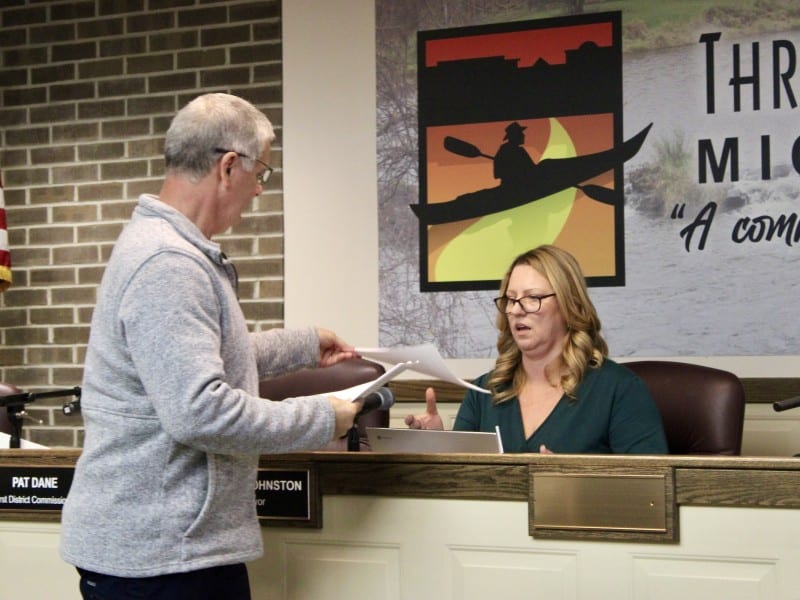
Longtime Three Rivers City Manager Joe Bippus announced his impending retirement during Tuesday’s Three Rivers City Commission meeting. Bippus, who accepted the position in 2000, said his 27-year tenure will end effective January 14, 2027.
Watershed Voice spoke with Mayor Angel Johnston and former Mayor Tom Lowry about Bippus’ decision, and what it means for the City of Three Rivers going forward.
Kalamazoo officially has a data center moratorium
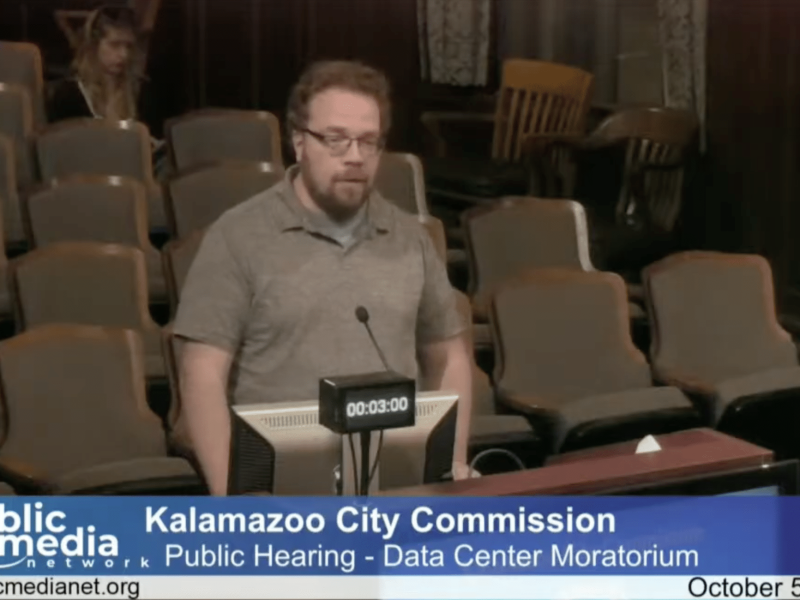
The moratorium, which lasts until October 5, 2027, includes data centers, battery energy storage systems (BESS), cryptocurrency mining centers and artificial intelligence data centers. Monday night’s meeting included the final public hearing on the ordinance before commissioners voted to approve it.
