
Listen: Good Grief. Nano Learning Podcast
In this first episode of the Good Grief. Nano Learning Podcast, Watershed Voice’s Aundrea Sayrie begins by exploring what grief is, and what it isn’t. Together, you’ll unpack common misconceptions, challenge unrealistic expectations, and create space for honest conversations about healing, loss, and life after change.
Whether you’re grieving the loss of a loved one, a relationship, your health, a dream, or another significant life transition, you’re welcome here. Aundrea’s hope is that each short episode leaves you feeling seen, informed, and a little less alone.

Grief changes us, but it does not have to define us. In this first episode of the Good Grief. Nano Learning Podcast, we begin by exploring what grief is, and what it isn’t. Together, we’ll unpack common misconceptions, challenge unrealistic expectations, and create space for honest conversations about healing, loss, and life after change.
Whether you’re grieving the loss of a loved one, a relationship, your health, a dream, or another significant life transition, you’re welcome here. My hope is that each short episode leaves you feeling seen, informed, and a little less alone. Thank you for listening, and welcome to the Good Grief. community. Wherever you are in your healing journey, thank you for allowing me to walk alongside you.
💜Coach Aundrea Sayrie💜
Founder, Good Grief.
Healing Hearts. Honoring Lives.
What is grief?
“Grief is the natural, emotionally painful response to a significant loss.”
Simple by definition, but I have found the experience of navigating grief to be far more complicated than that.
It is a thief.
Of time.
Of joy.
Of identity.
Of control.
Its impact is mental, emotional, physical, and spiritual. Although most often associated with death, grief can also be found woven into the transitions that separate one season of life from another. Job loss. Chronic illness. Heartbreak. Estrangement. Lost dreams. Major life changes.
Before experiencing profound grief myself, I assumed grief was primarily sadness.
I imagined uncontrollable tears, difficult anniversaries, and moments of longing.
What I did not expect was how thoroughly grief could alter a person.
I did not expect it to affect my concentration.
My patience.
My energy.
My relationships.
My faith.
My sense of identity.
I did not expect grief to become something I carried into grocery stores, work meetings, holidays, ordinary conversations, and quiet moments alone.
Grief was not simply something I felt.
It became something I lived through.
Perhaps one of the greatest misconceptions about grief is the belief that it can be neatly contained.
We search for timelines.
Definitions.
Stages.
Rules.
We ask how long it will last and when life will feel normal again.
Not because we are weak.
But because uncertainty is uncomfortable.
The hope is that if grief has a formula, then perhaps we can solve it.
If it has a timeline, perhaps we can survive it.
If there is a finish line, perhaps we can start moving toward it.
But grief rarely cooperates with our expectations.
There is no all-encompassing definition.
No guaranteed order of stages.
No universal timeline.
Grief is unpredictable and immeasurable.
Everything about grief is uncertain and uncomfortable, forcing people to search for rules in hopes of finding an ending.
But in truth, while there may be changes in intensity, grief does not simply end.
Love does not disappear.
Loss does not unhappen.
What changes is our capacity to carry it.
Knowing now that there is no “getting over it” and that I am forever changed, I have learned to stop apologizing for who I no longer am.
For how I no longer show up.
For the things I can no longer carry.
I have learned to value the people who stayed through my darkest hours, saw goodness in me when I could not see it myself, and reminded me that I still had value even while struggling.
Grief is one of the hardest battles many people will ever face.
And while avoidance may seem easier, healing rarely happens through delaying the process.
There is immense value in acknowledging grief, making space for it, and processing it rather than spending years trying to outrun it.
Grief is not something we overcome, but learn to carry.
Not perfectly.
Not gracefully.
Not all at once.
But little by little, we build the capacity to hold both love and loss in the same heart.
And somewhere between the two breathing becomes easier again.
What has grief taught you that no one ever prepared you for?
Aundrea Sayrie is a writer, narrator, advocate, and the creator of Good Grief., a reflective platform exploring grief, belonging, identity, healing, and intentional living through storytelling and spoken reflection. Drawing from lived experience, community advocacy, and creative expression, her work centers emotional honesty, connection, and giving language to the experiences many people struggle to name. She truly believes the only thing worse than hurting is hurting alone and hopes to be a companion to others through their healing journey.
If you would like to support her work as an independent writer and creative, donations can be sent via Cash App: $Asayrie
Any views or opinions expressed in Good Grief. do not necessarily reflect the views or opinions of the Watershed Voice staff or its board of directors.
Author

Related Articles
Listen: Good Grief. Podcast, Episode 8
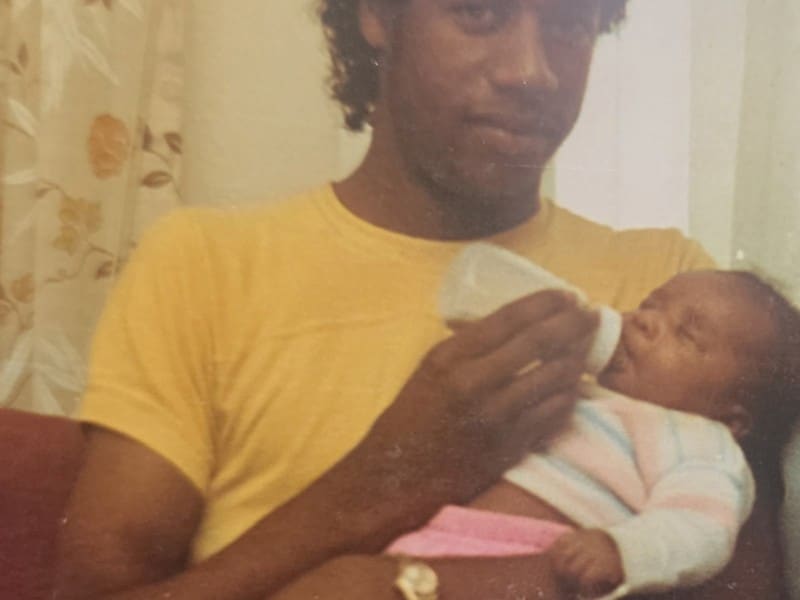
In the eighth episode of the Good Grief. Podcast, Aundrea Sayrie reflects on her late father who died just over a year ago. Aundrea writes about memories, trials, and tribulations related to her father, and how she has navigated through her grief over the past year.
Listen: Good Grief. Podcast, Episode 7
Grievers are all around us and most of the time, we have no idea.
In recognition of National Grief Awareness Day, August 30, this episode of Good Grief. explores what awareness asks of all of us.

Listen: Good Grief. Podcast, Episode 6
We’re told to grieve alone, in private, but why? In the sixth episode of the Good Grief. Podcast, Watershed Voice’s Aundrea Sayrie discusses what grief is, how we do it, and why we need others to witness it.
