
Listen: Good Grief. Podcast, Episode 4
In the fourth episode of the Good Grief. Podcast, Watershed Voice’s Aundrea Sayrie examines one of the biggest misconceptions about grief – “[it] only happens when someone dies.”
“As I reflected I realized something that on one hand, the level of grief I experienced losing my mom was unlike anything I had ever experienced. But on the other, it was quietly familiar.
“Not in its intensity. But in its depth. In its ache. I began to recognize grief at the edge of nearly every significant loss I’d experienced since childhood. I simply hadn’t known to call it grief.”

In the fourth episode of the Good Grief. Podcast, Watershed Voice’s Aundrea Sayrie examines one of the biggest misconceptions about grief – “grief only happens when someone dies” — and why recognizing loss is often the first step toward healing.
Things We Thought We Knew About Grief | Myth #2: Grief only happens when someone dies
For most of my life, I thought grief had a starting point.

Someone dies.
Then you grieve.

Or so I thought.

It wasn't until my mother's death that I realized grief had been quietly walking beside me for years.
I just hadn't recognized it.

Losing her was all-consuming.
Inescapable.
Nothing could have prepared me for that kind of pain.

Yet as I sat with it, something unexpected began to happen.
One of the tools I use to navigate hardship is introspection.
Whenever life shakes me, I instinctively ask:

Where have I felt this before?
Where have I seen this before?
What helped then?
What might help now?

As I reflected I realized something that on one hand, the level of grief I experienced losing my mom was unlike anything I had ever experienced.

But on the other...
It was quietly familiar.

Not in its intensity.
But in its depth.
In its ache.

I began to recognize grief at the edge of nearly every significant loss I'd experienced since childhood.
I simply hadn't known to call it grief.

The more I listen to other people's stories, the more convinced I become that I'm not alone.

One conversation in particular has stayed with me.

A client told me she had unexpectedly lost the job she'd held for thirty years.
Technology had replaced her.
The loss sent her life into a downward spiral.
When we spoke, she admitted she was calling me from the car she was living in.

As we talked, I gently asked,
"I wonder if what you're experiencing is grief."

She stopped.

Then, almost incredulously, she replied,
"You're absolutely right... it is grief."

It wasn't just agreement.
It was recognition.

You could hear the relief that comes from finally having language for something you've been carrying.
Like so many people, she believed grief only followed death.
But grief isn't defined by death.
It's defined by loss.

Once we understand that, we begin to recognize grief in places we may have overlooked.

Sometimes grief looks like mourning a person.
Other times, it looks like mourning the life we thought we'd have.
It may be the loss of...

• Health or physical ability
• Independence
• A marriage or relationship
• The dream of becoming a parent
• Pregnancy or infant loss
• Years spent caregiving
• Retirement or the end of a career
• Financial stability
• A friendship
• Faith
• The home you left behind
• The childhood you deserved but never had
• The future you imagined
• A sense of identity

The losses may be different.
But the ache is often surprisingly familiar.

Perhaps that's why so many people struggle to recognize grief.
Not because they aren't grieving...
But because no one ever told them grief could look like this.

Maybe you've been waiting for someone to tell you that what you're carrying counts as grief.

It does.
Aundrea Sayrie is a writer, narrator, advocate, and the creator of Good Grief., a reflective platform exploring grief, belonging, identity, healing, and intentional living through storytelling and spoken reflection. Drawing from lived experience, community advocacy, and creative expression, her work centers emotional honesty, connection, and giving language to the experiences many people struggle to name. She truly believes the only thing worse than hurting is hurting alone and hopes to be a companion to others through their healing journey.
If you would like to support her work as an independent writer and creative, donations can be sent via Cash App: $Asayrie
Any views or opinions expressed in Good Grief. do not necessarily reflect the views or opinions of the Watershed Voice staff or its board of directors.
Author

Related Articles
Listen: Good Grief. Podcast, Episode 9
In this episode of Good Grief., Aundrea Sayrie explores Black grief, the toll of repeated loss and racial injustice, and the psychological refuge mechanisms folks develop to survive what sometimes feels impossible to process.
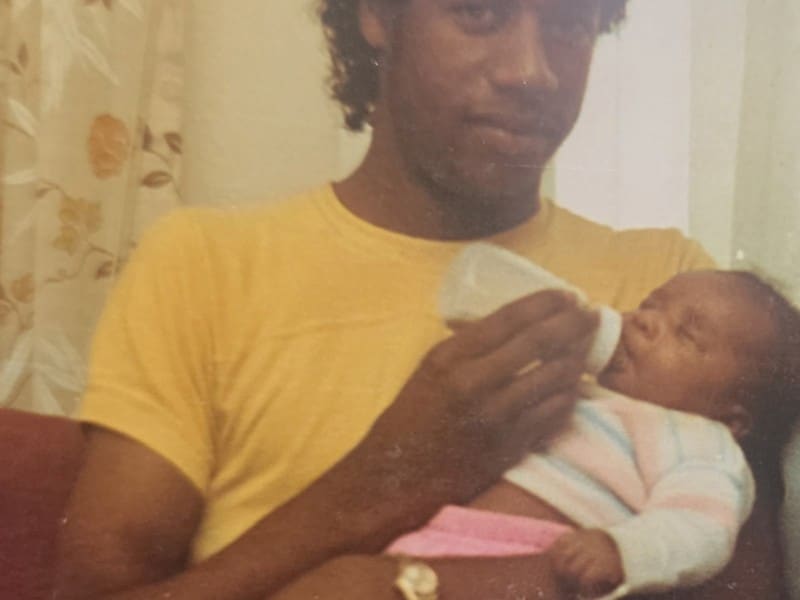
Listen: Good Grief. Podcast, Episode 8
In the eighth episode of the Good Grief. Podcast, Aundrea Sayrie reflects on her late father who died just over a year ago. Aundrea writes about memories, trials, and tribulations related to her father, and how she has navigated through her grief over the past year.
Listen: Good Grief. Podcast, Episode 7
Grievers are all around us and most of the time, we have no idea.
In recognition of National Grief Awareness Day, August 30, this episode of Good Grief. explores what awareness asks of all of us.
