
Listen: Good Grief. Podcast, Episode 3
In the third episode of the Good Grief. Podcast, Watershed Voice’s Aundrea Sayrie explores one of the most common misconceptions surrounding grief: the Five Stages of Grief.
“Many of us have searched for ourselves somewhere between denial, anger, bargaining, depression, and acceptance, wondering why our grief didn’t seem to follow the ‘right’ order. The truth may surprise you.”

In Episode 3 of Good Grief. Nano Learning, we explore one of the most common misconceptions surrounding grief: the Five Stages of Grief.
Many of us have searched for ourselves somewhere between denial, anger, bargaining, depression, and acceptance, wondering why our grief didn’t seem to follow the “right” order.
The truth may surprise you.
This episode begins a new series:
Things We Thought We Knew About Grief
Together, we’ll thoughtfully examine some of the most common myths surrounding grief and replace them with understanding, compassion, and hope.
If this episode encouraged you, consider subscribing, sharing it with someone navigating loss, and joining the conversation.
I’d love to know:
What was something you believed about grief that you’ve since learned wasn’t true?
With compassion,
Aundrea Sayrie
Grief Advocate • Coach • Writer • Host of Good Grief. Nano Learning
Things We Thought We Knew About Grief | Myth #1: The Five Stages of Grief
There are so many myths surrounding grief.
Perhaps because certainty makes us feel safe.
We want grief to be predictable.
Understandable.
Orderly.

Anything that might help us make sense of what feels impossible.
I did the same thing.
Like many people, I tried to figure out which stage of grief I was in.
You know the ones...

Denial.
Anger.
Bargaining.
Depression.
Acceptance.

I quietly compared every emotion I felt against that list.
But something didn't fit.
Some emotions never came.
Others arrived over and over again.
I found myself wondering  — what was I missing?
As it turns out,
Nothing.

The Five Stages of Grief were introduced by Swiss-American psychiatrist Elisabeth Kübler-Ross in 1969.
What I didn't know was the model was originally developed for people facing their own terminal illness — not people grieving the death of someone they loved.

Suddenly,
Everything made more sense.
There was nothing wrong with me.
And there was nothing wrong with the model.
I had simply been trying to fit a square peg into a round hole.

Over the years, the Five Stages became one of the most widely recognized ways of talking about grief. But they also received criticism because many people assumed grief was supposed to unfold in a neat, predictable order.

It never does.

In fact, Kübler-Ross later clarified she never intended the stages to be experienced in sequence. They weren't meant to be a checklist, and they often overlap or appear simultaneously.

That realization stayed with me.

At the end of her life, my mother was terminally ill.
She had always been a gentle soul.
A quiet strength.
When she was given just three weeks to live, she didn't unravel.
At least,
Not outwardly.
She spent her days encouraging the people around her.
Praying.
Worshipping.
Quietly whispering instructions she wanted us to carry out.
If I had to name one stage I witnessed in her
It would have been acceptance.

And then,
She was gone.

Nearly four years have passed since then.
I still grieve.
Deeply.
That doesn't mean the Five Stages are wrong.
It simply means they were never intended to define every grief experience.

I have certainly experienced denial.
Anger.
Depression.
Acceptance.
But not in a straight line.
Not once.
Not in order.
Because grief has never asked my permission before changing shape.

Now, the question isn't,
"What stage am I in?”
It's,
"What is my grief asking of me today?"
Some days, it asks for rest.
Other days, courage.
Sometimes it asks for remembrance.
Sometimes it simply asks us to survive.

Grief doesn't move in straight lines.
Neither does healing.

Both have a way of finding us exactly where we are.
Aundrea Sayrie is a writer, narrator, advocate, and the creator of Good Grief., a reflective platform exploring grief, belonging, identity, healing, and intentional living through storytelling and spoken reflection. Drawing from lived experience, community advocacy, and creative expression, her work centers emotional honesty, connection, and giving language to the experiences many people struggle to name. She truly believes the only thing worse than hurting is hurting alone and hopes to be a companion to others through their healing journey.
If you would like to support her work as an independent writer and creative, donations can be sent via Cash App: $Asayrie
Any views or opinions expressed in Good Grief. do not necessarily reflect the views or opinions of the Watershed Voice staff or its board of directors.
Author

Related Articles

Listen: Good Grief. Podcast, Episode 10
In this episode of Good Grief., Watershed Voice’s Aundrea Sayrie discusses psychological refuge tools, and the ways we learn to protect ourselves when life becomes too painful or overwhelming.

Listen: Good Grief. Podcast, Episode 9
In this episode of Good Grief., Aundrea Sayrie explores Black grief, the toll of repeated loss and racial injustice, and the psychological refuge mechanisms folks develop to survive what sometimes feels impossible to process.
Listen: Good Grief. Podcast, Episode 8
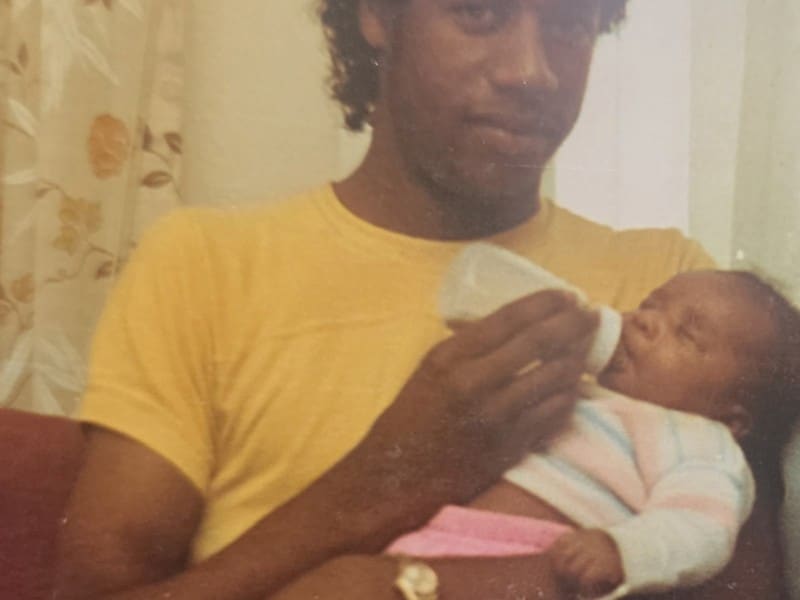
In the eighth episode of the Good Grief. Podcast, Aundrea Sayrie reflects on her late father who died just over a year ago. Aundrea writes about memories, trials, and tribulations related to her father, and how she has navigated through her grief over the past year.
