
Congress passes major housing bill as Southwest Michigan faces affordability challenges
For communities across Southwest Michigan, the bill could eventually affect how local housing projects move forward.
In areas like Kalamazoo County, where housing development has increasingly become part of conversations around population growth and affordability, faster development approvals and expanded federal funding could create more opportunities for new construction.
In smaller communities throughout St. Joseph and Cass counties, where older housing stock and limited inventory often create challenges for both renters and buyers, easier access to smaller mortgages and expanded manufactured housing options could provide additional paths to homeownership.
Housing experts caution, however, that the bill is not expected to produce immediate results.
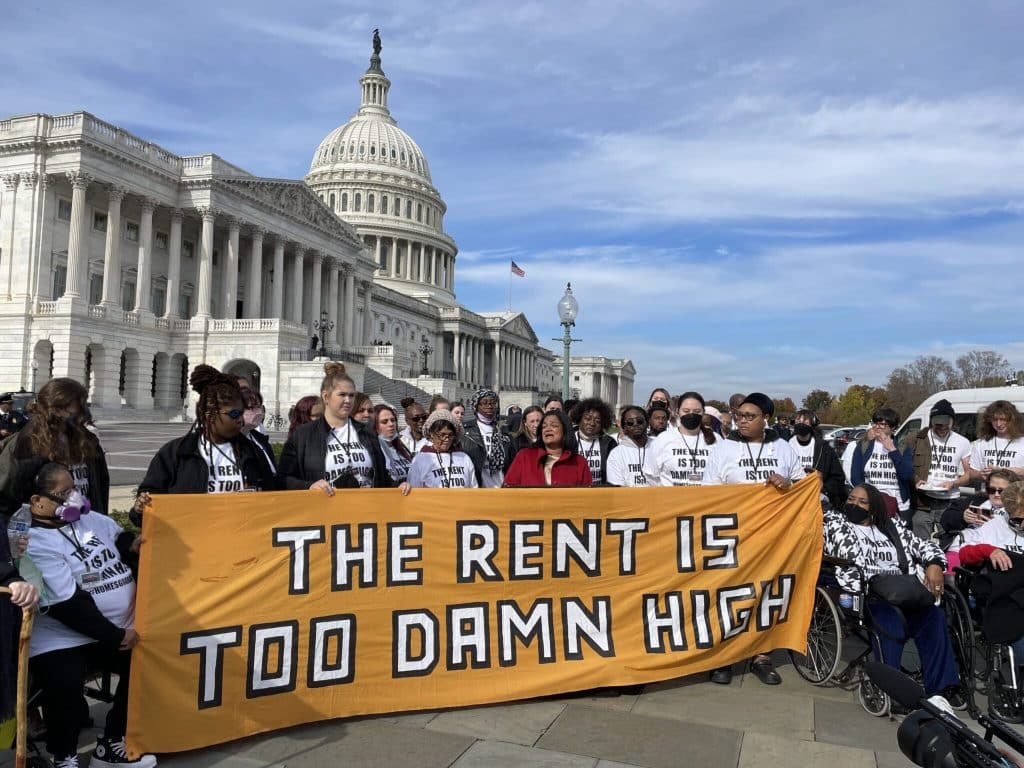
As communities across Southwest Michigan continue grappling with rising rent, limited housing inventory, and increasing barriers to homeownership, Congress has approved a sweeping federal housing package aimed at tackling the nationwide shortage driving many of those challenges.
Last week, lawmakers passed the 21st Century Road to Housing Act, a bipartisan bill housing advocates are calling the most significant federal housing legislation in more than three decades. The legislation cleared both chambers of Congress and was sent to President Donald Trump’s desk for him to sign. Trump had a signing event scheduled, however, abruptly canceled it in protest of another piece of legislation he wanted congress to pass, an elections bill known as the SAVE America Act. Due to Trump’s inaction — neither a signature or a veto — the bill automatically went into law on Saturday, July 11 at 12 a.m.
The bill comes at a time when affordability has become one of the country’s most pressing economic concerns. According to national housing researchers, the United States is currently short several million housing units needed to meet demand — a shortage economists say has steadily pushed both home prices and rents higher over the last several years.
That shortage has affected communities across Michigan as well, where housing availability and affordability have increasingly become concerns for working families, first-time homebuyers, and local governments attempting to manage growth.
Michigan Governor Gretchen Whitmer said the legislation builds on the state’s recent efforts to increase housing supply and reduce barriers to development.
“Housing is fundamental. It’s where we live, raise our families, and grow old,” Whitmer said in a statement after the bill became law. “The 21st Century ROAD to Housing Act will build on that progress. It will help lower the cost of housing, support our local communities as they build more homes, and cut red tape.”
Long term benefits
Federal lawmakers say the legislation is designed to address some of the root structural issues behind the crisis rather than simply offering short-term financial relief.
At the center of the bill is a broad effort to increase the overall supply of housing by making construction easier, faster, and less expensive.
One major section of the legislation reduces federal regulations tied to housing development projects. In many communities, developers often face lengthy environmental reviews, permitting requirements, and infrastructure hurdles before construction can begin. The new law streamlines portions of that process, which supporters argue could allow communities to build new housing faster while lowering development costs.
The legislation also significantly expands support for manufactured housing, a sector lawmakers say has been underutilized despite offering one of the more affordable alternatives to traditional home construction.
Under current federal rules, many manufactured homes must be built on steel chassis frames, the heavy metal base used to transport homes from factories to building sites. Builders say those requirements can add significant costs even when homes are intended to remain permanently in place. The new legislation removes some of those restrictions, potentially reducing construction costs by thousands of dollars per home while allowing manufacturers greater flexibility in how homes are designed.
Supporters say those changes could be particularly important in rural communities where manufactured housing often provides one of the most affordable ownership options.
Financial barriers
The bill also attempts to address financing barriers that have historically limited access to affordable housing.
Community banks will face fewer regulatory restrictions under the new law, and lenders will have expanded flexibility when issuing smaller mortgage loans under $100K — a category that has become increasingly difficult to access in lower-cost housing markets. Housing advocates say smaller mortgages are especially important in rural communities and smaller towns, where lower-priced homes are more common but financing options can be limited.
Another major provision targets large institutional investors that have increasingly entered the housing market over the last decade.
Under the legislation, corporate entities will now be prohibited from owning more than 350 existing single-family homes nationwide. Supporters of the measure argue large investment firms have contributed to tighter housing supply by purchasing homes that might otherwise be available to individual buyers, particularly first-time homeowners.
The bill also includes federal grants and funding incentives for communities actively building new housing developments.
Cities and municipalities that expand housing construction may now qualify for additional federal infrastructure support tied to roads, utilities and community development projects connected to new housing growth.
Short term impact
For communities across Southwest Michigan, those provisions could eventually affect how local housing projects move forward.
In areas like Kalamazoo County, where housing development has increasingly become part of conversations around population growth and affordability, faster development approvals and expanded federal funding could create more opportunities for new construction.
In smaller communities throughout St. Joseph and Cass counties, where older housing stock and limited inventory often create challenges for both renters and buyers, easier access to smaller mortgages and expanded manufactured housing options could provide additional paths to homeownership.
Housing experts caution, however, that the bill is not expected to produce immediate results.
Unlike emergency rental assistance programs or direct housing subsidies, the legislation focuses primarily on long-term structural changes meant to gradually increase supply over time.
Economists say one of the largest drivers of rising housing costs nationwide has simply been a lack of available homes. Builders have struggled for years to construct enough new housing to keep pace with population growth, a trend that accelerated after the 2008 housing crash and worsened during the pandemic-era housing boom.
As a result, home prices nationally have risen sharply over the last several years while the average age of first-time homebuyers has climbed to record highs.
Housing policy experts say no single piece of legislation is likely to solve the affordability crisis overnight.
But supporters argue the combination of faster construction approvals, expanded affordable building options, increased financing access and new restrictions on large investors represents one of the most aggressive federal attempts in decades to address the underlying supply shortage.
For communities already feeling the strain of rising housing costs, lawmakers hope those long-term changes could eventually make housing more affordable and more accessible in the years ahead.
Maxwell Knauer is a staff writer for Watershed Voice.
Author

Related Articles
OutCenter hosting open house Friday in downtown Dowagiac
“We’re talking about a sizable portion of our communities that need support, need to be able to find community, and need folks out there that are advocating for them,” Executive Director Gerik Maverick said. “We have been working with schools for just over a decade. We work with healthcare systems on training to make sure folks are able to get resources. We’re working with the area agency on aging on some very exciting new projects.”

Three Rivers Athletic Club to host ribbon cutting ceremony Friday
The fitness center once thought to be closing for good will host a ribbon-cutting ceremony Friday after its new owners reopened the gym under a new name, Three Rivers Athletic Club.

Findings of investigation into Sturgis City Commission conduct leaves key questions unanswered
After a closed session during their September 23 meeting, the Sturgis City Commission unanimously voted to release the findings of the external investigation by Miller Johnson that looked into alleged wrongdoing by commissioners. The report details the events leading up to the public controversy, the investigator’s findings, and his legal conclusions regarding the commissioners’ conduct.
This story presents the events chronologically, drawing on the investigator’s findings and the accounts of those interviewed.
