
Live-streaming plan heads back to drawing board in Three Rivers
City staff recommended purchasing a Meeting Owl 5 Pro camera and supplemental equipment for up to $5,000, along with adopting a video retention policy. The proposed policy called for recordings to be deleted one day after the minutes for the corresponding meeting were approved — which occurs at the following meeting, typically 2-3 weeks later — unless a legal, FOIA, audit or investigation hold applied.
The system and policy were voted down unanimously.
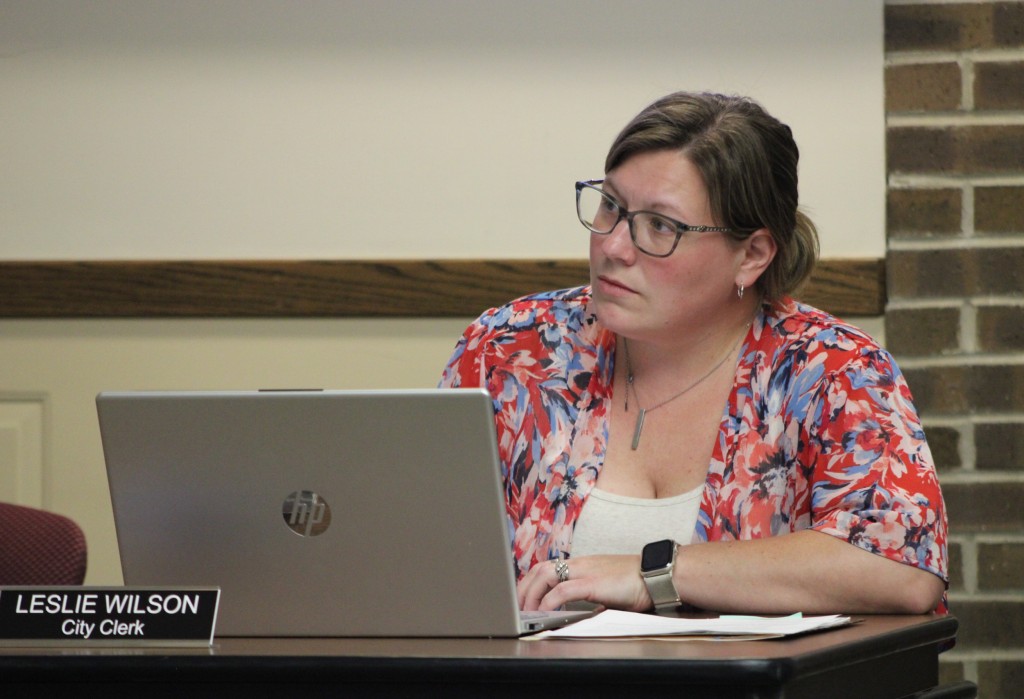
The Three Rivers City Commission is continuing to determine how it will livestream its meetings.
The commission considered live-streaming as a formal agenda item for the first time Tuesday, during its September 1 regular business meeting. City staff recommended purchasing a Meeting Owl 5 Pro camera and supplemental equipment for up to $5,000, along with adopting a video retention policy. The proposed policy called for recordings to be deleted one day after the minutes for the corresponding meeting were approved — which occurs at the following meeting, typically 2-3 weeks later — unless a legal, FOIA, audit or investigation hold applied.
The system and policy were voted down unanimously. Commissioners instead directed City Finance Director Bobbi Schoon to consult with an AV technician to help figure out which equipment would be best for the city’s needs and current staffing. The city’s IT contractor had previously evaluated several camera systems and recommended the Meeting Owl system, according to Schoon.
Three Rivers resident Austin Kane, who said he works in AV technology and has installed systems in municipal chambers, said the proposed equipment would be insufficient.
“I am an expert in this arena. That is, this is my role. I have worked at and done city council chambers from Traverse City down to Elkhart,” Kane said. “This is the wrong product.”
Kane saidthe city is using their IT department to solve an issue that an AV technician needs to solve.
“The Owl Pro is a 360-degree camera. It is meant to sit in the middle of a conference room table and do Zoom calls where people are all around it, and who’s ever talking, it then zooms in on that person, and that is what the Owl Pro Five is meant for,” Kane said, adding that the product also does not have the ability to connect to the microphones that each commissioner and city staff have in front of them during meetings.
Mayor Angel Johnston agreed with Kane, saying she also works in AV and that, based on her own research and conversations with co-workers, she believed Owl was the wrong product for the commission.
“I think it’s important not to go to a cardiologist to fix your lung. You know, so when we’re doing IT versus AV, I think we just need to go to the people who actually do this,” Johnston said.
Schoon asked commissioners to keep any direction broad, saying she needed flexibility to identify an appropriate system without adding significantly to her workload.
“You guys are asking me to potentially spend a large amount of time to talk to three integrators and get three more quotes beyond the time I’ve already spent. When the audit is in a week and a half,” Schoon said. “All due respect, that is crazy to me.”
Schoon said she would work with Kane to identify an appropriate system and bring a new proposal back to commissioners. Schoon did not provide a specific timeline.
Commissioners also discussed the proposed retention policy. Johnston expressed disappointment with the proposal and said she would favor retaining recordings for one year. Commissioner Pat Dane said she thought a year would be too long and preferred the shorter option.
Neither the equipment nor the retention policy was approved, meaning commission meetings will remain without a city-operated livestream for now.
The discussions of city-run live-streaming began in city chambers on June 16, when commissioners directed City Manager Joe Bippus to gather quotes and come back to commissioners with something on the agenda.
Other business
Commissioners unanimously adopted the International Property Maintenance Code. They also conducted first readings of zoning amendments addressing massage establishments and side-yard requirements.
Planning liaison John Beebe described the massage amendment as a second step following revisions to the city’s massage licensing ordinance earlier this year. The new proposal would eliminate the special-exception-use permit requirement for massage establishments and instead regulate them as conditional uses.
Commissioners also accepted an $18,019 federal pass-through grant from the Michigan Office of Highway Safety Planning for traffic enforcement targeting distracted driving, speeding and seat-belt violations. Police said the funding will cover overtime for officers dedicated to traffic enforcement.
Maxwell Knauer is a staff writer for Watershed Voice.
Editor’s note: Austin Kane, who is mentioned in the article, serves as a volunteer board member on Watershed Voice’s board of directors.
Author

Related Articles
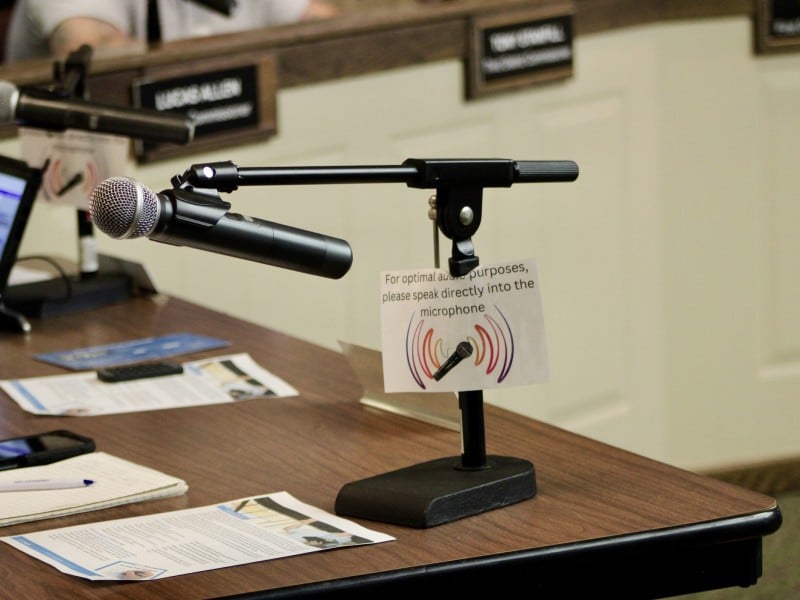
In case you missed it: Three Rivers draws one step closer to live-streaming its meetings
Commissioners approved a recommendation to allocate up to $4,000 towards the equipment and went with the second option provided: MSPoT/PTZOptics Move SE for $3,607. The quoted total cost includes the setup, training, live-streaming interface, and the equipment which includes a PTZ camera. Also included is five push-to-talk mic stands, however, commissioners decided to wait on that decision as they worry having to push to talk could make fluid conversation at the dais difficult.
Although commissioners approved the second equipment option, they decided to continue using their existing microphones for the time being.

See ‘A Better World A Comin,’ Woody Guthrie tribute at the Riviera this month
A group of local musicians will present an evening of music by Woody Guthrie at the Riviera Theatre and Bar in Three Rivers on Saturday, October 24 at 7:30 p.m. Proceeds will benefit The Huss Project, a community center owned and operated by Three Rivers nonprofit *culture is not optional.
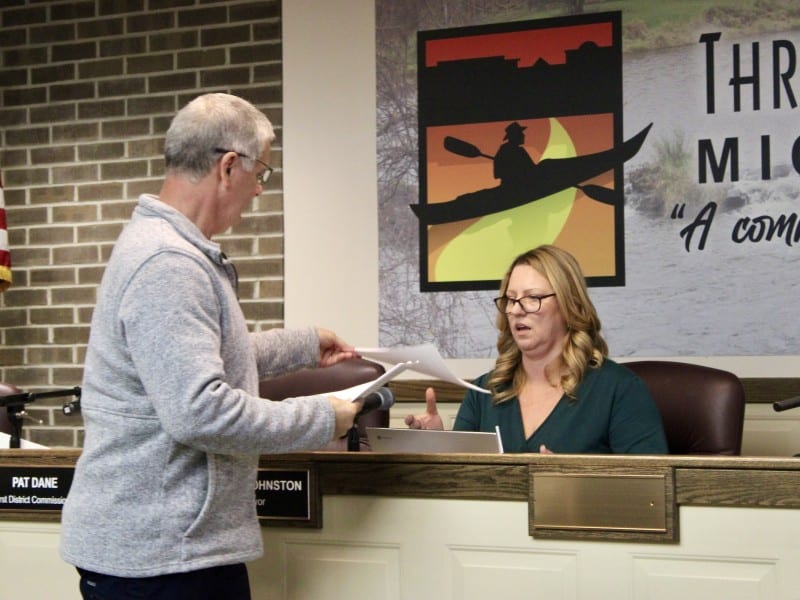
Three Rivers City Manager Joe Bippus retiring in 2027
Longtime Three Rivers City Manager Joe Bippus announced his impending retirement during Tuesday’s Three Rivers City Commission meeting. Bippus, who accepted the position in 2000, said his 27-year tenure will end effective January 14, 2027.
Watershed Voice spoke with Mayor Angel Johnston and former Mayor Tom Lowry about Bippus’ decision, and what it means for the City of Three Rivers going forward.
