
‘Money out of politics’ will be on Michiganders’ ballots this November
The ballot proposal would amend the Michigan Campaign Finance Act to prohibit regulated electric and gas utilities from making certain direct or indirect political contributions. It would also restrict government contractors with more than $250,000 annually in qualifying contracts, along with certain people and organizations affiliated with those companies, from contributing to candidates in jurisdictions that awarded the contracts.
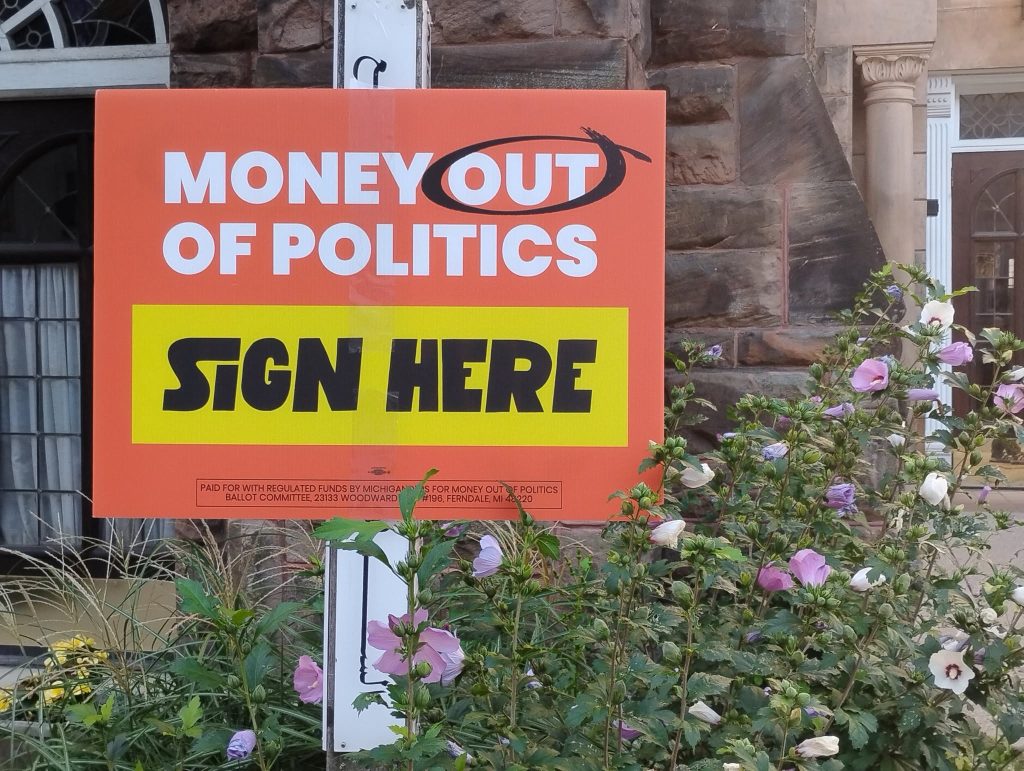
This November, Michigan voters will decide whether to restrict political contributions from certain utilities, government contractors, and people affiliated with those companies.
The ballot proposal would amend the Michigan Campaign Finance Act to prohibit regulated electric and gas utilities from making certain direct or indirect political contributions. It would also restrict government contractors with more than $250,000 annually in qualifying contracts, along with certain people and organizations affiliated with those companies, from contributing to candidates in jurisdictions that awarded the contracts.
The proposal would also change disclosure rules for political advertising. Certain ads and other political messages that name a candidate or ballot proposal would have to disclose who paid for them, even if they do not explicitly tell people how to vote. The proposal would also apply campaign finance disclosure requirements to political communications posted or promoted online.
The initiative was placed on the ballot after Michiganders for Money Out of Politics, or Mop Up Michigan, submitted more than 560,000 signatures in May. The Michigan Board of State Canvassers certified the initiative in July after challenges to the validity of some of the signatures.
The Republican-controlled Michigan House voted 77-26 in August to adopt the proposal. The Democratic-controlled Senate did not take it up, leaving the decision to voters in November.
“We thank Senate Leader Brinks and the legislators who voted no on taking up the MMOP proposal in the legislature,” said Ken Whittaker, executive director of Michigan United and an executive member of Michiganders for Money Out of Politics. “Speaker Matt Hall never intended to get money out of politics. If he had, he wouldn’t have let bipartisan anti-corruption bills die in committee again and again. Politicians in Lansing have cut backroom deals for years while everyday Michiganders got shut out. We put MMOP on the ballot to end that. We’re ready to vote yes this November.”
Whittaker said thousands of volunteers gathered signatures for the proposal throughout the winter and spring.
“One thing came through in every county we worked,” Whittaker said in an emailed response to Watershed Voice, “Michiganders are done with pay-to-play politics. They want a government that works for people, not for the corporations writing the checks.”
Whittaker added that the proposal targets government contracts because companies receiving taxpayer money should not be able to use political contributions to influence officials responsible for those contracts.
The proposal also specifically targets regulated electric and gas utilities. Its restrictions extend to certain executives, board members, substantial owners, lobbyists, immediate family members, and others affiliated with the utilities.
Opponents argue the proposal goes too far and would restrict political participation by businesses and individuals associated with them.
Protect MI Free Speech, a group opposing the measure, has argued that the restrictions could violate First Amendment protections for political speech. John Sellek, a spokesperson for the group, told Bridge Michigan that attorneys have questioned whether the proposal would withstand a constitutional challenge if approved by voters.
The Michigan Chamber of Commerce, which is part of the opposition coalition, has also argued the proposal unfairly restricts some political interests while leaving others unaffected, including labor unions.
The Chamber called the proposal “selective censorship” and said it would determine “who can participate in the policy and political process and who can’t.”
Opponents have also challenged the proposal on procedural grounds. Protect MI Free Speech unsuccessfully challenged the petition’s certification before the Board of State Canvassers, arguing that too many of the campaign’s signatures were invalid. The group subsequently asked the Michigan Supreme Court to overturn the certification.
How did we get here?
The debate over corporate political spending changed significantly following the U.S. Supreme Court’s 2010 decision in Citizens United v. Federal Election Commission.
The case arose after Citizens United, a conservative nonprofit organization, challenged federal campaign finance restrictions affecting its ability to promote and distribute a film critical of then-presidential candidate Hilary Clinton.
The Supreme Court ruled that the government could not prohibit corporations and unions from making independent political expenditures based on their corporate identities.
The decision did not eliminate restrictions on direct corporate contributions to candidates. Instead, it protected independent political spending — money spent advocating for or against candidates without coordinating with their campaigns.
More than 15 years later, the debate over how much influence corporations and other organizations should have in elections is at the center of Michigan’s ballot proposal.
Michigan voters will decide on the issue in the November 3 election.
Maxwell Knauer is a staff writer for Watershed Voice.
Author

Related Articles
Debate week in Michigan continues tomorrow night with El-Sayed and Rogers
The first debate between Senate candidates Abdul El-Sayed and Mike Rogers will be this Thursday, October 8 at 7 p.m. The debate will air live on WOOD TV8, WOOD TV+, WOODTV.com, and their partner stations across the state.
Thursday’s debate is part of WOOD TV8’s “Debate Week in Michigan.” On Tuesday, Democratic gubernatorial candidate Jocelyn Benson and Republican candidate John James faced off in their first debate.
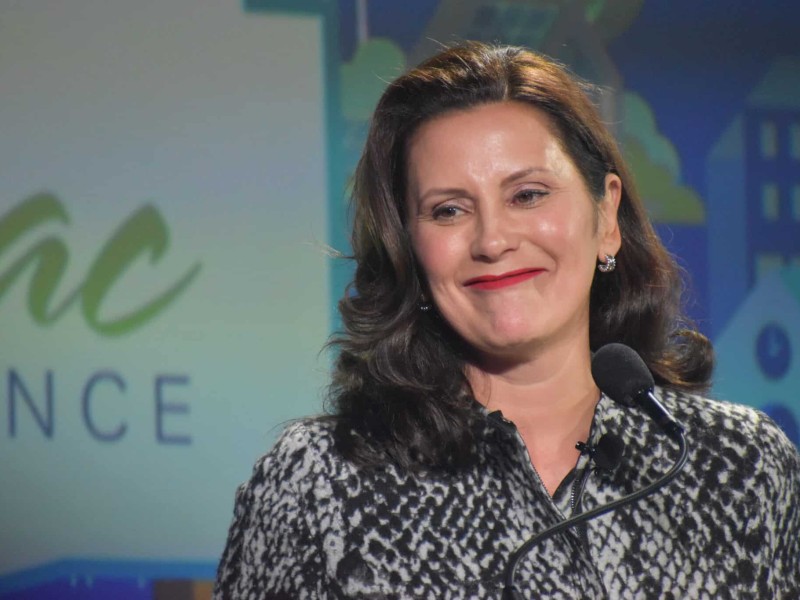
Whitmer announces first batch of local road funding
The first batch of local funding is being disbursed to cities and counties across Michigan as part of Governor Gretchen Whitmer’s Neighborhood Roads Fund (NRF), which aims to rebuild state and local roads and bridges.
Locally, residents in Three Rivers and Sturgis have complained to local officials about the condition of their roads, asking for plans to fix them. Those officials have said some of the most problematic roads are owned and maintained by the state, meaning responsibility for those repairs rests with the state.
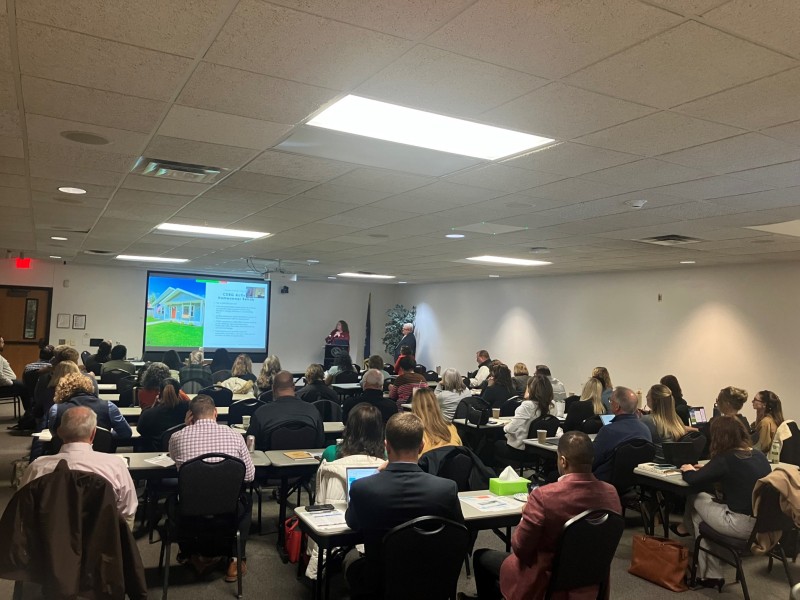
Michigan counties, towns spend $30B a year. Could collaboration get more done?
Berrien County leaders recently established a new nonprofit that works to keep housing affordable. It’s an example of cooperation that policymakers wish happened more often among the state’s 1,856 counties, cities, townships and villages. Collectively, those local governments spend more than $30 billion a year, according to US Census data, including $1.7 billion in state revenue sharing.
