
Three Rivers OKs downtown restrictions aimed, in part, at pushing unhoused outside of district
The rules, which apply to areas like the Mural Mall, East Alley, the Amphitheater and adjacent city-owned public grounds are intended to address public safety and cleanliness, although much of the impact will fall on the unhoused population.
Mayor Angel Johnston said she hopes the new rules empower the Three Rivers Police Department.
“I am 100% in favor of this, and I hope to goodness that this empowers our police department to brutally enforce these rules. I shouldn’t say brutally; be nice to people. I know that you all are, but as Commissioner (Pat) Dane said, to do it, I don’t want this ordinance to just come and it just be something that sits on the books.”
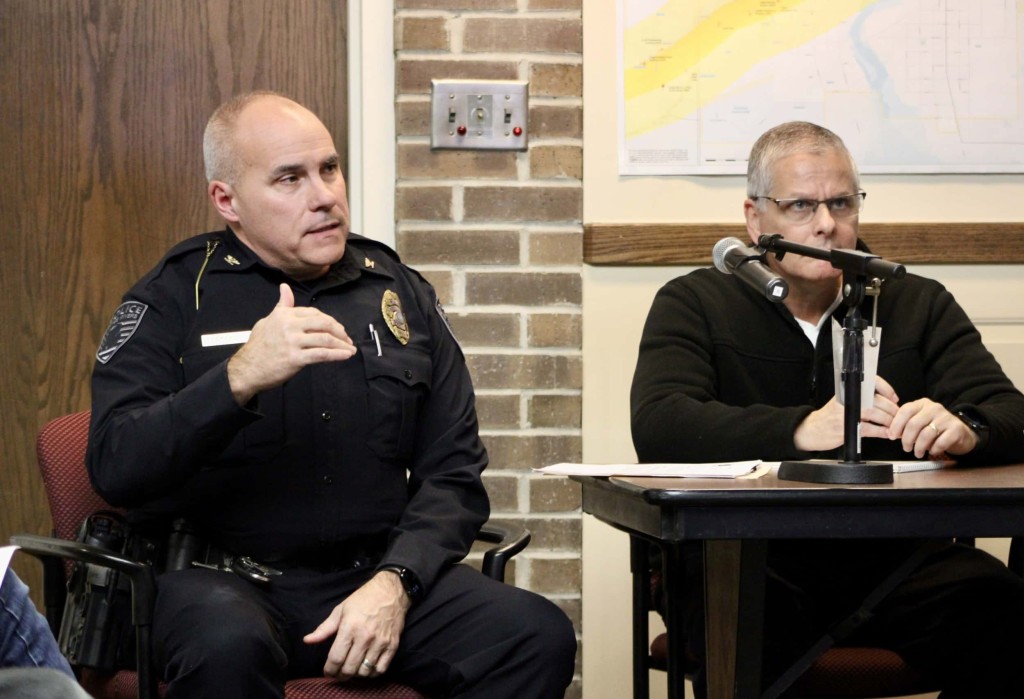
During Tuesday night’s regular business meeting, the Three Rivers City Commission unanimously passed a set of new rules for public grounds in downtown. The rules, which apply to areas like the Mural Mall, East Alley, the Amphitheater and adjacent city-owned public grounds are intended to address public safety and cleanliness, although much of the impact will fall on the unhoused population.
Police Chief Scott Boling brought the proposal to the commission after discussing it with the Downtown Development Authority on Wednesday, November 4.
The dais was light again, with only Mayor Angel Johnston, Commissioners Pat Dane, Torrey Brown, and Carolyn McNary in attendance. Commissioners Lucas Allen, Anthony Stanfill, and Steven Haigh were absent. Each present commissioner shared their feelings about the proposal and homelessness throughout the city before all voting in favor. During their November 9 meeting, last Monday, the commission was unable to conduct official business because not enough commissioners were present for a quorum.
Commissioners Allen and Haigh have been absent at both meetings since losing their elections on November 3. There will be no more meetings before commissioners-elect Josh Williams and Josh Hoeppner are sworn-into Allen and Haigh’s seats, respectively.
Prior to the vote, several residents spoke out against the proposal saying it burdens the unhoused population without giving them any alternatives.
“I think that it’s shortsighted in not providing care and not providing some place for them to go. It’s just saying you can’t be here, but we’re not telling you where you can be. And I think that we need to to think about something beyond what this says,” said resident Austin Kane.
Other residents echoed these concerns, asking why the city wants to move them out of downtown knowing they’ll just end up somewhere else in the city.
“I do sympathize with the DDA and downtown business owners,” said Casey Tobias, Three Rivers resident and founder of HOPE, a nonprofit organization that provides resources to those in need, especially the unhoused. “But I believe there’s a humane and effective way to handle the situation out of our chief’s hands.”
Mandy Brown, a Three Rivers resident who has been experiencing chronic homelessness for years, explained that some unhoused individuals do not want the help being offered. Brown expressed mixed feelings for the proposal but ultimately supported it.
“I just wish people could get their heads together and do better as a community. I’m not trying to sound holier than thou, but at the same time, it makes everybody else that’s trying to get back up look horrible and absolutely deplorable,” Brown said, referencing the behavior of some unhoused individuals. “I’m appreciative of the grace that this community has given people like me and my partner, but at the same time, I do agree there needs to be boundaries set for all the bad apples.”
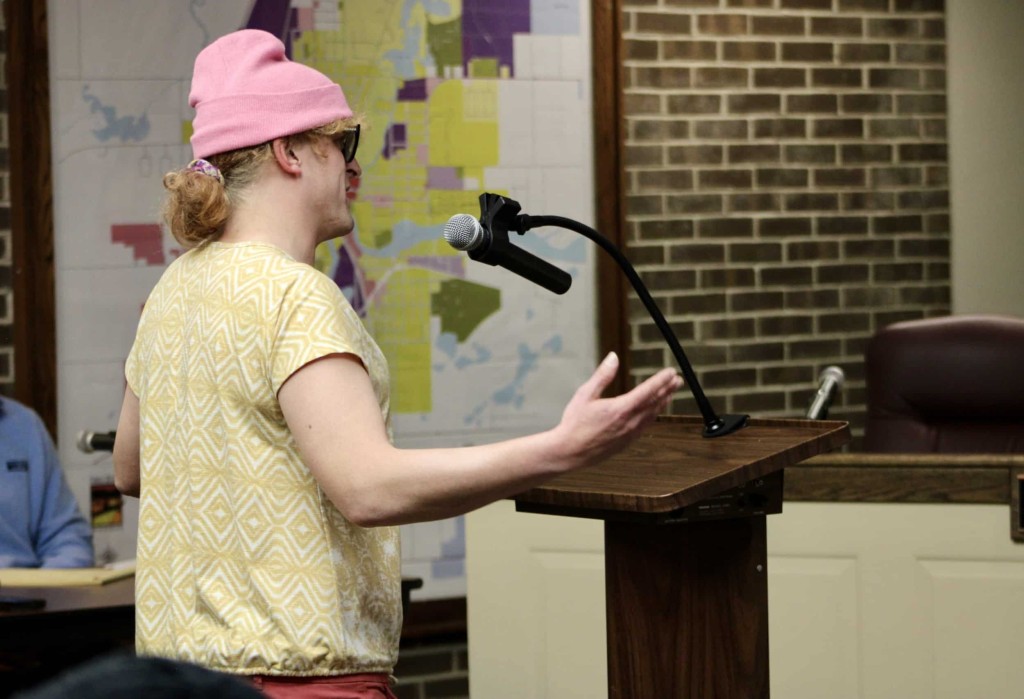
Despite resident concerns, each commissioner expressed their support and reasoning with many sharing personal experiences with unhoused individuals.
Commissioner Brown told a story of his 11-year old daughter asking about taking a picture under the Christmas tree in Mural Mall once it starts snowing, however, Brown couldn’t give her a straight answer because he said he wasn’t sure who would be there at that time. He added that he and his daughter watched an unhoused man pull down his pants and pee off the back of the amphitheater while the two were driving around.
“These are for the people, even if they’re born and raised in Three Rivers, who do not respect Three Rivers, who do not respect what Three Rivers is trying to build,” Brown said. “I just saw a post the other day that Sturgis has six new businesses moving into town. Sturgis has a homeless problem too. We need to take care of Three Rivers. We need to make Three Rivers a place where people want to come.”
Commissioner McNary shared her thoughts outlining that the city does need to provide more resources, however, she is weary of Three Rivers becoming a destination for unhoused individuals.
“We need more businesses down there. You know, we just need to be proud of our area. So we can’t be proud of it and we can’t be so wimpy that we let a bunch of people that have nothing because some choose not to have it, just run over us and come and take over what the DDA and the city and volunteers have worked so hard to provide,” McNary said, adding, “If you build it, they will come. I don’t really want Three Rivers to grow into this big place, this small place, where a whole bunch of homeless people come to be, because again, what I’ve witnessed is a lot of people want to be homeless.”
Mayor Johnston, who first proposed a homelessness task force to commissioners in December 2025, shared why she too supported the proposal. The task force has yet to be established and Johnston says she hopes to try it again when there are willing commissioners and a city manager who “doesn’t block it.”
Johnston shared a story from her time living in Kalamazoo with an unhoused individual that she grew close with, providing care and resources for. Johnston explained that despite this individual being faced with the reality of losing his foot, he still chose to stay outside and decline the shelter a local church was offering him. Johnston said that individual shifted her perspective on the issue and had the commission been voting on Boling’s proposal before that, she would not have been in favor of it.
“I am 100% in favor of this, and I hope to goodness that this empowers our police department to brutally enforce these rules. I shouldn’t say brutally; be nice to people. I know that you all are, but as Commissioner Dane said, to do it, I don’t want this ordinance to just come and it just be something that sits on the books.”
Approval of the rules means individuals will no longer be allowed to camp, establish temporary living conditions, store or abandon personal belongings or obstruct walkways in the given areas. The rules also prohibit public urination and defecation, improper disposal of hazardous materials, and damage to city property.
The areas will be open from 6 a.m. to midnight. Between midnight and 6 a.m., individuals may pass through but cannot remain or congregate. The rules apply to everyone regardless of housing status, and exceptions may be made for approved events or other authorized activities.
While the proposal drew lots of controversy online, it faced little resistance during last night’s meeting. The next time Three Rivers meets on Tuesday, December 1, new faces will be sworn-in.
Maxwell Knauer is a staff writer for Watershed Voice.
Author

Related Articles

Struggling to make ends meet? Here’s where to find assistance in southwest Michigan
As winter approaches, residents of St. Joseph, Cass, and Kalamazoo counties struggling to afford groceries, housing, utilities, healthcare, and other necessities have several resources available to them.
Watershed Voice has compiled a list of organizations and programs offering assistance throughout the region.
Local meeting primer: Three Rivers City Commission
Police Chief Scott Boling has proposed a set of rules for commissioners to consider which would prohibit anyone from congregating at Mural Mall, East Alley, Amphitheater or connected areas between midnight and 6 a.m. The proposal says a person may pass through during that time, however, may not remain there for an extended period.
The proposal would also prohibit camping or sleeping in the listed areas, including setting up tents, makeshift shelters or bedding. Personal property could not be abandoned or stored on city property, although belongings associated with lawful use of the area would be permitted as long as they do not obstruct public access. The restrictions would apply to everyone, regardless of housing status. However, the proposed changes come as temperatures are dropping and the unhoused become more vulnerable to the elements, with little to no viable alternatives for shelter within city limits.

Glen Oaks Community College Foundation launches President’s Circle
Established in 2026, the President’s Circle is part of the Foundation’s renewed approach to donor stewardship and engagement. The society was created to recognize leadership donors while helping them build stronger connections with the students, employees and programs their generosity supports.
