
Listen: Good Grief. Podcast, Episode 12
In this episode of Good Grief., Watershed Voice’s Aundrea Sayrie explores spirituality and ritual as sources of comfort, connection, and renewal, especially as we navigate grief during the holidays.
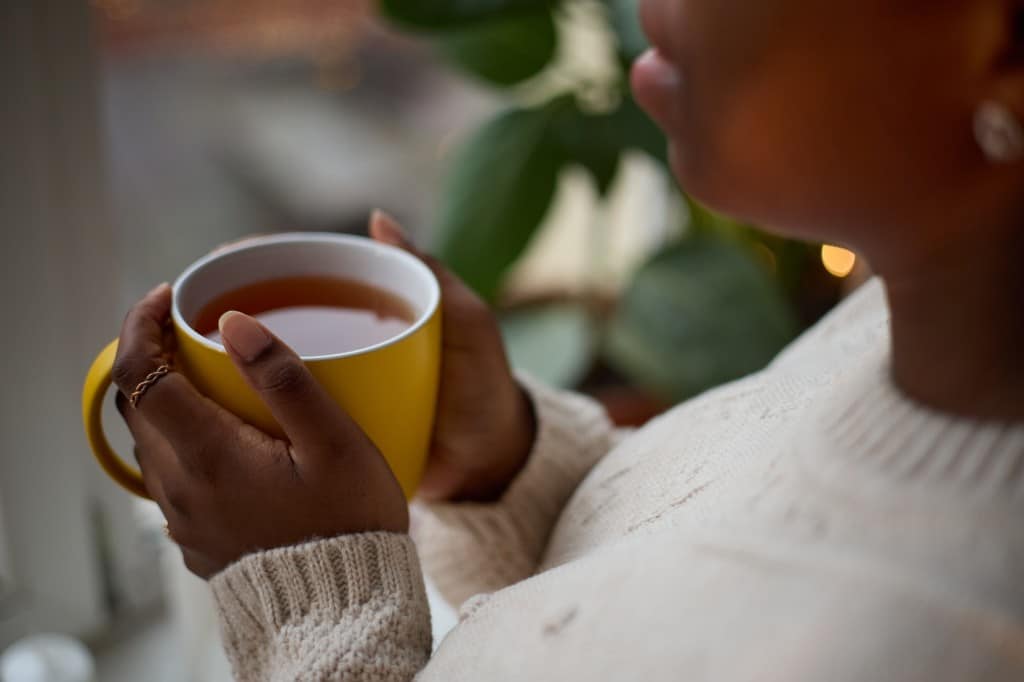
In this final episode of the Psychological Refuge series, we explore spirituality and ritual as sources of comfort, connection, and renewal, especially as we navigate grief during the holidays.
There is beauty in the pause.
In the stillness.
In having somewhere to go to be held.
Psychological Refuge: Spirituality & Ritual The Places We Go to Be Held
I have had an awareness of God since I was about five years old.
My foster brother had a grandmother who would pick him up on Sunday mornings and take him to church.
One Sunday, when he returned, he grabbed my hand and pulled me away from everyone and led me to his room.
He asked me if I had invited Jesus into my heart.
I had absolutely no idea what he was talking about.
But he was my best friend, so I listened.
He had this tiny blue New Testament Bible. It was so small it could fit in the palm of a child’s hand.
He opened it, turned through the pages, and began explaining what I needed to do.
He told me to get on my knees.
Put my palms together.
Bow my head.
Close my eyes.
And repeat after him.
So I did.
He led me in prayer, and I repeated every word.
When we finished, he told me God was all powerful, all knowing and always with me.
Omnipotent. Omniscient. Omnipresent.
Little me was in awe.
I still am.
I didn’t understand much about religion at five years old, but that moment stayed with me.
From then on, I carried an awareness of God’s presence.
Not perfectly.
I haven’t always listened. Haven’t always made the right decisions. Haven’t always understood what He was doing or where He was leading me.
But I’ve always acknowledged Him.
And when I look back over my life, I can see …He was there.
I was never completely alone.
And that brings me to the final two psychological refuges I want to explore in this series.
Spiritual refuge and ritual refuge.
Two different ways we find comfort, meaning, safety, and sometimes enough peace to keep going.
Spiritual Refuge: Somewhere to Be Held
My mother used to tell me:
“Just pray about it.”
Just pray about it.
There was a time when that frustrated me to no end.
I didn’t want to hear that.
I wanted an immediate audible answer.
Something tangible.
Something I could do.
When you’re hurting, “just pray about it” can sound like somebody is asking you to do nothing.
At least, that’s how I heard it back then.
But my faith in prayer changed as I got older.
When I was bedridden, I couldn’t get up and go find relief.
I couldn’t get to the people I wanted to see.
I couldn’t fix what was happening around me.
There were things I needed that I simply could not make happen for myself.
But I could pray.
And I did.
From the confines of that bed, I talked to God.
And He heard me.
I witnessed prayers answered in ways that we’re nothing short of miraculous.
Prayer works. Not because that’s what I’d always been told, but because I experienced it I personally.
Those experiences changed my relationship with God.
Prayer became more than something I had been taught to do.
It became a place I could tell the truth.
A place where I could weep and didn’t have to pretend I was strong.
A place where I could admit that I was afraid, angry, exhausted, confused, or simply didn’t know what to do next.
I walked away from those conversations feeling held.
Not necessarily with everything resolved.
But with enough peace to face what was still unresolved.
Refuge doesn’t remove the burden. It gives us somewhere to set it down for a while.
For me, that refuge is rooted in Christianity and my relationship with God.
But I understand that spiritual refuge can look different for different people.
Some find it through religious faith, prayer, scripture, and worship.
Others find a spiritual connection through meditation, contemplation, nature, or a sense of belonging to something larger than themselves.
I don’t need everybody’s experience to look like mine to recognize what it can mean to them.
Because when grief enters our lives, it can shake more than our circumstances.
It can shake our understanding of the world.
Our sense of fairness.
Our trust.
Our hope.
Our beliefs about what is supposed to happen to good people.
And sometimes even our relationship with God.
I’ve spoken with people who found it difficult to return to church after losing someone they loved.
Sometimes because that was where the funeral was held.
The same sanctuary that once represented joy and fellowship now held the memory of a casket.
The music sounded different.
The pews felt different.
Even walking through the doors could bring everything back.
And sometimes the struggle went deeper.
Sometimes there was anger toward God.
A feeling that He had allowed something unbearable.
Or done something that hurt them.
And I think we have to make room for that, too.
Because spiritual refuge isn’t always peaceful.
Sometimes it begins with wrestling.
With questioning.
With silence.
With being angry enough to say, “God, I don’t understand.”
I believe there is room for honesty in our spiritual lives.
There has to be.
Otherwise, the place we go to be comforted can become another place where we feel obligated to perform.
And that brings me to the caution I want to offer about spiritual refuge.
Faith can sustain us.
But we have to be careful not to use it to silence ourselves, or one another.
Sometimes “just pray about it” is exactly what somebody needs to hear.
And sometimes they also need somebody to sit beside them.
To help with the children.
To bring a meal.
To listen.
To help them make a difficult phone call.
To acknowledge that what happened was terrible.
Prayer and practical support don’t have to compete.
And faith doesn’t require us to pretend that we aren’t hurting.
I have learned that I can trust God and still grieve.
I can believe He is guiding me and still be uncertain about where I’m going.
I can believe that the pain I’ve experienced will not be the entirety of my life.
There is more for me.
I believe that.
A life where I am not always bracing for the next difficult thing.
And I believe God is guiding me toward it.
Ritual Refuge: The Comfort of What We Do
Now, spiritual refuge is often about what happens within us.
Ritual refuge is often about what we do around us.
The candle we light.
The music we play.
The prayers we say.
The way we prepare a room.
The cup we reach for every morning.
The pictures we keep nearby.
Journaling.
The traditions we repeat because they connect us to something we love.
Ritual gives shape to feelings that don’t always have words.
And when life becomes unpredictable, there can be enormous comfort in something familiar.
Something we can return to.
Something our hands remember how to do.
My mother understood the beauty of ritual.
Especially around the holidays.
Her house was the holiday house.
We didn’t spend much time making plans about where we were going.
We already knew.
We were going to Mom’s.
And there was a whole production that came with it.
The cooking.
The preparation.
Pulling out the fold-out tables.
Finding enough chairs.
Tablecloths.
Making sure there were enough dishes.
Enough food.
Getting the music going.
Preparing the environment.
And at some point, we’d stop what we were doing and go get dressed.
Then people would start showing up.
One here.
Two there.
A family of five.
Another car pulling up.
And before long, the house would be full.
Wall to wall.
Laughter.
Loud talking.
Televisions going.
Music playing.
Glasses clinking.
People moving in and out of the kitchen.
Somebody looking for somewhere to sit.
Somebody asking if the food was ready.
It was loud.
It was full.
It was rich.
And it was special.
It was ours.
And now,
It’s gone.
Not just my mother.
That whole experience.
That particular gathering of people, in that particular house, with my mother at the center of it.
There is no way to recreate it exactly.
And I think that’s one of the things we don’t always recognize about grief.
Sometimes we aren’t only mourning a person.
We’re mourning an entire way of life.
The sounds.
The smells.
The routines.
The things we never thought to photograph because we assumed we’d be doing them again next year.
And then one year, we’re not.
One of the hardest things about losing my mother has been navigating the holidays.
Every year since her death, I have pushed myself to celebrate.
To participate.
To keep the traditions going in some form.
Even while I was deeply mourning.
And I understand why.
Those rituals connected me to her.
They kept something familiar within reach.
They gave me a way to honor what had been.
But this year, something is different.
This year, I’m giving myself permission to just be.
I’m going to cook my first full Thanksgiving meal.
I’ll have my music.
My movies.
Maybe I’ll write.
I don’t know exactly what the day will look like, but for the first time since her passing it’s a plan I don’t feel anxious about.
There will be no performance.
No pretense.
No trying to manufacture a feeling that isn’t there.
No obligation to make the day resemble something I can no longer have.
Just me.
In my space.
Doing what feels right.
I’m beginning to understand that honoring what was doesn’t require me to keep reproducing it.
Sometimes we preserve a tradition by continuing it.
Sometimes we honor it by allowing ourselves to create something new.
This time of year can be especially difficult for people who are grieving.
And not only those grieving a death.
Someone may be estranged from family.
Someone may have moved away from everyone and everything familiar.
Someone may be facing financial hardship and unable to celebrate the way they once did.
Someone else may be adjusting to children who have grown up and started their own traditions.
Someone may be spending the first holiday in a home they never expected to live in.
The calendar doesn’t stop because our lives have changed.
The holidays keep coming.
And sometimes the traditions that once brought comfort become reminders of what is missing.
That’s where ritual can help.
You might light a candle.
Set an empty chair.
Wear loved one’s jewelry.
Cook their favorite dish.
Play the music they loved.
Say a prayer.
Tell a story.
Look through photographs.
Or start an entirely new tradition that belongs to this chapter of your life.
It doesn’t have to be elaborate.
Sometimes the ritual is making tea.
Opening the curtains.
Taking a walk.
Sitting quietly for ten minutes before the day begins.
Sometimes it’s creating a small space in your home where you can breathe.
Where you can be still.
Where nobody needs anything from you.
Where you don’t have to explain yourself.
There is beauty in the pause.
In the repetition.
In the familiar.
In creating a little order when life has felt chaotic.
In giving ourselves something to look forward to.
Something that replenishes us.
Something that says:
I’m still here.
But just as with every refuge we’ve explored in this series, ritual can become restrictive when we forget that it is supposed to serve us.
When we feel obligated to maintain a tradition long after it has stopped bringing comfort.
When we believe the holiday must look a certain way or we’ve failed the people we love.
When our routines become so rigid that we cannot tolerate interruption.
When the ritual becomes another demand.
Another performance.
Another thing we have to get right.
That’s when we may need to ask ourselves:
Is this still comforting me, or am I afraid of what it would mean to stop?
Because there is no single correct way to honor a loss.
And there is no requirement that we keep doing something simply because we’ve always done it.
Sometimes we need the old rituals.
Sometimes we need new ones.
And sometimes we need permission to do nothing at all.
I recently saw a post on Coach Blythe Landry’s page.
“Grief remembers the day someone died, while love remembers all the happy memories that came before.”
Grief can make the ending feel so enormous that it begins to overshadow everything else.
But love remembers more.
Love remembers the kitchen.
The music.
The laughter.
The little blue Bible.
A child kneeling beside her best friend.
A mother saying, “Just pray about it.”
A house filling with people, one car at a time.
The sound of dishes.
The smell of food.
The feeling of belonging somewhere.
That’s what spiritual and ritual refuge offer us.
Ways to remain connected.
To what we believe.
To what we love.
To who we’ve been.
And to who we’re becoming.
Spiritual refuge reminds me that I don’t have to carry everything alone.
Ritual refuge reminds me that I can create moments of comfort and beauty within the life I have now.
One gives me somewhere to place my burdens.
The other gives my hands something gentle to do while my heart catches up.
Peace doesn’t always arrive as an answer.
Sometimes it arrives as a moment when we realize we are no longer fighting ourselves to get through the day.
As I close this series on psychological refuge, that’s what I want to leave with you.
We’ve talked about the different ways we protect ourselves from pain.
The ways we think our way through it.
Laugh our way through it.
Remember our way through it.
Pray our way through it.
And create little places of safety through the things we do.
None of these refuges is inherently the problem.
We need places to rest.
We need places to feel held.
We need moments when life asks a little less of us.
But refuge was never meant to become another prison.
It is somewhere we can go to gather ourselves.
To breathe.
To refill.
To remember that we are still here.
And then, when we’re ready, to return to the lives waiting for us.
I don’t know what every holiday ahead will look like.
I don’t know what new traditions I’ll create.
But I know I don’t have to spend the rest of my life trying to recreate what has been lost.
I can love what was.
I can miss it.
I can honor it.
And I can still make room for what is coming.
That’s what refuge is really for.
Not to keep us from living.
But to give us somewhere to rest until we’re ready to live again.
Good Grief.
Aundrea Sayrie is a writer, narrator, advocate, and the creator of Good Grief., a reflective platform exploring grief, belonging, identity, healing, and intentional living through storytelling and spoken reflection. Drawing from lived experience, community advocacy, and creative expression, her work centers emotional honesty, connection, and giving language to the experiences many people struggle to name. She truly believes the only thing worse than hurting is hurting alone and hopes to be a companion to others through their healing journey.
If you would like to support her work as an independent writer and creative, donations can be sent via Cash App: $Asayrie
Any views or opinions expressed in Good Grief. do not necessarily reflect the views or opinions of the Watershed Voice staff or its board of directors.
Author

Related Articles

Listen: Good Grief. Podcast, Episode 11
In this episode of Good Grief., Watershed Voice’s Aundrea Sayrie explores nostalgia as psychological refuge, and what happens when “before” becomes the place we go for comfort.

Listen: Good Grief. Podcast, Episode 10
In this episode of Good Grief., Watershed Voice’s Aundrea Sayrie discusses psychological refuge tools, and the ways we learn to protect ourselves when life becomes too painful or overwhelming.
Listen: Good Grief. Podcast, Episode 9
In this episode of Good Grief., Aundrea Sayrie explores Black grief, the toll of repeated loss and racial injustice, and the psychological refuge mechanisms folks develop to survive what sometimes feels impossible to process.
